!["Recognizing When the Signal Becomes Too Intense: Understanding Distortion vs. Saturation for Achieving a Raw Sound"]](https://backingtracksfullcollection.com/wp-content/uploads/2026/03/Recognizing-When-the-Signal-Becomes-Too-Intense-Understanding-Distortion-vs-758x400.png "\"Recognizing When the Signal Becomes Too Intense: Understanding Distortion vs. Saturation for Achieving a Raw Sound\"] 1")
The very term ‘saturation’ sometimes feels like it has a negative value attached to it. Throughout recording history, technology has sought to deliver the cleanest signal possible, so why for the love of Joe Meek would you want to turn a clean signal into a distorted one?
It turns out, the answer is relatively simple. As human beings living in an organic world, we quite like impurity and a measure of chaos – and that’s where sensible use of saturation can bring an awful lot to the musical table, whether it’s individual instrumentation, as well as an entire mix.
The term distortion is very closely linked to saturation, but while they are subtly different, one could not have existed without the other.
If we go back around 100 years, the predominant music of the era was jazz, and particularly big bands. Electric guitar amplification was not particularly advanced, and would now be probably described as ‘lo-fi’.
Guitarists would often turn up their equipment as high as they could go (we don’t think ’11’ was a thing back then), in an attempt to compete with the loud acoustics of a large band. This would lead to equipment overdriving or speaker cones failing, with the resulting sound being something close to the guitar distortion that we know today.
With the advance of electronics, distortion pedals began appearing in 1962, and by the 70s, they were both commonplace and an essential part of a guitarist’s rig. This gave guitarists ultimate control over their distorted sound, without the need to destroy an amplifier on a weekly basis!
But why should guitarists have all the fun? With the rise of synthesisers in the 70s and 80s, synthesists and producers realised that they could get some pretty gnarly tones by attaching the same distortion pedals to synthesizers.
Nothing exemplifies this more than the acid house era of dance music, from the late 80s and early 90s.
It was this period where the now-legendary Roland TB-303 was repurposed from a humble bassline machine to the must-have device for the genre. It turns out, whacking up the resonance on the 303 filter produced an amazing sound through a distortion pedal. Club-avoiding guitarists, however, were largely non-plussed
So what exactly is saturation, and what does it bring to the production table?
By and large, saturation is designed to be more subtle than distortion, often with a penchant for mimicking good old-fashioned analog equipment. You remember our previous point about clean signals? We rest our case!
Saturation excites and distorts certain frequencies and harmonics in the signal, depending on your chosen plugin. What’s more, we can trace the saturation story back to the late 90s.
Back then, CDs were the predominant format, and many musicians and producers were reporting that the overall sound of the digital signal chain was a little cold and sterile.
Couple this with the emergence of one of the first rack-mounted units to offer a one-stop mastering solution – the TC Electronics Finalizer – and basic mastering saturation became commonplace.
TC Electronics described this saturation as ‘Digital Radiance Generation’, or DRG for short.
DRG applied second harmonic distortion to a mix, designed to mimic analog equipment and specifically analog tape, so it’s no surprise that it was quite a hit.
However, over-using it could quickly destroy a mix, forcing mix engineers to pay close attention.
Fast forward to the current DAW age, and we are now flush with a plethora of different saturation plugins, with many being very highly regarded and offering bespoke solutions, depending on your production requirements.
One of the big boons of plugins, is that you can use them as many times as you like, and while it is probably a bad idea to sprinkle saturation on every instrument in your mix, there are definitely places where employment can pay dividends.
If you find yourself recording an electric bass part directly via your audio interface, you could choose to use amplifier simulators to colour the signal. This could be regarded as a form of saturation, but you could also go all-in and just apply a saturation plugin to warm up the signal.
One of the most highly regarded in the current market is Decapitator from Soundtoys. Not only is it flexible, but it can go from incredibly subtle to total extreme very quickly.
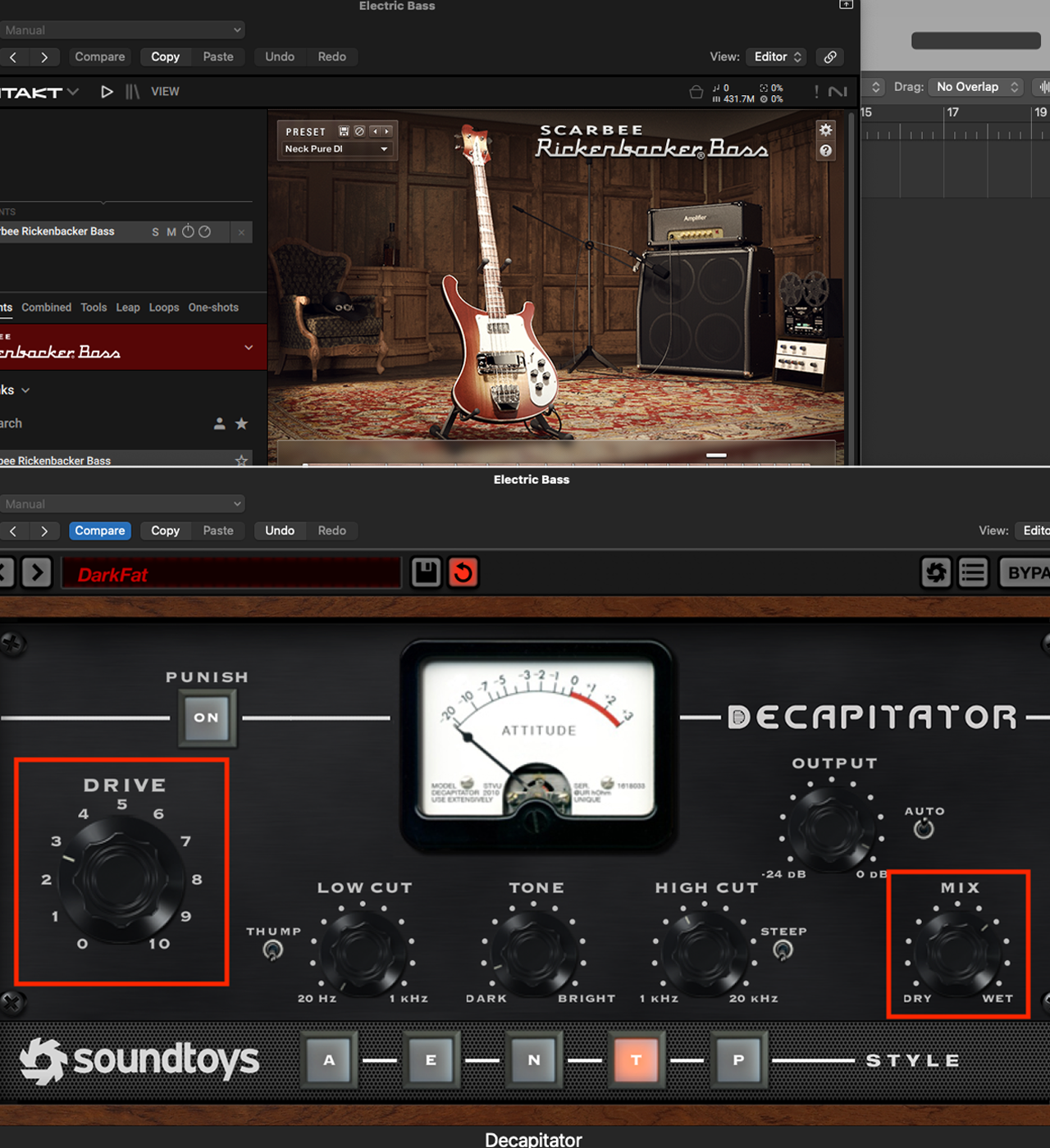
When applying saturation, it is always really important to listen objectively. The moment you feel the signal is getting too aggressive, it’s time to back off, and that may not necessarily be exclusively down to the saturation amount control.
Just about all plugins will be equipped with a Wet/Dry see-saw control, and adjusting this can scale an extremely saturated sound to help it blend in more nicely.
Of course, this principle could also apply to sampled bass sounds, which may be a little too clean for your mix. It’s also a concept which could be applied to drums, specifically if you are working with samples within your DAW.
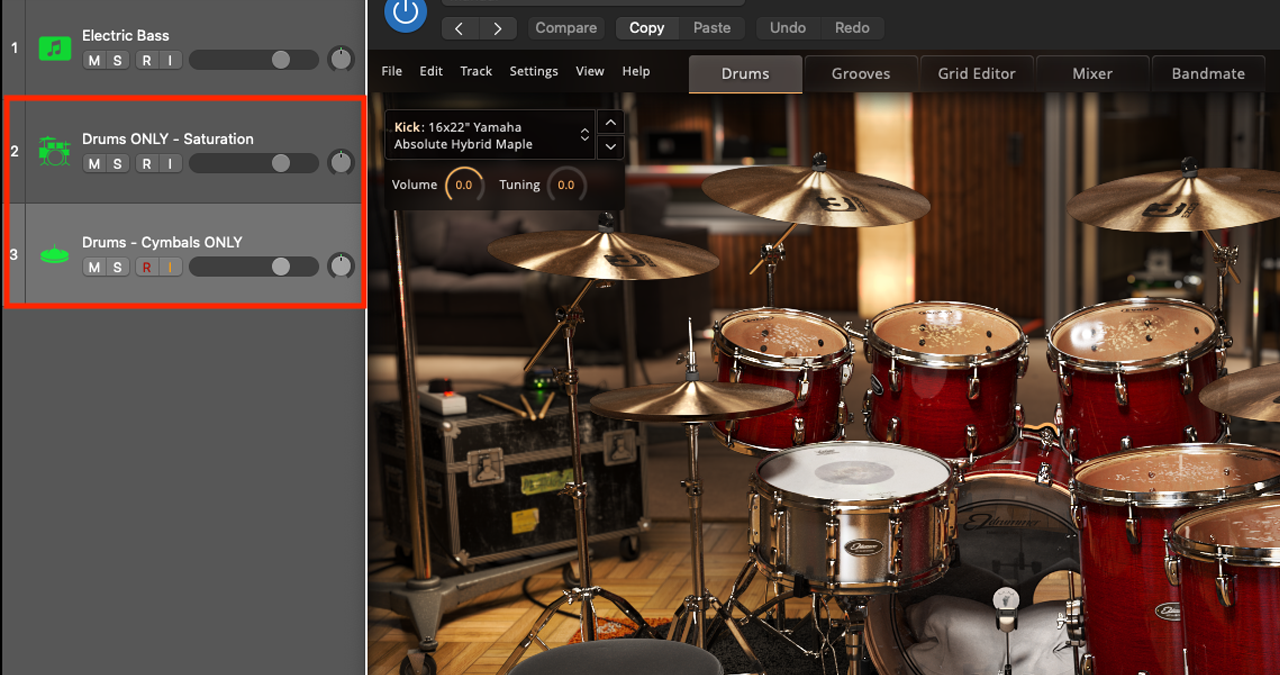
It’s a common complaint that many drum samples are just too clean, so it could be very useful to add a little saturated colour to your drum track. The only problem is, the drums themselves often sound great with saturation, but the hi-hat and cymbals can react less favourably…
A sensible solution requires the creation of 2 drum tracks, both with accompanying MIDI parts. You can then mute all of the drums on one channel, muting all of the metallic instruments on the other. This leaves the path clear to saturating the drum elements on their own, with no effect on the cymbals and hats.
Before you get lost in instrument saturation heaven (or hell, if that’s your preference) be aware that some instruments do not embrace saturation so readily, particularly instruments with a more acoustic persuasion, such as acoustic pianos, string sections or brass and woodwinds. There’s no harm in trying, but don’t be surprised if saturation does little to improve the sound.
With a slight sense of history repeating itself, we have to revert to TC’s DRG concept, and discuss how beneficial subtle saturation can be to an entire mix.
Mastering suites, such as iZotope’s Ozone, offer a number of saturation solutions, designed to be used during the mastering phase. These include tools to excite upper frequencies, and elements for inducing the sound of vintage tape.
But if you want a little more control, one company that personifies the application of saturation to mimic analog is Universal Audio. It has produced an array of exemplary plugins which are perfect for subtle saturation across your mix.
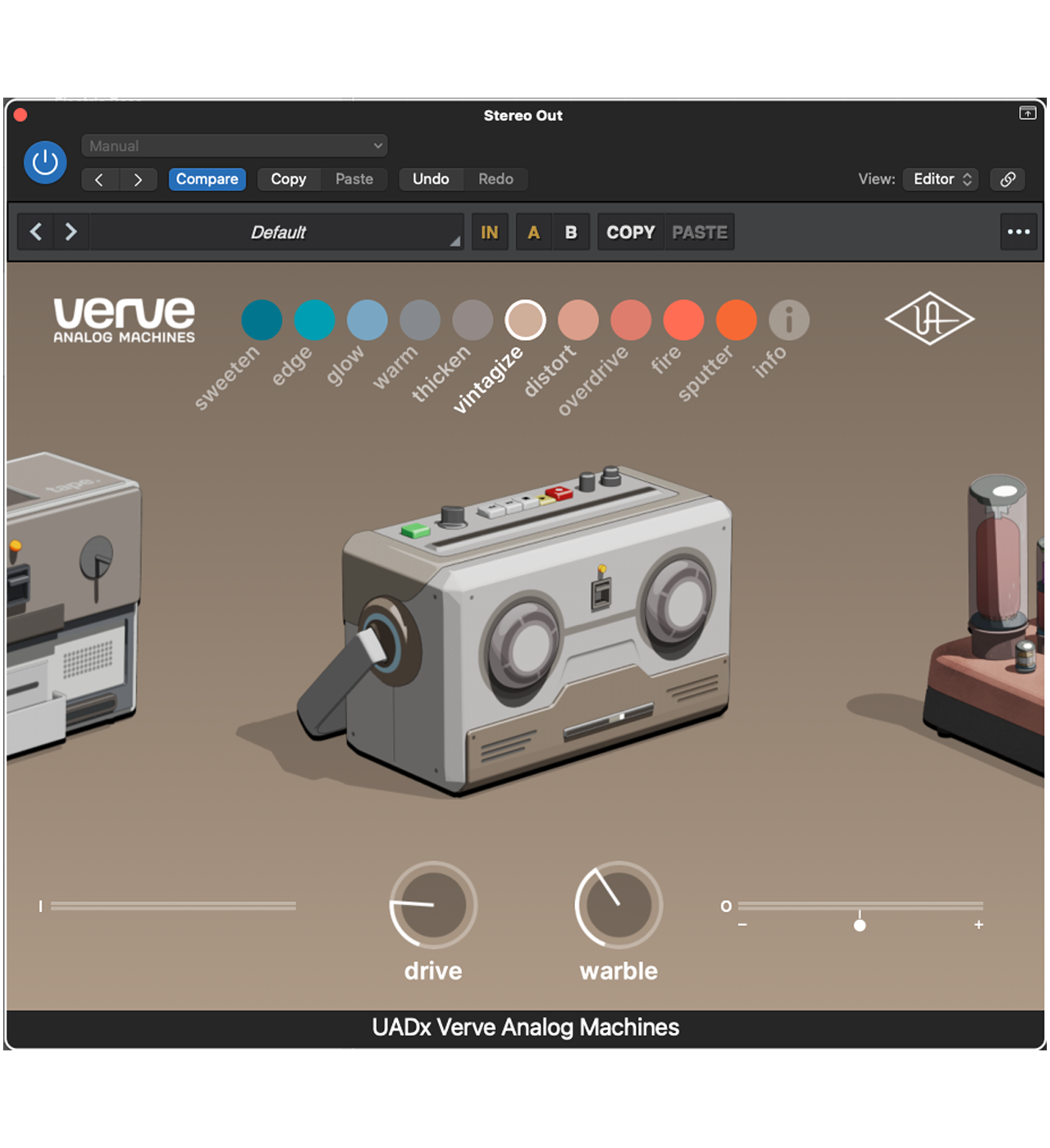
If you are nervous about over-applying saturation, take a look at the Verve Analog Machines plugin, which is available in two forms; the first is an entry-level Essentials version, offering four saturation models, while the upper-level version provides 10 models.
The idea is simple – apply across your mix, and adjust the tone and amount controls to suit your production. The included models range drastically from subtle, through to downright dirty, so it’s important to be objective.
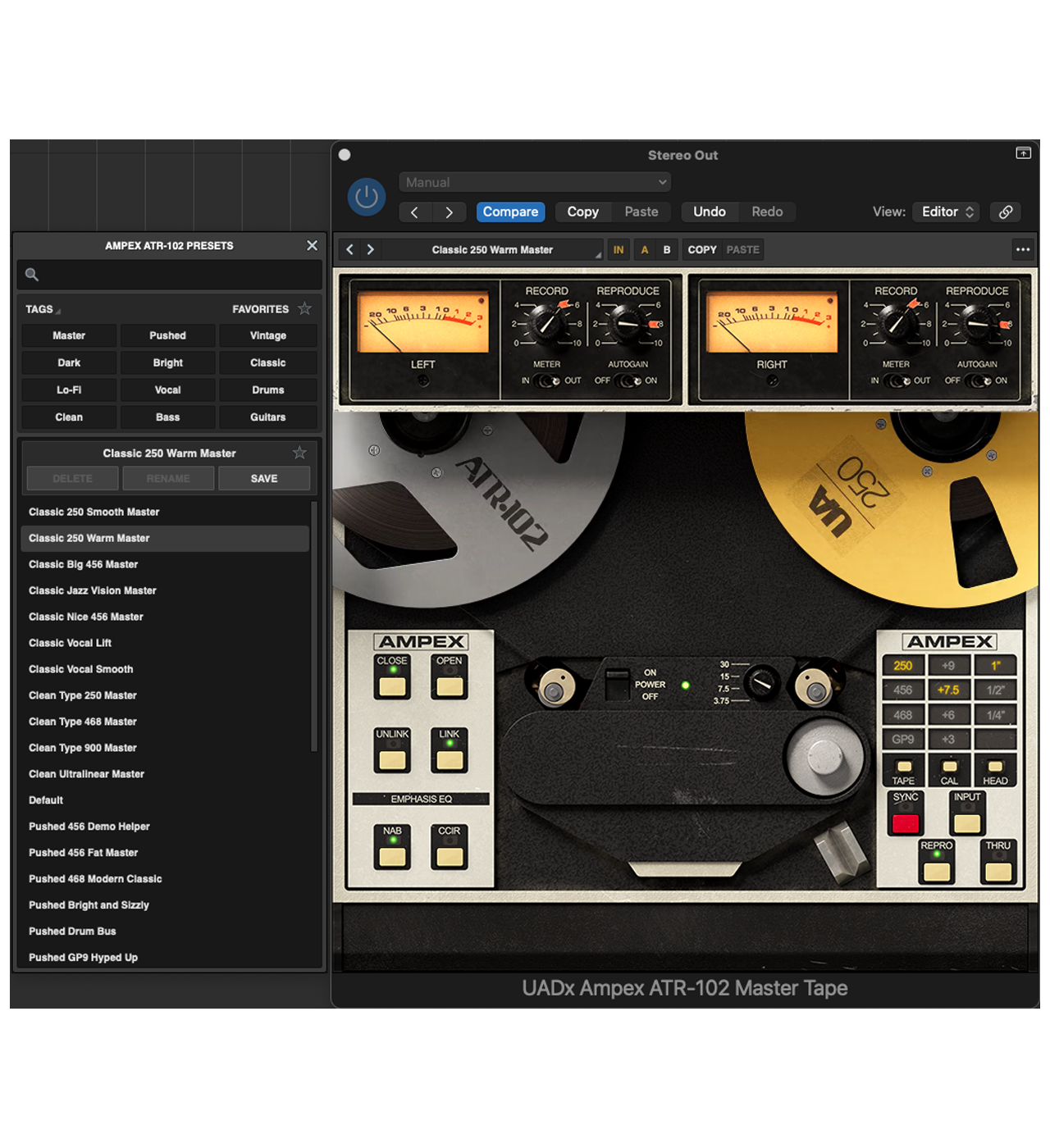
For even more control, UA’s emulation of the Ampex ATR-102 Mastering Tape Recorder is stunning. This plugin can induce everything from saturation through to hiss and even wow and flutter. It just depends how extreme you want to go!
One final thought. We’ve mentioned on several occasions that you need to be objective about your saturation exploits, and be careful not to overuse. You can easily destroy a mix by being a little overzealous.
If you find yourself regularly creating or delivering stems of your mix, be aware that many saturation plugins induce noise.
If you deliver half a dozen stems and they all have noise on them, when all the stems are played back together, that’s going to be quite a racket. It’s probably best to defeat the noise element as much as you can, in this setting, so that your music doesn’t get drowned out by hiss.
We spent many years trying to get rid of tape hiss and noise, so you don’t want to end up back where we all started.