![Jimmy Westerlund: A Fresh Take on '80s Rock Guitar Solos!]](https://backingtracksfullcollection.com/wp-content/uploads/2026/03/Jimmy-Westerlund-A-Fresh-Take-on-80s-Rock-Guitar-Solos-758x426.jpg "Jimmy Westerlund: A Fresh Take on '80s Rock Guitar Solos!] 1")
Jimmy Westerlund is a busy man. He’s the guitarist and producer of One Desire and lead guitarist on the latest album by legendary AOR rock band Giant. If you like soaring guitar chops in the style of Steve Lukather, Neal Schon and (of course!) Dan Huff, Giant’s Stand and Deliver shows Jimmy’s sophisticated phrasing and thick rock tone in spades.
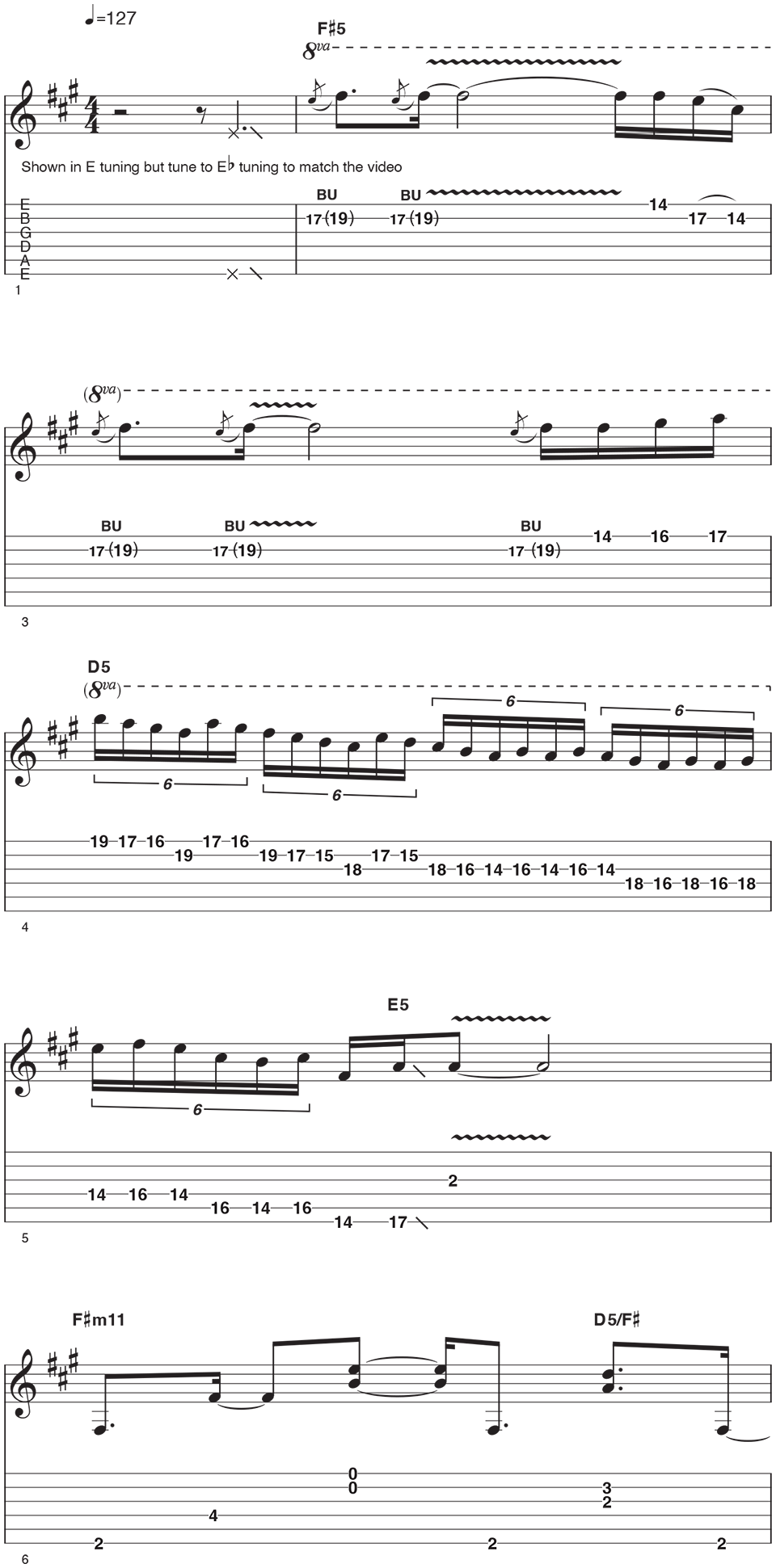
For this video, Jimmy is tuned down a half step, to Eb tuning. To get into this, simply drop every string down a semitone (Eb-Ab-Db-Gb-Bb-Eb). Our notation suggests you detune to Eb to play along, but it is shown in standard E tuning because that’s easy to read and understand. Just imagine you’re playing in E after detuning and all will be well.
Contextually, the chords in his bespoke backing track are all from the key of E minor. To complement this, he uses the E minor pentatonic (E-G-A-B- D) and the E natural minor scale (E-F#-G-A-B-C-D) throughout the first two sections of the solo. To keep you on your toes, the third section moves up a tone, to the key of F# minor, so the F# minor pentatonic (F#-A-B-C#-E) and F# natural minor scale (F#-G#-A-B-C#-D-E) are used.
Article continues below
The electric guitar is a very expressive instrument, and Jimmy sells every phrase with a variety of techniques and articulations. These include runs with fast picking, string bending, pedal tones, double-stop string bending, finger slides, whammy-bar scoops, finger vibrato and tapped harmonics. He makes using the whammy bar look easy, but if you are new to the idea of scooping into notes and adding vibrato, it’ll take a bit of practice to get it sounding controlled and consistent.

Jon Bishop
Jon Bishop is a UK-based guitarist and was a longtime contributor to Guitar Techniques and Total Guitar. He’s a graduate of the Academy of Contemporary Music in Guildford and is a touring and recording guitarist for British rock and roll royalty Shakin’ Stevens. As a fan of hard-rock music, he’s well suited to transcribing Jimmy’s stunning guitar chops.
Jimmy’s guitar of choice here is a Fender Stratocaster with a Seymour Duncan Hot Rails pickup in the bridge. He manipulates the guitar’s controls to access a wide sonic palate, moving between the neck and bridge pickups depending on where he is on the fretboard and what is played.
Tone-wise, Jimmy has dialed up a rich and thick overdrive with reverb ambience and delay added. To clean up the sound, the guitar’s volume control is rolled back to make the articulation of more intricate passages clearer.
If you want a similar tone, dial in a crunchy overdrive tone from your amp or pedals and then add a liberal amount of delay and reverb for an arena rock vibe.
Once you’ve learned the phrases in Jimmy’s solo, it would be a good pursuit to expand your fretboard skills by playing them in different keys.
Hopefully there will be new techniques and licks in here for you to perfect. If you find some you like, memorize them and use in your own solos. Enjoy!
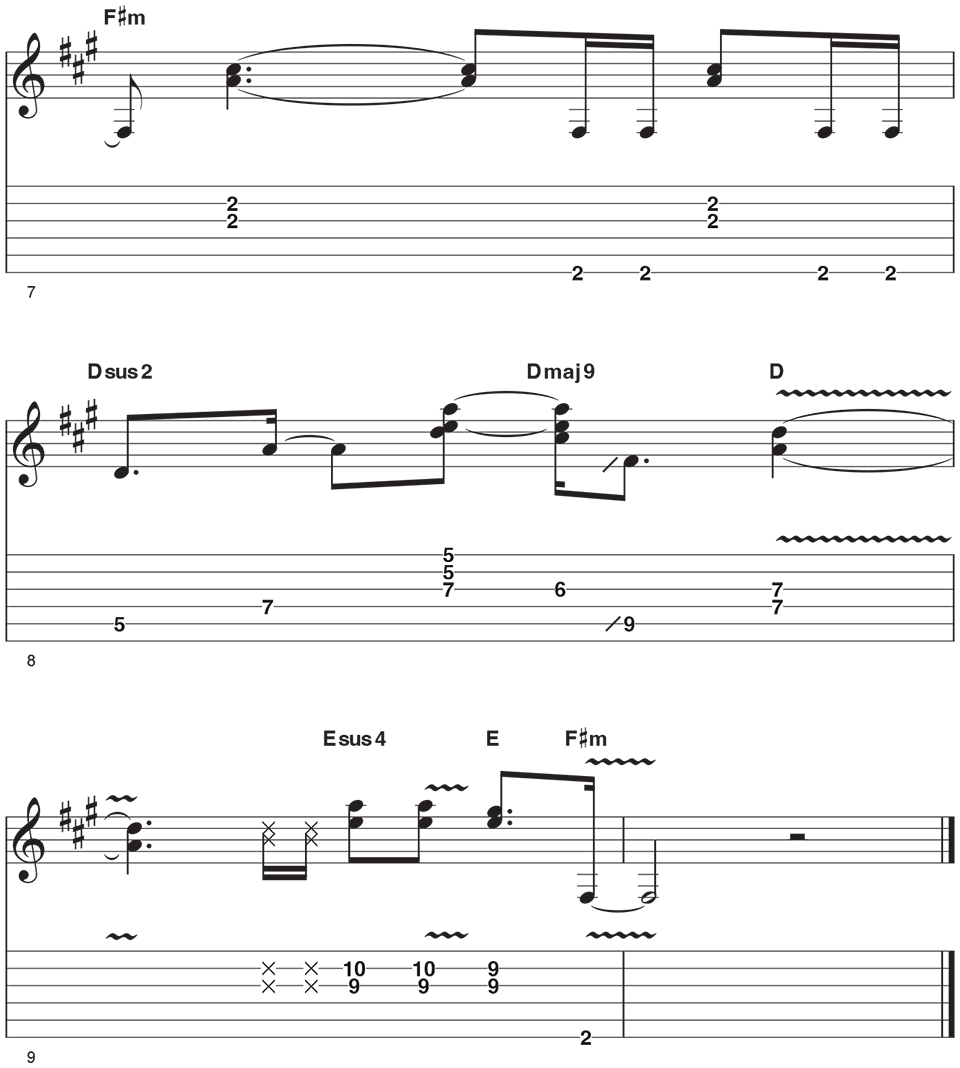
Example 1: Section 1
Jimmy’s solo starts with a melodic motif that is augmented with the whammy bar. If you let the notes in bar 4 ring together while scooping the whammy bar, a cool dissonance is produced. This is followed by a fiery descending picked run in bar 5. Think G major pentatonic (G-A-B-D-E) with an added C note.
The opening motif is repeated in bar 6 and punctuated by a dramatic-sounding string bend in bar 7. For this, Jimmy grabs the second string as he bends the first string up and then picks both. This produces a wild double-stop bend reminiscent of Stevie Ray Vaughan. The section is topped off with another fiery run in bar 9, and some tasteful licks to take you into Section 2.

Example 2: Section 2
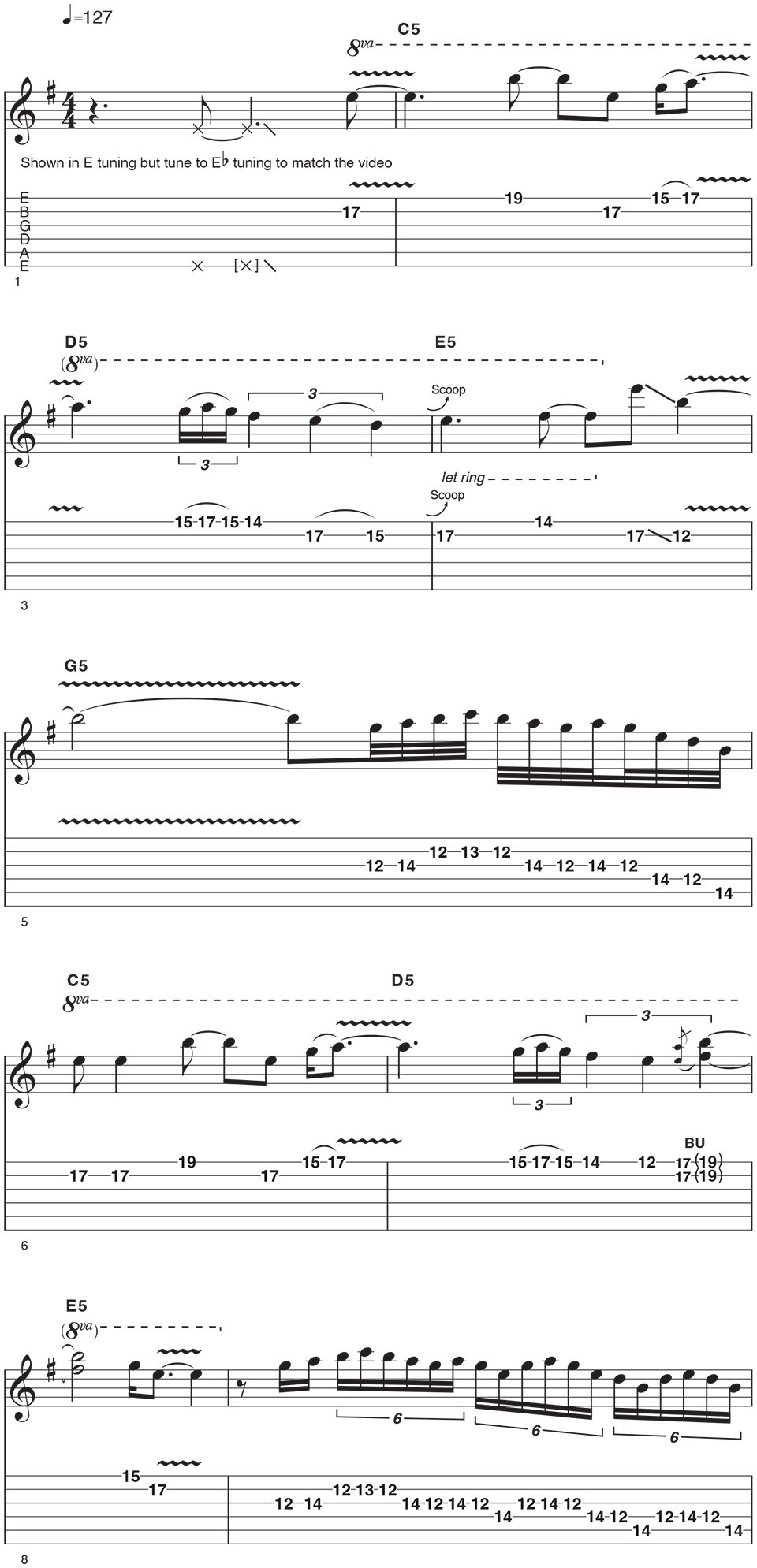
For this section, Jimmy switches to the neck pickup for a warmer tone and rolls the guitar volume down. This cleans up the fast hammer-on and pull-off trills. The articulation of the motif in bars 7, 8 and 9 is enhanced with whammy-bar vibrato.
In bar 10, the guitar volume is tuned up full and the bridge pickup selected for a big rock tone. Certainly, this allows the tapped harmonics to really sing out. To articulate these, tap down on the second string directly above the 17th and 12th frets while fingering the 5th fret. Tip: Tap at the actual fret wire for best results, not either side of it.
To finish off the section, Jimmy plays repeating patterns that exploit the open second string as a pedal tone. The open first string is used at the end as a drone to thicken up the melodies played on the second string.

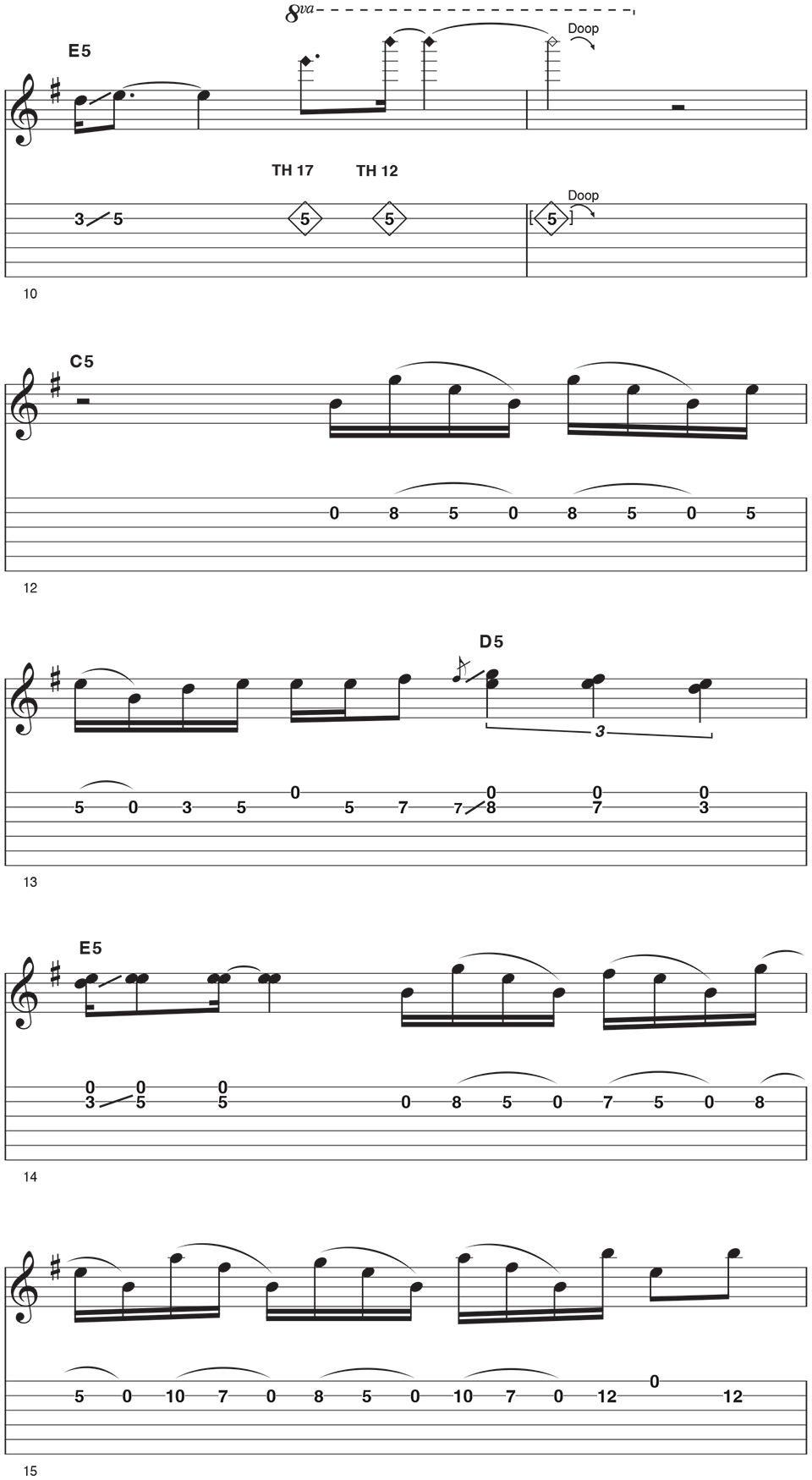
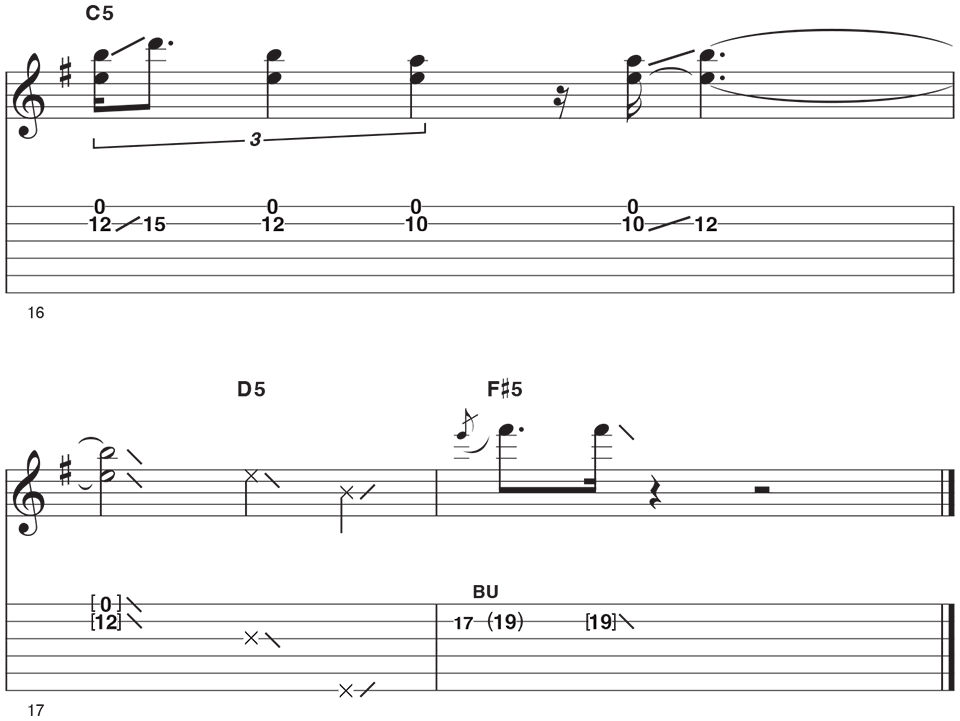
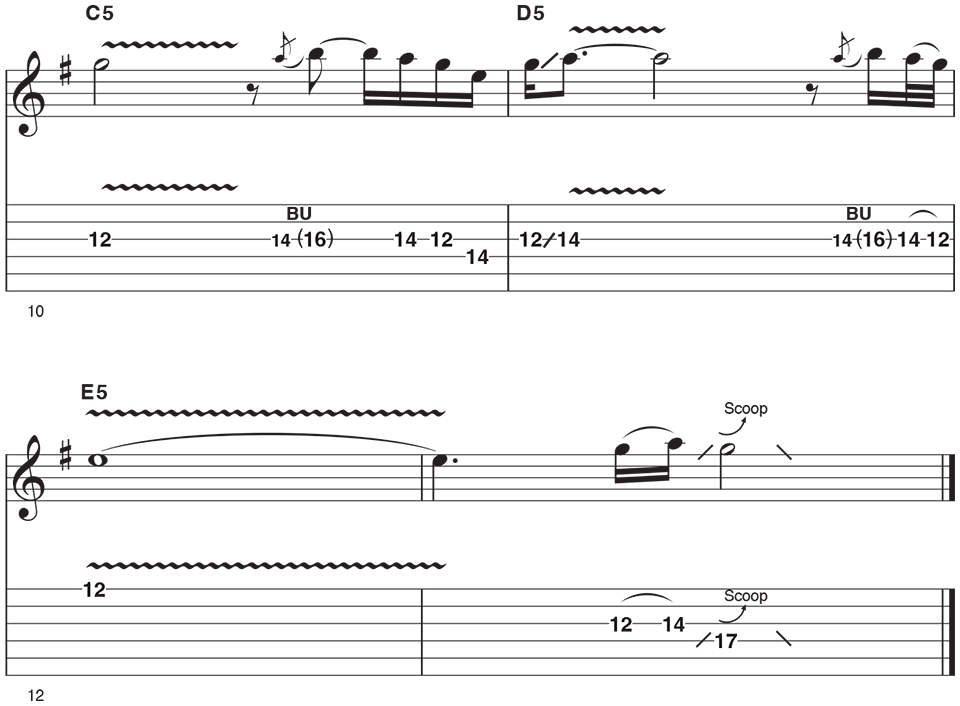
Example 3: Section 3
For the final section, you change gear by moving into the new key of F# minor. The opening bends are played with conviction and augmented with finger vibrato. Then there’s a stunning descending run that uses the F# natural minor scale (F#-G#-A-B-C#-D-E) as a foundation. Take this slowly, learning the fingering and honing the picking requirements in bite-sized sections before tackling it at speed.
At the end of this is a classic Lukather-ism: a fast and precise zoom down the fretboard for a low note. It sounds exciting and is full of attitude.
The solo finishes with tasty riffing on bass notes that alternates with double-stop chord fragments.
Virtuosic, expressive and sophisticated: All the hallmarks of great AOR soloing. Enjoy!