![James Honeyman-Scott Discusses Chrissie Hynde's "Unusual" Rhythms]](https://backingtracksfullcollection.com/wp-content/uploads/2026/04/James-Honeyman-Scott-Discusses-Chrissie-Hyndes-Unusual-Rhythms-758x426.jpg "James Honeyman-Scott Discusses Chrissie Hynde's \"Unusual\" Rhythms] 1")
Pretenders frontwoman Chrissie Hynde is very clear about where her rhythmic heart lies. She looks to two masters of the groove: Jimmy Nolen of James Brown’s band and founding Rolling Stones guitarist Brian Jones.
One of the most famous aspects of her playing is her unique sense of timing. In a 2021 Guitar World interview, Hynde — whose electric guitar of preference is an Ice Blue Fender Telecaster — recalled that when recording her first album, bandmates told her she had “dropped a beat.”
“I said, ‘That’s the only way I know how to do it,’” she said. “So I had to find some people who knew how to play it the way that I heard it.”
Because she spent years playing alone before joining a band, she developed a rhythm that didn’t always adhere to a strict 4/4 time. This “quirk” actually became a signature element of the Pretenders’ sound.
But as the late Pretenders guitarist James Honeyman-Scott told Guitar Player in 1981, Hynde’s unusual rhythm style put special demands on his own lead and rhythm work.
“She does quite a bit of rhythm guitar, and I don’t know anybody who plays like her,” he said. “It’s real distinct, and I can’t count her beat half the time. Instead, I just put a little guitar line over it, like the lick in ‘Tattooed Love Boys.’ I just happened to know that those notes in that order fit rather well, so I kept doing it so I wouldn’t go out of time.
“Her timing in that number is so weird, like 7/13 or something!”
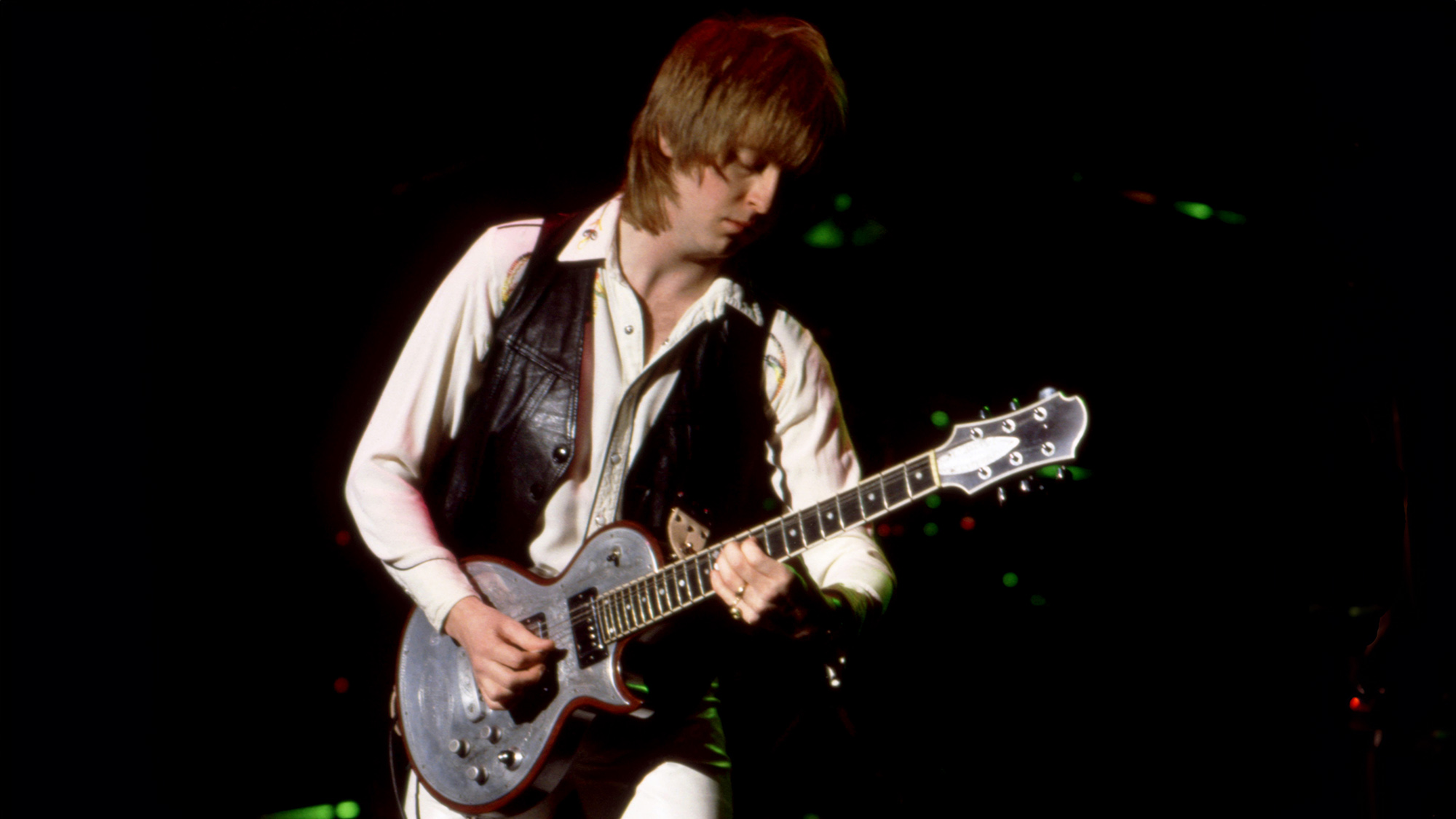
While recording their debut album, producer Chris Thomas asked Honeyman-Scott to clean up Hynde’s rhythm part on “The Wait.”
I bluff a lot. I think the rest of the group will be amused when they read this, because I’ve never told them I can’t work out their time at all!”
— James Honeyman-Scott
“It sounded real scruffy,” Honeyman-Scott said, “but I couldn’t because Chrissie plays that way and I don’t.”
He shared a secret with Guitar Player about how he worked around Hynde’s unusual rhythm work.
“This puts a lot of demands on me, and I bluff a lot. I think the rest of the group will be amused when they read this, because I’ve never told them I can’t work out their time at all! They are used to me coming in a bar too late; they think that’s the way I play. But it’s because I’ve missed where she comes in!
“That happened on a new number, ‘The Adultress,’ and they think it’s great — ‘Oh, that’s Jimmy’s style.’ I just bluff it and hope for the best.’”
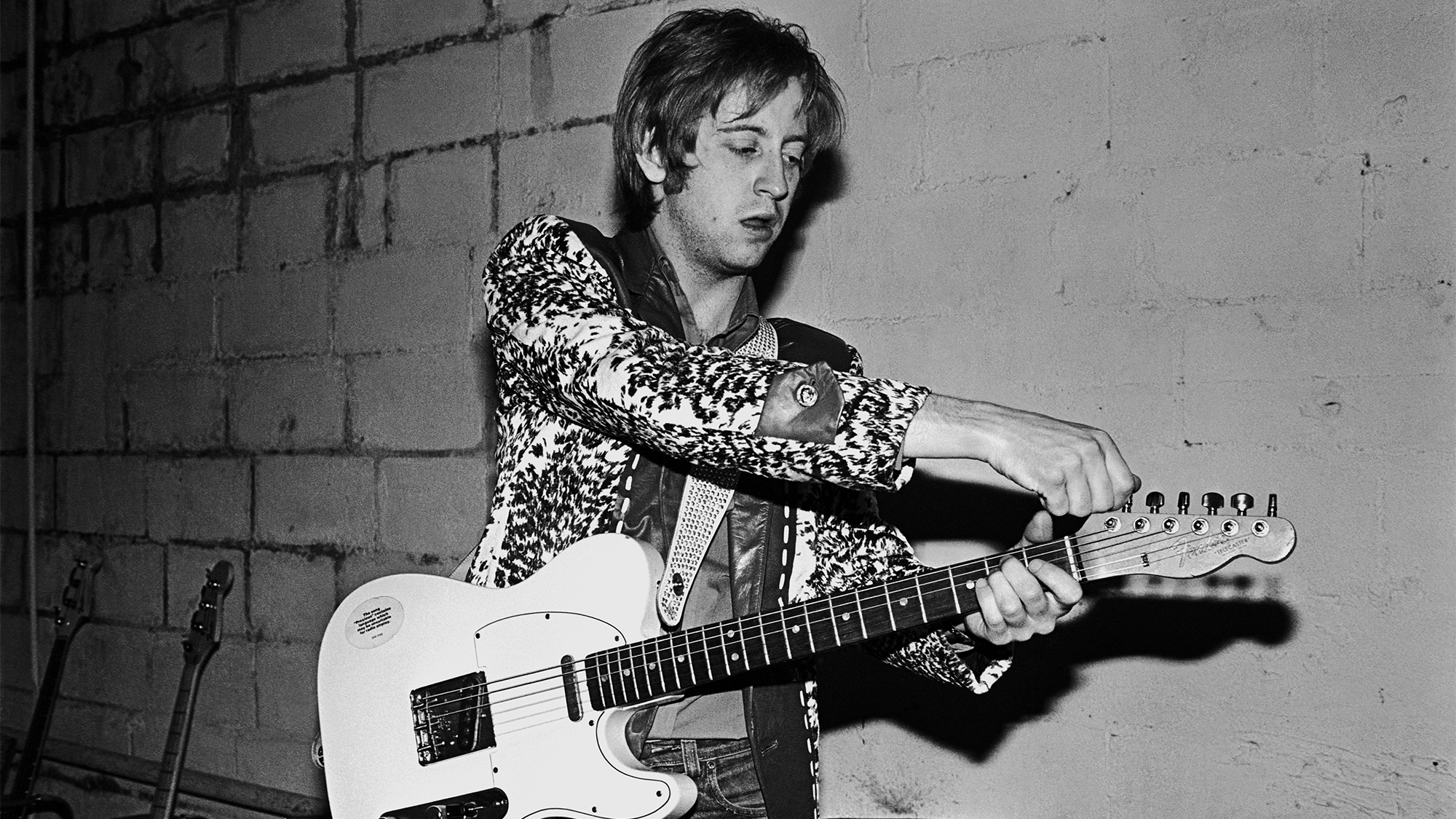
Honeyman-Scott’s own guitar career had been something of a happenstance. He was raising vegetables and selling guitars in Hereford, England, during the summer of 1978, unsure of what his next musical direction — if any — would be.
I started selling guitars and not really caring, although I knew that one way or another I was going to get heard.”
— James Honeyman-Scott
A phone call brought him to London, where he met Hynde, an American-born musical expatriate who was crossbreeding bits of pop, punk, reggae and her eccentric sense of meter to create crisp, no-nonsense accompaniments to her lyrics.
In a series of basement rehearsals, he found his specialty — savage power chords, arpeggiated or percussive rhythms, and short hooks instead of extended solos — and proved that he could handle his role with precision and flamboyance.
Honeyman-Scott — who died tragically at 25 from heart failure due to cocaine intolerance — told Guitar Player he couldn’t really account for why or how he’d landed in a successful group.
“I started selling guitars and not really caring, although I knew that one way or another I was going to get heard,” he said. “I settled back a bit and then thought, ‘No, no — you’ve got to make a fight for it.’ But I think it just turns up. You’ve either got the style or luck or whatever is needed, or you don’t.”