![Devo's Bob Mothersbaugh Reflects on Half a Century of Playful Punk Guitar]](https://backingtracksfullcollection.com/wp-content/uploads/2026/04/Devos-Bob-Mothersbaugh-Reflects-on-Half-a-Century-of-Playful-758x406.jpg "Devo's Bob Mothersbaugh Reflects on Half a Century of Playful Punk Guitar] 1")
With Devo, an oddball group out of Akron, Ohio, aka the USA’s so-called “rust belt,” and breeding ground for ’70s cock rock, Bob Mothersbaugh helped redefine what it meant to be a guitar hero.
Like many who came before him, but who sounded and looked very different, Mothersbaugh worshiped Hendrix, Clapton and Beck… but the results were much different.
Article continues below
Now 73, and rising after a hit Netflix documentary, DEVO, brought the band’s music to a new generation of listeners, the guitarist remembers his basic intention to do “anything but arena rock.”
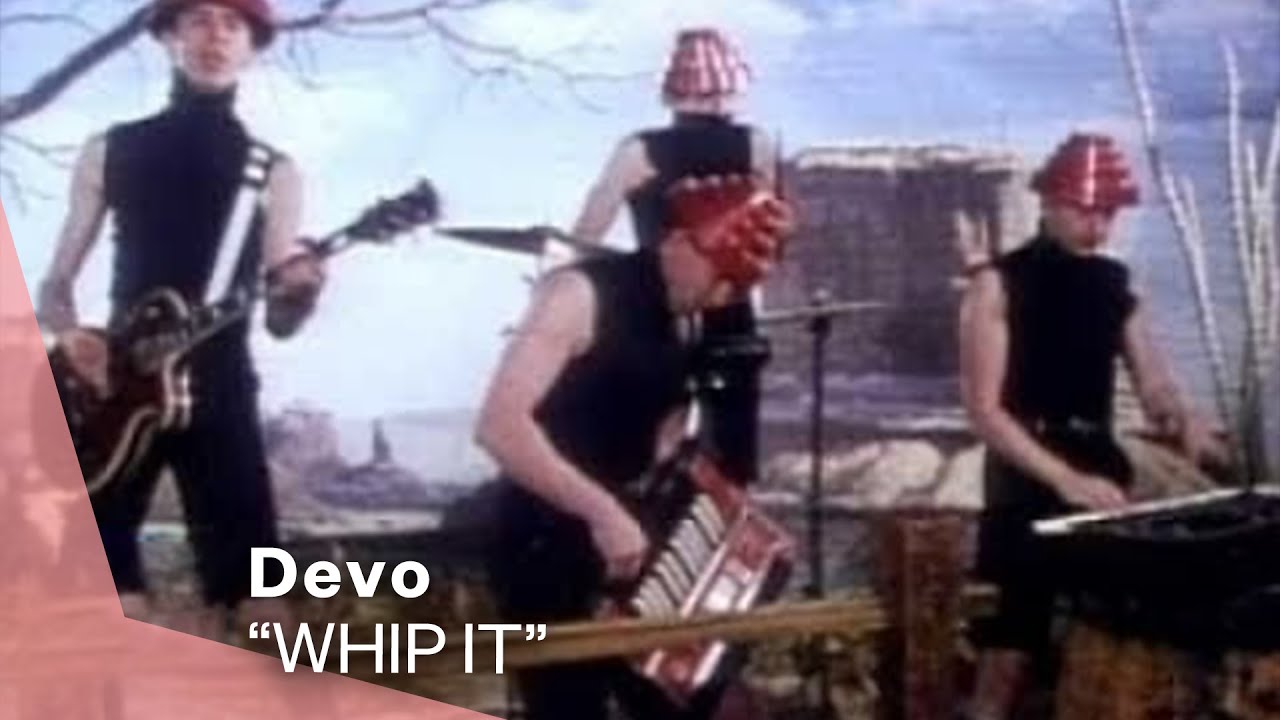
Mothersbaugh says, “It was about the look; I wanted the look.” To that end, Mothersbaugh brandished an array of weird-looking guitars, adding to Devo’s hate-me-if-you-wish-but-hear-me-anyway aesthetic, and making them leaders of new wave music.
“It’s funny,” Mothersbaugh says. “I think back on that, and it was a groundswell. Here were all these bands that weren’t doing arena rock. There were the Ramones, the Sex Pistols, Blondie and the Talking Heads. It was all of us… everything was just really cool. And after Whip It, it was fun. We got to do whatever we wanted for a year or two. [Laughs]”
Mothersbaugh hasn’t lost his passion for guitar or Devo. He admits he plays just long enough every day to “make the tips of his fingers hurt,” but maybe that’s all he needs as he prepares to his the road for Devo’s Mutate, Don’t Stagnate tour.
But despite the success of the DEVO documentary and the renewed interest in the band’s catalog, Mothersbaugh isn’t really the looking-back type. He just keeps doing his thing, hoping the music touches people. “I have a lot of gratitude,” he says.
“I’ve been lucky to go out and do this every night,” he says. “Sometimes, we’ll be playing somewhere, and I’ll play the lead on Girl U Want, and everybody will be like, ‘Yes! That’s what I remember from the record!’ That’s when I’ll get a little jolt of, ‘Oh, yeah… this is fun.”
What types of sounds were you chasing in your early days as a guitar player?
Back in Akron, we just didn’t like the arena rock kind of sound. We tried to make fun of it and do anything but arena rock. We were just into anything weird.
What sound caught your ear within the realm of weird?
I was initially influenced by old blues and British rock guitar players from the late ’60s. But, I don’t know; I’m not sure how to answer that. I didn’t really hear a lot of stuff, and go, “Oh, that’s weird, or that’s cool,” you know? But there would be a lot of weird stuff on, say, a [Jimi] Hendrix album. I’d go, “Oh, my God… how does he get those sounds?” So, that’s the kind of stuff that influenced me.
Given that you wanted to avoid arena rock tropes, how did you view the guitar within Devo’s music?
I liked guitar players like Jimi Hendrix and Jeff Beck – especially Beck’s first two albums – for guitar leads. And I liked the stuff Eric Clapton did with the Bluesbreakers; I love those kinds of leads. But I also really liked the Ramones.
I liked Johnny Ramone’s leads because they were succinct and short. And I liked George Harrison, who always did it in four bars, and it was just perfect, and he wasn’t noodling. I liked that kind of stuff, and that’s what I was looking to do.
Once Devo got rolling, what sort of gear were you working with?
I liked George Harrison, who always did it in four bars, and it was just perfect, and he wasn’t noodling
I had a Gibson L6-S, and I had an Acoustic Model 470 solid-state amplifier. It had a graphic EQ on the front of it, and I would just take the graphic EQ and do geometric patterns. [laughs] It was like a five-band EQ, and it would go a step up, and a step up, and a step up, until it got to the high-end, which was all the way up to 10.
So there was a lot of experimentation.
Yeah, a lot of experimentation, with not much equipment. [Laughs] In the mid-’70s, there really wasn’t a lot of stuff, you know? But I also had that little orange-colored phase shifter [MXR Phase 90], and the amp had a lot of distortion on it, so that’s mostly all I used back then.
What do you remember about putting together Devo’s cover of the Rolling Stones’ (I Can’t Get No) Satisfaction?
I mostly played my L6-S with that Acoustic head. And the Acoustic head was cool because you could plug it right into the ‘board, so you didn’t even need speakers. But just before we left for [to record Devo’s first record Q. Are We Not Men? A. We Are Devo! in] Germany, I bought an old Fender Mustang from a pawn shop.
What did that guitar bring to the party compared to the L6-S?
I really liked that it had those two switches for the pickups, and you could configure them so that the two pickups were out of phase. I used that on Gut Feeling and Praying Hands. It was kind of like I was playing two-note chords, and chunky stuff… I really liked the sound of that.
I really appreciate Ry Cooder because he’s somebody who really picks esoteric guitars for sounds. But when we grew up, we just played what we had
What’s the story behind the La Baye guitar that you used in the Satisfaction music video?
Well, at one point, back in Akron, I was walking down the street with my girlfriend, and we saw this thing, the La Baye 2×4, in a pawn shop. I said, “Oh, my God, I gotta play that.” So, she loaned me the money to buy it, and I used to play it for the whole show in clubs… but it was a horrible guitar. [laughs] It didn’t sound good, was hard to play, and if you let go of the neck, the whole thing would drop straight down.
Is there something to be said for guitars like that, which give you off-kilter inspiration that you might not get from a typical guitar?
Um… no. [laughs] The inspiration was already there; I just needed something to get it out with, you know? Like, I really appreciate Ry Cooder because he’s somebody who really picks esoteric guitars for sounds. But when we grew up, we just played what we had.
What can you remember about putting together Whip It?
I had the Ibanez guitar that kind of looked like a cloud, and I forgot what amp I used…but it was a prototype. Actually, believe it or not, it was a Roland. Okay, so Roland took that Acoustic amp that I had with the Graphic EQ, and they made their own version. And my brother worked at Roland, so he got me a prototype.
And then, we were at the Record Plant, and [producer] Bob Margouleff put the drums in the big main room, and we put my amp back in the little drum section and covered it up.
And that’s what it was… we had written the song in a rehearsal studio, and we used to record everything on four-track, so we knew exactly what we wanted, and Bob helped us recreate it, and make it a little better.
Did Whip It’s popularity take you by surprise?
Yeah. And we made the music video because the song was taking off, but we didn’t think… Whip It was just another song on the album [Freedom of Choice]. We didn’t know it was gonna be a hit. We thought that Girl U Want was going to be the hit, and I think somebody even brought Roy Thomas Baker in to remix it for the single.
As far as amps go, have you always been exclusively a solid-state guy, or have you used tube amps, too?
I’d use tube amps, too. I used to get the Music Man RD-50s and RD-100s, and I would buy Groove Tubes and put in a matching pair of tubes, so I was into tube amps for a while there. But even now, I just play whatever is there and see what I can do to make it sound good just as it is.
Which is more important to you: a great amp or a great guitar?
It depends on what day of the week it is. [Laughs] I’ve had amps that have a really clean sound, where I’d plug in a Les Paul and go, “Oh, yeah, that’s the Les Paul sound.” And then, I grab my Tele, and I go, “Oh, yes, there’s the Tele sound.” I really appreciate that.
Josh is a good player. And his brother is our sound man, and his brother kind of sold him on us
These days, you seem to be using amp modelers as opposed to stacks of amps behind you onstage. Has that been a big adjustment?
Kind of, yes. I have a monitor in front of me, and a monitor behind me, and the monitor behind me kind of emulates what would be coming out of an amplifier with speakers. I had to have what feels like a [sound of a] guitar hitting me in the back. But you get used to it.
When we did the first album, and were ready to go on tour, I bought all these Bandmaster cabinets, and Bob [Casale] and I both had the Acoustic heads.
We’d put one cabinet on each side of the stage, and it was almost like playing in a rehearsal room, and you could never hear anything. But now, nobody wants to hear each other on stage.

Speaking of Bob, Devo has always been a two-guitar band. What was the secret sauce between you two?
Secret sauce… Bob was just an easy person to get along with. He was one of the funniest people that I ever knew. And he would just play whatever anybody wanted him to play. He was a great bandmate.
So, the chemistry was natural between you two.
It came naturally. He didn’t play leads. But there’s a difference between playing good rhythm parts and then playing a lead where you’re just not sure where it’s gonna go, but you do it, and it ends up where you want it.
He didn’t play leads very much, so it was mostly that we were writing songs, and whatever we played, we recorded it to a four-track, and that’s pretty much what we did.
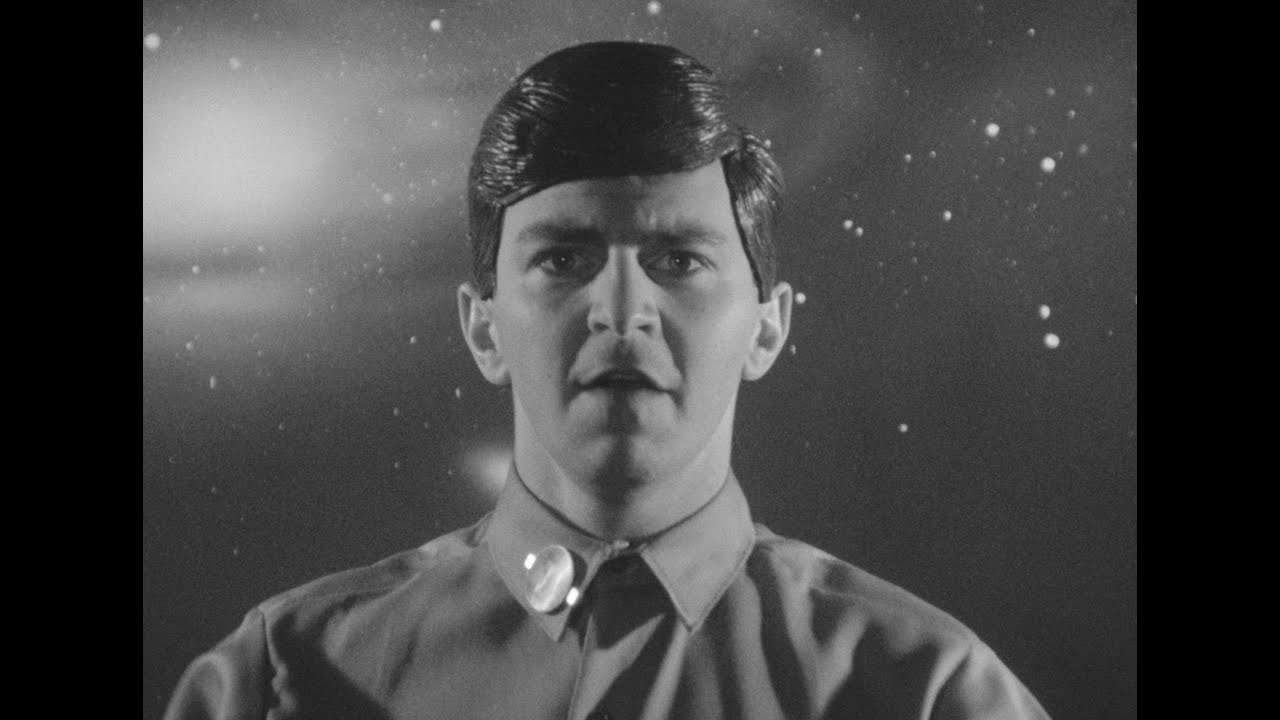
In recent years, you’ve had Josh Hager as Bob’s replacement. What made him the right person for the job?
He’s a good player. And his brother is our soundman, and his brother kind of sold him on us. He said, “Look, I’ll give him the show tapes, I’ll isolate Bob’s parts, and he’ll have everything worked out perfectly.” So, I went, “Okay!”
What’s a favorite Devo lead or riff of yours, and what’s the key to laying it down?
I kinda like when we play Beautiful World because I like to turn the volume down on my guitar and get a kind of clean sound. It’s a nice change from a lot of the stuff that we’re usually doing. But Bob Casale actually came up with the riff for Satisfaction.
We were doing a retro tour and playing all the really early stuff, and Bob had passed away before we went out, and I said, “Okay, we can still do it, but I’ll play Bob’s part on Satisfaction.” But it was really hard every night. The key is probably playing it every day for years and years. [Laughs]
Devo has tour dates planned with the B-52s for 2026. What’s the key to getting in shape guitar-wise?
I do stuff on the guitar every day just long enough to make the tips of my fingers hurt. That way, it isn’t excruciating when I go out for a couple of weeks or a month. Other than that, it’s mostly just aerobics. [laughs]
But as soon as we walk out, people are cheering, and you’re like, “Oh, yeah… this is cool.” We get a couple of hours, where it’s a lot of fun, and then the rest of the day is just boring traveling and waiting. Most of what you do is wait. [laughs]
How do you view Devo’s legacy?
We’re a really great, misunderstood band. We did what we wanted, and we didn’t try to produce hits; we tried to be artistic. Mark [Mothersbaugh] and Gerry [Gerald Casale] are really good visual artists, so they made the videos look good. But I don’t know… I don’t really sit around and think about my place in history or anything.
Do you still feel misunderstood? If so, how has that fueled Devo through the years?
We played clubs in Akron, and people would come, and they would hate us. If you watch the documentary [DEVO], you’ll see footage of what we were like back then.
It was crazy-sounding, and people would hate us, bully us, throw stuff at us and threaten to beat us up, but they wouldn’t leave. We thought, “Okay, we’ve got something. We’re upsetting them, but they don’t leave; they just want to stay and fight.” [Laughs]
And they’re still coming. Does Devo have an endgame, or is it a “rock till you drop” scenario?
Rock till I drop. [Laughs] We’re having fun, and we’re having a resurgence because of the documentary and the political climate. We’ve got plenty to do and say.
- The Mutate, Don’t Stagnate Tour is underway. See Devo for dates and ticket details.
- This article first appeared in Guitar World. Subscribe and save.