!["Post-Grammys, I was in line at McDonald's when a man approached me and said, 'You helped me buy my house': Jimmy Jam discusses sampling, AI, and his latest EastWest drum machine plugin."]](https://backingtracksfullcollection.com/wp-content/uploads/2026/04/Post-Grammys-I-was-in-line-at-McDonalds-when-a-man-758x426.jpg "\"Post-Grammys, I was in line at McDonald's when a man approached me and said, 'You helped me buy my house': Jimmy Jam discusses sampling, AI, and his latest EastWest drum machine plugin.\"] 1")
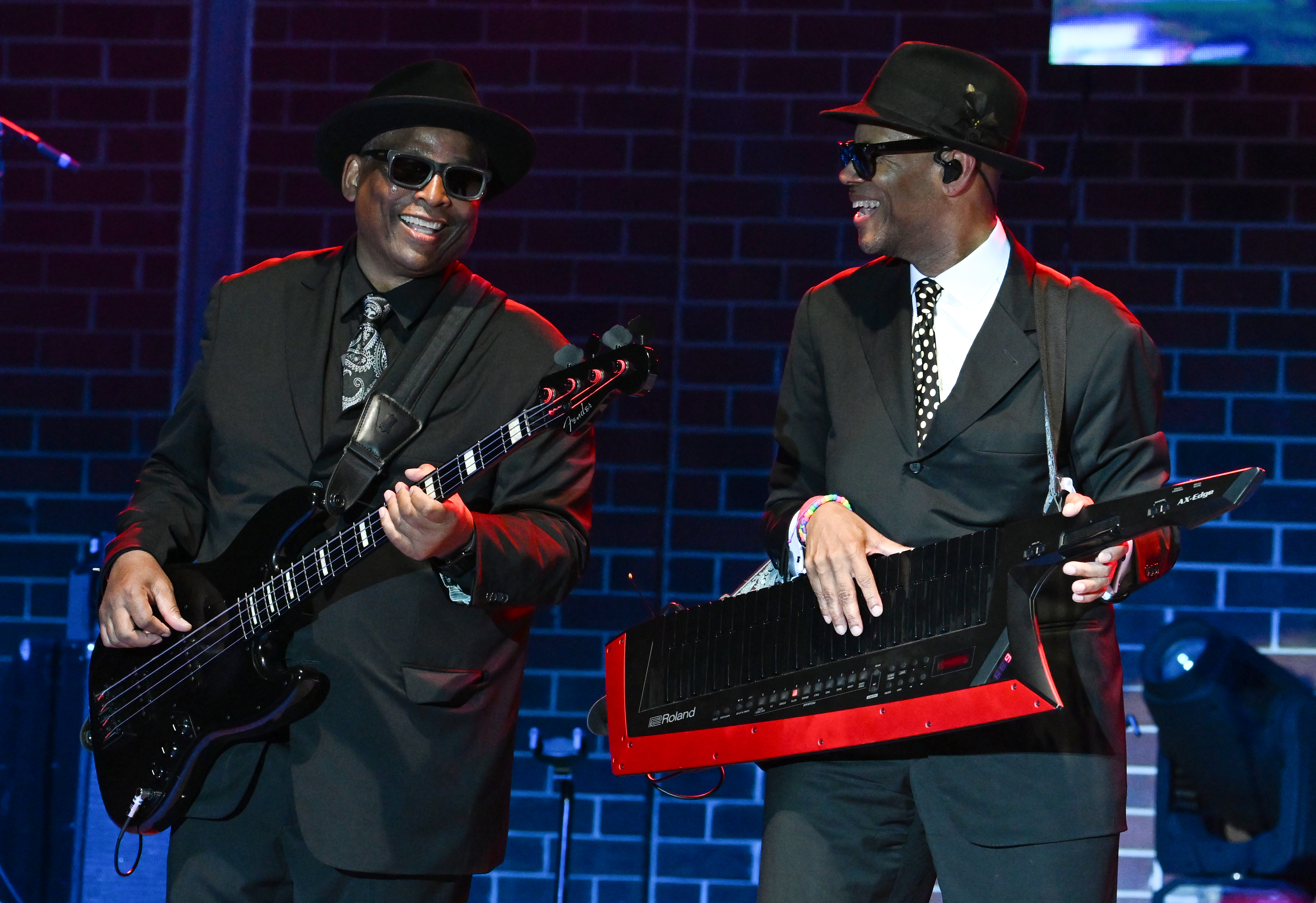
Jimmy Jam is back. Not only appearing live in Vegas in a showcase of classic tunes alongside his longtime production partner Terry Lewis, but also providing hundreds of drum patterns for EastWest’s new DrumX drum machine plugin, released April 27.
For ‘80s and ‘90s aficionados Jam and Lewis will need no introduction. Starting out as part of Prince’s backing band (before being “let go” by the temperamental superstar) the pair swiftly moved into music production, crafting such classics as Just Be Good To Me for the SOS Band, Change of Heart for Change, Saturday Love for Cherelle and Alexander O’Neal, plus their incomparable work across the decades bejewelling hits for Janet Jackson.
To date, they’ve scored 42 Billboard No 1s and more than 100 gold, platinum, and diamond records. Check the sleeves of beloved albums by Michael Jackson, Mariah Carey, Usher, Boyz II Men and many more, and you’ll find Jam and Lewis in Control.
Article continues below
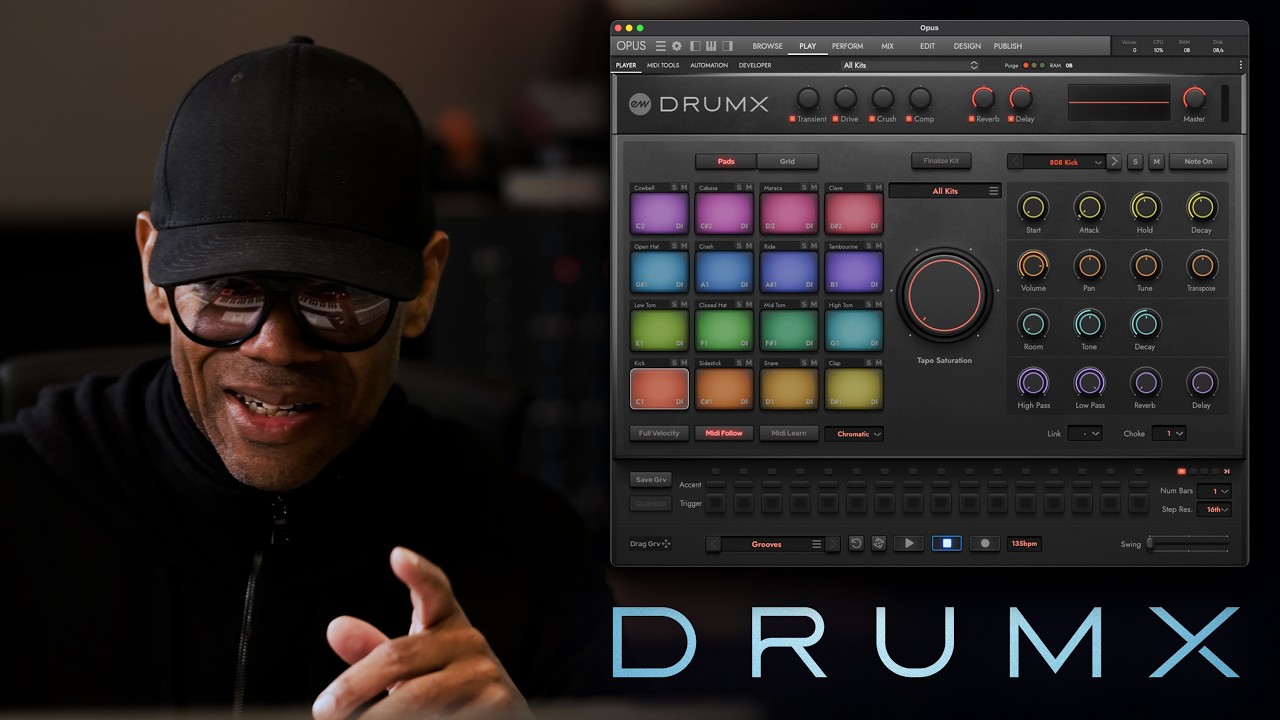
Meanwhile, EastWest’s DrumX brings together 10 of the most iconic drum machines ever created – including the LinnDrum, TR-808 and TR-909, DR-55, DMX, DrumTraks and SP-12 – all meticulously sampled by the producers and reimagined for modern production by Jimmy Jam himself in an exclusive collaboration with the award-winning virtual instrument developer.
We caught up with the production legend alongside EastWest’s founder, producer and king of the sample library Doug Rogers to talk sampling, AI and what comes next in Jimmy’s illustrious career.
What is it about DrumX that made you want to get involved?
Jimmy Jam: “I liked the concept of going back and doing things the way that I used to do them. In the early days, a lot of the stuff we did started with drum machines and beats. So the idea of having something starting with a drum beat again was very intriguing.
“I think it was not only the ask, but who was doing the asking. What Doug has built is pretty amazing and it was exciting to be a part of.”
And it’s not just your sounds? It’s got your grooves in there as well?
JJ: “Somebody literally gave me the drum machine and said ‘Go create’. That’s what we did for a couple of weeks – just experimenting, learning things about it. There were things that the machine could do that I don’t even think the designers knew that it could do. And there were other things where I’d say, ‘You know, man, it’d be great if we could do this…’ and then the next day I’d come back and they’d say, ‘Oh, it’s there now.’”
Doug Rogers: “I know we changed things on the quantization.”
JJ: “Yeah, we changed some things where it wasn’t quite right. They said, ‘Where do you think it should be?’ And I said, ‘Right here’, and then the next day, there it was. I always like when people are creating software or whatever and include the creatives in the process. I had a great time doing it.”
What were your aims for DrumX? What makes it different?
DR: “Jimmy. [laughs] That makes it different! You’re not gonna be able to get Jimmy to do your drum tracks so that’s a great foundation to build any piece of music on – something from a proven hitmaker, that forms the foundation of whatever you’re working on.
“There are a lot of drum machines out there and a lot of people have sampled 808s, 909s, and the rest, but what we have are 10 of the real classic drum machines really deeply sampled, spending a lot of time capturing every nuance. Plus we also wanted to add something so as not to be stuck in the ‘80s and ‘90s – to create something that could be used in modern music.”
So what’s your take on the ‘modern’ sound?
DR: “The thing that’d happened between the ‘80s and ‘90s and now is that people use a lot more distortion. EDM didn’t exist in the ‘80s and ‘90s. With DrumX we were running these machines through four levels of tape saturation, using an analogue Studer A820 and then the fifth one with the [Studer] J37 tube, which really sounds great when you push it real hard.
“And Opus – our audio engine – has got hundreds of effects. The default reverb is a simulation of an AMS [RMX16] gated reverb, but you could change the reverb to another 100 different reverbs if you want to do that, just by going into the mixer.
I’ve seen a lot of people using drum machines, but I’ve never seen somebody honing in to create a piece of music on a drum machinE
“The thing that I think that was most interesting to me was how musical Jimmy got the drums. He was going for notes, musical notes. I haven’t seen that before, I’ve seen a lot of people using drum machines, but I’ve never seen somebody honing in to create a piece of music on a drum machine.
“Jimmy was pulling sounds from all those 10 machines and stacking them, tuning them, putting them through effects, adding tape saturation, adding some crush. Just screwing them up as much as possible, but in a very musical way. It’s almost like the drum machine became a drum synthesiser, with all of those tools being added together.
JJ: “My thing – with any piece of equipment – is I want it to inspire me. I love it when I turn it on and instantly a song idea comes or a drum idea comes or a melodic thing comes. And that was the thing with DrumX. The more I got into it the more inspired I got.”
Jimmy, what would you say the secret of your drum sound is? Those famous ‘trash can’ snares. When we listen to one of your classic tracks, what are we actually hearing?
JJ: “Well, a lot of it was sound effect-based stuff. It was things piled on top of each other. It wasn’t one snare drum, it was a combination of three. And then the AMS. We use the AMS a lot on our records – the non-linear setting on there. It was always combinations of things.
“I loved the records Trevor Horn made and the way that he took sounds that were percussive, not necessarily drum sounds, but glass breaking or trash can lids or whatever. A lot of stuff we did in the early days was Linn Drum, and we used the 808 back in the day, but we took those sounds and then combined them with other things and ran them through an AMS… You could change the complexion of the sound totally.
“I always liked the idea of having a super distorted drum palette then putting something beautiful over the top of it. And I have to give a lot of credit to Steve Hodge, our engineer. These were very ugly sounds but he would find the beauty in them.
“Terry and I came along at a time when drum machines were very new and drummers were, in a lot of cases, kind of scared of them. But I started off as a drummer, and I loved the drum machine because I felt like, ‘wow, I know how to do it!’ I should be able to do this better than anybody because I started off as a drummer, so I never felt threatened by it.
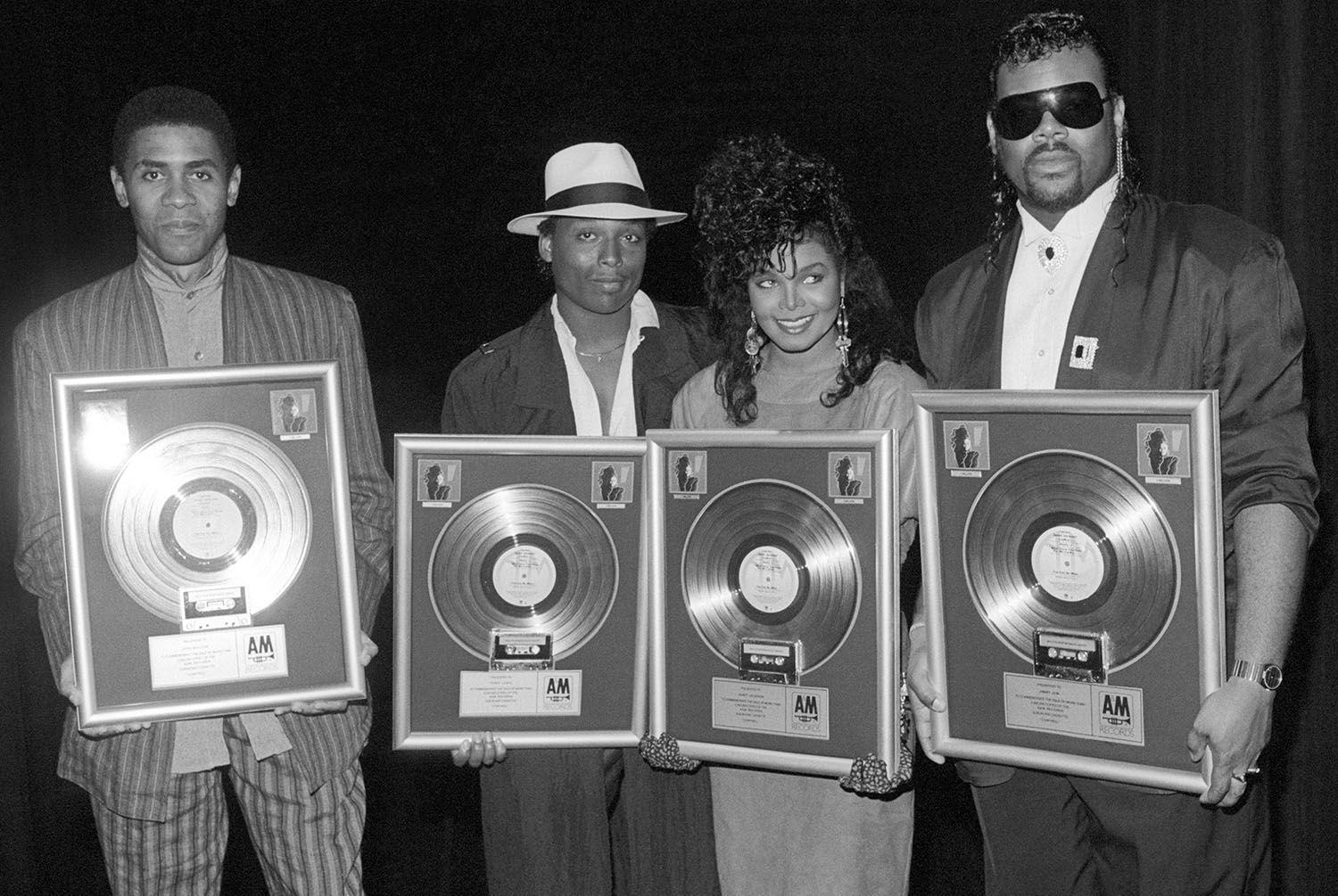
“I never felt threatened about pushing the envelope. Working with Janet Jackson on Control, Janet was so open to whatever we wanted to do. She grew up listening to musicals, movies, so the idea of rhythmic sounds with picture and choreography and those things together – I think she loved the fact that we were doing things so rhythmically aggressive. She loved that.
“Like when she heard the drums in Nasty, she didn’t go ‘Oh, that sounds ugly’ or ‘that sounds too aggressive.’ It was like, ‘No, that’s really cool’. She embraced those kinds of things and when you work with artists that don’t really have limits on what they wanna do, you can do all kinds of different things.
“We wouldn’t have come up with those drum programmes and pushed the envelope the way we did – and it’s really true of all the artists that we work with – it’s really them that’s the inspiration. Some things we would push more than others, but Janet always really wanted us to come up with whatever weirdness we could come up with. She was totally into it.”
Like the incredible sounds you got for Scream, with Janet and Michael Jackson together.
JJ: “Yeah, I think we came up with probably six or seven tracks for that. Scream – or what ended up becoming Scream – was the track that he liked the best. But then after we were done with that, he came back and he asked, ‘What about that other track?…’ Tabloid Junkie was another of the ones we did. And the title track, History. I think we ended up doing like five or six on that album. We probably would have worked again with each other at some point because it was a really enjoyable experience.
“But Scream. I think that Janet always felt like that was Michael’s track, that she was just a guest on his record. She didn’t really feel it was a duet, because it was very much Michael’s kind of lyric and where he wanted to go. And also even the key of the song was more Michael’s than Janet’s. But we love the way it turned out.
“Janet was the inspiration for doing it because we knew that Michael was in love with a song on her Rhythm Nation album, The Knowledge. That used to be his warm-up, so we knew if we gave Scream some of that sonic character then that would be it. And Janet said, ‘I knew that was the one he was gonna pick. I know my brother!’”
Tell us about the process of putting DrumX together.
DR: “We did the DrumX sampling maybe two years ago, before Jimmy came on board. I’m an analogue buff and the best you can do if you’re an analogue purist is do as much analogue before you get to that final stage, where it has to be converted to digital. I put the audio down to Pro Tools and direct to tape, so I have the choice between both, and usually, I end up using the tape version because a lot of these sounds benefit from a little bit of harmonic distortion.
“Where tape falls down for me is in the bottom end. The digital bottom end is much more solid and has better bass than analogue. So we use both. We just get the best signal chain we can and then figure out what’s going on with the machine, and what settings are there, and make sure we capture every setting that is important. At the end of the day, it all ends up digital, whether you like it or not, because we live in a digital world.”
For your Fab Four project, where you re-created all The Beatles most famous signature sounds, you put together an amazing collection of kit. Do you still have it all?
DR: “Well, I kept the [Studer] J37. But I sold the REDD desk. And I sold the TG12345 because they cost me hundreds of thousands of dollars. Once the project wrapped, I just didn’t see the need to keep them. And I actually didn’t like the TG! I know it’s sacrilege to say something like that, but I really didn’t like the sound of it.
“To me, it was absolutely amazing that Alan Parsons and Pink Floyd got the sound of Dark Side of the Moon from that console. It was such a credit to them as a team. But I did like the REDD because that was tube-based. I think Abbey Road was the first album that The Beatles used a transistor-based console with the TG. I think right up until then they were using the REDD and the J37, so everything was tube-based and that has a sound – a fatness.
“There’s something about a tube that’s living and breathing. It never repeats itself. I equate it to being like the ocean. The waves are never the same a second time, you know? There’s something about that movement inside a tube. It’s unpredictable and it’s a sound that people just love. So I kept the best part of it, which was the J37. But someone offered me an insane amount of money for the REDD, so I had to let go of that.”
Jimmy, you were saying earlier you started out playing drums?
JJ: “My dad was a musician, still is a musician, 99 years old, Cornbread Harris. I was a drummer in his band at 12 years old. When I met Terry [Lewis] later that same year, 1973, HE said, ‘I already have a drummer’, who was Jellybean Johnson, who recently passed away, but Terry said, ‘Be a keyboard player because your Dad plays keyboards’. Terry was the one that got me into playing keyboards.
“At home my mom controlled the record player, so everything I heard, whether it was Ray Charles or James Brown… All those things back in the day. All of those combinations of things led to this. I was a DJ as well as a musician. All of those things taught me how to pack a dance floor… or clear a dance floor! Learning other people’s songs taught me how to make hit songs, I guess. And then, obviously, going back to Terry. I have had a great partner for over 50 years. All of those things kind of go into it.”
It’s great that these tools are only getting more useful and more powerful but when does music tech cross a line? How do you both feel about the role of AI in music-making?
DR: “I think that Jimmy and I are both on the same page here. In 1987 when I got my first sampler there were no sounds for it. There was nothing, and that just seemed ridiculous to me. It was like having a computer with no software. So we made the very first drum sample CD of all time and put it out. I think it was early ‘88.
“But they said the world was gonna fall apart, that we were destroying music. We were gonna be putting all these people out of business… But actually, the complete opposite happened. Now there are millions of people making music that weren’t before because they didn’t have a record contract. Or they didn’t have access to an expensive studio. So I’ve kind of been through the ‘AI thing’ before, and I saw that it was just a load of crap.
“I’m working with an AI company now, Ace, who are the leader in musician-based AI. Suno, for example, is a consumer product. They’re for the people that just want to type in, ‘Make me a good song’, but there’ll always be real musicians and they want to make music.
“Right now you have to become a rocket scientist just to create a musical passage that sounds real. My whole thing has always been about simplicity and I see AI as really opening that up. So someone can sit down at a keyboard and the software will interpret perfectly what they intended to do in terms of their performance. They won’t have to learn all the articulations and all the rest of it that goes with it.”
JJ: “When I think of AI I think about two things: permission and compensation. Permission has always been in place for any sort of copyright, and so it should be for AI. Where AI is taking people’s voices or they’re taking art without the permission of the person or the people who they’re scraping the information from, they should be compensated.
“So if they’re being compensated, and they give permission, then I think that’s good. There needs to be some sort of regulation or some sort of rules in place, but this train has left the station. You can either get on the train, or you’re gonna get run over. So learn as much as you can about it and find a way to use it in a way that’s respectful, and as a tool to help you create. Then I think AI is a really good thing.”
Do you use AI in the studio?
JJ: “We’ve always embraced the idea of technology. I won’t name the artist, but there was a legendary artist we were working with who’s on the older side, and there was a part that they just couldn’t get as we were recording.
“Well, now with AI I can take the demo vocalist – who sang it exactly the way we wanted it to be – and I can take the voice of the person that we’ve been working with, and I can combine those two things together. And now I have him singing it perfectly, the way we want to do it.
“So now the choice is, do I have this older gentleman come back and sing his part, or do I say to him, ‘We can correct this so it’s the right timing. Is that OK with you?’ That’s where the permission comes in. They said, ‘Yes, that’s perfectly fine’. That’s the problem solved, and this person is being respected. We’re not just ‘taking his stuff’”.
DR: “It’s like when sampling first started – sampling records. On the creative side, there were no guardrails in place. Clyde Stubblefield [the origin of the Funky Drummer riff] being a good example. He was the most sampled guy ever and never got a cent for it.”
JJ: “I love sampling because I love the idea of being able to take a song and bring together generations of people. Like Got Till It’s Gone for Janet. That started out as a Joni Mitchell sample of Big Yellow Taxi and then I added a drum beat to it.
“Or a song like That’s the Way Love Goes which started off as a James Brown Papa Don’t Take No Mess sample alongside an Impeach the President sample. Rhythm Nation itself is probably the best example – that’s Sly and the Family Stone’s Thank You (Falettinme Be Mice Elf Agin).
“There are two samples in particular that we used, that I always think about because I ran into the people that did them. Once, I got on a plane and a guy turned around and he said, ‘Are you Jimmy Jam?’ And I said, ‘Yeah’. And it was Gerry Beckley of America and he said, ‘You built me my pool,’ because Someone To Call My Lover, the song we did for Janet, sampled their Ventura Highway. He said ‘If you ever wanna redo any of our stuff, just call me!’”
“Another one was after the Grammys, I was stood in McDonalds by The Staples Centre, waiting in line and a guy came up to me and he said, ‘You bought me my house.’ It was Wayne Garfield, the writer of The Glow of Love for Change that we sampled for Janet’s All For You.
“So we were able to introduce a song to a new generation of people, but we were able to compensate the songwriter that wrote the original song. But at the beginning of sampling? People didn’t think twice about it. But once the lawsuits started flying they got serious about getting permission and compensating the artists. AI is that same wild west right now, but it’ll get sorted. I’m confident it’s all gonna work out.”
And you’ve got a Vegas residency coming up?
JJ: “We’re gonna head to Vegas tomorrow. It’s Terry and myself and then our kind of our foundational singers are Ruben Studdard for the male singing and Shanice Wilson for the female. And then we’ll have a few other folks drop by on different nights to do different things.
“It’s kind of like going back to our roots because before we were songwriters or producers, we were just musicians in a local band playing everybody else’s hits. So now we go back to just being musicians, but we get to play our own music! We’re doing six shows, at The Venetian, a club called Voltaire. It’s about a thousand seats, intimate, every seat is great – really great sound, great lighting, just a really cool place. It’s a kind of a trial run. We’ll see how it goes.”