![How Brian Carstens Created the One Amplifier Billy Corgan Truly Appreciated]](https://backingtracksfullcollection.com/wp-content/uploads/2026/04/How-Brian-Carstens-Created-the-One-Amplifier-Billy-Corgan-Truly-758x427.jpg "How Brian Carstens Created the One Amplifier Billy Corgan Truly Appreciated] 1")
When Billy Corgan announced his first-ever signature amp, the Grace, at the height of the pandemic, Brian Carstens became one of the most talked-about amp builders on the planet, seemingly overnight.
“It’s like, this is what happens to other people, right? It doesn’t happen to you,” he says. “You couldn’t make it up. And for him to be genuinely so excited by it that he’s like, ‘I want to put my name on it, and this is my first and only signature amp I’ve ever done’… it’s amazing.”
Article continues below
After a miserable stint at Guitar Center (“the worst job I ever had”), he wound up working at the Music Garage, the city’s premier rehearsal space. Amp repair guru Tim Schroeder hit him up to tech at the attached music store, where Carstens got his first taste of electronics.
“Whenever I had to replace pickups and stuff, I was like, ‘Oh, this is fun.’ Not making the nut or filing frets. And I was like, ‘I think I want to get into more amps.’ Two weeks later he fired the amp tech and said, ‘You’re the amp tech now. There’s Wilco’s gear – fix it.’”
Carstens taught himself on the job and was soon hired to repair amps at Chicago Music Exchange. During his seven-and-a-half year stint, he worked on gear from Deftones, Mastodon, Joe Bonamassa – and no fewer than three Dumbles (“one I didn’t jive with at all. One was cool. And Jackson Browne’s sounded amazing”).
All the while, he was picking up on what he liked from different circuits. Taking photos. Making notes. He started his own company, Carstens Amps, in 2015.
During this time, he started working on Pumpkins guitarist Jeff Schroeder’s gear [no relation]. Then he began fixing up Corgan’s. The pair met briefly backstage at a Pumpkins show. It inspired the builder to reach out.
“I just said, ‘Hey, I was at the show and saw you backstage with my friend Jeff and just wanted to let you know as a fan, thank you for always innovating. That’s what art’s all about.’
“He wrote me back like a minute later and he said, ‘Thank you. By the way, amazing amps. Used them on the latest Pumpkins. Well done.’”
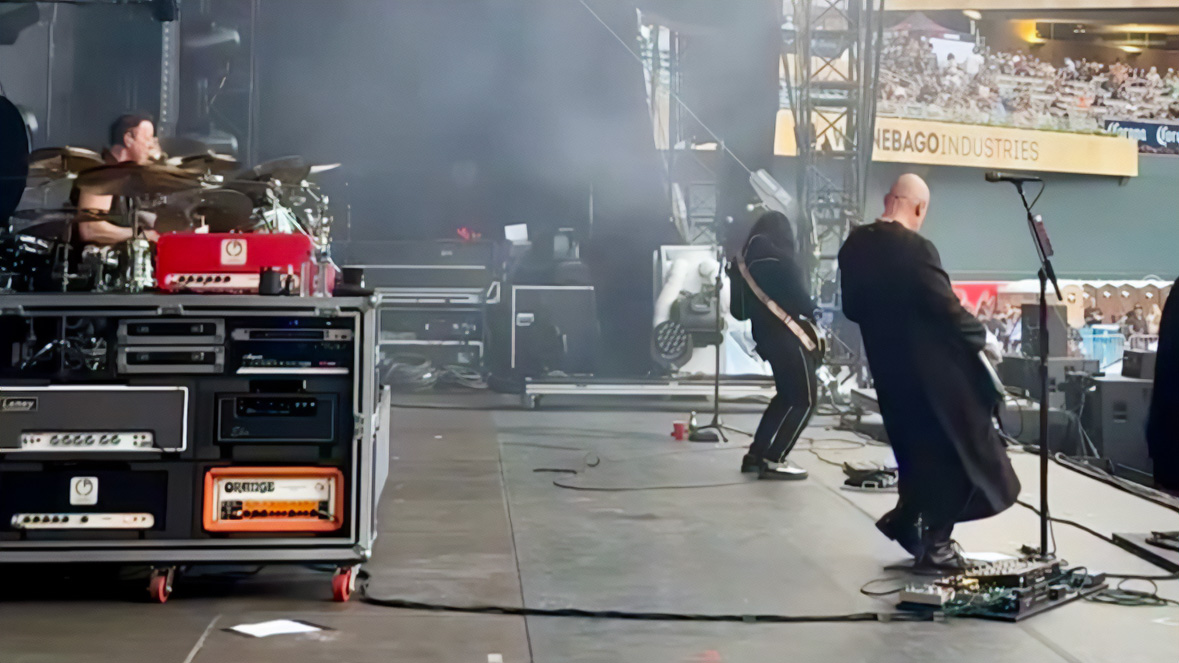
Carstens offered to build Corgan a custom amp. But it quickly became clear that this would not be a straightforward commission.
“He told me what he didn’t want. He didn’t want a Marshall. Billy does not like to repeat himself. He wasn’t super-descriptive, but he gave me a couple points. I said, ‘OK, give me a few months and I’ll come at you with something beautiful.’ And he said, ‘I’ve never played a high-gain amp that I like.’”
No pressure. But Carstens and Corgan align in their quest for high standards. And as someone who had obsessed over the Pumpkins leader’s guitar tone for 30 years, he knew he was the man for the job.
Months later, his creation was ready. He brought it to Corgan in his Chicago studio.
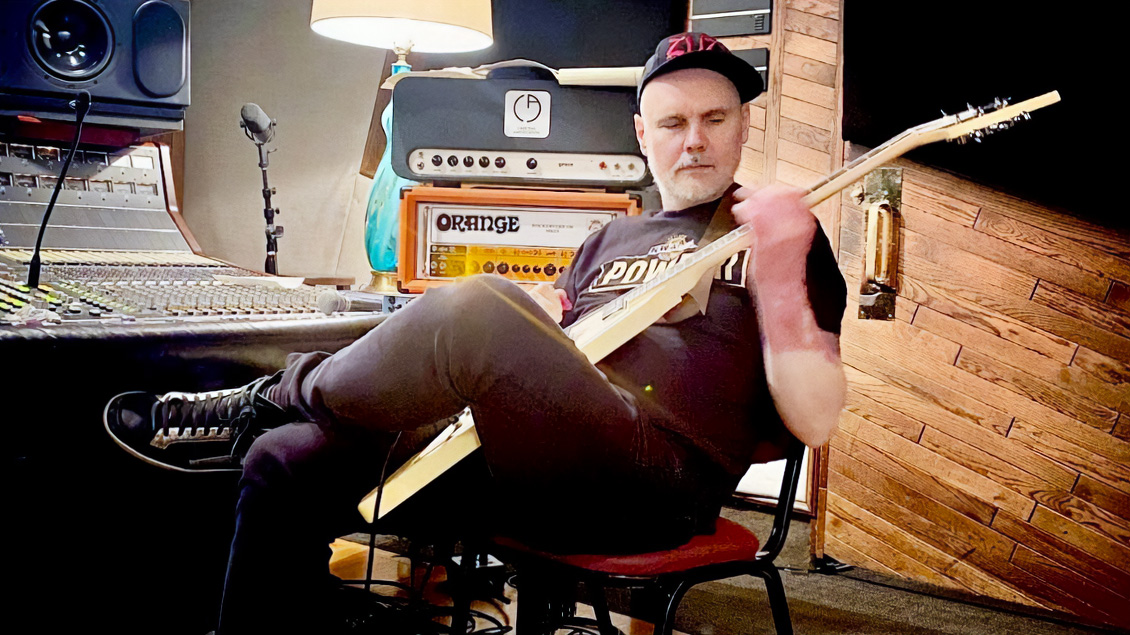
“We go into this room and he’s like, ‘Yeah, put it on that cabinet.’ It’s a silver Marshall 4×12 from the Mellon Collie tour. He fires it up, starts playing through it. Jimmy’s there and we’re all just listening and tweaking knobs.
“At one point I was moving one of the controls and he goes, ‘Stop right there.’ He turns and looks at Jimmy, gets this big smile on his face and starts playing Shiva. And he’s like, ‘Can we keep it? I love it.’”
Corgan was so impressed with what he has since dubbed Carstens’ “savant-level understanding of gain and power” that he offered to make the Grace his first-ever signature amp. Yet the 100-watt head’s name was very much Carstens’ vision.
“Most things that have gain get so compressed. They get so narrow. This needed to be the opposite. It needed to be wide and harmonic and open and big. All my amps are that – there’s an air around the notes. There’s space. And there’s a transparency. It allows you to shine.
“I didn’t want to name it ‘Hellfire’. I didn’t want to name it ‘The Dragonslayer’. I named it Grace. There’s nuance to it. It changes your relationship with this piece of gear.”

Carstens invites an intimate relationship between the player and the amp. His creations are resolutely single-channel. He wants players to control the amp with their fingers, with their guitars, rather than rely on channel switching.
“The best amps are the ones that [players] have an interaction with. It’s not just ‘click channel one, click channel two, click channel three.’ There’s no inspiration with that for me. If I made two-channel amps, I would sell a lot more amps. But it’s not about that.”
Instead, Carstens seeks to crystallize the ideal versions of each amp in his head with each subsequent release. The Empire is a modern metal amp designed for extended-range guitars and developed with input from Misha Mansoor. The Cathedral was designed to be “the ultimate clean, chimey, glassy, beautiful clean amplifier”.
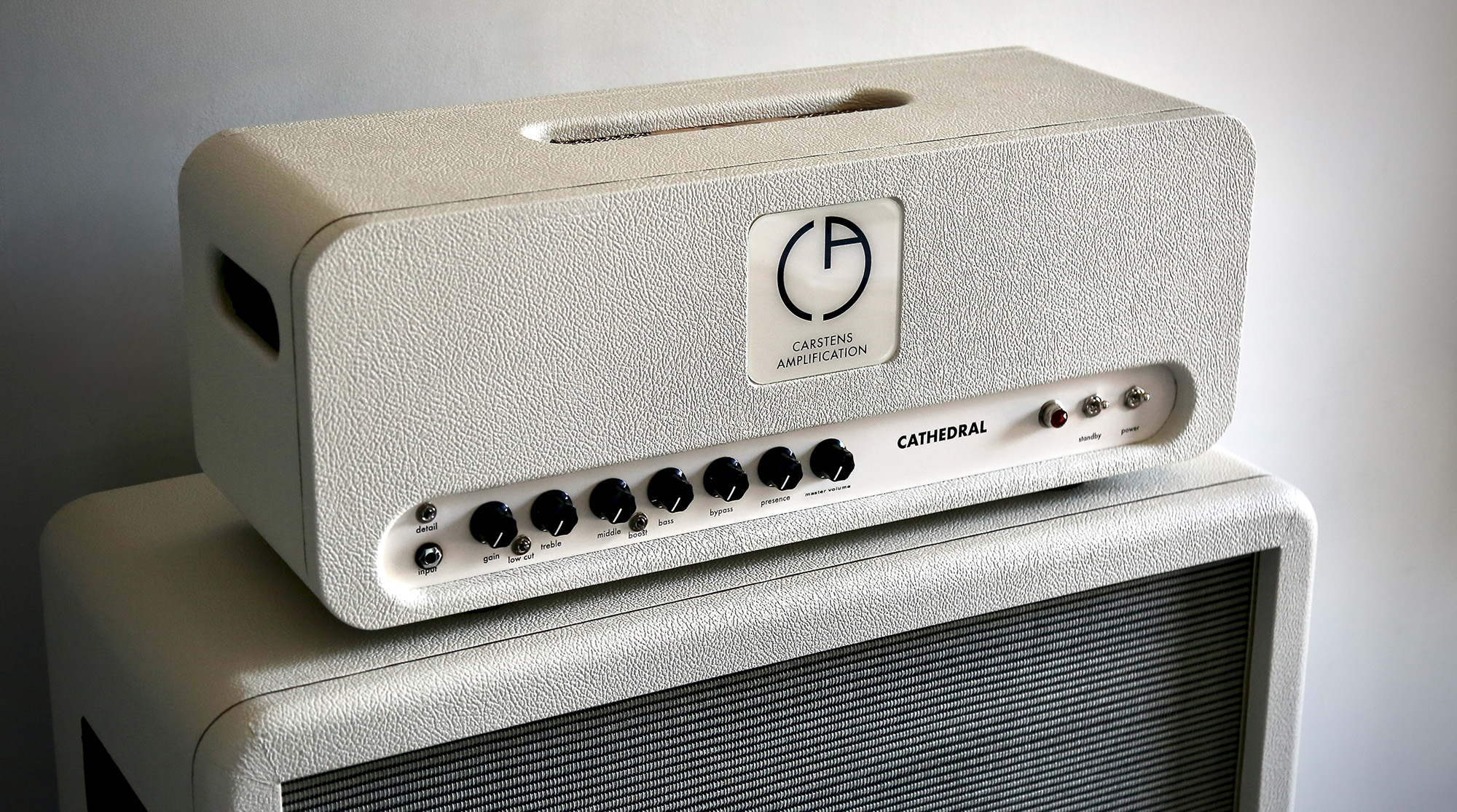
His creations have attracted some major-league fans outside of the Pumpkins universe. Tool and Slipknot rave about them, after super-producer Joe Barresi picked one up. Will Putney always has a Grace ready to go in his studio. Greta Van Fleet are messing around with them. And it’s not all rock and metal bands, either.
“My phone rang and it was John Fogerty,” Carstens says. “He’s like, ‘I just played one of your amps at the Vault at Chicago Music Exchange. It wasn’t for sale and I’d like to buy one. I’m in the cab right now going to my hotel, but I’ll send you my PayPal. I really, really like it.’”
The Grace, meanwhile, is currently reaching a new group of players as part of Laney’s Supergrace – a pedal amp that bottles Corgan’s live rig: one side Grace, one side Laney Supergroup. But Carstens had his reservations when the iconic British amp firm first proposed the idea.
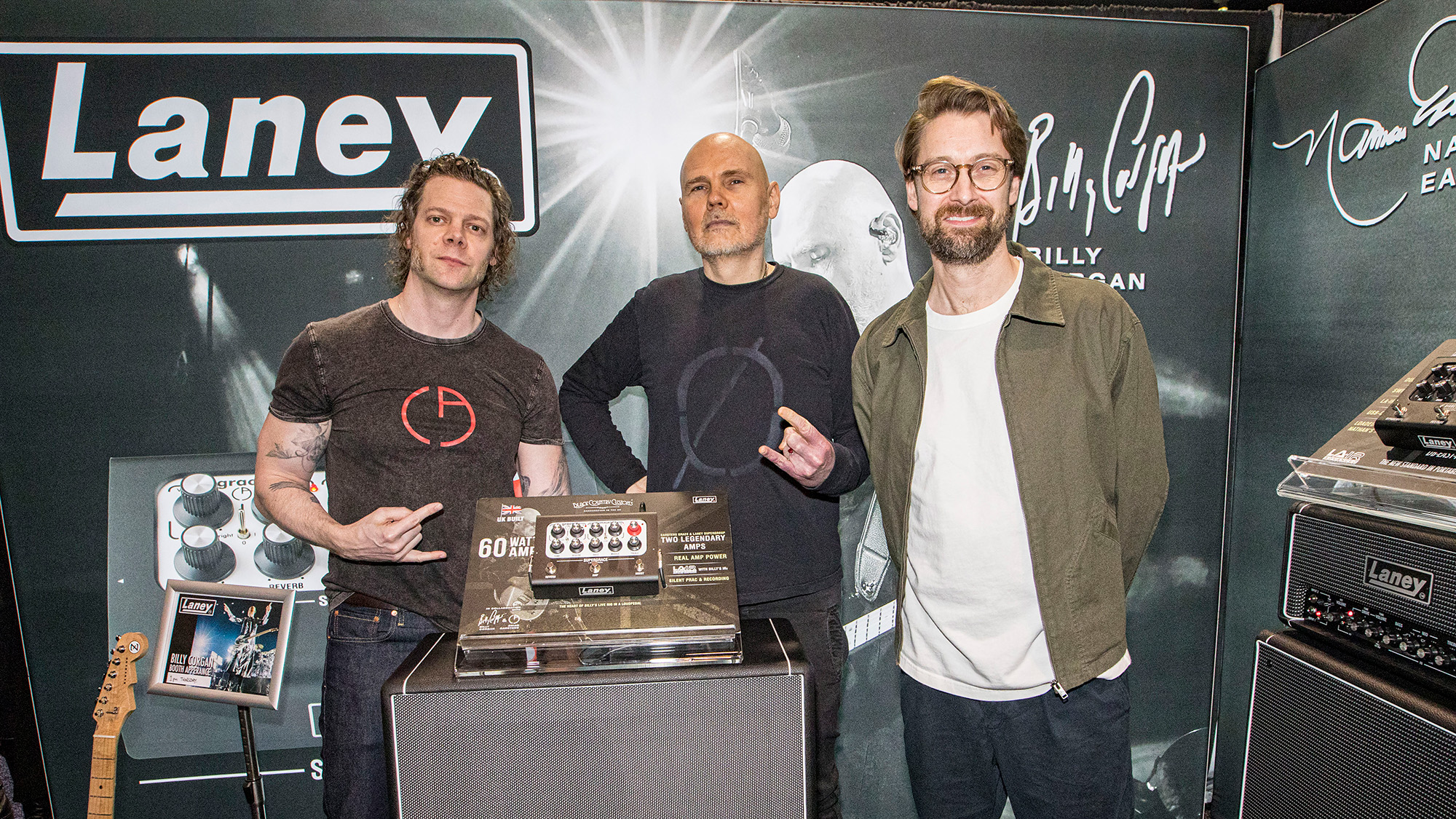
“I have this thing with pedals. Playing that for an extended period of time, you get ear fatigue – there’s nothing like the tube-rich harmonic character that tubes have. But they did a great, great job with this thing.
“It doesn’t replace the real, genuine article, but it allows people to access it at a price point where they can get the idea of what it is and where it comes from.”
Any future affordable collaborations weigh heavy on the Chicago builder’s mind – that tightrope between quality and accessibility. He equates the difference between amps and pedals to vinyl and streaming.
And no wonder: Carstens doesn’t want to make anything he’s not 100 percent happy with. Heck, 99 percent isn’t good enough. And maybe that’s why it took his uncompromising determination to finally unite Billy Corgan with an amp he not only likes but actively endorses.
“I don’t want to create an amp to be in the middle somewhere. It’s easy to get 90 percent there. To get that extra, it’s hard. What separates the good from great? That’s what it’s all about. Can I crack the code? If I can, hopefully I can make an amp for it.”