![The Definitive Synth Face-Off 2026: Classic Hardware Versus Their Software Alternatives – But Can You Actually Tell Them Apart?]](https://backingtracksfullcollection.com/wp-content/uploads/2026/05/The-Definitive-Synth-Face-Off-2026-Classic-Hardware-Versus-Their-Software-758x426.png "The Definitive Synth Face-Off 2026: Classic Hardware Versus Their Software Alternatives – But Can You Actually Tell Them Apart?] 1")
SYNTH WEEK 2026: Once upon a time, the only discussion that mattered to us music tech types, was whether Macs were better than PCs. While that conversation still crops up from time-to-time, it’s largely become irrelevant, with the pace of technology clearly leaving not much between the two. Today, how you make your music is purely a matter of taste.
If you are making music within a DAW, you will doubtless have many plugin synths to call upon, whether they form part of your DAW package, purchased as third-party propositions, or are sampled/modelled to sound like hardware. These days, as with the inner workings of the computers that run them, the quality bar is set very high.
So if software synths today are so good, why is original vintage hardware so incredibly expensive?
Article continues below
Well, there are many factors at play here, and a large part of it may have to do with your own age.
Much like classic guitars, the original synth-head generation have the fondest affection for the classics. Operating the OG hardware with their own hands is, to some people, the only way to synthesize.
From Minimoogs and ARPs, to Junos and Jupiters, the purists will tell you that there is nothing like the real thing.
But is there something in their claims that the vintage originals are unsurpassed, or is their aging circuitry and the need for constant servicing actually a drawback that gives software the edge?
With a DAW, loading a soft-synth onto a track is often an instantaneous route to creativity. Controlling vintage hardware, however, is nowhere near as easy, and while many levels of control are possible, it’s often not quite as fluid as firing up a plugin within a project.
Hence, software aficionados quite understandably prefer the faff-free approach.
Yet the hardware allure remains.
There have also been many examples of companies trying to blend software with hardware control, and in some instances, it has worked fairly successfully.
Roland’s System-8 is a great example of a flexible controller, with sounds emanating from software, either on-board or as plugins within a DAW.
Roland even produced Jupiter and Juno look-alike products too, which were both amazing in their own right, but were met by cries from the aforementioned purists that they ‘Just wanted the original analogs!’
But beyond all the advertising hyperbole, and the passion-led angles of both sides of the hardware/software debate, the question remains; On a sonic level – does software really outperform hardware in 2026?
To answer it, we are going to put it to a blind test, with three of our choice hardware synthesizers, and one or more of their software counterparts.
To illustrate our test, we have created audio examples from some of our own original hardware, and recreated exactly the same sounds in software, placing them side by side. Across multiple rounds.
Guessing whether hardware or software examples come first, second (or third) is part of the fun here, so keep a log of your assumptions as you go, and compare them with our answers at the end.
So, all you need to do is listen, and – well, make your mind up.
In each case, we have attempted to keep our sounds relatively simplistic, so that you can draw your own conclusions from the raw signals, recorded at 48k/24bit.
We haven’t used any additional or onboard EQ, compression or effects, so the signals are all untreated. This allows us to take an educated listen and decide which we prefer.
1. Sequential Circuits Pro-One v u-he Repro-1
Our first synth in the shootout is the Sequential Circuits Pro-One, produced in the early 80s as a more affordable alternative to some of the expensive US designs.
Although only monophonic, it provided a two-VCO architecture, and packed the most extraordinary punch by way of its filter and snappy envelopes.
Encased in hard plastic (in order to keep costs down) it looked resplendent with its wooden end-cheeks, and provided an incredible amount of creative character, thanks in part to the modulation matrix.
Although it would be regarded as relatively basic by today’s standards, the modulation matrix provided some incredible layers of sonic possibility, which made it quite unique.
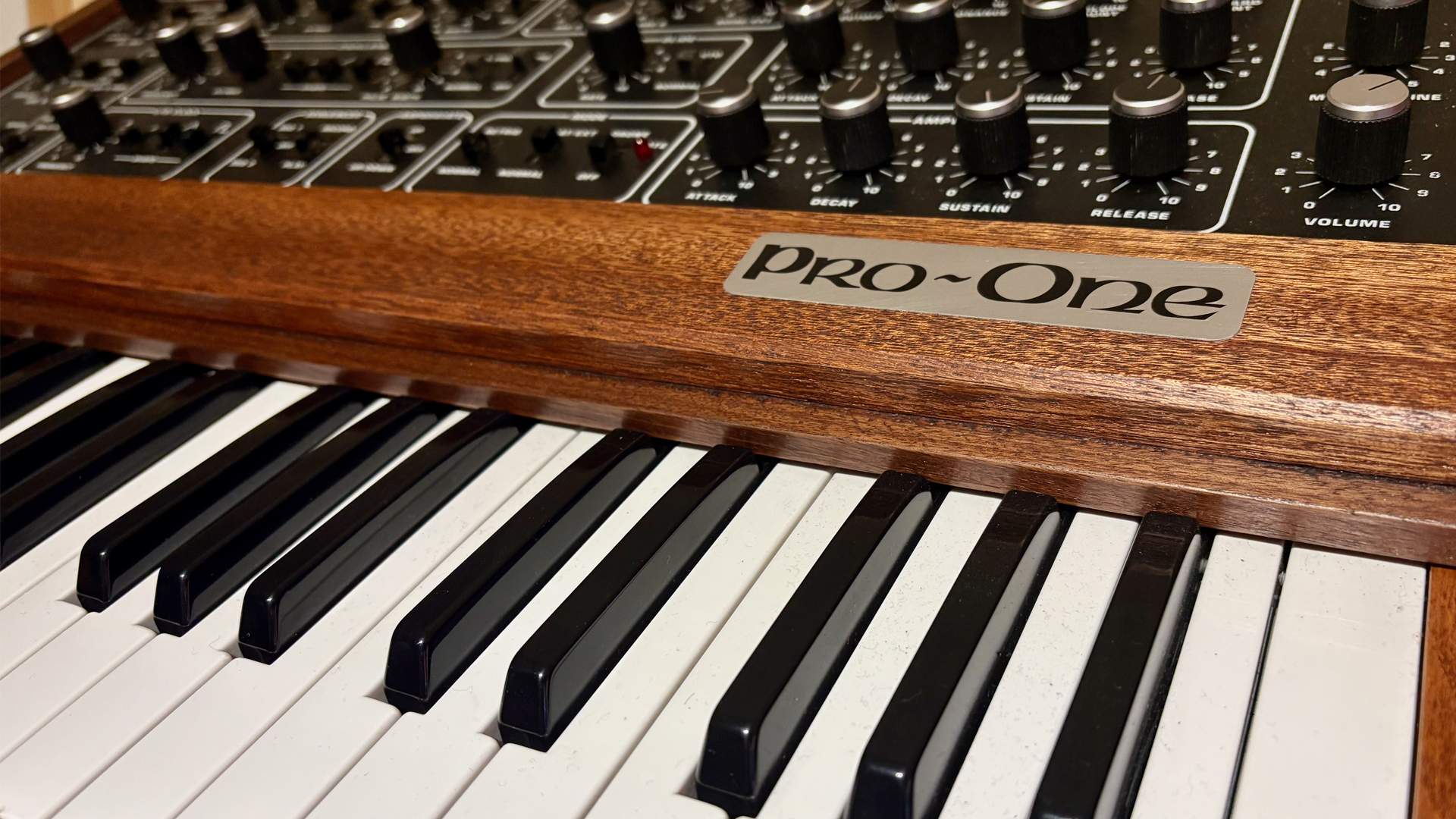
Some people unfairly described the Pro-1 as an inferior single voice Prophet-5, but being a highly capable monosynth, it is easily one of the best-sounding and most fun to use.
The only downside to it really was its horrifically awful keyboard, which could become fairly unreliable with age.
To test out its sonic chops, we put an original Pro-One (albeit our snazzily refurbed one with new woodwork and updated keyboard) through its paces, and placed it up against the u-he Repro-1. Part of a double-sided package which also includes the Repro-5 (which emulates the Prophet-5), Repro-1 is a fine software tribute.
Vince Clarke often described the Pro-One as his favourite synth of all time – high praise from a man who has just about every analogue synth in existence!
Much of Clarke’s early Yazoo output demonstrated the flexibility of the Pro-One, with the classic Don’t Go famously being produced almost entirely with the Pro-One as a sound source.
Audio Test
ROUND 1: Single VCO (Saw) – Open filter synth riff
ROUND 2: Dual VCO (Saw) – Classic oscillator sync riff
ROUND 3: Dual VCO (Saw/pulse) – Punch octave bass riff
ROUND 4: Single VCO (Saw) – Resonant filter ‘wah’ lead riff
2. Oberheim Two Voice Pro Synthesizer v GForce Software Oberheim TVS Pro
Oberheim’s reputation and inventory of extraordinary synthesizers includes some of the most characterful and highly prized machines available on the secondhand market.
The unique Oberheim SEM (Synthesizer Expander Module) was available as a standalone, cased unit which offered two VCOs in a monophonic voice, coupled with one of the most legendary filters in existence.
The 12dB 2-pole filter design offered a variable state, shifting from low-pass to band and high-pass states through the continuous rotation of a pot.
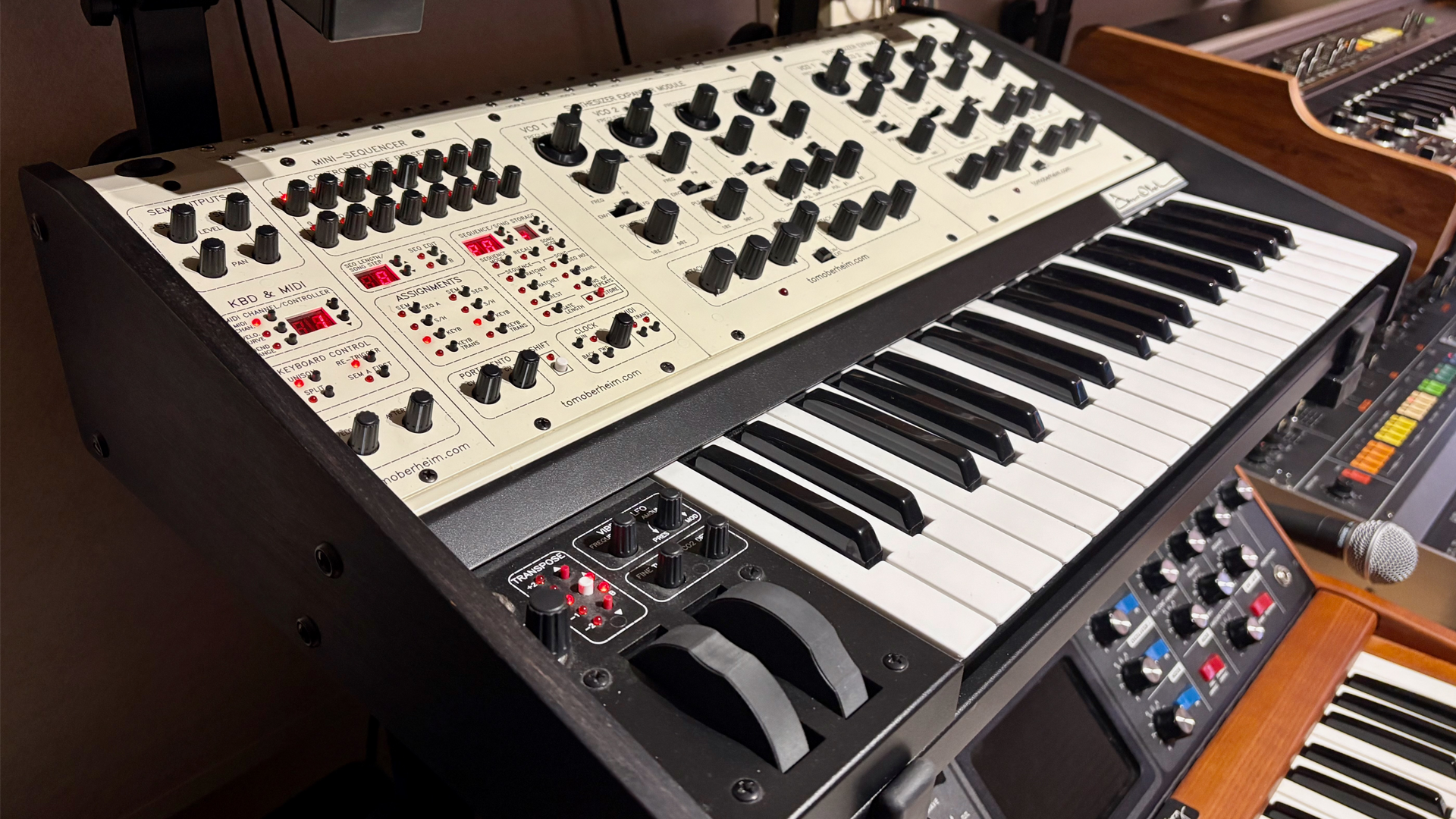
Oberheim placed these unique SEMs in a number of configurations, which include included the enormous 4 and 8-voice models, both of which could be difficult to control, given the complexity of individual voices.
The more manageable concept of the Two Voice (TVS) provided two individual SEMs, along with a fantastic on-board sequencer.
This unique hardware instrument was reissued by Oberheim in 2016, and we luckily have one of these reissues in our studio, which we put up against the (fully endorsed by Tom Oberheim) GForce Oberheim TVS Pro.
The TVS Pro cements GForce’s extraordinary reputation for exacting models of the classics, while adding additional elements, such as macros and comprehensive modulation routing.
Audio Test
ROUND 1: Two VCOs in octaves (single SEM) – Low-pass filter sweep, with resonance.
ROUND 2: Two VCOs – Pulse/modulated pulse (single SEM) – Classic OB Pulse lead
ROUND 3: Four VCOs (Both SEMS) – Bright and punchy pitched major chord
ROUND 4: Four VCOs (Both SEMS) – Filter swell minor chord
3. Roland Jupiter-8 v Cherry Audio Mercury-8 v Roland Jupiter-8 Software
For our final head-to-head, we have chosen one of the all-time vintage classic polys – the Roland Jupiter-8.
Described as one of the most beautiful synthesizers ever created from an aesthetic point of view, the sound of the Jupiter-8 pretty much defined the 80s and beyond.
Originally released with a retail price of £3999, the JP-8 remains a collector’s piece, with exorbitant price tags extending into the many thousands.
Despite its age, the superb build quality of the originals means that there are still many hardware examples in fine working order.
We have owned our Jupiter-8 since 1985, with our example being the slightly revamped model which was described as the Jupiter-8a.
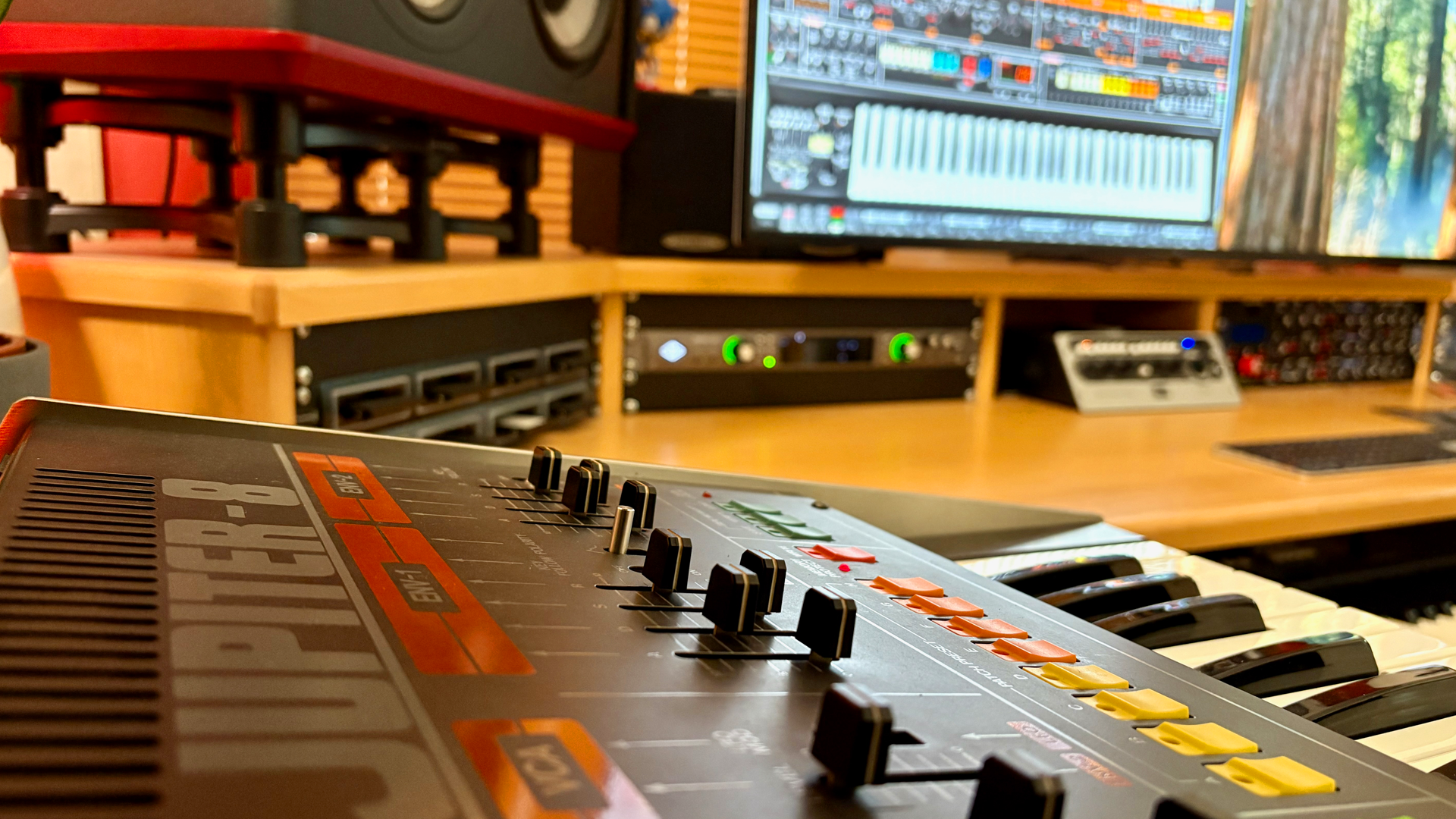
This revision added MIDI, via the Digital Communication Bus (DCB) which allowed connection to other equipment, particularly sequencers.
There was also a slight improvement in the DAC, which shifted from a 12-bit DAC to 14-bit, with the intention of improving stability.
Given the popularity of the instrument, Roland finally relented on building an official software emulation, creating its Roland Cloud-based software, which also resurrected some of its other hardware instruments. We’ll be using Roland’s official emulation in our test, along with another sublime take…
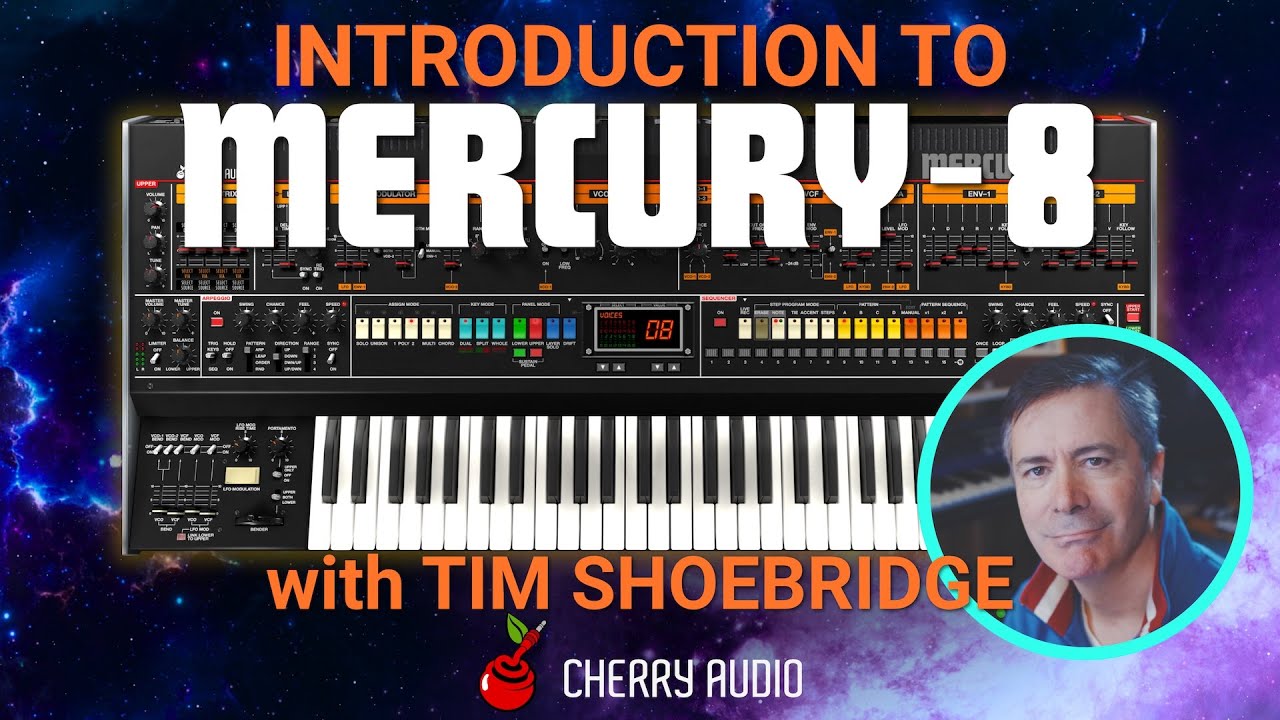
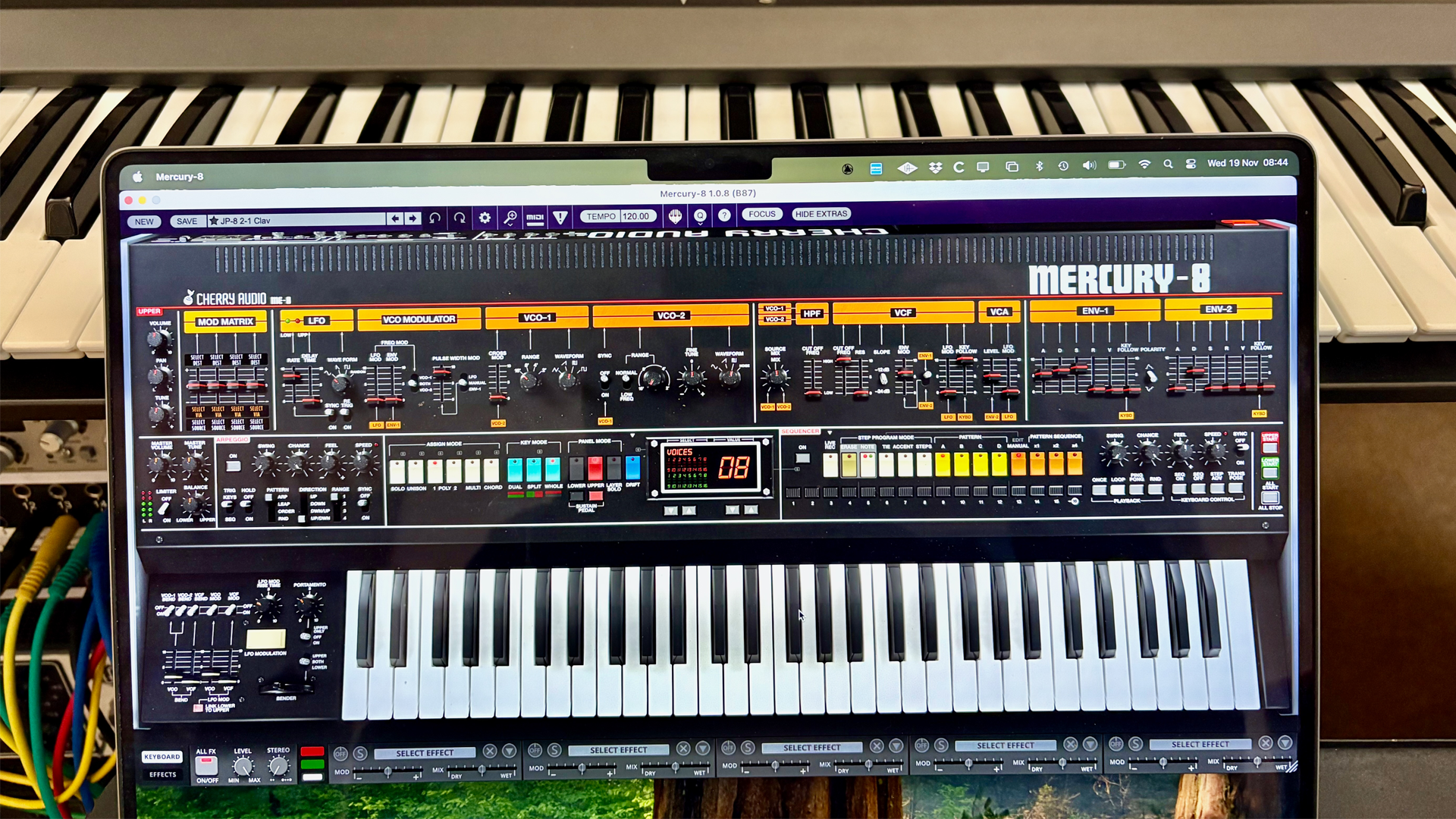
The Jupiter has been modelled by other companies too, most recently Cherry Audio. The company’s exquisite Mercury-8 – which we’re also throwing into our test here – includes a beautifully-designed GUI, all of the original presets, and a number of useful enhancements that make it a tempting proposition at a very affordable price.
Audio Test
ROUND 1: Single VCO (Saw) – Resonant filter sweep
ROUND 2: Dual VCO (Saw) – Filter swell pad
ROUND 3: Dual VCO (Pulse) – PWM brass/pad stabs
The Results
How did you get on with your blind listening test? Were you aware of any noticeable differences?
Well, we hope you’ve been logging which sounds you think are hardware and which are software, because, below, we’re going to breakdown which is which:
Sequential Circuits Pro-One v. u-he Repro-1
In each pair of examples, you heard the Repro-1 first, and the hardware Pro-One second.
Oberheim Two Voice Pro Synthesizer v. GForce Software Oberheim TVS Pro
In each pair of examples, you heard the GForce software TVS first and the Oberheim TVS hardware second.
Roland Jupiter-8 v. Cherry Audio Mercury-8 v. Roland Jupiter-8
In each trio of examples, you heard the Roland Jupiter-8 Software first, the Cherry Audio Mercury-8 software 2nd, and the original Roland Jupiter-8 hardware third.
Any surprises?
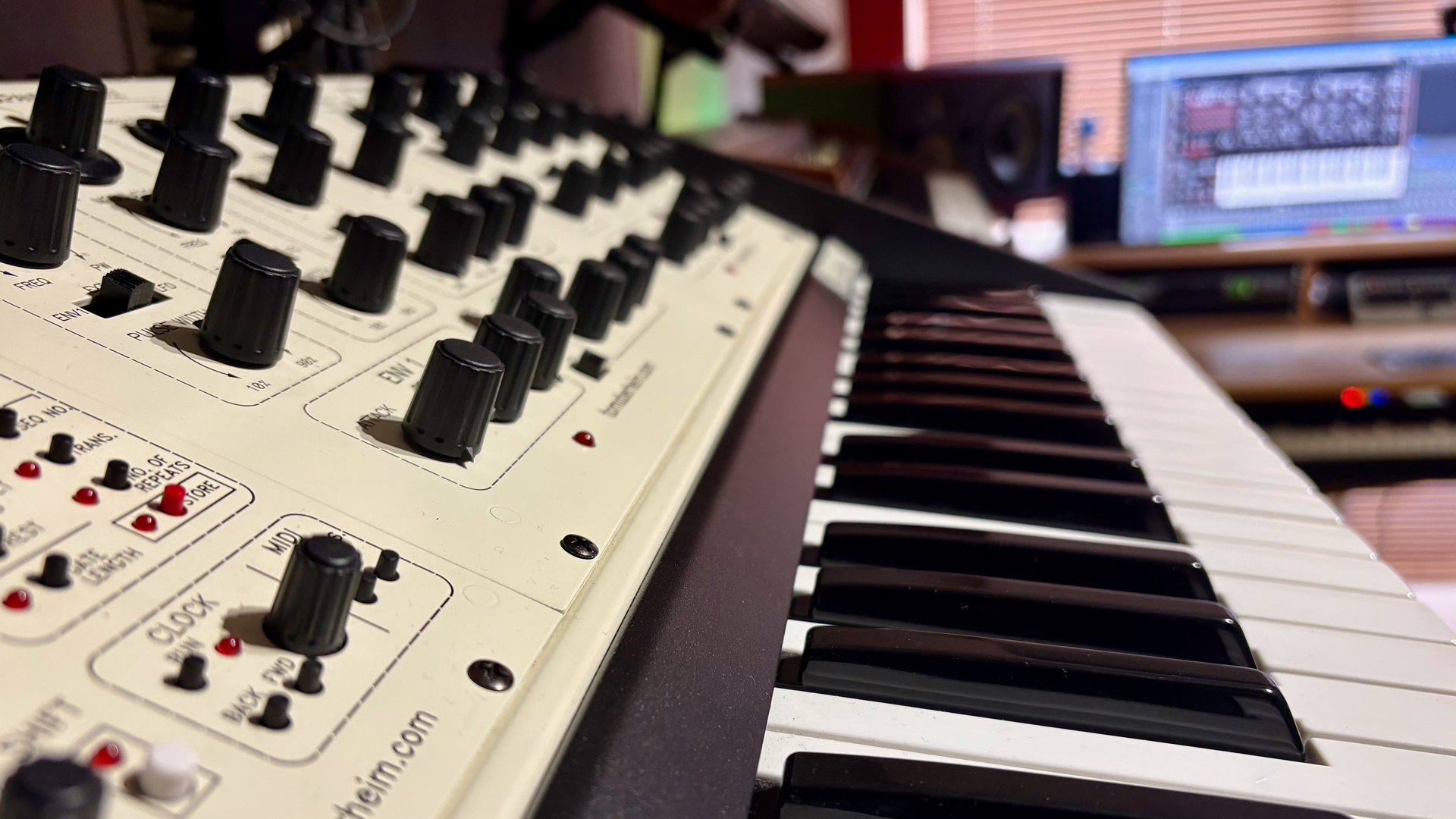
In our view, not only did the software perform exceptionally well in all cases, but there is an incredibly small amount between our listening examples. It’s therefore very difficult for the hardware purists to make the claim that hardware obviously trumps soft on a sonic level.
Which you prefer to use is likely to be dependent upon the way you work, and how you approach your creativity.
There really is nothing quite like the feeling of standing in front of a full-sized synthesizer and conjuring a sound. With a panel of pots and faders stretching out in front of you, tempting you to tinker.
There is an immediacy with hardware that is difficult to replicate in software, particularly as we tend to control parameters with a mouse, one element at a time.
If you have a control surface, or have programmed MIDI controls to mirror the parameters that you use the most, you can certainly get around this problem, and some products do offer a bespoke solution, such as the Roland System-1 or 8.
However, in our tests we found that the software could often be more refined and controllable than those vintage pots or faders – satisfying though they are.
As our friends at u-he told us (in preparation for our testing), “We used to have two or three (hardware) Pro-One units in the office when we created Repro-1, and even between two pieces of hardware, it could take ‘forever’ to create the exact same sound on all instruments.”
Would you really notice these subtle differences – unless you were working with two products side-by-side? Probably not, but we also cannot overstate the usefulness of having full control of our sounds within the DAW, and that’s where software wins the argument, hands down!
Whichever route you take will likely be dictated by what approach inspires you to be most creative.
However, when software can sound as good as hardware, why wouldn’t you adopt a combined approach? If you can afford to, that is!