![Understanding Nashville Tuning: Enhance Your Music's Brightness]](https://backingtracksfullcollection.com/wp-content/uploads/2026/05/Understanding-Nashville-Tuning-Enhance-Your-Musics-Brightness-758x426.png "Understanding Nashville Tuning: Enhance Your Music's Brightness] 1")
Alternate tunings can be a gateway to creative ideas and new textures, but they often require re-orienting yourself with the fretboard. Nashville tuning, however, requires no such effort, as you can replicate anything you play in standard tuning.
There is one caveat: you have to restring the guitar in order to get this tuning. In practice, it’s not hard at all – you start with a 12-string set and use the higher octave sixth, fifth, fourth and third strings in place of your standard gauge strings. The first and second strings remain the same.
Get these strings in place and you’ll be greeted by a phenomenal sound – part 12-string, part high-strung guitar. The real magic comes in the relationship between the high octave strings and the standard gauge first and second strings. Even just strumming simple CAGED chords yields a unique timbre and this sound can add brightness and definition, particularly if a song is missing some high end sparkle and vitality.
A secret weapon of the country world (hence the Nashville monicker), you’ve heard this tuning many times, even if it’s not immediately apparent – everyone from Keith Richards (Wild Horses) and David Gilmour (Comfortably Numb) to Taylor Swift (Love Story features it in the band mix) has employed it.
There are various reasons for using Nashville tuning, as you’ll discover in this lesson. Sometimes it’s a subtle layering tool, sitting back in a track or doubling a regular tuned guitar, whilst at other times it’s more upfront, adding brightness and energy to a track.
One of the great things about Nashville tuning is that it makes any guitar sound great. You don’t need an expensive instrument – a cheap, smaller-bodied guitar will come alive when strung in Nashville tuning.
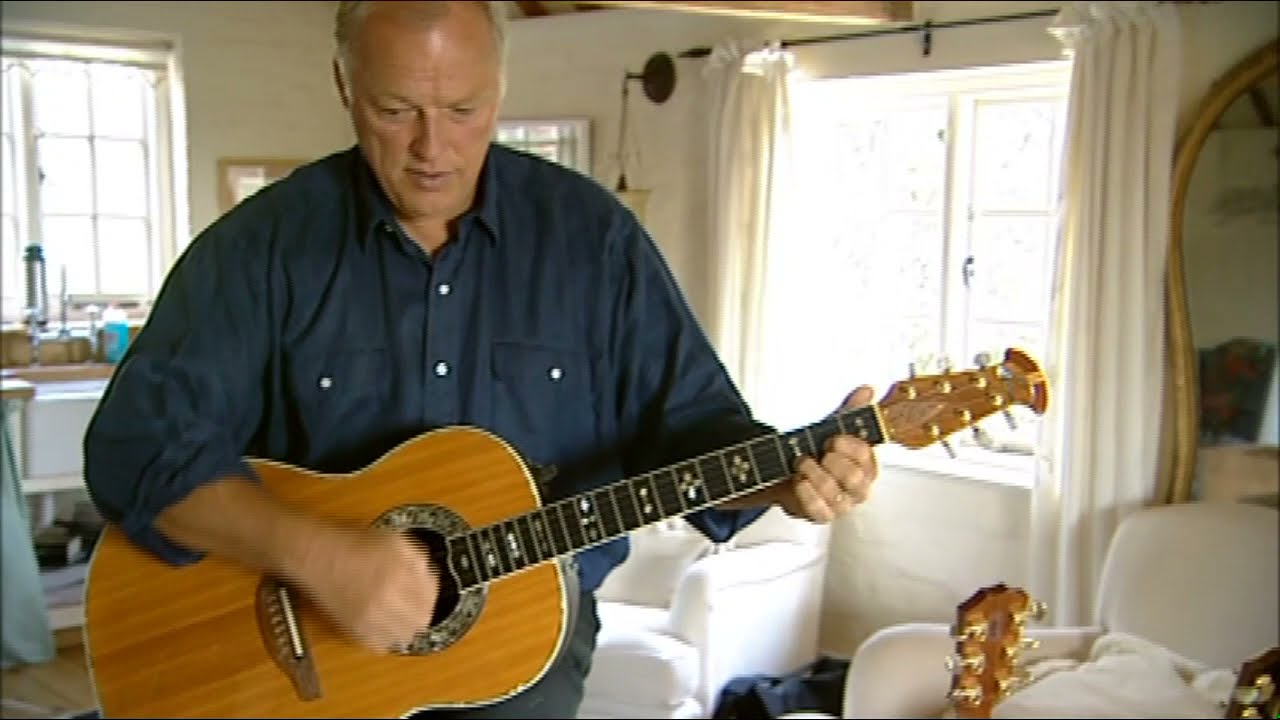
Check out David Gilmour‘s Nashville-tuned guitar below and then delve into the following examples to see how it can inspire your own music-making.
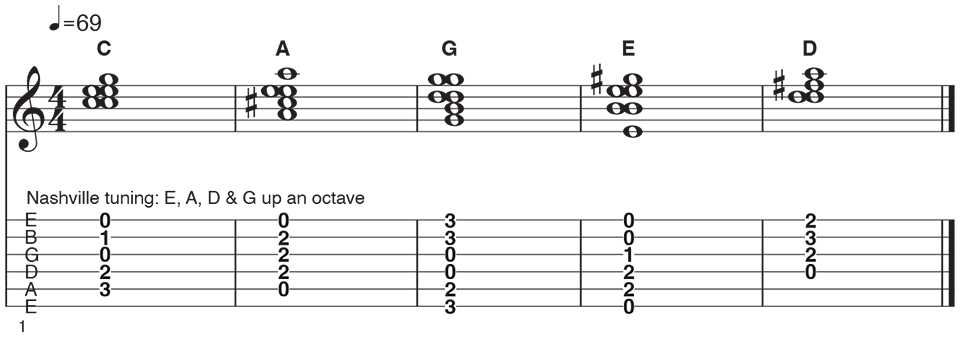
Example 1: Simple chords made chimey, Nashville style
The open position is the obvious starting point for any new tuning and you’ll immediately hear how simple CAGED shape chords are given new life with the Nashville sheen and jangle. Indeed, many studio players are just overlaying chords like these onto a rhythm track when using Nashville tuning.
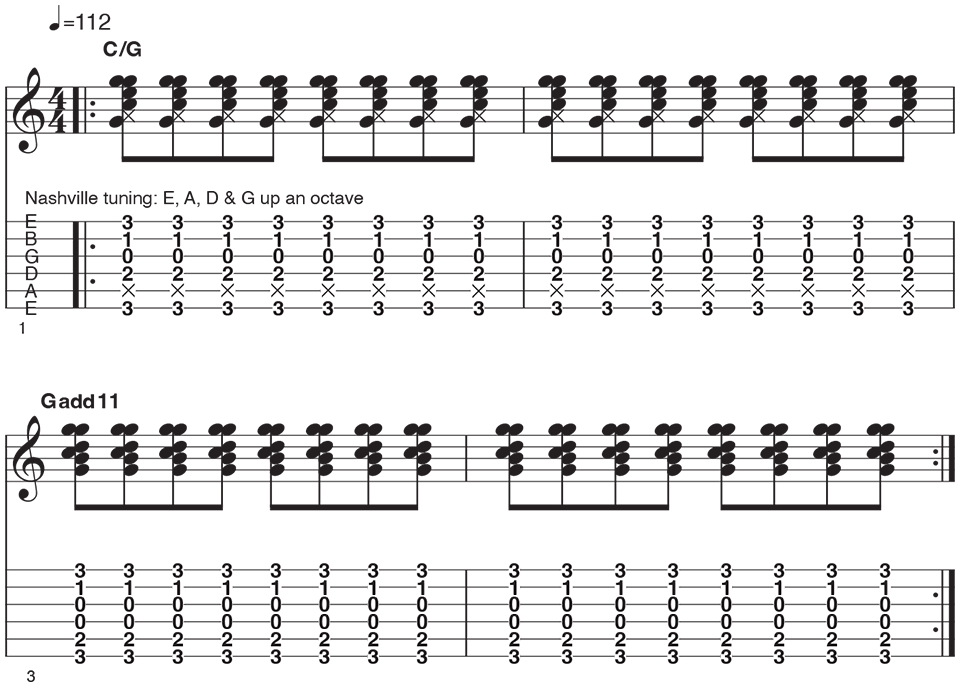
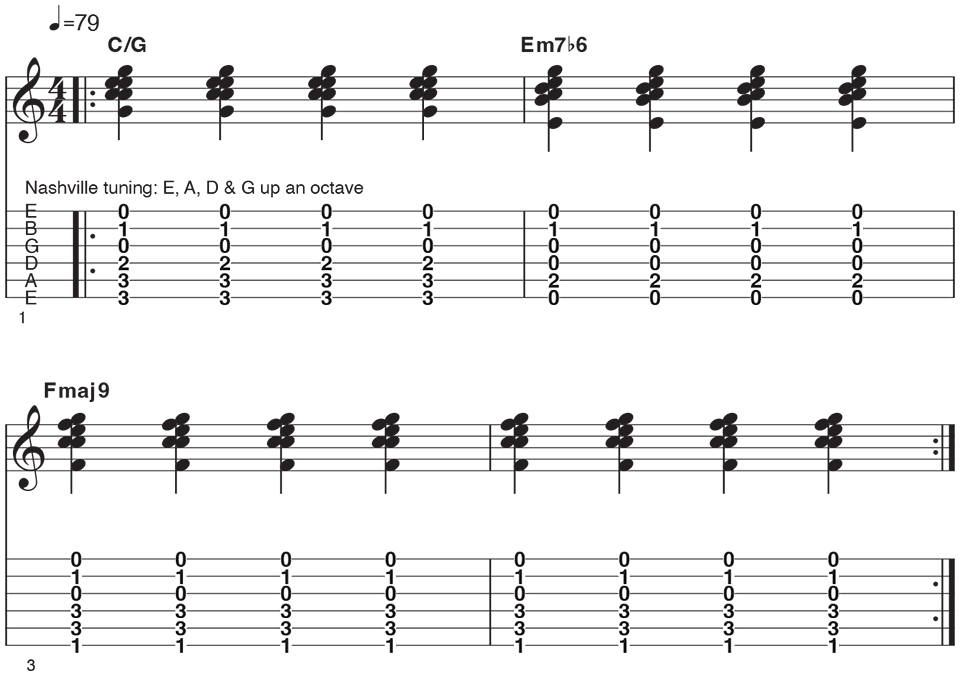
Example 2: Nashville strumming
This simple strummed two chord pattern demonstrates how useful Nashville tuning can be when creating simple rhythm parts. Give the chords some added color with added 9ths or 11ths and you’ll basically hear the sound of modern country pop.
Use common tones (notes shared between the chords) for added glue. The first audio example is at 75bpm (beats per minute), the second at 112bpm.
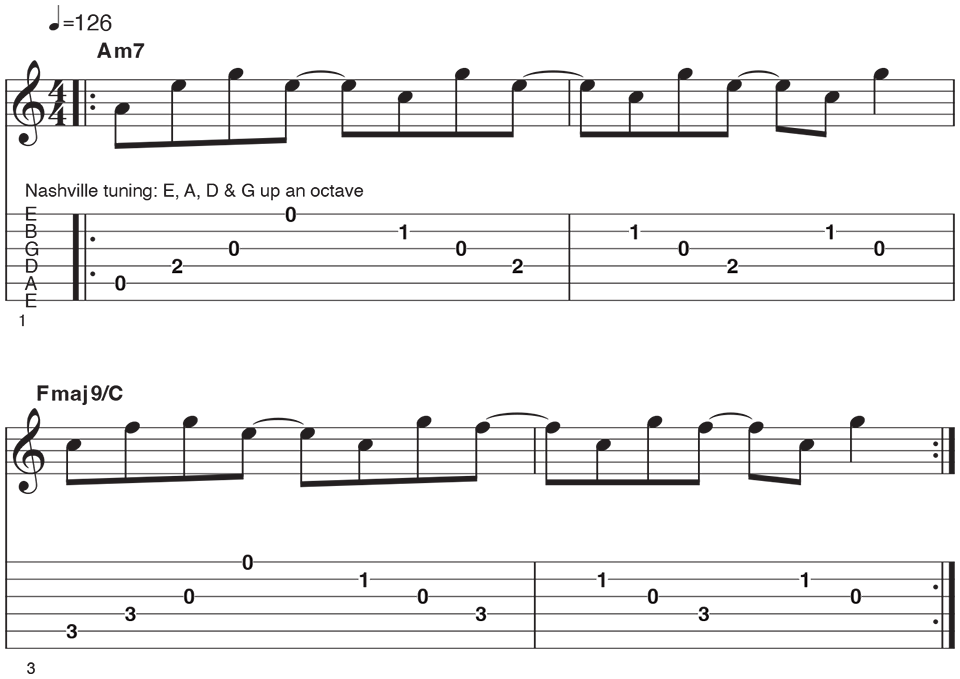
Example 3: Nashville picking
Picked parts sound fantastic in Nashville tuning and can be useful when you want to bring the Nashville part to the fore. What’s more you can double these parts on a standard tuned guitar to get a faux 12-string effect. Indeed, doing this can even be easier than playing an actual 12-string guitar!
Example 4: Nashville doubling
Doubling simple strummed open chords is another great way to use Nashville tuning. On its own an acoustic guitar could sound overly full or even muddy when playing chords like these but introduce a Nashville guitar and pan both instruments and the sound will both thicken and brighten up.
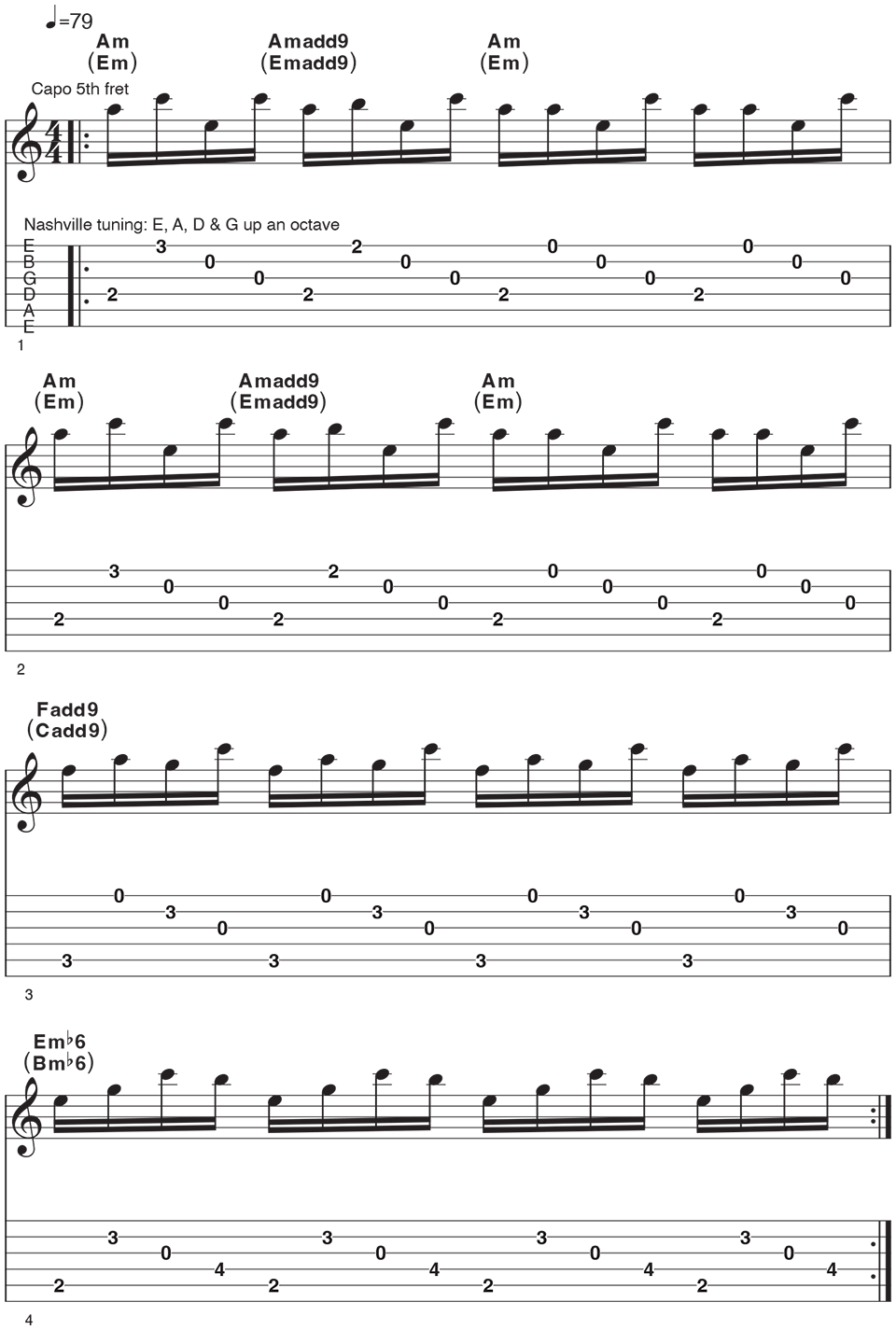
Example 5: Nashville to the foreground
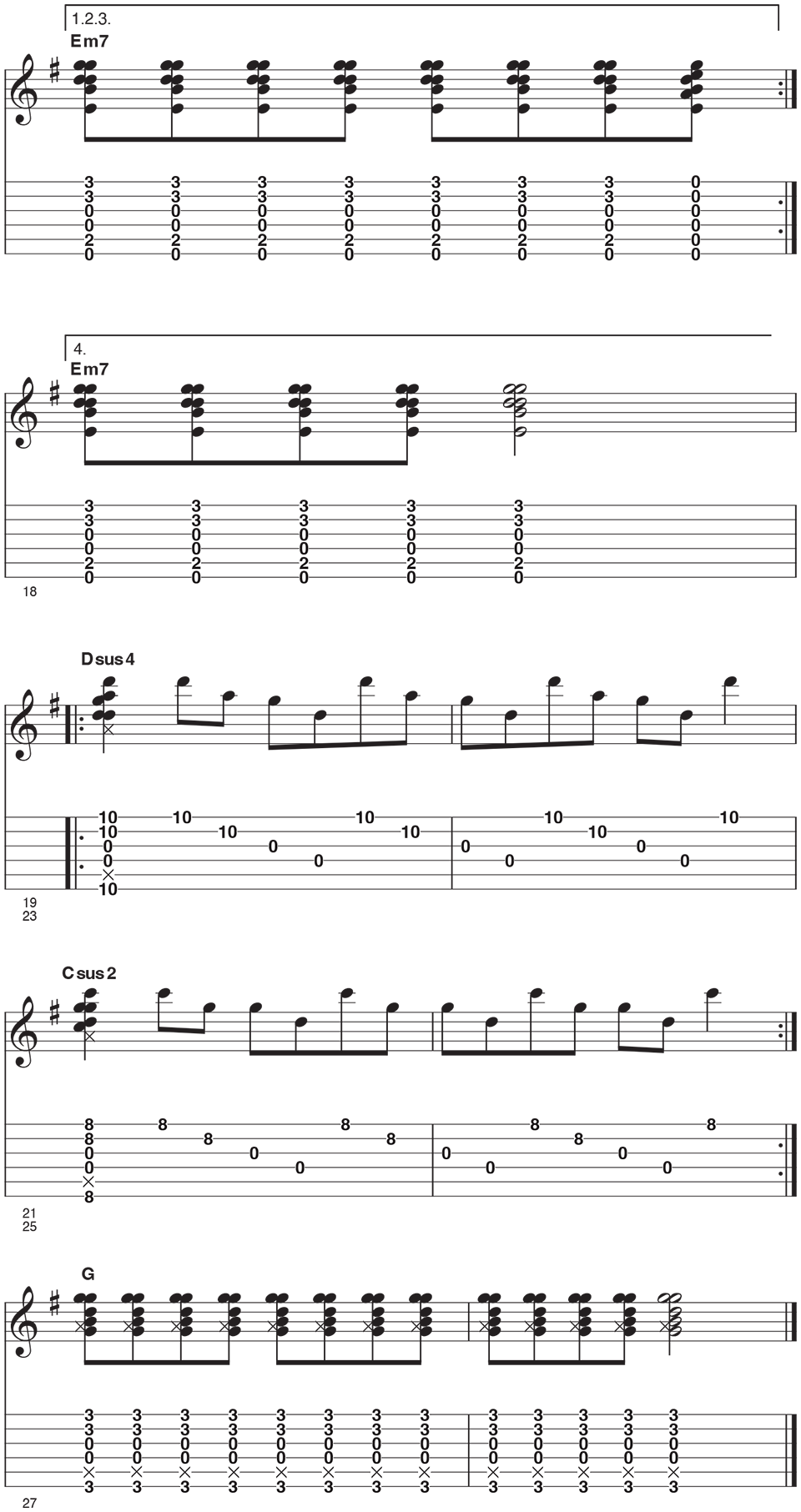
You can create more complex parts in Nashville tuning, and this Pat Metheny-inspired example shows how evocative the tuning can be when played on its own. Adding a capo introduces an even brighter, richer tonality. This could also be used in a track for more dramatic effect when you want the part to leap out.
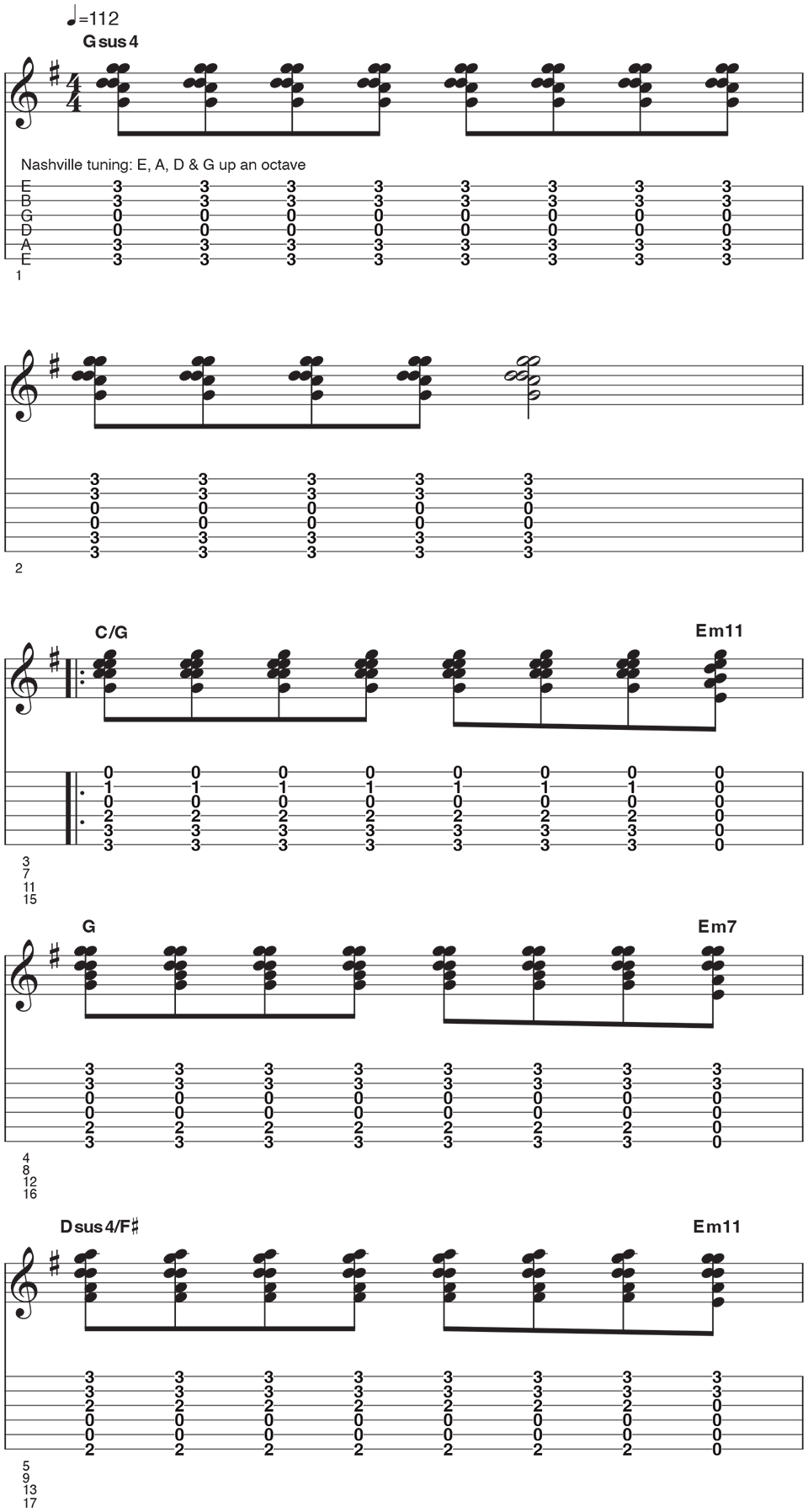
Example 6: Exploring all the benefits of Nashville tuning
This puts the previous examples into practice on a modern country pop-inspired track. Before playing this, have a listen to the full track and the backing track with the Nashville guitar removed so you can really appreciate what the high-strung guitar is bringing to the track.
As you’ll hear, it can work as both a blending tool with the other instruments or as a more prominent voice when arpeggiating higher up the neck. Listen to the full track first, then play along with the backing track using your Nashville tuned guitar. Enjoy!
Players who use Nashville tuning
Pat Metheny – Sueño Con Mexico
This is a great track for hearing Nashville tuning up front and center instead of as a layering tool. Metheny’s rich, picked arpeggios immediately get to the heart of the magic of this tuning. This tuning excels with rapid picked parts as there’s no low-end mud build up to worry about.
Taylor Swift – Love Story
Swift’s modern pop classic showcases Nashville tuning in its more common format as a layering tool. In this track, it’s more subtle, adding a top-end sheen with simple chords but it’s the kind of thing you’ll miss if it’s removed. You’ll hear a similar effect on Lady A’s Bartender…and pretty much most modern country pop!
The Rolling Stones – Wild Horses
The combination of a 12-string and a Nashville-tuned acoustic give this track its super-rich sound. Keith Richards is a big fan of Nashville tuning though it’s possible that Mick Taylor was playing the Nashville guitar on this track. Listen to this one and the guitars are the very definition of ‘sheen’.