Unlocking the Mysteries of Guitar Modes: A Guide for Progressive Musicians
As a guitarist, you know that music is more than just notes on a page; it’s an emotional journey, an expression of who you are. Whether you’re diving deep into the heart of jazz-fusion, exploring progressive rock, or simply jamming in your living room, understanding guitar modes can be the key to elevating your improvisation and creativity. So, grab your guitar, and let’s unlock these musical mysteries together!
What Are Guitar Modes?
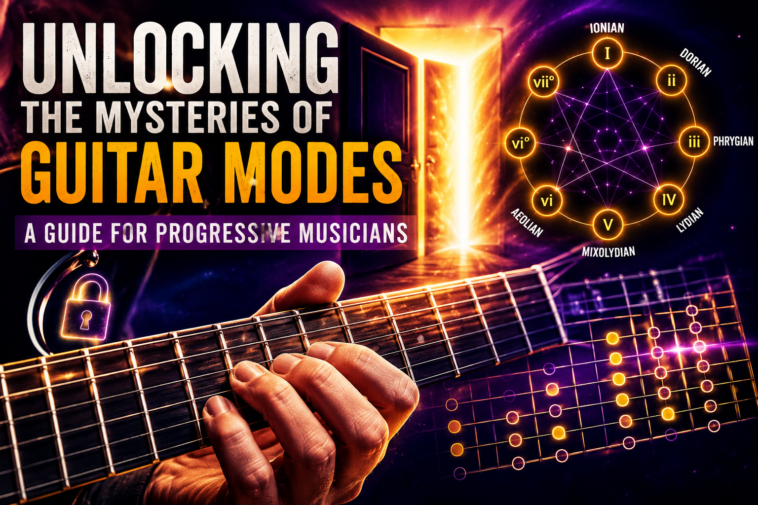
In essence, guitar modes are variations of scales that provide different emotional and tonal flavors. They are derived from the seven notes of the major scale, and you can think of them as different ‘colors’ that you can mix into your musical palette. Each mode has a unique character, making it suitable for diverse musical styles, from fusion to rock to jazz.
Understanding the Seven Modes
Here’s a quick overview of the seven modes:
- Ionian (Major Scale): Bright, happy, and versatile. Great for creating catchy melodies.
- Dorian: A minor mode with a jazzy twist. It helps evoke a sense of introspection and groove.
- Phrygian: Dark and exotic, perfect for creating tension and drama.
- Lydian: Dreamy and ethereal, ideal for adding a touch of surrealism to your solos.
- Mixolydian: Bluesy and funky, a great choice for rock and fusion.
- Aeolian (Natural Minor): The classic ‘minor’ sound; it’s expressive and often melancholic.
- Locrian: Dissonant and unstable; use it sparingly for tension.
Each mode offers a unique emotional landscape. Let’s dive deeper into how you can combine these modes with your guitar techniques.
Improvisation Tips: Harnessing the Modes
Improvisation is an art that thrives on spontaneity and emotion. Here’s how you can start incorporating modes into your improvisational toolbox:
1. Start with the Dorian Mode
The Dorian mode is a fantastic starting point for soloing, especially in fusion contexts. Its minor quality allows for rich emotional expression. Let’s say you’re in a D minor groove. Focus on the root (D), minor third (F), and major sixth (B).
Practical Exercise
- Jam with a Dorian Backing Track: Find a Dorian backing track (you can explore options online) and practice improvising, emphasizing the major sixth. It’ll help you paint a more colorful solo texture.
2. Explore Emotional Phrasing with the Lydian Mode
If you’re aiming for that floating, ethereal sound, the Lydian mode is for you. Picture a canvas of airy melodies that can lift the listener’s spirit.
Practical Exercise
- Mix Mode Melodies: While jamming in C Lydian, alternate between quick runs using the major scale and slower, melodic phrases. Experiment with longer-held notes to evoke emotion.
3. Create Tension with Phrygian
The Phrygian mode can add an exotic tension that draws listeners in. Imagine a narrative that builds suspense; the Phrygian will be your ally.
Practical Exercise
- Tension Release: Play a Phrygian scale over a static E minor drone. Work on creating tension with irregular rhythms and sudden bursts of volume.
Scale Suggestions for Fusion Guitarists
Fusion is all about blending styles, and scales play a pivotal role in defining your sound. Here are some recommended scales to weave into your practice.
Whole Tone Scale
The whole-tone scale has a dreamy, floating quality that sparks creativity. Use it sparingly, as its symmetry can make it sound surreal.
Application
- Lay it over a minor chord to explore new textures. Use it to pivot between more traditional phrases for a compelling contrast.
Half-Whole Diminished Scale
This scale is a go-to for solos that need a sprinkle of complexity. It works beautifully over dominant 7th chords.
Application
- When facing a dominant chord progression, let the half-whole diminished scale guide you. The tension it creates will resolve beautifully, leaving the listener hanging before the next resolution.
Guitar Techniques for Unique Soundscapes
To stand out as a guitarist in this modern age, you need to master various techniques that can complement your explorations of modes and scales. Here are some that I find incredibly effective.
Hybrid Picking
This technique allows for a nuanced sound, blending picking with fingerstyle. It’s particularly effective in creating arpeggios that flow smoothly between notes.
Practical Exercise
- Practice hybrid picking while playing through chord progressions. Note how your phrasing becomes more fluid, and experiment with attacking the strings in different styles, allowing new textures to emerge.
Tapping
Tapping can open doors to melodic ideas that you may not achieve with traditional playing. It’s especially effective for fast runs and can be mixed with legato notes for a thrilling combination.
Practical Exercise
- Think of a simple melody and incorporate taps to embellish it. Start slow, focusing on clean execution, then gradually increase your speed.
Modern Guitar Theory: Beyond the Basics
Delving into advanced guitar theory can transform your playing, giving you more tools for improvisation. Here’s a modern perspective on using modes.
Chord-Melody Integration
Emphasizing chord tones while soloing enriches your improvisational approach. Utilize modes to outline your chord tones clearly, making your solos sing over harmonies.
Practical Exercise
- Choose a chord progression and identify the corresponding scale/mode. As you play, ensure that your notes align with the chord tones, creating a cohesive sound.
Modal Interchange
This concept involves borrowing chords from parallel modes to enrich your progressions. If you usually play in A major, try slipping in a Dorian or Phrygian chord.
Practical Exercise
- Experiment with a progression like A – Bm – C#m – Dm (A Dorian) to add some color. Notice how the unexpected chord brings freshness to a familiar progression.
Emotional Soloing Concepts
When we speak of emotional playing, it’s about connecting with your audience at a fundamental level. Let’s explore some concepts that may help you achieve that.
Use of Space
Sometimes, less is more. Give your notes room to breathe, allowing silence to create anticipation and highlight your musical phrases.
Practical Exercise
- Work on playing fewer notes in your solos, focusing instead on letting them resonate. Count the beats between phrases to find the balance necessary for emotional impact.
Building a Narrative
Think of your solo as a story; it should have a beginning, middle, and climax. Use dynamic shifts to guide your listener through different sections.
Practical Exercise
- Outline a simple story in your mind and translate it into your playing. Perhaps start softly, intensifying towards the climax and then gently resolving.
Recording and Tone Tips
The final element in this creative journey is capturing your sound and ideas in a way that resonates with your audience.
Essential Gear Considerations
Invest in a versatile pedalboard that can help shape your sound. A good overdrive pedal can add warmth, while modulation effects can bring out the unique qualities in your modes.
Practical Exercise
- Experiment with different settings on your amp and pedals while focusing on specific modes. Note how each adjustment can change your emotional delivery.
Learning Through Recording
Recording yourself not only helps in identifying areas for improvement but also provides insights into how your playing translates to recording.
Practical Exercise
- Set up a simple recording and play through your improvisations. Listen back critically, focusing on emotional resonance and clarity. Adjust accordingly.
Conclusion: Embrace Your Journey
Unlocking the mysteries of guitar modes is a journey of exploration and creativity. It’s not just about the theoretical understanding but about applying these concepts in real musical situations. Let your improvisation breathe, infuse your solos with emotion, and explore the beautiful fluidity that the guitar offers.
As you continue to grow, remember that the most important element is your passion for music. Explore different modes, play with various techniques, and record your journey. If you’re looking for an avenue to practice improvisation and enhance your skills, consider checking out premium guitar backing tracks at music.backingtracksfullcollection.com/guitar-players. These tracks can provide a rich environment for your creative exploration, helping you craft solos that resonate deeply.
Happy playing, and may your guitar journey be filled with inspiration and emotional expression!