Unlocking the Guitar: A Modern Guide to Improvisation with Modes
If you’re a guitarist looking to step beyond the confines of standard scales and chord progressions, then this guide is for you. Improvisation is often deemed a mystical art, but with a bit of knowledge—especially regarding modes—you can unlock a deeper level of creativity. Grab your guitar, and let’s dive into the world of improvisation through modes!
Understanding Modes: The Musical Palette
Modes can be seen as different flavors derived from the same set of notes, much like how paint colors can be mixed to create varying shades. The beauty of modes lies in their ability to enrich the emotional landscape of your playing.
What Are Modes?
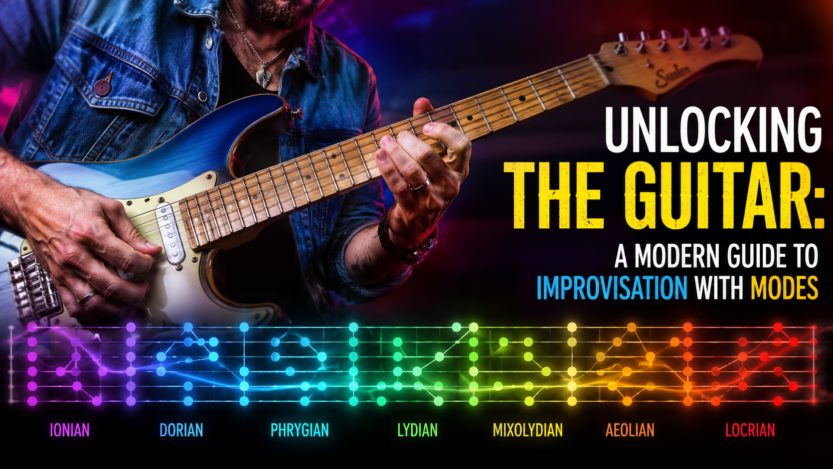
Modes are essentially scales derived from the major scale (Ionian mode) and are adapted to create different emotional contexts. Here are the seven primary modes:
- Ionian: The major scale, bright and happy.
- Dorian: A minor scale with a bluesy twist.
- Phrygian: Dark and exotic, great for adding tension.
- Lydian: Dreamy and otherworldly, built on the perfect fourth.
- Mixolydian: Similar to the major scale but with a flat seventh, offering a strong rock feel.
- Aeolian: The natural minor scale, perfect for melancholic expression.
- Locrian: Dark and unresolved, often more complex but useful for creating tension.
Incorporating Modes into Your Improvisation
To get started with modes, you can experiment by improvising over backing tracks or chord progressions that emphasize these different modes. For instance, try a Dorian riff over a ii-V-I progression in a jazz context, or explore the Lydian sound over major seventh chords to evoke a sense of wonder.
Fusion and Modern Progressive Guitar: Finding New Vibes
Fusion guitar takes elements from jazz, rock, funk, and beyond, embracing complexity and emotional depth. To explore fusion through modes, consider the unique textures they bring. Practice blending modes with unconventional time signatures or polyrhythms, which are staples of modern progressive music.
Tips for Practicing Fusion Techniques
-
Explore Extended Chords: Use seventh, ninth, or even thirteenth chords as your harmonic backdrop. This sets a foundation for using modes in a way that’s lush and colorful.
-
Fusion Arpeggios: Incorporate arpeggios into your solos. For instance, play a Dorian arpeggio over a minor groove to create mesmerizing lick patterns.
-
Rhythmic Complexity: Improvise over a rhythmic figure, straying into odd time signatures. This will challenge your timing and force you to rethink your approach to both melody and harmony.
Emotional Phrasing: Speaking Through Your Guitar
Phrasing is where improvisation becomes truly personal. It’s not just about hitting the right notes; it’s about conveying emotion, nuance, and storytelling.
The Power of Dynamics
Incorporating dynamics into your playing can transform a simple lick into something moving. Practice your scales at various volumes. Gradually crescendo from soft notes to strong ones, and then back again. This ebb and flow is reminiscent of natural speech and will add depth to your solos.
Techniques for Expressive Phrasing
-
Sliding: Use slides to connect notes smoothly and mimic the human voice. This adds a unique character to your phrases.
-
Bends: Bending notes can create a sense of longing or urgency. Experiment with half-step and whole-step bends to see how they affect the emotional weight of your licks.
-
Vibrato: A subtle vibrato can resonate deeply with listeners, enhancing the emotional quality of a note.
Scale Suggestions for Improvisation
When diving into improvisation, having a set of go-to scales can help you navigate different musical scenarios effortlessly. Here’s a quick breakdown of effective scales:
-
Blues Scale: A must-have in any guitarist’s toolkit, the blues scale works across many genres, especially in fusion contexts.
-
Pentatonic Scale: Both major and minor pentatonic scales are versatile and can effortlessly blend with numerous modes.
-
Whole Tone Scale: Ideal for creating a dreamy, ethereal sound. It’s perfect for a Lydian vibe, evoking feelings of openness and exploration.
Tips for Scale Practice
-
Play in Different Positions: Get comfortable with your scales up and down the neck in various positions.
-
Combine Scales: Try merging different scales to expand your improvisational palette.
-
Use Backing Tracks: Play along with various backing tracks that emphasize different genres and harmonies.
Advanced Guitar Techniques for the Creative Musician
To stand out as a modern guitarist, you’ll want to integrate advanced techniques into your improvisational arsenal. Here’s how you can elevate your playing:
Tapping
Tapping can add a unique flair and complexity to your solos. Use it to create unexpected intervals and weave in melodic lines that stand apart from traditional picking techniques.
Legato Playing
Practicing legato—where notes are connected smoothly with minimal attack—adds a fluidity to your playing. This technique is particularly effective in modern progressive styles, making your improvisations feel more lyrical.
Harmonics
Incorporate natural and artificial harmonics to create shimmering effects in your solos. Play around with the placement of harmonics in your phrases to add texture and intrigue.
Modern Guitar Theory: Creating Next-Level Solos
Understanding the underlying theory behind your playing can profoundly enhance your improvisation skills. Here’s how you can gain a deeper insight into modern guitar theory.
Chord-Scale Relationships
Explore how different modes can be paired with specific chords. For example, the Dorian mode pairs beautifully with minor seventh chords. Understanding these relationships allows for richer improvisation and helps you anticipate chord changes dynamically and effortlessly.
Modal Interchange
Modal interchange involves borrowing chords from parallel modes (e.g., mixing Dorian with Mixolydian). This creates a varied harmonic landscape that can spark spontaneous and intriguing improvisations. Practice moving between modes smoothly to find unexpected tonal shifts.
Sound and Tone: Crafting Your Unique Guitar Voice
Your tone is just as vital as the notes you play—it’s your sonic identity. Explore different tones and effects to see what resonates with your style.
Effects Processors and Pedals
Experiment with reverb, delay, and modulation effects to enhance the emotional quality of your sound. Subtle effects can elevate a creative riff into something truly remarkable.
Tone Settings
Adjust your amp settings to match the mood you want to convey. Roll off some treble for warm, rounded tones or boost the mids for a more aggressive sound. Don’t hesitate to test different pickup settings; humbuckers can yield a thicker sound, while single coils deliver that cutting edge.
Recording Your Ideas: Capturing the Moment
In this digital age, recording your improvisations can help you grow as a guitarist and musician. Here are some practical tips for effective home recording:
-
Use Quality Gear: While you don’t need the most expensive equipment, a decent microphone and audio interface can significantly enhance your recording quality.
-
Layer Your Tracks: Experiment with doubling your guitar lines or adding harmonic layers. This creates a fuller sound and helps you explore different textures.
-
Listen and Reflect: Record your improvisations and take the time to listen critically. What worked? What didn’t? This reflection is key to improving your craft.
Final Thoughts and Encouragement
Improvisation is a journey; it evolves with every note you play. As you explore modes, techniques, and emotional phrasing, remember that the essence of your music is rooted in genuine expression. Be patient with yourself; the creativity will blossom as you immerse yourself in the process.
For a seamless transition to your improvisation practice, check out premium guitar backing tracks at music.backingtracksfullcollection.com/guitar-players. They offer rich, immersive soundscapes that can inspire fresh ideas and help you develop your unique voice. Happy playing!