
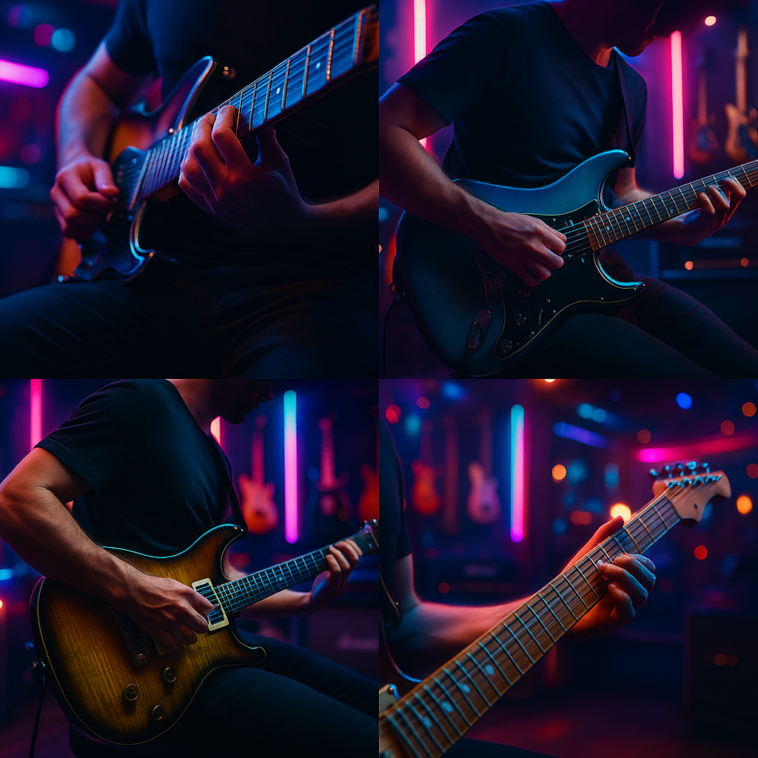
Mastering Guitar Phrasing: Essential Exercises for Emotional Soloing
As guitarists, we often find ourselves engulfed in the vast ocean of notes, scales, and chords. But what truly sets a player apart isn’t just technical prowess; it’s the ability to convey emotion through phrasing. Whether you’re an aspiring fusion guitarist or a modern progressive enthusiast, enhancing your improvisational skills hinges on mastering the nuances of phrasing. Let’s dive into essential exercises that will help you craft memorable solos that resonate on a deeper level.
Understanding Phrasing: The Heart of Emotional Guitar Playing
Phrasing in music is akin to punctuation in conversation. Just as pauses and inflections can enhance spoken dialogue, the way you articulate notes can deeply affect the emotional impact of your solos. Think of your favorite guitarists—whether it’s the soaring melodies of Joe Satriani or the complex, yet soulful lines of Allan Holdsworth. Their phrasing makes their music compelling.
The Importance of Silence
Before we even talk about what to play, let’s discuss silence. In music, silence is just as crucial as sound. Consider the space between your notes; it’s where the listener finds breath and connection. Instead of bombarding our audience with a flurry of notes, sometimes it’s powerful to leave a beat of silence—mirroring a sigh, a moment of reflection. Try integrating pauses into your improvisation. You might be surprised by how much more expressive and human your solos become.
Essential Exercises for Developing Phrasing
1. The 4-Note Limit
One effective way to refine your phrasing is to limit yourself to just four notes. Choose a scale—let’s say the Dorian scale—and create a short melodic idea. For instance, you can take the first four notes of the Dorian scale and explore various ways to express it.
Exercise: Play the notes in different rhythms, using legato, staccato, or bends. This will not only help you think melodically, but also push you to experiment with different articulation styles.
Example in D Dorian:
- Notes: D, E, F#, A
- Variations:
- Play them straight: D – E – F# – A
- Change the rhythm: D – (rest) – E – F# – (rest) – A
- Use bends: D (bend up) – E – F# (slide) – A
2. Call and Response
This age-old technique, rooted in jazz and blues, is a fantastic way to develop your phrasing. Think of it as a musical conversation. You “ask” a question with a phrase and then respond to it with a contrasting or complementary line.
Exercise: Start with a simple lick as your “call.” Here’s an example in C major:
- Call: E – G – A (quarter notes)
Then create a contrasting “response” that might utilize longer notes or a different rhythm:
- Response: C (held longer) – D (quick run) – B (bend).
This not only bolsters your creativity but also instills a sense of dialogue in your solos.
3. Incorporating Dynamics
Dynamics play a pivotal role in phrasing. A well-placed soft note can evoke vulnerability, while a powerful note can stir excitement. When practicing, focus on varying the intensity of your playing.
Exercise: Take any scale, such as C minor, and play it softly at first. Gradually build up to a loud crescendo and then descend back to softness. This will not only enhance your dynamic control but also provide contrast in your solos.
Exploring Scales and Modes for Emotional Impact
The Power of Scales
Scales provide a palette of colors for emotional expression. Here are a few pulse-quickening scales to incorporate into your practice:
1. The Melodic Minor Scale
Melodic Minor has a unique sound that melds minor and major characteristics. Here’s how you can utilize it:
- Notes: C – D – Eb – F – G – A – B – C
- Practice phrases that highlight the A and B for a more mysterious sound.
2. The Whole Tone Scale
This scale is perfect for creating a dreamy or otherworldly atmosphere. With only six notes, it’s inherently ambiguous.
- Notes: C – D – E – F# – G# – A# – C
- Take a simple lick in this scale and apply it to a backing track. Emphasize the unusual intervals to evoke different emotions.
Incorporating Advanced Fusion Techniques
When delving into the realm of fusion guitar, your phrasing should evolve alongside your technical skills. This genre thrives on complexity and creativity, so experimentation is key.
1. Hybrid Picking
This technique allows for a seamless blend of picking and fingerstyle. It opens a plethora of sonic possibilities.
Exercise: Practice a two-string melody utilizing a combination of your pick and fingers. For example, play a line on the B and G strings, plucking the B string with your pick and the G with your middle finger. Explore how this affects your phrasing and tone.
2. String Skipping
Incorporate string skipping techniques to create unexpected melodic twists in your solos.
Exercise: Play a lick that skips strings while applying different rhythms. Start with simple phrases and build to more complex ideas, allowing natural breathing spaces in your riffs.
The Role of Music Theory in Emotional Expression
Understanding the theory behind what you’re playing can elevate your emotional phrasing. Here are some concepts to consider:
Chord Tones vs. Non-Chord Tones
When improvising over a chord progression, not every note needs to be a chord tone. Using non-chord tones can create tension that resolves beautifully.
Exercise: Over a G7 chord, try emphasizing the B (the 3rd), then add a C (the 11th). The momentary tension created by the C will contrast and enhance the resolution when you land back on the B.
Chromatic Passing Tones
Incorporating chromatic passing tones adds friction and movement to your phrases.
Exercise: Experiment by adding a chromatic note between the scale notes in your improvisation. For instance, if you’re playing C to D, you could slide into D with C#.
Recording and Tone: The Final Touch
As we all know, tone is personal, and it significantly influences how your emotive playing is perceived. Take time to experiment with your gear—find the right pedals, amp settings, and even the guitar itself that resonates with you.
The Art of Recording
When recording your improvisational solos, think about how your phrasing translates to a wider audience. Utilize a loop pedal to capture your phrases and build layers. This allows you to explore your ideas more freely and evaluate how your phrasing evolves.
Finding Your Unique Tone
Everyone’s tone is unique. Spend time discovering the tonal characteristics that resonate with you. Focus on:
- Pickup selection (humbucker vs. single coil).
- Adding effects like reverb or delay for depth.
- Experimenting with gain and EQ settings to highlight the nuances of your playing.
Conclusion: Your Journey to Phrasing Mastery
Mastering guitar phrasing is a journey filled with exploration, experimentation, and emotional expression. By dedicating time to these exercises—whether you’re fascinated by improvisation, modern fusion, or progressive guitar—you can feel the beauty flow through your fingers and into your music.
As you continue to develop your unique voice on the guitar, remember to embrace the imperfections and the silences that make your playing compelling. The emotions you convey through your music are what will truly touch your audience.
For an exciting way to practice your emotional phrasing and improvisation, consider exploring premium guitar backing tracks at music.backingtracksfullcollection.com/guitar-players. These tracks can provide fresh contexts that will help you push your creative boundaries even further and develop emotive connections with your audience.
Happy playing! 🎸