
![“They could easily undermine you.” Ann Wilson discusses the sexism Heart encountered while entering the ’70s rock scene.]](https://backingtracksfullcollection.com/wp-content/uploads/2026/05/They-could-easily-undermine-you-Ann-Wilson-discusses-the-sexism-833x473.jpg "Array] 18")
Rock was still very much a boys’ club in the mid 1970s, a fact that Ann Wilson and Nancy Wilson learned firsthand as their band, Heart, fought its way into the spotlight.
Ann Wilson is revisiting those early battles in her new documentary, In My Voice, which traces her career with Heart and as a solo artist. The film features appearances from Paul Stanley of Kiss and rising pop star Chappell Roan, who has been covering Heart’s classic “Barracuda” on tour.
But long before Heart delivered arena-ready riffs and radio staples like “Crazy on You,” the Wilson sisters were teenagers trying to figure out how two women from the suburbs might fit into rock’s loudest, most swaggering world.
The sisters were adolescents in 1966 when they had the life-altering experience of seeing the Beatles in concert. Four years later, they caught Led Zeppelin live. Watching Robert Plant stalk the stage with what Nancy later called “super-suggestive” moves was electrifying — and eye-opening.
“We were in a little folk band at the time,” Nancy recalled. “We were from the suburbs, so we were square little hippie chicks to be unenlightened.”
Like countless guitarists of the era, the Wilsons were struck by Zeppelin’s thunderous rock — but they filtered it through their own mix of folk harmony, acoustic textures and hard-rock muscle. Before long, Heart were earning comparisons to Zeppelin themselves.
Breaking through, however, meant navigating a music industry that didn’t quite know what to make of two women fronting a hard-rock band.
“You would build yourself up and do something really great, and you’d feel really good about it — then you could get put down and squashed down very easily by the rest of the men,” Ann told Rolling Stone. “They could make you feel like you were really silly for even trying.”
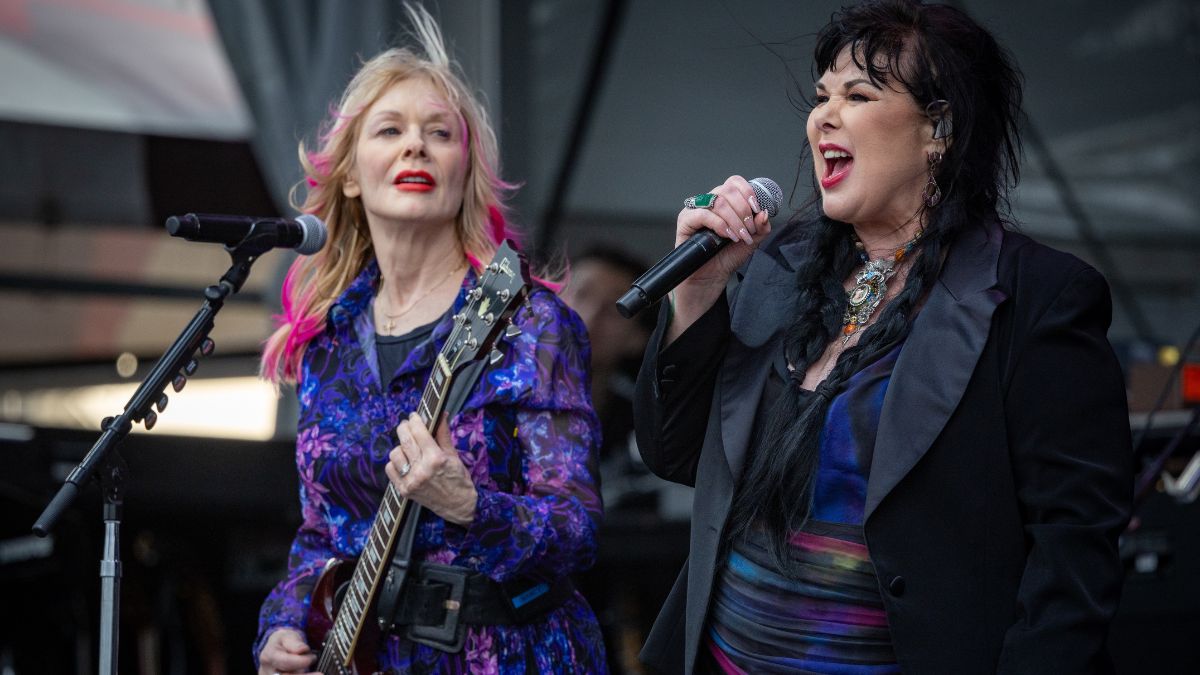
Women in rock were still a rarity at the time, though trailblazers like Suzi Quatro were beginning to crack open the door.
Heart kicked it wider. When the band released its debut album, Dreamboat Annie, in 1975, Nancy’s razor-sharp rhythm work and Ann’s seismic vocals powered songs that could pivot from acoustic guitar intimacy to full-throttle hard rock — proof that women could command the same sonic territory as their male peers.
Nearly five decades later, that breakthrough still resonates. But as the Wilson sisters have often pointed out, the path there required more than talent — it required resilience in an industry that didn’t always believe they belonged on the same stage as the men they grew up idolizing.
![Array]](https://backingtracksfullcollection.com/wp-content/uploads/2026/05/1779722773_Array-150x150.jpg "Array] 26")
![Array]](https://backingtracksfullcollection.com/wp-content/uploads/2026/05/1779730086_Array-150x150.jpg "Array] 27")