![Array]](https://backingtracksfullcollection.com/wp-content/uploads/2026/05/Array.svg.svg+xml "“My favorite Ibanez was always the 550. That’s not to say I felt I needed to improve on it, but I wanted to make one RG that had all my favorite variables”: Nili Brosh on Danny Elfman, shredding with intent and augmenting Ibanez's most popular guitar 18")
Nili Brosh – known for her work with Dethklok, Danny Elfman and Cirque du Soleil – is beyond excited about her new solo record, Eventide. And it’s not too tough to figure out why.
“This album reflects more of who I am than any record that I’ve made before,” she tells Guitar World. “A lot of these ideas have been in my head for a long time,” she says. “Actually, I should say they’ve been in my iPhone voice memos for a long time. It was just a matter of fleshing them out.”
Beside the names we conveniently dropped in this story’s first sentence, Brosh’s brand of hyper-melodic-meets-tasteful-shred has landed her gigs with Jennifer Batten, Tony MacAlpine, and the Iron Maidens, and opened doors to soundtrack work for Marvel’s 2024 animated series, X-Men ’97.

But it’s her solo work that’s most fulfilling, so it goes without saying that Brosh is stoked about taking Eventide and her new signature Ibanez RG on the road in 2026. She’s got more work with Elfman on tap, too. Beyond that, the sky’s the limit.
“One of the things I love is not knowing what’s going to happen next or what will be the next part of my musical voice,” she says. “Your guess is as good as mine. We’ll see.”
Bring us up to date on where you’re at, playing-wise. It’s been a few years since your last solo album.
I try to go where what I hear in my head takes me. That affects the playing, the ideas that come out and what needs to be done to convey them; that’s where I end up. But certainly, it’s been a few years, and I’m overdue for a new album.
This is the first time since the pandemic that I’ve had a moment to sit down and flesh it out. I’ve been blessed with a lot of live shows since touring came back. Spinning plates and juggling all that stuff has definitely kept me busy.
What gear are we hearing?
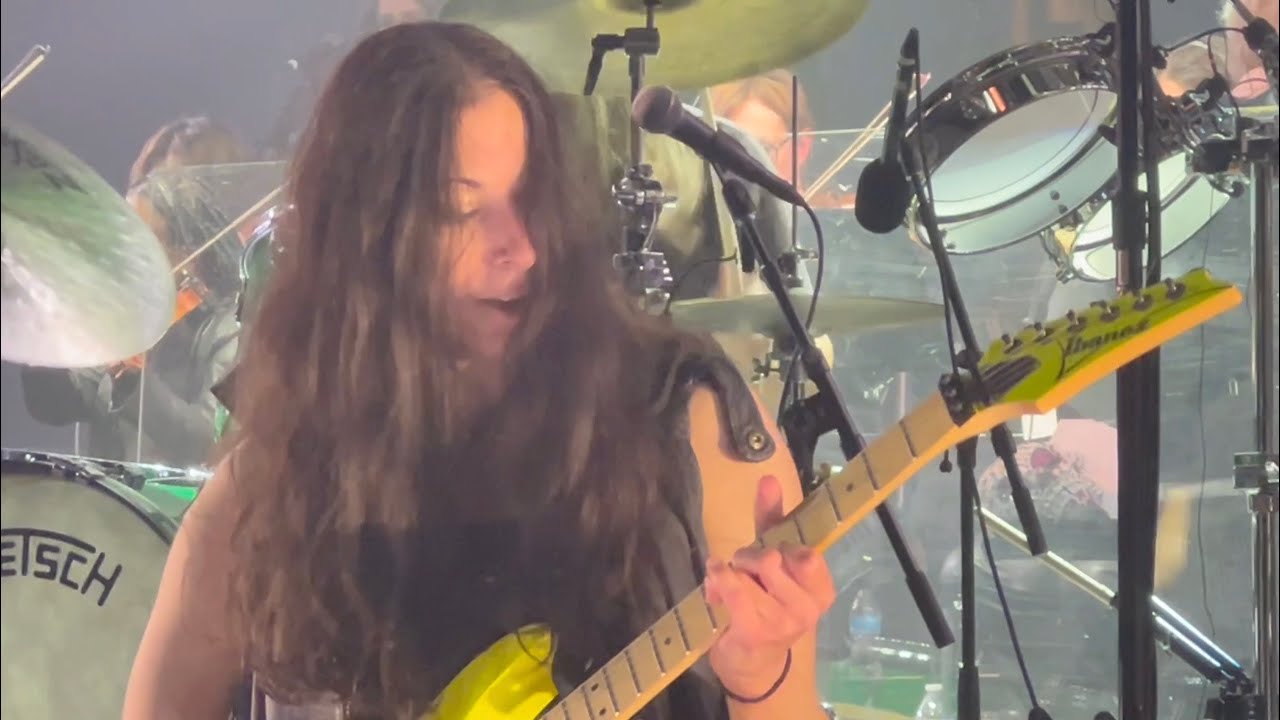
I used my custom Ibanez RG and Ibanez 550 quite a bit, plus the AS93 for some of the jazzier things and a nylon-string Cordoba GK Studio Negra. Amp-wise, it’s mainly the Mesa/Boogie Triple Crown and a bit of the Peavey Joe Satriani Signature JSX.
The Mesa has been my main amp for years, and before that it was the JSX. And I like to have an Xotic California EP Booster in the front, just to kind of thicken the tone. But I tend to record old-school by mic’ing the amps and getting a raw, basic tone, then shaping it after that.

Melody is present throughout your music and playing – along with plenty of shred. What’s the key to that marriage?
The thing that’s always helped bridge the gap between the melodic and the shred stuff is to focus on a fairly traditional song form, regardless of how complicated the music is.
I think in verse-chorus terms – bridge and that kind of stuff. That helps me zero in on the exact ideas, not overplay and focus on the hooks being hooks and the song feeling like a song.
Then, whatever the solo section ends up being, that’s time to play more notes, if that feels like the right approach. I’ve always been a big believer in not shredding for the sake of shredding. If you do shred, I believe in having something to say. Without a tune there, it’s kind of pointless. That’s helped me maintain structure.

You worked on the X-Men ’97 theme. What was that like?
I was on the road at the time, so I did the session remotely. I just used my HeadRush MX5 effects processor. I got them a DI as well, so between those two sources, they were able to mix the thing nicely. My approach was pretty straightforward.
It’s a testament to Danny being very loyal to his musicians. He’s always seen this as a band from day one and treated us like family
They sent me a mockup of how they had the melody in the new version, and they asked me to do one version that sticks to that, played verbatim and articulated. Then they asked me to do one with a little more freedom.
For one of them, I used a lot of bends, which was part of my own interpretation. To my surprise, that was the part that was kept. I thought they’d keep the thing that was played straightforward.
What’s the latest on your work with Danny Elfman?
He has a new album and quite a bit of live stuff coming up. It’s a testament to Danny being very loyal to his musicians. He’s always seen this as a band from day one and treated us like family. I work very hard to be as reliable as I can to whoever the band leader is.
I make sure I’m prepared and that they can trust that the foundation will be there, so they can feel comfortable soaring on top of it and not have to worry about anything. I’d like to think that’s something that keeps me around.

How long was your new signature Ibanez RG it in development, and what was the process like?
It’s been in development for quite a while; close to five years. We started the conversation during the pandemic, and it was very clear that – because of the way production chains were going – it was going to take several years to actually get it out there. In a way, that was good because it gave us plenty of time to figure out what we wanted to do.
I created the Custom RG as a prototype for myself to see if that’s what I wanted from a guitar. There were a few things about it – like the burst color – that I wanted to change. We went from prototype to prototype until I felt like we nailed it.
Also, making it affordable was definitely important to me. So, keeping it in the premium line, and understanding what that factory is able to do, and where our limitations were – and the middle ground between all those things – took a little while.
Looking at your older guitars, what do you want to improve upon, and where did you pull inspiration from?
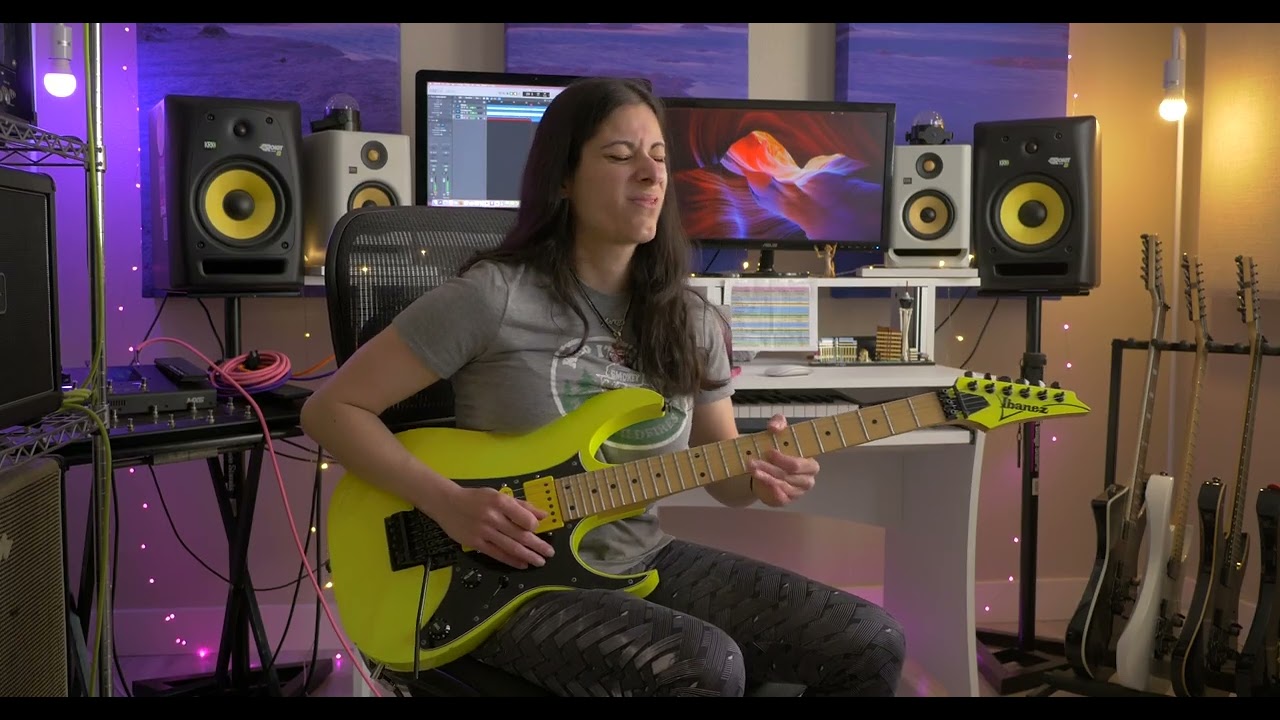
My favorite Ibanez was always the 550. That’s not to say I felt I needed to improve on it, but I wanted to make one RG that had all my favorite variables. The humbucker-single-single configuration was really important to me.
I basically wanted to make it a Fat Strat RG and add to the versatility. So I did keep a lot of the variables of a standard RG – that’s pretty obvious there. But I wanted to put my favorite aspects into it, like the Edge bridge, for example.
Is the body and neck construction pretty traditional?
A lot of those aspects were taken from a standard RG; it has a basswood body and a Super Wizard maple neck. Those are two things I’ve always felt very strongly about, especially the type of neck that has contributed to the playability of the music that I play.
How about the hardware and pickups?
Same with those. But the original Edge bridge was important to me. That’s something Ibanez does very well. It’s a really stable floating bridge. It’s been reliable for a very long time.
With the pickups, we talked about the humbucker-single-single configuration, and even though they’re EMGs, they’re passive, which is something that not everybody is aware that EMG even does. It’s something I’ve been using for several years, and it’s a nice combination of variables.
Your new RG and Eventide’s cover art definitely share a similar aesthetic. Was that intentional?
Absolutely. It all reflects back to how I see the music in my mind. I don’t know if I have actual synesthesia, but I have some sort of connection between sounds and colors. A lot of the music on this record went in that direction in my mind. So I wanted to reflect it in the visuals and give people a sense of what I see in my head when I hear this.
How do Eventide and your new RG reflect who you are as a player now, and where do you see yourself going in the future?
I really feel like it was very much primarily my voice on this record, and me conveying what I hear. It’s a good reflection of me and how I hear melodies and vocabulary. But I can’t tell you about the future. I definitely like to explore new sonic directions every time.
Who’s to say? Maybe I’ll latch onto that. I’m enjoying that direction, but a lot of people say the inspiration comes back around full circle. I hear different kinds of music all the time, so you never really know where that’s going to take you or how that’s going to reflect back.