
![Array]](https://backingtracksfullcollection.com/wp-content/uploads/2026/05/1779850244_Array.svg.svg+xml "“We want to stand head and shoulders with the giants and say ‘Yeah it is nice up here Bob Dylan, John Lennon because I'm Richard Ashcroft. We’re The Verve”: The Rolling Stones-sampling Britpop epic that has captivated a new generation 18")
One of the most frequently shared clips to emerge from last year’s headline-grabbing Oasis reunion was that of a young fan Shazam-ing the indomitable Bitter Sweet Symphony, being performed live on stage – with characteristic swagger – by Richard Ashcroft during his solo support slot.
While some of the more belligerent Britpop aficionados mocked the girl for not recognising a song that has, across the decades, become something of an indie institution, the song’s writer himself was delighted that new ears were being pricked up.
“If you don’t know it Shazam it, all new fans welcome!” wrote a gleeful Richard Ashcroft on Instagram.

The unyielding power of the Verve’s Bitter Sweet Symphony, driven by its strident violin motif, has demanded attention almost from the moment it was first written. Its fusion of stately strings and propulsive beat herald the message loud and clear; ‘This is an important song.’
Clearly, it retains that call-to-attention power even now, nigh on 30 years after its birth.
Although for many of us older music nerds, the contentious background of the song – and the fierce wrangle to control the song’s rights – has been an oft-discussed talking point. Yet many newcomers who discovered the song via Ashcroft’s Oasis stint are perhaps wholly unaware of the anguish that its writer has had to endure before the situation was finally (for the most part…) resolved in 2019.
The Bitter Sweet story began back in 1996, and the staggered making of The Verve’s mainstream breakthrough third album, Urban Hymns.
Prior to its recording, the Wigan-hailing four-piece indie rock troupe had all-but called it quits after the turbulent recording of their second album A Northern Soul.

With entirely different attitudes when it came to approaching making an album and building a career as serious musicians (namely, the attitude of whether heavy ecstasy use was a good idea or not…) Ashcroft found himself increasingly at loggerheads with guitarist Nick McCabe, who had taken to operating under a different working schedule in the studio.
It was clear to everyone that this tension couldn’t go on and, during the post-launch promo phase for A Northern Soul, the Verve disbanded.
“Looking back, something clearly had to give,” Hut Records’ founder Dave Boyd said in an interview with Select. “They’d been together since they were 18. They were young men with lives of their own, and they needed time alone to find out who they were.”
But, after just a few weeks isolating himself in his new home in Bath, Somerset, Ashcroft realised that he’d made a terrible mistake…
Quietly reconvening with bassist Simon Jones and drummer Peter Salisbury a few weeks after the split, Ashcroft set to work on rebuilding his band. More cynically-minded people assumed that Ashcroft had shrewdly used the pretence of a band break-up simply as means to extricate himself of McCabe.
Absence, however, made their respective hearts grow fonder, and a bit of distance clearly did the business. Unbeknownst to the other Verve players, Richard eventually picked up the phone to Nick, inviting him back into the fold in January of 1997. McCabe accepted.
It wasn’t just the time away that underlined Nick’s centrality to The Verve though. During the preceding McCabe-less months, the band had attempted to replace him with former Verve rhythm guitarist Simon Tong and ex-Suede guitarist Bernard Butler, neither of which panned out – news that would put a bit of wind in McCabe’s sails upon his return.
“It was gratifying when I came back that they had tried to replace me with two guys, and they couldn’t. I am the guitarist they couldn’t replace,” Nick told XS Noise. “It did work in my favour, allowing myself to feel a bit of pride because when I went back into the studio, that obviously informed my mentality that I had been brought in as a problem solver.”

With the band now fully back together, attention turned squarely to the making of album three. Thankfully, Ashcroft hadn’t been wasting time. On the contrary, he’d rustled up a veritable feast of outright gems during the downtime.
Future Verve staples Sonnet, The Drugs Don’t Work and Lucky Man had all-but poured out of him.
King amongst all though, was the grand Bitter Sweet Symphony.
Ashcroft had written Bitter Sweet Symphony the previous year, amid that post-split flurry of creative urgency.
The starting point came following the purchase of one of The Andrew Oldham Orchestra’s LPs which consisted of David Whitaker-arranged string interpretations of Rolling Stones tracks (The Rolling Stones Songbook, to be precise, assembled by their infamous manager, Andrew Loog Oldham).
Ashcroft was captivated by the arrangement of The Last Time in particular, and the swelling four-chord harmony that underpinned it.
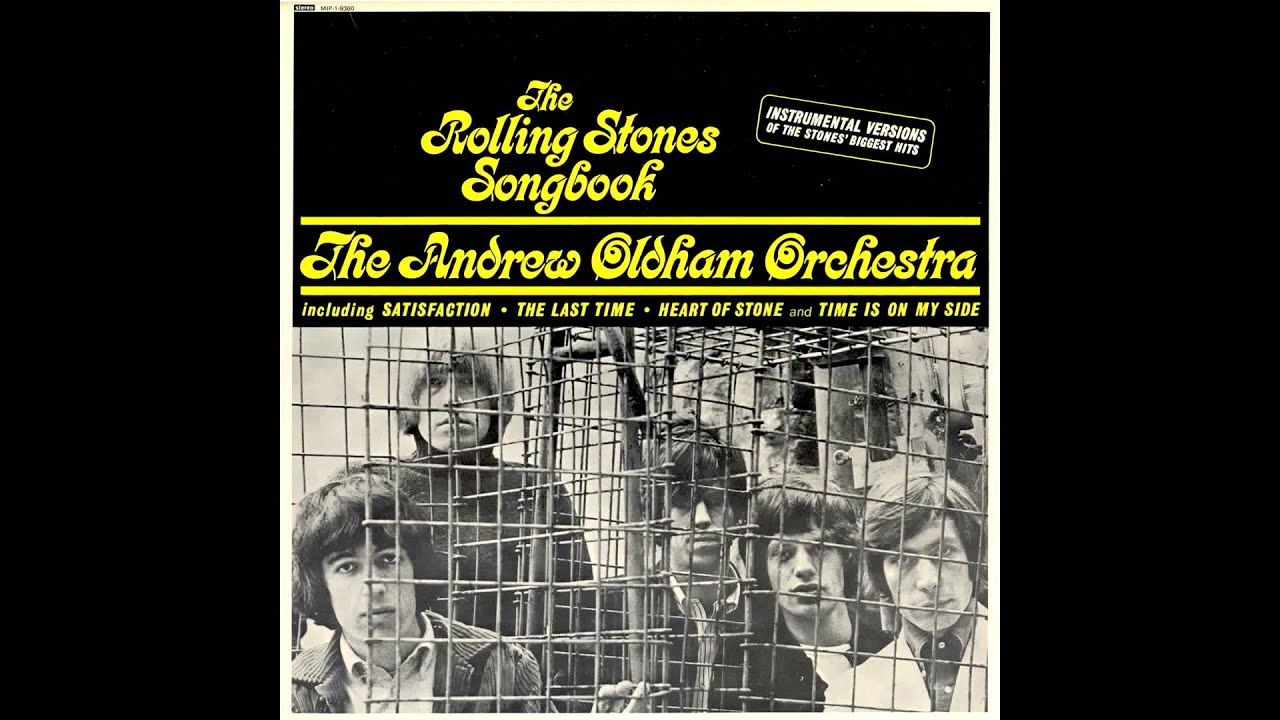
Adopting the DIY sampling ethos of hip-hop, Ashcroft looped the sequence from the track with a hardware sampler, feeling that with a bit of fairy dust, this radiant foundation could be built out into something even more spectacular.
“[It’s] essentially hip-hop because it was written by me sampling a piece of music and building on that sample. It’s a way of writing that wouldn’t exist if it wasn’t for hip-hop and the process they go through making records,” Ashcroft told Sirius XM.
Richard kept pushing, driven by the idea that this track could become bigger than just another song. In his own words, Ashcroft wanted it to grow into something ‘outrageous’;
“I wanted something that opened up into a prairie-music kind of sound, a modern-day Ennio Morricone kind of thing,” Ashcroft told Rolling Stone. “Then after a while, the song started morphing into this wall of sound, a concise piece of incredible pop music.”

With Salisbury laying down a propulsive live drum beat underneath, the nature of Bitter Sweet Symphony pivoted from the romantic bucolicism of its starting point to a resilient march.
With this feel of tenacity running through the music, Ashcroft’s verse lyrics channeled the semi-hopeless feeling he felt during the band’s downtime into a defiant square-up to the very notion of a life of drudgery
‘Cause it’s a bittersweet symphony, that’s life
Trying to make ends meet, you’re a slave to money then you die
For the jubilant chorus, Ashcroft alluded to freeing himself from this resigned and self-defeating mindset. It was an idea borne of the idea that circumstance (and class) can prevent great people from rising up.
“Lyrically, it touches most people on the planet,” Ashcroft reflected in a 2025 Virgin Radio interview. “Purely because of its sentiment. Often through circumstance and what we’re born into, we can become trapped within ourselves, whether that’s financially [or] in our jobs. Yet we do have so much to give.”
I can change, I can change
But I’m here in my mold
And I’m a million different people
From one day to the next
I can’t change my mold
After initially laying down some demos for Urban Hymns with debut album (A Storm in Heaven) producer John Leckie at Real World Studios in Bath – and trialling Oasis (and A Northern Soul) producer Owen Morris for a few sessions, Ashcroft finally gelled with Killing Joke co-founder and Orb collaborator Martin ‘Youth’ Glover, who pushed Ashcroft to lean further into the new vein of pure songwriting classicism that was plainly evident across the latest batch of work.
Decamping to Olympic Studios in London, a future staple of most British teenager’s CD collections in the late 1990s was crafted.
Despite the obvious brilliance of Ashcroft’s clutch of new songs, the demos that had been tracked prior to McCabe’s rejoining (in the midst of the Olympic sessions) were somewhat lacklustre.
At McCabe’s suggestion, the album’s engineer Chris Potter rented-in a then innovative new technology: Pro Tools. Together, they were able to cut even deeper into the arrangements.
“Some of the stuff [on the demos] was born out of loops, and the problem with using loops which is a well-known syndrome with working with computers and stuff these days, is things can get locked into four-bar segments without having any developmental interest happening in them. I had been experimenting with hard disk recorders in my time off, so I had developed a new way of working, which was liberating for me in that I could do the thing that I always did,” Nick told XS Noise.
“[Chris and I] got our hands dirty with Pro Tools on that session which wasn’t a thing back then, but it was the perfect toolset for a band like us that was semi-improvisational. Previously we had had to get it right on the spot.”

As Bitter Sweet Symphony grew, a high register string line (which had shades of Elgar and Tchaikovsky) was scored by Will Malone, who extrapolated an idea that was semi-hinted in the original sample.
He gave instructions to a 24-strong group of string players to perform the music with adjectives like ‘tough’ and ‘determined’ – in conjunction with the forthright energy of the beat. Ironically, people would later incorrectly assume that it was this original repeating violin ostinato that was the contested part of the song.
But, on one track of the mix there was indeed The Andrew Oldham Orchestra’s original swelling string harmony, while the band filled a further 47 tracks with instrumental colour.
“We’ve got our own string players, our own percussion on it. Guitars,” Ashcroft told Rolling Stone. “We’re talking about a four-bar sample turning into Bitter Sweet Symphony.”
When married to Ashcroft’s world-weary lyric, the contrasting tension of the triumphant-sounding strings elevated both the urgency of the down-beaten lyric, and eased any sense of the lavish string section being pretentious. It was a perfect balance.
With its collision of high-brow pomp and Ashcroft’s lyrical prognosis of the lives of the countless listeners who never had the chance to achieve their full potential – the song sounded almost revolutionary.
When released as Urban Hymns’ lead single on June 16th 1997, Bitter Sweet Symphony’s frank-but-optimistic spirit jibed with a renewed sense of hope in Britain, Many were revelling in the wake of the victory of Tony Blair’s New Labour after a decade of Conservative rule the previous month. Things were seemingly getting better as their official campaign anthem had promised,
Now, ‘Cool Britannia’ had its very own Land of Hope and Glory.
Bitter Sweet Symphony soared to The Verve’s highest ever chart placement of number 2 in the UK charts (frustratingly kept from the top spot by Puff Daddy and Faith Evans’ colossal Notorious B.I.G. tribute, I’ll Be Missing You). It remained in its upper echelons for a staggering three months. Even in the US, it gathered serious momentum, landing at a not too shabby number 12 on the Billboard Top 100.
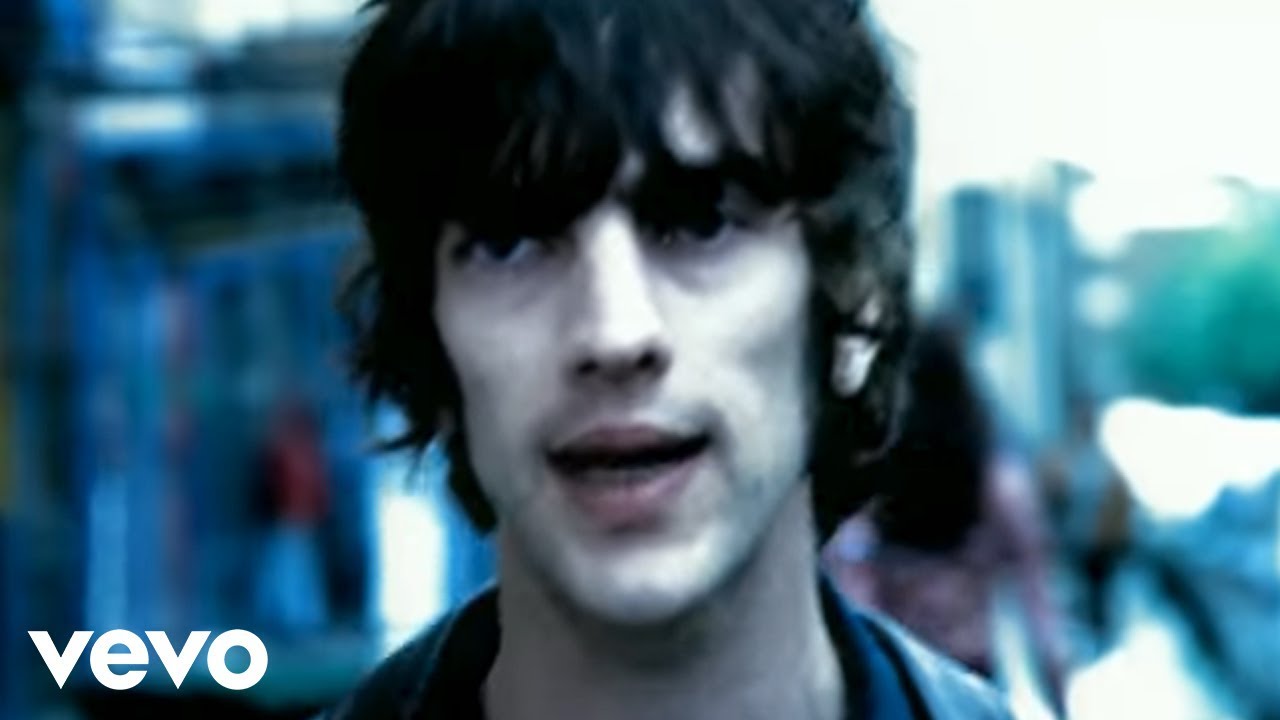
The song’s iconic video, directed by Walter Stern, focused on Ashcroft striding down Hoxton Street in London, thoughtlessly barging into people and delivering the song straight down the lens of the camera, before being joined by his gang of bandmates for the song’s conclusion. It was an unforgettable visual amplifier of the song’s defiance-in-spite of obstacles theme.
The video also asserted that Ashcroft was a natural inheritor of Oasis’s prideful northern swagger.
“It was an inspired idea and look how it worked. It was amazing,” Ashcroft told Hot Press.

The Verve had come back from the brink, and were now buzzing with self-belief.
“Would any other rock band in the world make a track like this?” Ashcroft boasted to the Toronto Star. “We want to stand head and shoulders with the giants. We want to look at them in the clouds (and say) ‘Yeah it is nice up here Bob Dylan, John Lennon because I’m Richard Ashcroft. I’m Simon Jones. We’re The Verve.’’
But this confidence was soon punctured by those aforementioned legal developments, which came from the representatives of a couple of other 1960s’ giants…
To be fair to them, The Verve’s label (Virgin) had done due diligence and acquired the permission (the recording rights, that is) to keep the particular Last Time string swell sample in the released track. However, the Rolling Stones’ former manager – and head of ABKCO Records – Allen Klein was notoriously sniffy about samples. He gave the track a closer listen.
As Klein still held the compositional rights to the original song, Klein felt he was due some of the proceeds, as were its original writers, Mick Jagger and Keith Richards.
Despite being a sampling-skeptic on principle, Klein’s case was built not so much on the lifted string section, but the actual vocal melody that Ashcroft employed in the song.
Klein, and a budding team of musicologists, believed it to be a half-time interpolation of the Last Time melody. A melody line that was, legally speaking, his property.
“It’s not really the sample that’s the issue,” McCabe relayed to XS Noise. “It is credited to Jagger/Richards because of the melody line, so the sample is by the by.”
After a heated legal back-and-forth, ABKCO won a lawsuit prior to the single’s release. Initially, this meant that The Verve and ABKCO would split the proceeds of the still unreleased song.
When Bitter Sweet Symphony became a generational mega-seller however, things changed.
“We were told it was going to be a 50/50 split, and then they saw how well the record was doing,” bassist Simon Jones told the Toronto Star. “They rung up and said ‘We want 100 per cent or take it out of the shops’, you don’t have much choice.”

With bigger financial and legal clout behind ABKCO, Ashcroft and the band had no option but to relent to their demands.
And so, from that moment on, all the publishing royalties for Bitter Sweet Symphony would flow straight to Klein. The full songwriting credit – and subsequent financial rewards for Ashcroft’s most inspired piece of work – would go straight to Mick Jagger and Keith Richards. The Stones’ figureheads themselves remaining quiet throughout proceedings.
For Ashcroft, who insultingly only received a paltry $1,000 as part of the settlement agreement, having the vast rewards for what fast became regarded as his signature song taken away was soul-crushing.
“Songwriters often talk about their songs as if they are their children and to have one of your children taken away from you has been brutal for Richard,” Ashcroft’s co-manager John Kennedy told Billboard. “He has endured it, not always patiently or in silence, but it has been terrible for him.”
There was a happy ending to the tale however, as in 2019, after multiple successive appeals to ABKCO (now in the hands of Klein’s son, Jody following his father’s death in 2009) Jagger and Richards were finally contacted and immediately agreed to relinquish their songwriting credits and future share in the track’s success.
Ashcroft was delighted, still holding the Stones’ legends in high regard despite the drawn-out affair; “[It’s] a remarkable and life-affirming turn of events… made possible by a kind and magnanimous gesture from Mick and Keith,” Ashcroft said at the time.
“I never had a personal beef with the Stones,” Ashcroft told the BBC. “They’ve always been the greatest rock and roll band in the world. It’s been a fantastic development. It’s life-affirming in a way.”
It’s no surprise then, that when Richard Ashcroft now witnesses young newcomers discovering his most important song fresh, and fully oblivious to the years of turmoil it caused its maker, he’s absolutely thrilled.
“I think Bitter Sweet Symphony will resonate long after I’m gone,” Ashcroft told Virgin Radio. “I’m very lucky to have created something that genuinely is timeless. Subsequent generations are going to enjoy this thing because it’s tapped into something that’s difficult to describe.”
