
![Array]](https://backingtracksfullcollection.com/wp-content/uploads/2026/05/1779850244_Array.svg.svg+xml "“People have it played at their wedding, and I’m like, ‘Why?’”: We speak to the duo behind one of the most uplifting songs of the 1990s 18")
Yes – the 1995 debut hit single by McAlmont & Butler remains one of the decade’s most life-affirming songs. The duo, formed by ex-Suede guitarist, Bernard Butler, and powerhouse ex-Thieves vocalist David McAlmont still holds up as a joyful assertion of independence.
With thunderous drums, soaring strings and epic, Phil Spector’s ‘Wall of Sound’-style production, Yes was the musical equivalent of a rush of euphoria.
Riding that wave is McAlmont’s sass-imbued lyric which serves as, ostensibly, a middle finger-raise to an ex. To quote David himself, Yes is very much a 1990s update of Gloria Gaynor’s I Will Survive.

During the towering chorus, McAlmont’s defiance reaches its pinnacle;
Yes, I do feel better
Yes, I do, I feel alright
I feel well enough to tell you what you can do with what you got to offer…
So how did these two displaced figures find each other, and summon the musical chemistry to conjure such a totemic anthem?
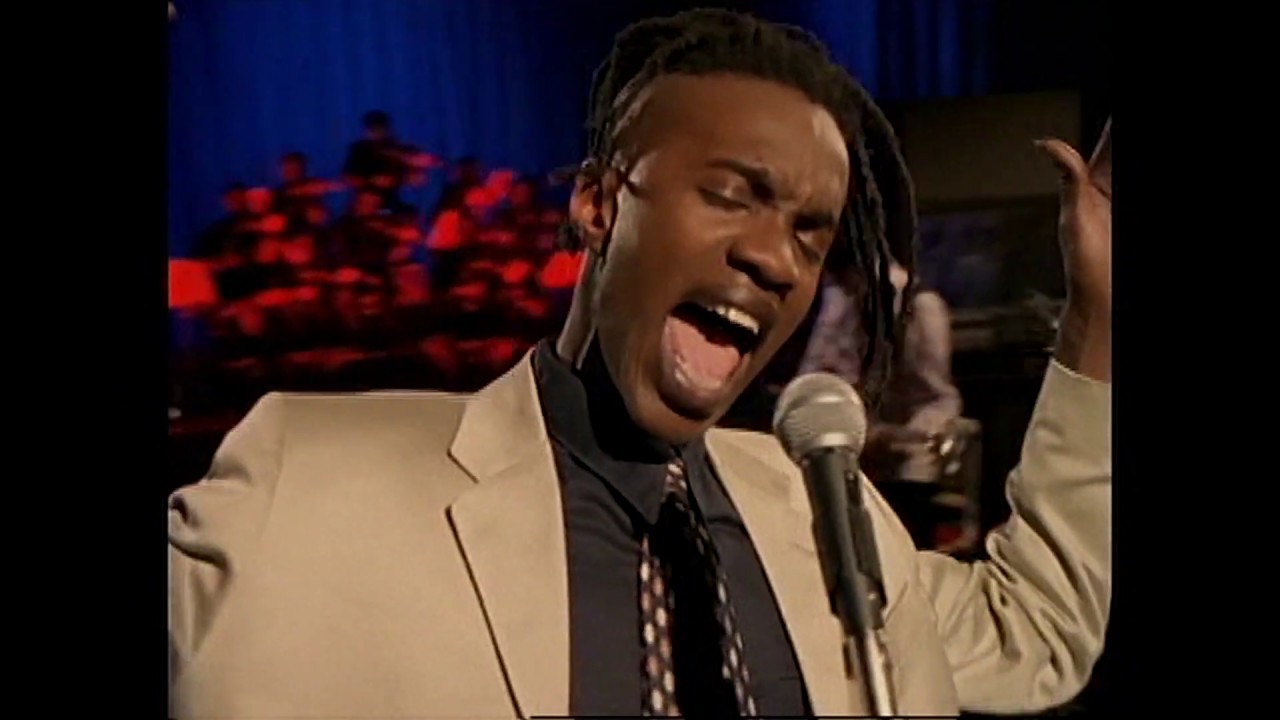
We need to rewind the clock back to early July 1994. Guitar hero and then-regular NME cover star Bernard Butler had dramatically left Britpop-pioneers Suede in a storm of words during the recording of their ambitious (and extraordinarily brilliant, we might add) second album, Dog Man Star, which was released later that autumn.
In the wake of his exit, Bernard was living in a basement flat in Highgate, North London.
“I was lonely, pretty depressed and very lost,” Butler tells us. “Contrary to popular belief, [leaving Suede] wasn’t something that I wanted to happen, and it became such a fuss – the whole thing with the music press. If you’re in a band, and you’ve got a manager or a record company, you’ve got people handling everything for you, but because I was the black sheep and I’d gone, I was totally on my own and I had no idea how to handle anything. All I wanted to do was to make music, but I thought I would probably be back doing a day job by Christmas because I just didn’t see any way forward.”
Staving off these anxieties, Butler decided to just immerse himself in his passion. But first, he needed to kit himself out with the right equipment.
“As I was on my own, I didn’t have any gear, so, the first thing I did was to buy a load of stuff from Loot magazine, which, at the time, was a treasure trove for musicians who were buying gear – it was amazing,” Bernard recalls.

“I bought a Tascam 16-track [recorder], a Seck mixer with 12 channels, an Akai S950 sampler and some cables. The reason I bought a sampler was not because I wanted to make trip-hop – I wanted a way of playing back sounds, particularly strings and keyboards.
“There was a guy in Loot who advertised himself as selling sounds on floppy discs. He lived in Hampstead and I phoned him up and said, ‘Have you got these sounds?’ He said, ‘Yeah – come over and I’ll run them off for you’”.
Bernard continues the tale, “So, I gave him 50 quid or something, and I can remember sitting in his flat for a whole evening – it took about three hours. He clocked who I was and he said, ‘Are you supposed to be doing this?’ I tried to avoid answering the question, and it was really awkward.
“What he gave me was a Mellotron string sample – that was the thing I really wanted. When I got home, I started playing with that and that’s what I used for Yes. As soon as I heard it, I was like, ‘Wow – this is brilliant’. I had a drum machine that I’d used for Suede, and a sample of strings, so I could play stuff on a keyboard.”
At the same time, Bernard had begun getting to know ex-Orange Juice frontman-turned-solo-artist-and-producer, Edwyn Collins. It transpires that Collins was also integral to the creation and sound of Yes.
“I phoned him up and he was super-nice. He came over to my flat with a bottle of wine and brought all this stuff – beautiful microphones, like the incredibly revered AKG C12A, and compressors,” Butler tells us. “I said, ‘I don’t know how to use it’, but I can remember him saying, ‘Don’t worry – just plug it in and make something’. That’s what I used for pissing around and coming up with the parts for Yes for the demo.”
Butler wrote the chord sequence for Yes on his signature Gibson 355 guitar, influenced by glorious and lush pop songs like Dusty Springfield’s I Only Want To Be With You, You On My Mind by Swing Out Sister and The First Picture of You by ‘80s English new wave band The Lotus Eaters.
“I loved all those records,” he says. “It was a bit of a dark and lonely time, but I can remember that it was a hot summer. I lived on Hampstead Lane, which is the road that goes down to Kenwood [House], it’s a lovely spot, I wish I lived there now, to be honest. I was going to the Heath every day, wandering around. It was sunny and I just wanted to make music that was [also] a bit sunny and uplifting. A lot of the music I’d made for Dog Man Star was the opposite of that – it was quite exhausting mentally. I really wanted to make music that had major sevenths. I used to call it ‘the Postcard chord’, because you’d always get it on Aztec Camera and Orange Juice records.”

He adds: “Everything we did in Suede was what I used to call ‘block chords’, with hard, basic roots – there was no nuance. It was in your face. I wanted to write a song with major sevenths and a key change. Don’t forget – I had no vocalist either, so I was just pootling with music and having fun.”
Butler channeled that idea into the first instrumental version of what would ultimately become Yes. He then asked Julianne Regan of goth-folk-rockers, All About Eve, to pen a melody and a lyric, but the results weren’t quite what Bernard had in mind.
Producer Mike Hedges, who’d worked with The Cure, Siouxsie and the Banshees, Marc Almond and Everything But the Girl amongst others, invited Butler to his studio, Chateau de la Rouge Motte situated in the Normandy countryside in France, to work on some new music.
“He got on the phone and was like, ‘Come over here and we’ll make a record’,” says Butler. “Mike’s like that – he’s a gambler. He’s one of those people who would crash a car and buy another one.
“He said, ‘Who are you working with?’ I told him I knew this lady called Julianne, and he said, ‘Bring her – it will be great’. So, I sent him some music we’d been writing. He just wanted people to come to France because, at the time, no one was going there.
“I liked the idea of working with Mike because he’d made records with Marc Almond, and I was a big fan of the Marc and the Mambas album, Torment and Toreros – that record was a big inspiration for me [when making] Dog Man Star.”
So, Butler packed his gear into his car and headed off to Hedges’ chateau.

“It was like a wonderland – it was a proper chateau, like you see in pictures,” Bernard recalls. “Mike’s front room led into a ballroom, where he had a mixing desk and a piano. There was a swimming pool downstairs and a wine cellar made of thick stone, which is where we did the drums. The sound was amazing and we sat up and drank wine and ate cheese.”
Regan left the sessions after a couple of days, leaving Butler to record a second instrumental demo of what would grow into Yes on his own.
“We went and got some drums from this guy in the village and Mike said, ‘Oh, you can play them’. I said, ‘I really can’t’, and he said, ‘No – you can do it, it’s fine’.
“So, we recorded the drums, we just had a laugh, and we made the demo with string samples. I loved working with Mike and being around him – I felt free and he was really encouraging towards me. He was so experienced – he’d done it all. He would say to me, ‘I’m going to sit on the sofa and have my sandwich, and you can go over there to the mixing desk, press anything you want and find out what happens.’ That was important because during Suede I was told the opposite: ‘Stop touching that,’ or ‘You don’t want to know how to do that’, and ‘Stay away from that’.
“Edwyn and Mike both came into the picture at that time, and they were both just like, ‘Go and have fun, f**k everyone, be punk – just press some buttons and see what happens.’ So, that’s what I did.”
With the lush-sounding demo in the can, Bernard returned to London that summer with the instrumental track in his pocket, keeping his ear out for any vocalists that might be interested in taking it on.
Things then took a very strange turn…
One Friday afternoon, Morrissey phoned the offices of record label Rough Trade, ran by Geoff Travis (who knew Butler) and asked him if he’d got any new music he could listen to.
“Geoff phoned me and said, ‘Morrissey’s round the corner in a phone box. Can I play him that piece of music?’” says Butler. “I said, ‘Yeah – whatever you want’… And then about an hour later, Morrissey phones me – he was gushing about it. He wanted to meet me. It was a sunny Friday night, and we went to the Edinboro Castle pub [in Camden], which had a big beer garden. It was packed, but nobody knew who he was, and I remember thinking how odd that was. We just chatted about stuff for a couple of hours, and he was everything that you thought he would be.
“I didn’t hear from him, and I was thinking, ‘Oh, God, what’s going on with this song?’ And then four or five days later, he sent me one of his famous letters through the post, which I’ve still got – it’s framed and on the wall. It just read, ‘Dear Bernard, I’m sorry – I can’t.’ So, that was the end of that.”
If that wasn’t odd enough, things then got even weirder… Butler’s publisher sent the demo to Kirsty MacColl, who called Bernard a couple of weeks after Morrissey’s letter hit the doormat.
“Again, she was gushing and said, ‘I love the tune’. This must’ve been August ’94, so I went round to Kirsty’s on a Sunday afternoon, but when I got there, she was totally different. I knew she was going through a divorce, I’d met her at a bad time, and she was very upset and not easy to be around. She said, ‘Right – this song… I’ve changed my mind. I think it’s quite good, but we need to do a lot of work to change it.’
“I don’t want to be arrogant about it – a collaboration is a collaboration – but it didn’t feel right and I didn’t want to do all the stuff that she wanted to change,” reflects Butler.
“While I was there, Morrissey turned up! I was in the garden with Kirsty and she was drinking wine. The doorbell went and Morrissey came in. He said, ‘We meet again…’ It was so Morrissey – it was like he was Byron or someone.

“I was thinking, ‘What’s going on here? Does he know that I’ve brought this song to her or not?’ Of course he does – they were mates. So, eventually, I got myself out of that, and I went home. I turned to my missus and said, ‘This is all a bit mad’. And then we went out for a bit and when we came back there was an answering machine message from Johnny Marr! I was like, ‘What the f**k is going on?’ That’s another story. Johnny knew I’d been with Kirsty and Morrissey – he was very nice.”
A few weeks after one of the strangest afternoons of Butler’s life, Travis suggested he should go and see singer David McAlmont perform at the Jazz Café in London.
“I didn’t know him, but I’d met him once before. His music wasn’t what I was aiming to do at that point – it was very ethereal and synthy – but I went to see him, and I remember this Japanese fella, Mako [Sakamoto], getting behind the drum kit and the whole room was like an avalanche,” remembers Butler.
“If I’m being honest, I was drawn straight to the drummer – I heard the thundering drum sound, and that was a big thing. I was like, ‘Oh, my God – this guy – I’ve got to get him’, and then David was a no-brainer, because he was pretty good as well. So, David came up to me after the show and I had a cassette of what would become Yes. I gave it to him and said, ‘If you want this piece of music, you can have it – see what you think.’ To be honest, at that point, after all the other things and the people I’d gone through, I’d have given it to the bus driver!”
Speaking to David McAlmont today, we ask him if Butler had told him that he’d already tried to work on the song with Regan, Morrissey and MacColl.
“Yeah, and that fuelled my ambition for it,” McAlmont tells us. “I didn’t want it to go anywhere else, so I just got my head down and worked really hard on it.”
David’s lyrical inspiration soon followed…
“The first thing I came up with was kind of T.Rexy – I was listening to a lot of T.Rex at the time, but luckily, I was living with someone who said it sounded a bit one-dimensional.

“Bernard said he was listening to loads of Dusty Springfield and those were the magic words for me. Also, just before I started working on Yes, Channel 4 had spent a month hyping a new print of [the 1954 film] A Star Is Born with Judy Garland and James Mason. I had never seen it, so I made sure I watched it. There was a song called The Man That Got Away, which was just electrifying. I’d never heard anything like it, so I went and bought the soundtrack.
“After my friend said the T.Rex thing was a bit one-dimensional, I went to my record collection and pulled out an album – it was A Star Is Born,” David remembers. “So, Yes became ‘What would Judy do?’ Yes is where Dusty Springfield and Judy Garland meet – Dusty via Bernard and Judy via me.”
Although Yes’s music is uplifting and joyful, the lyric, which was inspired by a real-life situation in which McAlmont was ghosted by someone he was dating, is nothing short of vitriolic.
“Absolutely – ‘vitriolic’ is the word I always use,” he agrees. “People have Yes played at their wedding, and I’m like, ‘Why?’
“At the time, I described Yes as an ‘I Will Survive for the ‘90s’ – I heard euphoria, release and escape,” David tells us. “I once heard Bernard say he was trying to create the happiest song and that’s certainly something people respond to, but I think because the lyric is so edgy, it’s kind of elevating.”
Interestingly, Yes only has one verse – the second verse is simply a repeat of the first one. McAlmont explains why; “We agreed that the first verse said everything that needs to be said, so why write another one.”
“David came round to my flat and he sang what he’d written,” Butler picks up. “When he got as far as the first chorus, he stopped. I was like, ‘Why have you stopped? This is great.’ He said, ‘That’s all I’ve written,’ and I said, ‘Just sing it again and we’ll worry about it later…’

A six-piece string section was recorded at Konk Studios in North London and, in December 1994, Butler headed back to Hedges’ studio in Normandy, this time accompanied by McAlmont and drummer Sakamoto.
“Mike said straightaway that Yes was a hit record – we did a weird thing; we couldn’t afford to pay to do the strings in France, so we did them at Konk, which is in Crouch End, but, before we went to France, we recorded the rest of the song to a click track,” says Butler. “We were only in France for four or five days – we recorded one day and mixed the next.”
Sakamoto, who sadly passed away in 2018, recorded his booming drums in the stone cellar of the chateau: “He didn’t speak much English, so he didn’t know where he was going. He was this guy from Japan who was being taken off to the French countryside in a van,” Bernard reflects.
“I was downstairs with him when he was playing the drums – I was standing in front of him and jumping up and down. He just played his heart out and made this incredible sound. There was no holding back – it was just like, ‘record it and do everything’.
“We put everything in the mix, and it all came together to make a beautiful sound. It’s a terrible mix – if somebody mixed it now, it would be a totally different thing, but it just sounds like it has energy. It was a little bit of a reaction to being in the studio with Suede and sanitising stuff. When the first Suede album was mixed, we weren’t allowed to go; we just got sent mixes. And then with the second record, obviously I wasn’t there to see it being mixed because I’d gone.”
McAlmont looks back on some of his memories of recording Yes: “It was in an amazing old chateau – I sang under a chandelier that had a covering. It was real ‘method’ musicianship, and I remember Bernard saying to the engineer [Ian Grimble]: ‘Don’t make it sound modern’”.
On working with Hedges, McAlmont says: “This is easy to say, because he’s a big, jolly bearded guy, but it was like being hosted by a king. He was in his chateau, and he sat at a long table for dinner, over which he would preside. He had a big fireplace, and he liked to throw Calvados into it – he was pretty relaxed really.”
Talking about recording in the chateau, Butler recollects; “Mike’s place was basically a house – there was no soundproofing. There was no attempt to make it a sterile studio, which is what I loved about it.
“The [mixing] desk was an EMI TG, which Mike had bought from EMI when they were throwing it out – Alan Parsons had mixed Dark Side of the Moon on it. Mike had all this gear from Abbey Road – loads of mics and three or four of the EMI desks were just sitting there… He had a greenhouse and he had one desk in there, sitting in the corner, with some plants in it, and he had the bell that was used on Yellow Submarine. He got it all super-cheap when they were being thrown out.”
When Yes was eventually released in May 1995, it entered the UK singles chart at number 10, peaking at 8 the following week. David and Bernard’s new partnership had smashed its way into the pop mainstream.

“It was difficult for me – I’m happy to sell records, go on TV and do interviews, but becoming public property? That’s another matter entirely and I wasn’t very good at it,” McAlmont reflects.
“I was absolutely delighted that the record did what it did… I can remember once posting on Facebook about What a Fool Believes by The Doobie Brothers and saying: ‘I wish I could write a song like that’. Somebody commented: ‘I think you already have.’”
Butler still says Yes, which would be just the first taste of McAlmont & Butler’s hailed debut album, is his favourite thing that he’s ever done in his career.
“It’s not because it’s my favourite song or recording or playing, it’s really because of what it means to people and how it sits on an island of its own. That’s what I love about it. I was very young – 23 or 24 – and incredibly ambitious and idealistic… I was an arrogant little prick, quite frankly, and because of what had happened to me, I felt like, ‘F**k it – everything’s going wrong and I’m about to be blown off the planet and going to have to go and get a job.’ Nothing mattered anymore.”
He adds: “The [original] idea for Yes was that it would be what they used to call a ‘disco sleeve’, where you just had a hole in the middle with a name [on the record] that no one would know. It was enigmatic. That’s what I envisaged Northern Soul was – but I’d never heard Northern Soul. There would be no video accompanying it and no tour, or t-shirt – you just have a song, and that song exists on its own planet.
“It would just come out, and that would be the great mystery of it,” Bernard continues. “There was just a sound and nothing else, and you either dig it or you don’t. I was attracted to that as a reaction against Suede, where there was a distinct aesthetic and masses of music press. I was thinking, ‘Imagine if you could make music when nobody knew anything about the artist and you didn’t do anything else after that’ – there was one piece of music that would just lift you off your feet and make you feel great. That was all I wanted to do.”
The Sound of McAlmont & Butler anniversary edition, featuring Yes, is out on September 18 on Demon Records as a 2LP vinyl set or 2CD version.


![Array]](https://backingtracksfullcollection.com/wp-content/uploads/2026/05/Array.svg.svg+xml "“I bought a tiger-stripe Les Paul and started playing it on stage. I broke the neck, got it back and it sounded better. Then I was even more attached to it!” Kirk Hammett on Gibsons, the magic of Greeny and why he thinks the age of active pickups is over 36")