
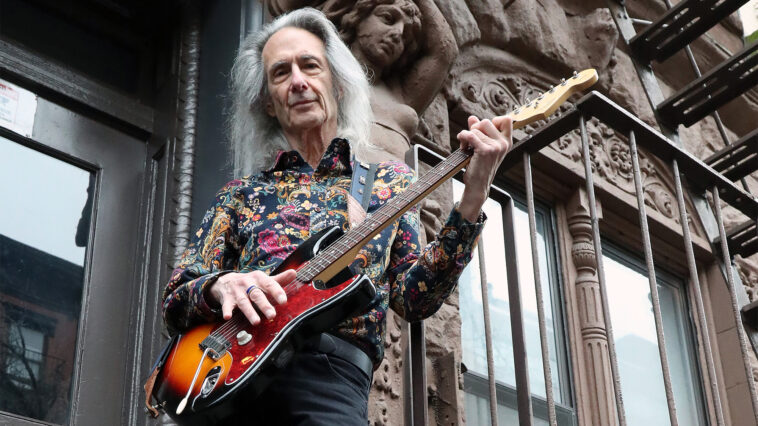
Lenny Kaye readily acknowledges that he “didn’t know what he was doing” when he was tapped to compile the famed Nuggets compilation for Elektra Records during the early ’70s. “I had no sense of destiny or anything,” the Patti Smith Group electric guitarist tells us via Zoom from his home in eastern Pennsylvania. “And if I had thought, ‘This is going to be discussed a half century later,’ I would’ve screwed it up, simple as that.”
Ignorance, then, was bliss for Kaye and for an untold number of listeners who hold the album — full title Nuggets: Original Artyfacts from the First Psychedelic Era 1965–1968 — sacrosanct and essential, influencing generations and musical movements to come.
The two-LP set’s 27 tracks offer both a snapshot of an era and a treasure trove of unknown, obscure or under-celebrated songs — even the ones that charted when first released — by rock bands that fit the same description. “Psychedelic” was a broad term, of course; garage rock was also a generalized description for the music, and Kaye even applied “punk” in his scholarly liner notes years before it came into common practice.
“The ’60s was a quite amazingly exploratory time for the genre we call rock ’n’ roll,” Kaye explains. “Things happened so quickly that the music grew up almost as an adolescent will, sprouting from, say, ’63 through the beginning of the ’70s. The rapid-fire experimental energy was overwhelming. It’s almost like the Italian Renaissance; you have these great, larger-than-life figures.
“I believe Nuggets addresses that sense of sudden expansion of limits. It was very exciting. It was a great moment to experience … and I had the opportunity, thanks to Jac [Holzman, Elektra Records founder] to be the first in line of gathering these.”

New York native Kaye had already made a name for himself in the New York music scene as a musician (sometimes under the name Link Cromwell), writing for a variety of music publications and working at the Village Oldies record store. He was well-known enough for Esquire magazine to name him “the token rock critic” on its list of the Heavy 100 in the music business in 1970, which led Holzman to hire Kaye as an independent talent scout for Elektra.
“Jac Holzman liked rock critics, ’cause he had an intelligent label and writers enjoyed writing about [Elektra acts] Love and the Doors and Tim Buckley and all of that,” Kaye recalls.
He “didn’t get much traction” in that capacity, however, as he championed the Stooges for a third album, as well as the Sidewinders from Boston and an early incarnation of Blue Öyster Cult. Meanwhile, Holzman had broached the idea of “an album he called Nuggets which would find these kinds of rogue tracks that were overlooked — ironic because he probably could’ve signed all of these bands right off the get-go at the time.”

Kaye figured the idea was dead after he “was asked to leave” the company, “but about five or six months later their legal department called me up and said, ‘We have the rights to such and so many songs. What do we do with them?’ And I thought, ‘Oh, this is still happening? That’s crazy …’
I just wrote up a list of songs that I liked that were slightly off the point, I guess. It was mostly my favorite records.”
— Lenny Kaye
“So we just kept going, and the rest is history.”
Holzman had a few suggestions of his own but mostly gave Kaye free rein in the process. “I just wrote up a list of songs that I liked that were slightly off the point, I guess,” he recalls. “It was mostly my favorite records. Jac told me to dig a little deeper, so some of the songs are not the ones you would expect. I didn’t put ‘Gloria,’ the national anthem of garage rock, on there; I chose another one from the Shadows of Knight catalog [‘Oh Yeah’].
“And many of them are not garage rock at all; they’re just fun songs. The Third Rail [‘Run, Run, Run’], a novelty song by some Brill Building songwriters. The Strangeloves [‘Night Time’], hardly a garage band, though they pretended to be one. Sagittarius [‘My World Fell Down’], which is a full-blown orchestration of West Coast Pop.”
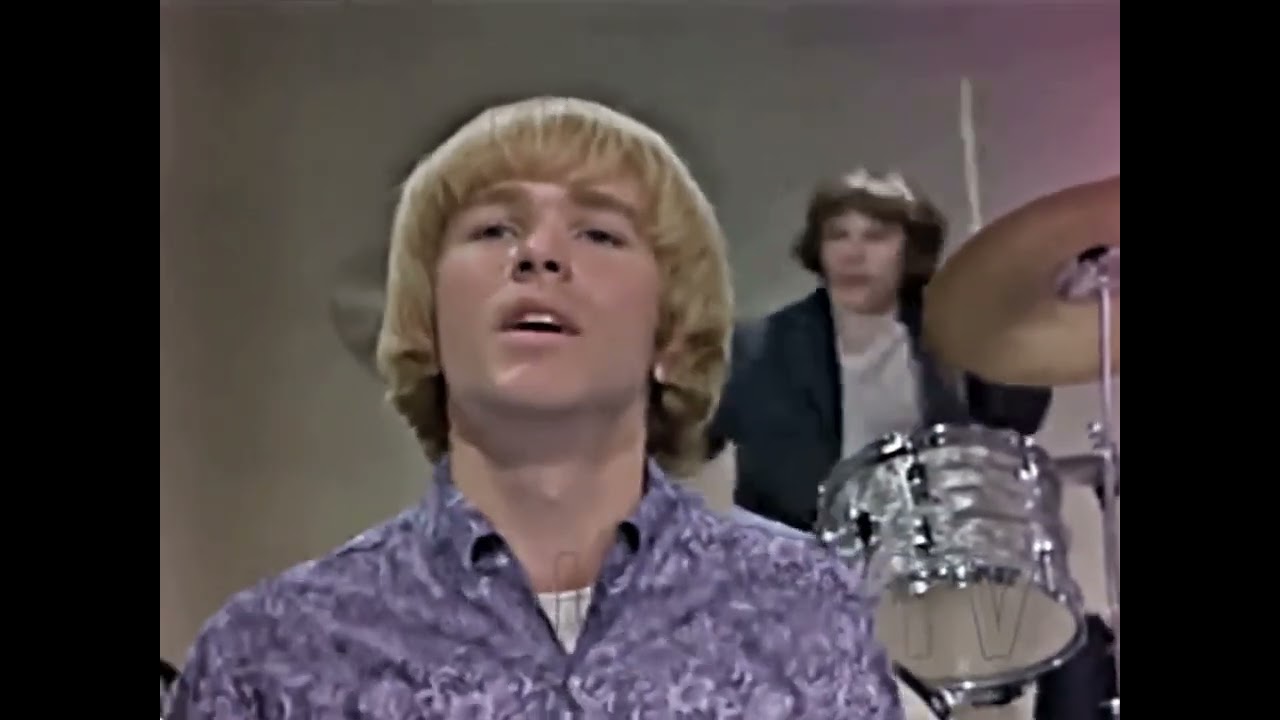
Nuggets does feature some well-known bands (Leslie West’s Vagrants, the Blues Project, the Amboy Dukes, the Blues Magoos) and actual hits, such as the Standells’ “Dirty Water,” the Seeds’ “Pushin’ Too Hard,” the Electric Prunes’ “I Had Too Much to Dream (Last Night),” Count Five’s “Psychotic Reaction” and Nazz’s “Open My Eyes.” What they shared was a spirit and attitude that went against the grain of where rock was at the time — increasingly slick production, virtuosic prog and bombastic heavy metal.
“There was a total sense of mission,” Kaye says of his intent for Nuggets. “Me and other rock critics at the time were longing for a sense, a return. The time was right for re-evaluation, for bringing things back to perspective to the personal, to the available of someone who wanted to pick up an instrument and start from scratch. The time just called for it.
“Music is all about cycles, so if things get out of hand in one way, you know that the opposite is going to come to topple it, the way grunge wiped hair metal off the map or Elvis Presley kind of made obsolete an entire generation of pop singers and songwriters, or the Beatles changing the landscape immediately.”
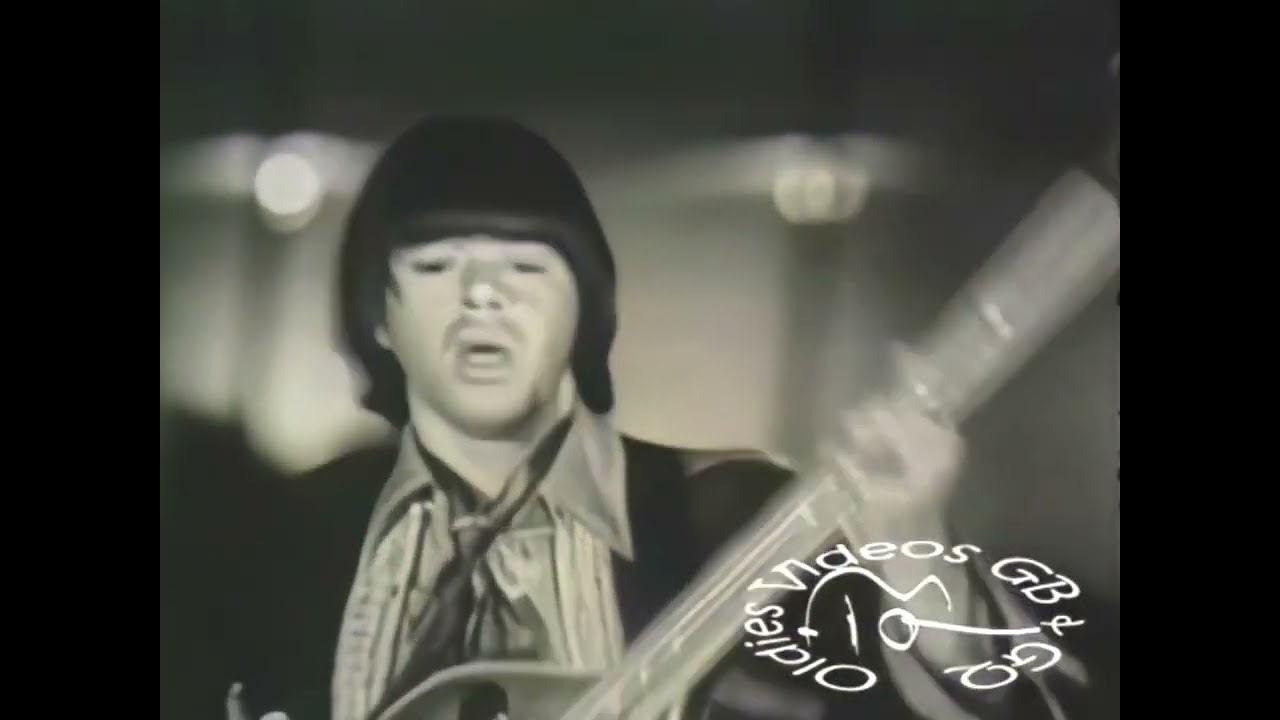
Kaye feels Nuggets’ impact was even more pronounced when Sire Records reissued it in 1976, concurrent with the widespread coining of the term punk rock.
“This was during a time bands were kind of cutting the excess and looking for the root of what makes people move,” Kaye explains. He says he’s not sure why he used “punk” as a term in his liner notes. “It was just in circulation from rock writers who were looking for the truer, the short, sharp, shocked without any artistic pretensions, who wanted things to get back to the basics.
“It was just a term, really; I can’t tell you who initially came up with it. It might have gone nowhere except that it became a capital P, a label for a music style that reflected simplicity and drive and a certain ‘don’t fuck with me’ attitude.
It’s the spirit of reinvention — that’s what punk was, and what grunge was later.”
— Lenny Kaye
“It’s the spirit of reinvention — that’s what punk was, and what grunge was later,” he continues. “The original CBGB bands — Television, Talking Heads, Blondie — they were all so different from each other. The Ramones, who set the template for what would be punk rock — all those bands were extremely different from each other. So what you had was the sensibility of renewal; ‘We’re not gonna listen to what was there. We’re gonna start all over,’ even though you’re drawing so much from what went before. Even the Sex Pistols, with all their rhetoric, sounded as much like the Who and the Small Faces as anybody.
“We build on what has come before, but hopefully it becomes the future, and that, to me, is so important in terms of music’s evolution.”
Nuggets fans are their own legion, of course. Scores of other musicians — Kaye singles out Primal Scream’s Bobby Gillespie — have complimented and cited the compilation over the years.
“Then there’s that random human in Stockholm who comes up and buys me a beer and tells me Nuggets changed his life,” Kaye adds. Smith is not among them, however. “She might’ve known some of the groups,” he says, “but our reference points were more vocal harmony groups. When I first met her and she started coming into Village Oldies, I spun her ‘Mr. Hero’ by the Blue Notes, ‘Today’s the Day’ by Gray, and ‘Bristol Stomp,’ of course.”

Post-Nuggets, Kaye worked with Smith from 1975 to 1979, and again since 1996, co-producing several of her albums. He had his own band, the Lenny Kaye Connection, during the ’90s and has produced albums for Suzanne Vega, Soul Asylum, James, Cindy Lee Berryhill, the Shams and others. He hosts The Lenny Kaye Program on SiriusXM’s Underground Garage channel, while his first-ever solo album, Goin’ Local, was released July 17.
While a proposed second volume for Elektra did not happen, Nuggets has been reissued in several incarnations, including the Sire reissue and expanded box sets in 1998 and 2023. Other Nuggets releases, not involving Kaye, include Nuggets II: Original Artyfacts from the British Empire and Beyond, 1964–1969, Hallucinations: Psychedelic Pop Nuggets from the WEA Vaults, Come to the Sunshine: Soft Pop Nuggets from the WEA Vaults, Children of Nuggets: Original Artyfacts from the Second Psychedelic Era, 1976–1996, Love Is the Song We Sing: San Francisco Nuggets 1965–1970 and Where the Action Is! Los Angeles Nuggets: 1965–1968.
“The lifeline of Nuggets is rather miraculous,” Kaye says. “The fact that we’re talking about it more than 50 years after this ‘oldies’ album was generated is remarkable. It’s great music. I believe Nuggets’ longevity is not just about garage rock; you really can take any genre and find great songs and make them a Nuggets. There’s always going to be an appetite for that history, and that discovery.”
![Array]](https://backingtracksfullcollection.com/wp-content/uploads/2026/05/1779850244_Array.svg.svg+xml "“This is like a bad trip\": Liam Gallagher, Wayne Rooney and others share their views on the first ever World Cup Halftime Show 31")