The Beatles are set to revisit Rubber Soul, their transformative 1965 album that blended folk, baroque pop, soul, and early psychedelic experimentation — a record that captured a year when popular music was rapidly expanding in every direction. Bob Dylan was one of the artists helping push those boundaries.
Dylan’s influence could be heard in the Beatles’ increasingly introspective songwriting, particularly on John Lennon’s “Norwegian Wood” and “Girl,” as the band moved beyond the youthful optimism of their early years. But while the Beatles were absorbing elements of Dylan’s folk-driven approach, Dylan himself was undergoing a revolution of his own.
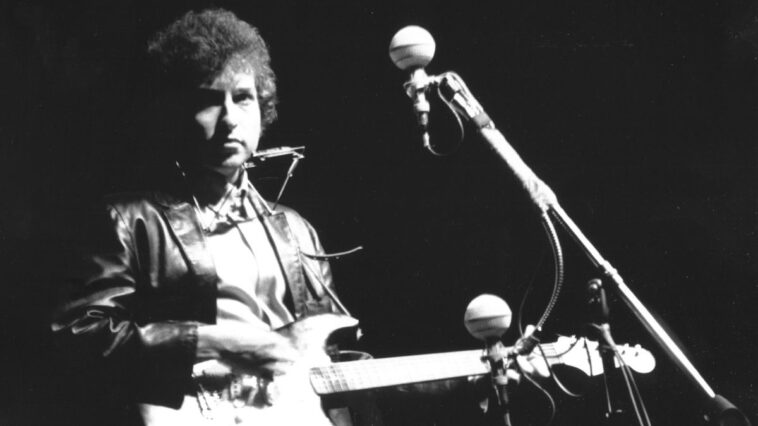
In 1965, Dylan released Highway 61 Revisited, an electrified masterpiece that pushed beyond the conventions of traditional folk and embraced the power of a full rock band. Months later, when he brought that sound to the stage — with Robbie Robertson along playing a Fender Telecaster — and the world was stunned. He was even branded “Judas” during a show at the Free Trade Hall in Manchester, U.K., in May 1966.many fans felt betrayed — but George Harrison, himself a songwriter constantly looking toward the future, saw the change as a natural progression.
The Beatles’ sixth album will arrive October 2 as an expansive new box set featuring a new stereo mix by Giles Martin and Sam Okell, alongside previously unheard session recordings and home demos. The collection offers fans an unprecedented glimpse into the making of a record that marked a major turning point for the band.
The shift represented by Rubber Soul had roots in the Beatles’ famous 1964 meeting with Dylan, an encounter Paul McCartney later described as a life-changing experience. Dylan introduced the band to marijuana that night, and McCartney later joked that he had discovered “the meaning of life.” The meeting helped reinforce the creative connection between two artists who were both beginning to move beyond the limits placed on them by their audiences.
For the Beatles, that meant songs that explored new emotional territory, from Lennon’s enigmatic “Norwegian Wood” and the aching “Girl” to McCartney’s elegant “Michelle” and the dark, unsettling “Run For Your Life.” The group was leaving behind the straightforward charm of its early singles and embracing something more complex.

Dylan’s own transformation was even more dramatic. When he performed with an electric band at the Newport Folk Festival in July 1965, some members of the folk community reacted with outrage. By the time he toured the U.K. the following year, the backlash had intensified, culminating in the infamous moment when an audience member shouted “Judas” at his concert at Manchester’s Free Trade Hall in May 1966.
But when Harrison saw Dylan perform his electric set at London’s Royal Albert Hall, he couldn’t understand the controversy.
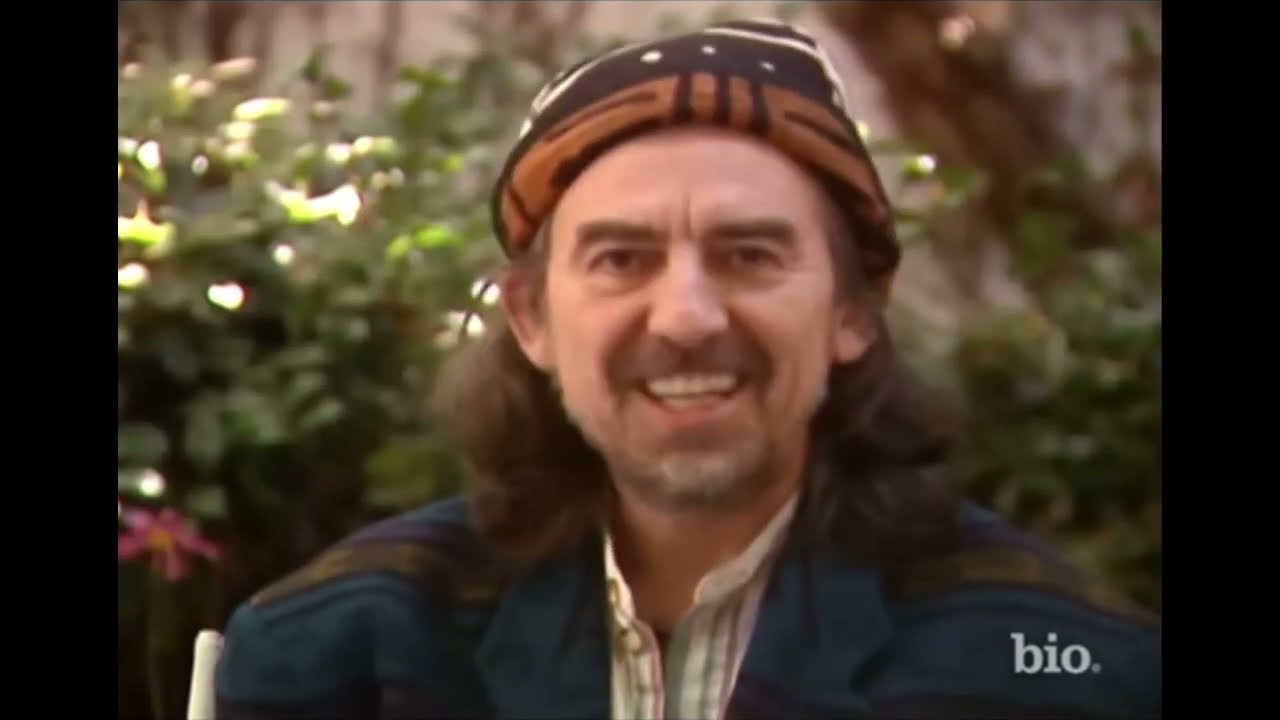
“The set was in two halves, and in the first half, he came out and did his usual thing with the guitar and the harmonica,” Harrison recalled. “Then in the second half he came out with the band.”
The Beatles guitarist understood why some fans were unsettled. Many had embraced Dylan as a symbol of the folk revival and saw the electric performances as a rejection of that identity.
“A lot of them were really uptight. They were like, ‘Hey, he’s forsaken the folk,’” Harrison said. “But Bob just came out and said, ‘Well, you know, you all may know this song. Remember how it goes? Well, here’s how it goes now!’ and they just went off wailing.”
Harrison, however, saw the performance differently.
“It was a great show. I mean, it was ragged, but that is the nature of Bob: raggedy,” he said. “And all through that second half, people were getting up and walking out, and shouting, and it was controversial.”
More than 60 years later, Dylan’s decision to embrace electric guitars and instrumentation seems less like a betrayal and more like a defining moment in rock history. Musician and author Dr. CP Lee has described the “Judas” incident as one of “the pivotal moments in popular music in the 20th Century,” capturing the divide between tradition and experimentation that defined the era.
Dylan, for his part, appeared unfazed. As recalled in the book Dylan on Dylan: The Essential Interviews, he responded to criticism of his Newport performance by telling one journalist, “They must be pretty rich, to be able to go some place and boo. I couldn’t afford it if I was in their shoes.”
And Harrison agreed with Dylan’s instinct to keep moving forward.
“It was interesting. It seemed natural,” Harrison said. “There’s a limit to what you can do just with acoustics; it didn’t seem that Bob should particularly be limited to just doing that. It seemed kind of a natural progression.”