Former Daft Punk member Thomas Bangalter has been reflecting on the origins of 2013’s Random Access Memories, the duo’s fourth and final studio album, and how making the record affected his creative process.
Spearheaded by lead single Get Lucky, RAM ended up being Daft Punk’s most successful album – it’s sold more than four million copies and won multiple Grammy Awards – but, with its focus on musicianship and live instrument recordings, was a markedly different beast to their previous records, which were created using synths and drum machines.
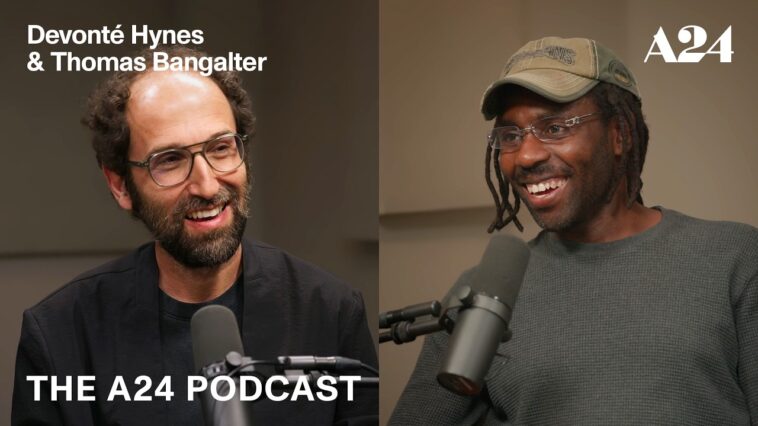
Speaking to Dev Hynes on the A24 podcast, Bangalter says that the catalyst for this change in approach came from Daft Punk’s work on the soundtrack to 2010’s Tron: Legacy movie soundtrack, which was made with an 85-piece orchestra.
Latest Videos FromMusicRadar
“The benefit of the Tron score, on a very personal creative level, was how we got from Tron to to Random Access Memories,” says Bangalter. “Before Tron, all the music we had made was just the two of us in in in my bedroom, and on a very super intimate level, not letting anyone in the process, even until it’s mastered.”
Bangalter alludes to the limitations of this way of working – “Part of Daft Punk was working with electronic instruments, and it it takes so much effort to bring soul to the to the sound of those synthesizers” – and says that after they’d made a start on Random Access Memories before the Tron soundtrack, he made it clear to Guy-Manuel de Homem-Christo, the other member of the band, that he wasn’t happy with the results.
“We had made demos at the studio, you know, in Paris at Gang in 2008 and 2009, after the Pyramid [2007’s Alive tour], and I was not happy with the with the sound of all these demos,” he admit. “I think there were some kind of cool groves, but I was like saying to Guy-Man, ‘We need to trash everything, production-wise.’”
Their work on Tron, though, showed them a way forward.
“Tron was this kind of collaborative process… film work,” says Bangalter. “That’s what Random Access Memories was – I really consider that Random Access Memories was like a film without cameras, basically the entire process of it. And somehow, at the same time, Tron happened in the middle of this process.
“After the Tron thing, there were all these demos, and we were like ‘OK – maybe we can go to LA and have these amazing session musicians turn it into something.”
Assessing the impact of the Tron project, Bangalter says that it helped him to discover “the magic of human beings performing,” but the eventual scale and size and RAM took a huge amount of creative energy, and so when it was over, it was time to strip things as far back as possible.
“For me, the pause was after Random Access Memories,” says Bangalter. “A song like Touch, with Paul Williams, had 250 tracks on Pro Tools. It was a 70-channel Neve board, and we had to divide it into three parts to be able to mix it. And so after that, I remember literally for two years, I had like one piano with like a a GoPro that I mounted on my piano. I didn’t touch one synthesizer. I didn’t open any machines.”
Explaining how alien to him this size of project was, Bangalter says: “You’ve got to understand that Homework and Discovery [the first two Daft Punk albums] were mixed on this 8-channel, small Mackie desk. So four mono, four stereo; like 12 channels, and that’s as much as I can handle in terms of mixing myself.”
Daft Punk officially disbanded in 2021, and Bangalter has since focused on soundtrack work for ballets, films and an art installation. Homem-Christo has busied himself with songwriting and production for the likes of Travis Scott and Rosalía.