
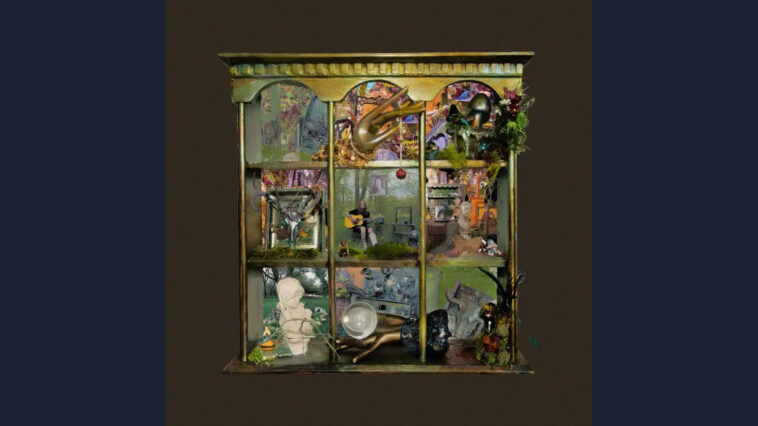
Billy Strings couldn’t say goodbye to his mother. But on So Much for Goodbyes, he’s finding a way to keep talking to her.
The bluegrass virtuoso was on the road last year, somewhere near Kentucky, when his wife called with the news that his mother, Debra Apostol, had died. She was 64. He never got the chance to say goodbye to the woman who raised him.
Releasing August 28, So Much for Goodbyes is Strings’ attempt to make sense of what happened. But its title carries a deeper meaning, too: His mother may be gone, but she’s still with him in the music, the memories and the art she left behind.
“It was a sad thing that I didn’t get to say goodbye,” he recalls to the New York Times. “But when I told my manager about the album title, he said, ‘I like that, ’cause it’s not really goodbye. She’s in everything, and she’s everywhere.’”
The bluegrass acoustic guitar virtuoso has the chops and accolades to match his reputation, including three Grammys. More importantly, his playing and songwriting have helped push bluegrass to new heights, with 2024’s Highway Prayers becoming the first bluegrass record to top the Billboard charts in 2022 years.
Whether Strings can repeat that feat — or go one better — with his fifth album remains to be seen. What’s already clear is just how personal the record is.
Strings wrote “Still I Crash” in the wake of his mother’s death, using the song to say the things he no longer could.
“That’s the one that’s pretty blatantly me talking to her, wondering where she went and why,” he explains. “[It’s me] explaining the fact I had to learn how to walk again, like a child. And just how difficult it is to be without her.”
His mother’s influence is less obvious on some of the other tracks, but it’s there all the same. Lead single “Mill Town Flood,” for instance, draws on Strings’ childhood hometown to tell the story of an alcoholic lumber worker who drinks his life away.
“I’m one of her greatest creations,” Strings says. “She was so artistic and so creative. [But] she struggled her whole life with different substance abuses, and she had a lot of unresolved trauma. I think her way of getting through that was medicating herself.
“She had an illness that she eventually succumbed to. She died of an overdose,” he adds. “It was a shock to me because I had no idea that she was using again. She seemed to be doing really well.
“She’s caused a lot of trauma in my life, but she’s kind of like a conundrum, because she’s such a beautiful, amazing, and artistic person. I’ve never met anybody like her.”

Her presence is perhaps most tangible on the album cover itself, which was created by his mother.
“We always talked about her making the artwork for my next record,” he explains. “She was an artist. She always was making art, these little shadow boxes and mixed media art. She would always be collecting these little trinkets, and pieces of junk, and she would take all this forgotten rusty crap, glue it together to make something beautiful.
“Even before I had any of the songs for this record, she was going to make the next cover. That was our dream.”
The dream was fulfilled in a way neither of them could have imagined.
“It was actually the piece that she was working on the night she died,” he reveals. “It was the last thing she touched.”
Now recovered and back on the road after a skateboarding incident brought his tour to an abrupt end in April, the Martin signature artist is embracing the catharsis of making the album — and the opportunity to break a cycle he knows all too well.
“I’m 10 years sober from alcohol, and I’m definitely drawing a line in the sand here,” he admits. “All this generational trauma has to stop with me, and I’m gonna give my son a very different life from mine.”