Jethro Tull’s first album, 1968’s This Was, featured guitarist Mick Abrahams and leaned in a decidedly bluesy direction. That approach didn’t work out for the British soon-to-be-prog rockers, and neither did Abrahams, leading to a short spell during which some guy named Tony Iommi took up six-string duties in Tull before bandleader Ian Anderson found his long-time running mate in Martin Barre.
Barre’s first album with Tull, 1969’s Stand Up, was a harbinger of things to come, meaning less blues, more flute from Anderson and undertones of prog. But there was heaviness, too; the record featured riffs that stood up to anything Iommi, Ritchie Blackmore or Jimmy Page were doing.
“We’d recorded Stand Up, and that was a new direction for Ian because Tull was a blues band,” Barre says. “And then suddenly we were this other animal you couldn’t put a title to.”
Latest Videos FromGuitar World
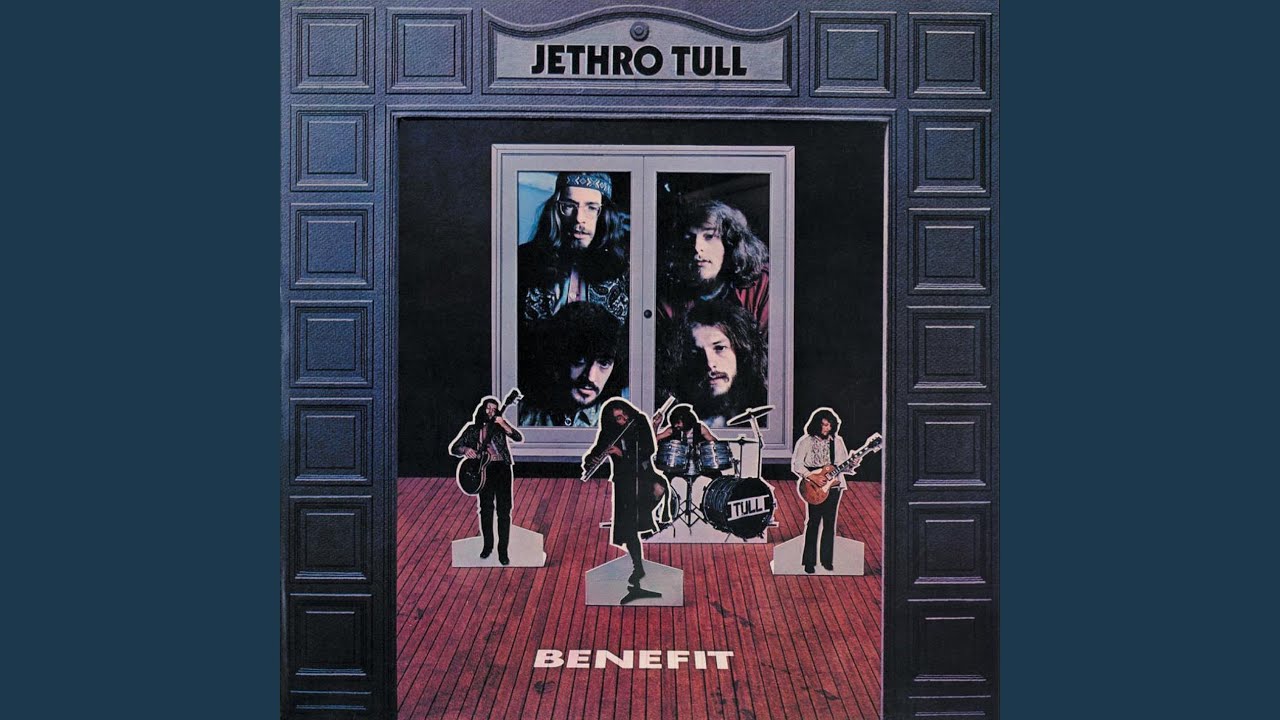
Barre did his best to put a title to said animal by kicking the riffs-meet-prog into overdrive for Tull’s third record, 1970’s Benefit, showing that he, too, was on the precipice of guitar-god greatness. Of course, Barre didn’t know that at the time – and doesn’t necessarily see it that way today.
“I just played,” he says. “We didn’t really investigate tone and sounds. We just got in there, and the sound of Jethro Tull was there, needing to be examined.”
Examine it they did. Songs like With You There to Help Me, To Cry You a Song and Teacher showcased Barre’s open-minded approach as well as Anderson’s status as a guitar maestro.
“I guess it was what was going to become prog,” Barre says. “The birth of prog sounds stressful, but it was exciting. We didn’t know if people were going to like it. Jethro Tull was a blues band, and they were like, ‘What’s happened to you?’ But slowly, we won them over. We had what people would call a ‘blank canvas’ because nobody knew what to expect. It was a relief in many ways.”
The relief didn’t last long, as Benefit was disregarded upon its release in April 1970. Rolling Stone even called the album “lame and dumb.” But as time has gone on, Tull did more and more of that winning people over that Barre talks about, and in retrospect, time has been kind to Benefit.
By the time Benefit came out, Tull were moving away from blues and toward prog, but the album also has a ton of heavy riffs.
At that point in time we’d been touring, and we’d met bands like Led Zeppelin and all these great bands. We knew Jimi Hendrix, Jeff Beck and Cream; they were bands we loved and listened to, so we were going to be influenced by them. That’s what everybody was doing.
When I play, I think, “There’s a riff that hasn’t been invented, and it’s probably not difficult.” I love the power of a great riff. There are classic riffs that were immortalized by Hendrix, Beck and Jimmy Page, but I love the concept that music can be so simple but so important because the riffs are so dynamic. I guess everybody fed off everybody else.
The general understanding of Tull’s music is that Ian played the acoustic guitar parts and you the electric, but that wasn’t entirely the case on Benefit. Ian is a better player than he’s credited.
Yeah, he is. He was a guitar player before Tull, and he told me he started listening to Clapton, Beck and Hendrix and realized he was never going to be as good as them, so he turned to the flute, but he is a great guitar player.
It’s a very focused area of play, but what he does – because I’ve learned his acoustic parts – is really good. They’re fun to learn, demanding and very, very precise.
Do you remember recording With You There to Help Me, which has a distinctive guitar flare and features you and Ian?
We both played electric. Ian played a rhythm track, and then I put all the riffs, bits and pieces. It was all live in the studio, so the whole band played that track live to record it.
Even when you overdubbed a solo, it was a live solo from beginning to end. You couldn’t drop in and repair it
Were there many overdubs on Benefit?
No, it was nearly all live. Maybe we used some overdubs, and I don’t know if [we had] an eight- or 16-track, but there weren’t many, so you didn’t have the luxury of doing 20 takes and then taking the best bit from each one.
Even when you overdubbed a solo, it was a live solo from beginning to end. You couldn’t drop in and repair it, so we mainly recorded it live in the studio.
To Cry You a Song has an incredible harmonized guitar riff. Was that you and Ian together?
Yeah, that’s me and Ian again. It was fun. It was inspired by Blind Faith’s Had to Cry Today. It’s a similar feel and riff, and we just had a lot of fun with it. I think it shows in the recording. You can tell it was something that was really easy and positive to put together.
What guitars were you using while recording Benefit?
Well, it wasn’t good stuff! Benefit was done on a Les Paul that I bought, and I’m ashamed to say that it was a fake. [Laughs] I didn’t know it then, and I loved it. I just wanted a Gibson Les Paul because when I was at college and starting in bands, it was the Holy Grail.
Just to see one was like, “Oh, my God,” you know? You wouldn’t even need to touch it; it was this… thing. You couldn’t have it, and you couldn’t find them, so you couldn’t play them, but they had this mystique about them, which, I guess, they still do. Not in my mind, but they still do.
Where did you get the Les Paul copy from?
Stand Up was done on a Les Paul Special, a really beat-up thing I bought from a shop in London. But then, I bought this [fake] Les Paul from a dealer in America, and that was the one guitar; it’s all I used for the whole record. Nobody had two guitars in those days; you couldn’t afford it! But yeah, it wasn’t a great guitar. [Laughs]
You used Hiwatt amps in the studio.
I didn’t really know anything about amps or guitars at the time, so you just made the best of what you were given
The Hiwatt amps weren’t particularly good, either. [Laughs] They didn’t drive easily; they weren’t really rock amps. Marshall began doing that well and [were available] at the time, but we all used Hiwatt, so that side of it was against everything, with the formula of a fake guitar and Hiwatt amps that weren’t very good and didn’t inspire.
I didn’t really know anything about amps or guitars at the time, so you just made the best of what you were given. And I had a sort of treble boost pedal to get a bit of sustain at the Hiwatt.
How do you feel about Benefit now?
We were really happy with it. Going back to the way Stand Up was received, we knew we were going to make a good album. Whether it sold tens or hundreds of millions of copies, that was never the formula.
We were just so confident, enthusiastic and positive about making more music in that direction. That’s what rock bands did. They just went in their own direction. It was great fun to make. If it had failed and sold nothing, I still would have been happy with it.