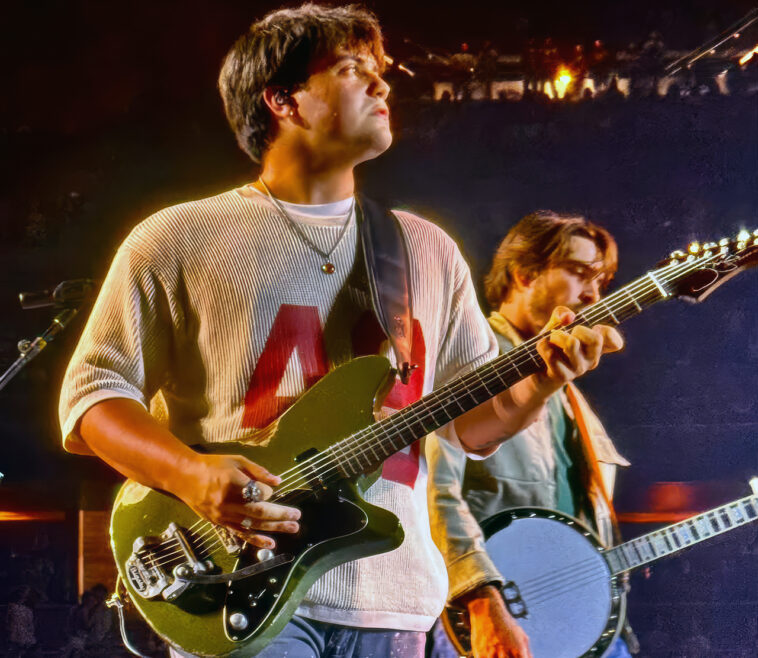
Noah Levine was three semesters into Berklee College of Music, and two weeks into an internship with producer Gabe Simon, when a rising songwriter named Noah Kahan asked him to try a guitar solo on an unfinished song. Levine’s second take for Homesick was kept.
A few weeks later, Kahan called Levine at seven in the morning, asking him to drop everything and join his touring band. “I ran over to the student center, unenrolled from all my classes and hit the road,” Levine says.
Kahan hadn’t yet released hit single Stick Season, and his band was booked into theaters seating 1,000-2,000. No-one knew what was to come. “It was a risk,” Levine says. “There was no guarantee of where it would go – there never is with any music artist.” Four years later, that risk has paid off.
Latest Videos FromGuitar World
Levine and Kahan are now deep into a stadium tour world tour behind chart-topping album The Great Divide. Nowhere has the scale hit Levine harder than playing Boston’s legendary Fenway Park, which they’ve now done six times.
The old ballpark’s green room sits far enough from the stage that the band can’t just walk to it. They load into a van and go through a barricaded stretch, where fans line up by the thousands before and after the show.
“I told my dad it was like watching a Beatlemania documentary,” Levine says. The journey from playing theaters to the current level, he says, felt both fast and gradual, because the band “hit every size stage on the way there.” Through it all, the touring unit – many of whom live in Nashville – have stayed a tight-knit family.
Baritone guitar, first introduced to Levine by producer Simon, has become his signature voice. He played Simon’s Jerry Jones baritone all over Kahan’s Deluxe album, including Dial Drunk and You’re Gonna Go Far. “It’s like my arms doubled in length with so much more reach, so much more range in the low end,” he says.
Fitting that low-end into a band with bass, keys, and a second guitarist took years to master. Levine credits producer Ethan Gruska’s records for showing him how low frequencies can coexist without fighting for space. “The baritone has such a unique growl and twang. It brings in this Western sounding element. I’ve learned how to dial that in and find where it fits.”
Finding the right instrument to carry that tone onstage took just as long. Levine cycled through a Fender Squier Cabronita, then a custom flamed Telecaster hand-built by Ohio luthier Tim Rocco, before John Page Guitars approached him about designing a signature model from scratch.
While Levine was on tour, he and Page worked the design, with prototypes shipped from Page’s Pacific Northwest workshop. “We went through that process three or four times before we nailed it,” Levine says. The result is the Noah Levine Signature DL Baritone, which pairs a solid rosewood neck with active Fishman Fluence P-90 pickups, a nearly silent version of his favorite pickup.
His rig has evolved from what was once a stereo tube setup – a Princeton style amp paired with a Fender Deville, running through a Milkman spring reverb and an Echoplex tape echo – into an entirely digital Kemper system, dialed in with guitar tech Gordon Allison over a month.

“I’ve never been totally sold on how amp breakup translates with a digital amp,” Levine says. But pushing the Kemper’s onboard amp models and effects “about as far as they’ll go” got him close enough to the touch-sensitive breakup of a tube.
His touring arsenal also includes a 1967 Gibson SG Special, a vintage Fender Jaguar and a Mule resonator. And with a rhythm section together nearly a decade, he says translating songs from studio to stage now feels “incredibly effortless.”
Off the road he’s quietly built a solo career, which Kahan has embraced rather than resented. “A lot of artists get territorial,” Levine says, “worried about someone half-assing their project if they’re doing their own thing on the side.”
But the trust runs both ways: when Levine’s own band sold out a 600-capacity show at Boston’s Middle East Club, a group from Kahan’s tour crew showed up at the door. “They nearly got the police called on them for demanding to be let into a sold-out show!”
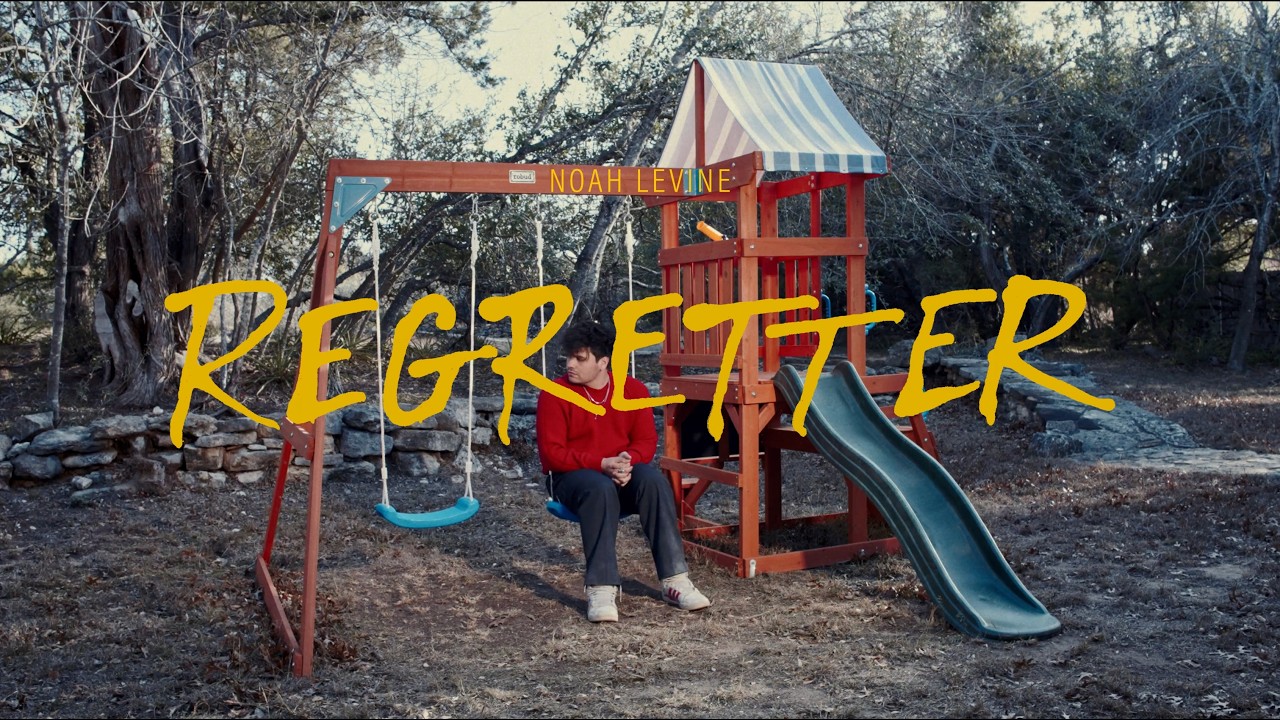
His debut album Leaver came together in a two-week sprint at a Nashville studio with his friend Sam Westhoff, writing and recording a new song nearly every day. “It’s one thing to write a song, sit on it and then feel the relief of finally recording it,” Levine says. “It’s another thing entirely to walk into a studio empaty-handed and come home with riches.”
Rather than chase Kahan’s sound, Levine says he’s tried to “stay inspired without emulating,” treating music as “the one place you get to be 100 percent honest without being criticized for it.”
Beyond Kahan’s overseas dates this fall, Levine hopes to bring his own show to Europe and the UK. He has no plans to slow down creatively either. “I’ve got plans for 20 more records,” he says. “I’m an album guy. I love listening to a record top to bottom.”