I bought my first guitar when I was 17. I paid for it with my own money, which I earned working a long, tedious summer job in 2006. When I got my final paycheck, I knew exactly what I was going to buy as soon as it hit my sweaty hands.
Mom drove me to Guitar Center and I purchased a cream-colored, solid body Fender Stratocaster with a light maple neck and fretboard. I ran up to my new best friend and pulled her off the stand: “Mom, I want this one!”
Living in Seattle and being the only Black guitarist I knew at the time, I was obsessed with Jimi Hendrix. I wanted to do more than just dress like him – I wanted to sound like Jimi too. So I became a Fender girl.
Latest Videos FromGuitar World
The instrument was made in Mexico and cost me $399. Of course, it wasn’t exactly what Jimi had, but it was close enough for a teen’s summer job budget. Little did I know that the guitar would stay with me for nearly 20 years; the one I played opening for the likes of Weezer, Death Cab for Cutie and Fishbone – and that ultimately got me discovered by Pearl Jam’s Mike McCready.
Over the years my guitar and I have played for a swath of fans, and each time, in a small way, it feels like I’m paying homage to the man who inspired my purchase. Shoot, I played that cream-colored Fender for the Seattle Sounders the year the MLS team introduced Hendrix-inspired purple jerseys. My band The Black Tones played the jersey launch in front of 40,000 people.
I started a band and wrote our first record on this guitar. We’ve been on TV, tours and some of the biggest stages I never knew I’d get to. And I couldn’t do all this with the guitar and not name her. So, I gave my cream-colored instrument a name – Ruth, which also happens to be my New Orlean-born maternal grandmother’s middle name.
When my grandfather Poppie passed away, Ruth and I wept together at his funeral, playing a song for him there as he lay in his casket. In short, we have history, Ruth and I. So much so that I thought I’d never let her go.
But then something happened to change those plans.
One day last year, I got a call from my manager DeVon with an unexpected offer. “Eva,” he said, “I know you’ve been trying to do this for years, and I think we finally got our opportunity – the band has been invited to perform at a prison in Oklahoma.”
I couldn’t believe it! He was right. This was something I’d actually been trying to do for some time. I know how important music can be to the incarcerated community. Now, the chance to be part of that was finally offered to me.
Why? Well, that’s where this venerable publication comes in.
I didn’t know anyone connected to the prison system in Lexington, Oklahoma. So I asked my manager how and why they’d reached out. “They saw an interview you did in Guitar World before,” DeVon told me. “And they dug into your music!” The power of journalism is real!
DeVon continued: “There’s a festival the prison puts on every year produced by the inmates,” he said. “This is their fifth year. They want to fly you in.”
“I’m in!” I said.
Since then, a whole new world and an exciting project has opened up. I have Guitar World to thank for it! (If my editor ever needs a kidney, I got you!) Now in all seriousness, it was hard to believe this was finally going to happen. The prison had come to me, to my band. They wanted us. And we would certainly rise to the challenge.

The gig was set for May 18, 2025. That morning, my band boarded a plane. A few hours later, we touched down in the dustbowl. A driver was there to pick us up to take us straight to the Joseph Harp Correctional Center, a medium-security men’s state prison. After a security check, it was time to enter their place.
When we got near the stage there was a strange silence. Then we saw a group of men in bright orange jumpsuits staring back at us. Was this going to turn into a bad movie scene? Had we made the wrong choice in coming?
Every worry my fantastical brain could think of melted away in about .5 seconds. The inmates began singing our songs: “Mama! There’s a spider in my room!” Then another shouted: “Craaaaaazy!”, which is a note to one of our tunes, Welcome, Mr. Pink. Several others joined in, yelling other lyrics to other songs. I could not believe what was happening. We were already rock stars in a far-away Oklahoma prison.
We smiled at and greeted as many of the inmates as we could as we walked to the stage. We took a tour of the prison music room, which had some really solid gear that had been donated by musicians who’d previously performed there. It was all pretty impressive.
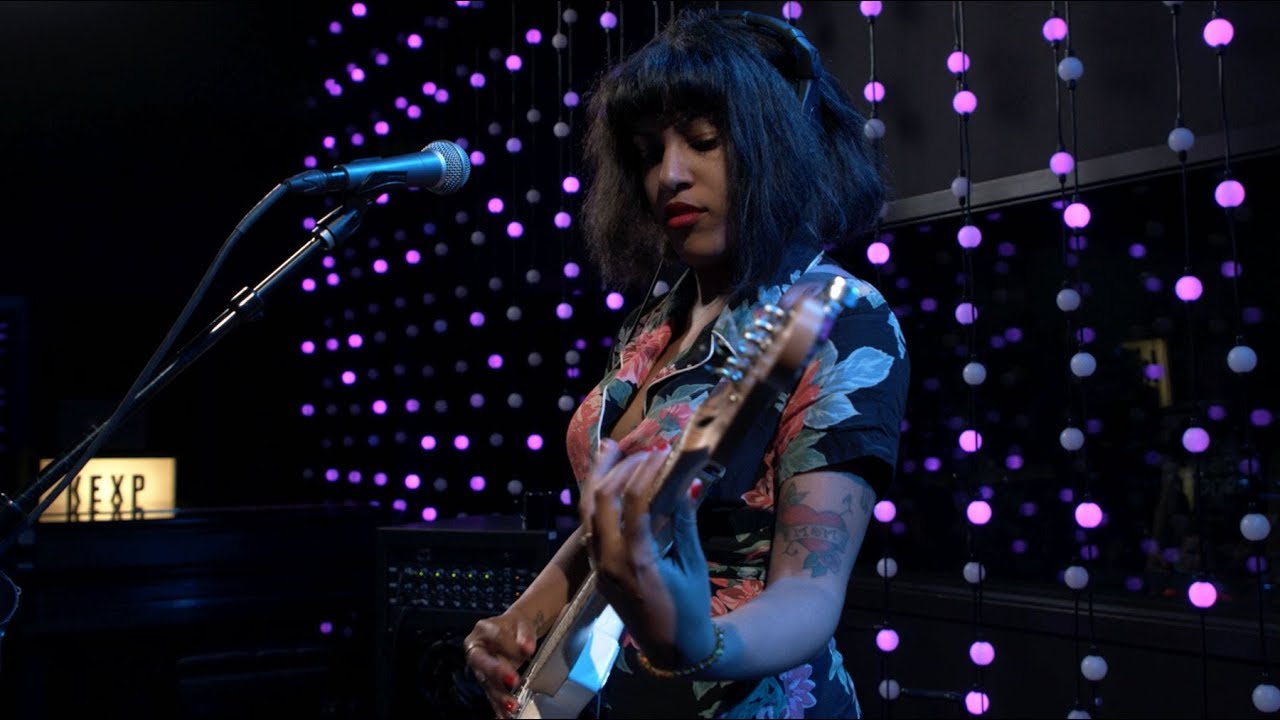
But now it was time to do what we’d flown down to do. We were the headliners for the night and I couldn’t wait to play. We performed an hour-long set, dishing out songs from our debut LP, Cobain & Cornbread.
I wailed on my Vox wah-wah, as I love to do, and tried to drench the walls of the prison with my Electro-Harmonix Cathedral Stereo Reverb pedal. For the ’70s Nigerian rock cover we play, Troublemaker, I used my all-time favorite distortion, the OCD pedal.
I was looking for my first new guitar in nearly two decades. But instead of running up to a new Ruth, I let this new one choose me
That gear had long complemented Ruth so well. Finally, as we wrapped up the gig, as I strummed the final chord, I told the inmates about her. I talked about how special Ruth was, how special she’d been. Every song I’m proud of, I’d written with Ruth. We’d shared a musical journey for nearly 20 years. Then without hesitation, I decided something.
“You know what?” I shouted. “This feels like the right time to leave her. Right here!” In that split-second, I gifted my Ruth to the inmates there at the Joseph Harp Correctional Center. The crowd erupted in a loud cheer. I saw a few tears in the audience, too.
For the first time in my life, I said goodbye to my guitar. To Ruth.
The next morning, my band and I boarded a plane back to Seattle. But I couldn’t stop smiling. I knew in that moment that I would miss my Ruth. But more than that, I knew that there are times in life when you have to let loved ones go. You have to make room for the new.

A few weeks later, I was that little girl in a guitar store yet again. I was now looking for my first new guitar in nearly two decades. But instead of running up to a new Ruth, I let this new one choose me. I meandered through the Seattle shop, I let each instrument on the wall, on the racks, and in between make their subliminal case.
In the end, I reached out and found a blue, Gretsch Electromatic Pristine LTD Jet. The beautiful electric guitar boasts gold hardware. She looks like a queen strutting down a ballroom staircase.
Later in 2025, I took my new guitar to play a gig at the Monroe Correctional Complex in Monroe, Washington. But while I couldn’t part with her just yet – we have a lot of memories yet to make – I did let the guys there name her.
You can call her Crazy Blue.
- The Black Tones’ new album, Diamond Ruby Night, is out on October 30 via Reptar Records. New single Bombs is out now.