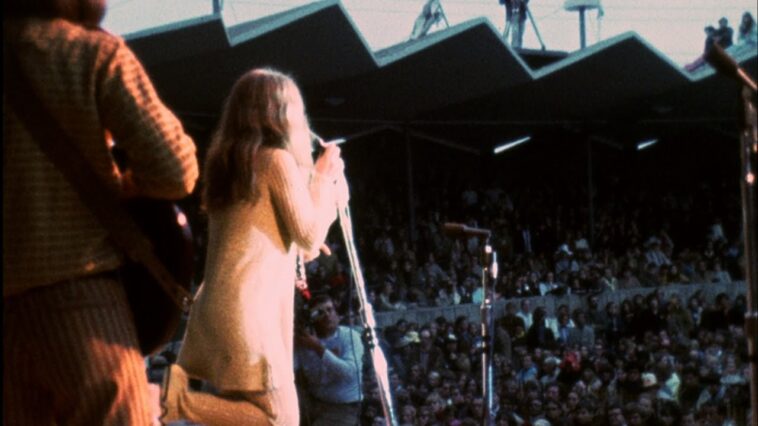
Early in the evening of Saturday 8 August 1970, one of the most uniquely talented singers of the age was sitting in a bar called Vahsen’s, Port Chester, a village situated in the affluent environs of Westchester County, 30 miles north-east of midtown Manhattan.
The singer was Janis Joplin, an artist inspired by the likes of Bessie Smith, Lead Belly and Big Mama Thornton, who melded blues, soul, gospel, country and rock into a radically distinctive sound.
There was a powerful emotional intensity to Joplin’s performances and her voice could shift from a vulnerable whisper to a raw visceral scream in a heartbeat. She also had an astonishingly physical and charismatic stage presence.
Latest Videos FromMusicRadar
Joplin was appearing later that evening at the Capitol Theatre in Port Chester with her band Full Tilt Boogie. They had just finished their soundcheck and she was in Vahsen’s bar with songwriter and producer Bob Neuwirth – a former road manager and associate of Bob Dylan’s – as well as the actors Rip Torn and Geraldine Page.
Also in the bar was rising-star singer and poet Patti Smith, a good friend of Neuwirth’s, who recalled the events of that evening at Vahsen’s in her 2010 memoir, Just Kids. Smith recalled that Joplin began reciting the line, “Oh, Lord won’t you buy me a Mercedes Benz”, which was adapted from a short, rhythmic poem by San Francisco beat poet, Michael McClure.
The poem was a wry comment on the futility of consumerism, the counterculture’s rejection of the idea that the accumulation of material goods will bring happiness and contentment.
According to Smith, the others started banging beer mugs on the table to form a rhythm. Joplin and Neuwirth then came up with lyrics elaborating on the premise of McClure’s short poem. Neuwirth hastily wrote them down.
“At the Port Chester bar, Janis sang the line a few times,” Neuwirth told The Wall Street Journal in 2015. “It was like a sea shanty. Janis came up with words for the first verse. I was in charge of writing them down on bar napkins with a ballpoint pen. She came up with the second verse too, about a colour TV. I suggested words here and there, and came up with the third verse – about asking the Lord to buy us a night on the town and another round.”
One hour later, Joplin performed the new song a cappella during her show at the Capitol Theatre. “I just wrote this at the bar on the corner,” she told the audience. “I’m going to do it Acapulco,” she joked.
All of which came as something of a shock to the Full Tilt Boogie Band who were on stage with her.
“On Mercedes Benz, Janis wanted to accompany herself on guitar,” bassist Brad Campbell told the Wall Street Journal. “She took out her Gibson Sunburst and whispered to us, ‘Watch me, boys.’ But instead of playing it, she just sang. We eventually played a few notes here and there and sang where we could, figuring she wanted us to follow her.”
There is an alternative version of how the song came into being. In his autobiography Midnight Mover, singer-songwriter and musician Bobby Womack – who was commissioned by Joplin to write the song Trust Me for her album Pearl – suggests that Joplin was inspired to come up with the song while going for a ride with Womack in his new Mercedes Benz 600.
The show at The Capitol Theatre in Port Chester on 8 August 1970 was recorded and widely bootlegged. On 1 October 1970, Joplin recorded the song Mercedes Benz during sessions for her debut solo album Pearl. Three days later, she died of a heroin overdose at the age of 27.
If there is one moment that defines the breakthrough of Janis Joplin it is her appearance at The Monterey International Pop Festival on 17 June 1967, with the band Big Brother And The Holding Company.
The audience was stunned by Joplin’s performance as is evident in the documentary of the festival when Joplin and the band perform the song Ball And Chain.
As Joplin unleashes a mercurial performance on stage, the camera hones in on Cass Elliot of the Mamas & The Papas, who is watching, spellbound, from the audience below.
Clive Davis, the newly appointed president of Columbia Records, was also in the audience that day and signed Janis Joplin and the band to Columbia Records.
Joplin and the band’s self-titled debut album fared reasonably, but their second album Cheap Thrills had a raw, visceral quality. Released in August 1968, the album launched Joplin as a star and reached No 1 in the Billboard Hot 200 chart, where it stayed for eight weeks.
Joplin’s ascent as an artist was beset with profound challenges. Throughout her adult life, she struggled with drug and alcohol addiction.
She performed at Woodstock, walking out on stage around 2 am on Sunday 17 August 1969, following consistent delays, which meant it was ten hours after her allotted stage time when she finally began her performance.
In his 2012 memoir, Pete Townshend of The Who wrote: “She had been amazing at Monterey, but tonight she wasn’t at her best, due, probably, to the long delay, and probably, too, to the amount of booze and heroin she’d consumed while she waited. But even Janis on an off-night was incredible.”
By the time Joplin began planning the recording of her second solo album in 1970, the stakes were high. After leaving Big Brother & The Holding Company in 1968, she recorded her first solo project I Got Dem Ol’ Kozmic Blues Again Mama!, backed by new outfit the Kozmic Blues Band. Some reviews at the time were extremely negative. While it reached No 5 on the Billboard Hot 200, some critics lamented her shift from psychedelic rock to horn-heavy soul and R&B.
When it came to her choice of producer for the follow-up solo album, Pearl, Joplin opted for The Doors’ producer Paul Rothchild, who began by insisting that they record at Sunset Sound Recorders studio in Hollywood, not at her label CBS’s own studio. Clive Davis reluctantly agreed and recording sessions began on 27 July 1970.
Before she recorded the song Mercedes Benz, Joplin wanted the agreement of Michael McClure, who had written the original short poem. Joplin phoned McClure at his home in Haight Ashbury, as Joplin’s sister Laura recounts in her 1992 book, Love, Janis.
“Janis finally called Michael, saying, ‘I’m singing a song with your Mercedes Benz line in it.’ He said, ‘Will you sing it for me?’ So, she sang it over the telephone. He said, ‘I like my song better.’ ‘Do you mind if I use it?’ she asked. ‘No, go ahead,’ he said, ignoring any discussions of money or credit.”
McClure was credited as co-writer along with Joplin and Neuwirth. In an interview with SF Gate in 2003, McClure said he never earned a cent from his poetry but the significant royalties from Mercedes Benz helped pay for his house, high in the Oakland Hills, on the eastern side of San Francisco Bay.
Joplin recorded Mercedes Benz during a lull in sessions on 1 October 1970 and none of the band were present. It was recorded in one take and her performance reportedly left Paul Rothchild and engineer Phil Macy mesmerised.
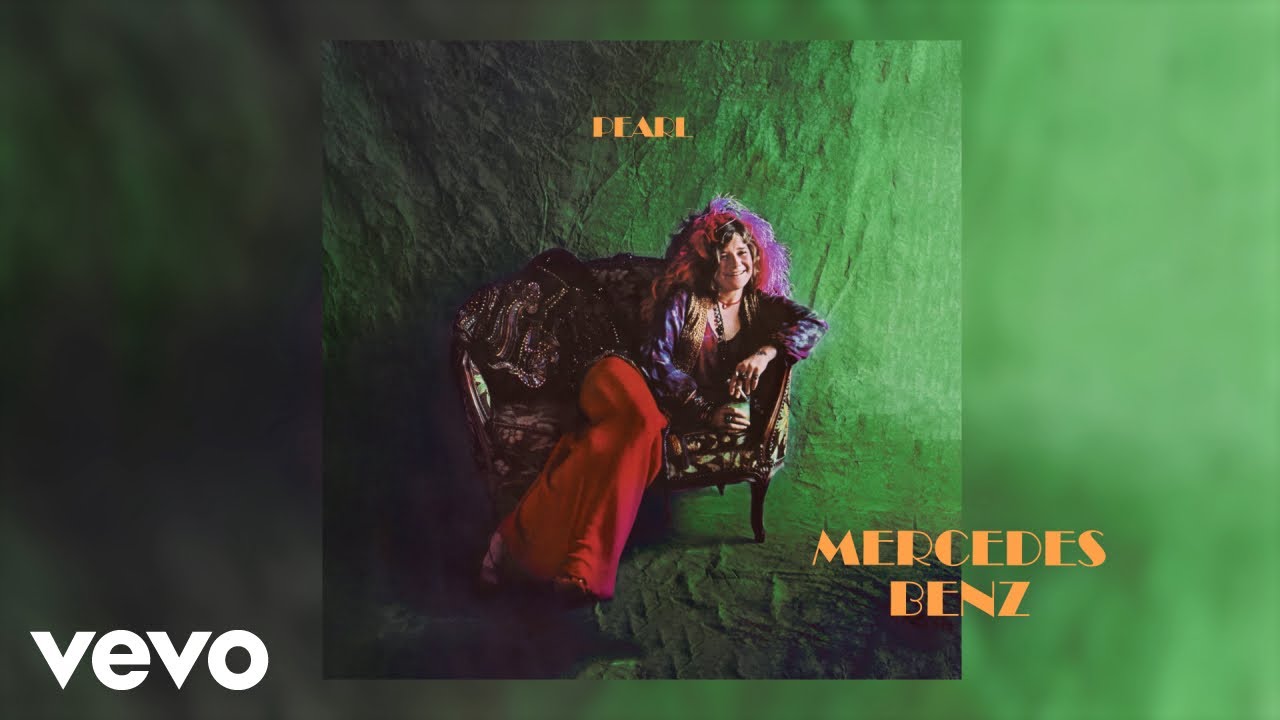
In so many ways, Mercedes Benz is far more than a song. It is an electrifying glimpse into the personality of the ferociously talented blues singer from Port Arthur, Texas, who fought against the stifling conservatism of suburban Texas in the early ’60s and fetched up one of the few places on Earth that would allow her to be herself – San Francisco.
It starts with an announcement. “I’d like to do a song of great social and political import,” she quips. “It goes like this…”
And so it begins, with Joplin stomping out a beat with her foot on the studio floor before the vocal comes in. It’s an astonishing sound, big and gritty, achingly soulful, ragged and whiskey-soaked, with the lack of any instrumentation only accentuating its power and emotion. “Oh Lord won’t you buy me a Mercedes Benz/My friends all drive Porches I must make amends.”
Across the 1:46 of Mercedes Benz, we see everything – her zest, her humour, her fragility, her fearlessness and her audacious, unbridled talent. It’s all captured on tape, a unique document that says far more than most massively-produced songs ever could.
As Jim Beviglia of American Songwriter magazine put it in 2023: “Very few a cappella songs have ever made an impact on the world of classic rock, but Janis Joplin’s Mercedes Benz packs more wallop in its way than countless tracks by full bands.”
Two days after she recorded the track, at around 11 pm on 3 October 1969, Janis Joplin left Sunset Sound studio and returned to her room at the Landmark Motor Hotel. She died from a heroin overdose during the night. According to Performing Songwriter magazine, Joplin had explained to a friend that she was only using heroin to avoid drinking again, because hangovers hindered her performance in the studio.
The deeply devastated Rothchild and the band worked for the next two weeks to finish the Pearl album, which would feature some of Joplin’s finest work.
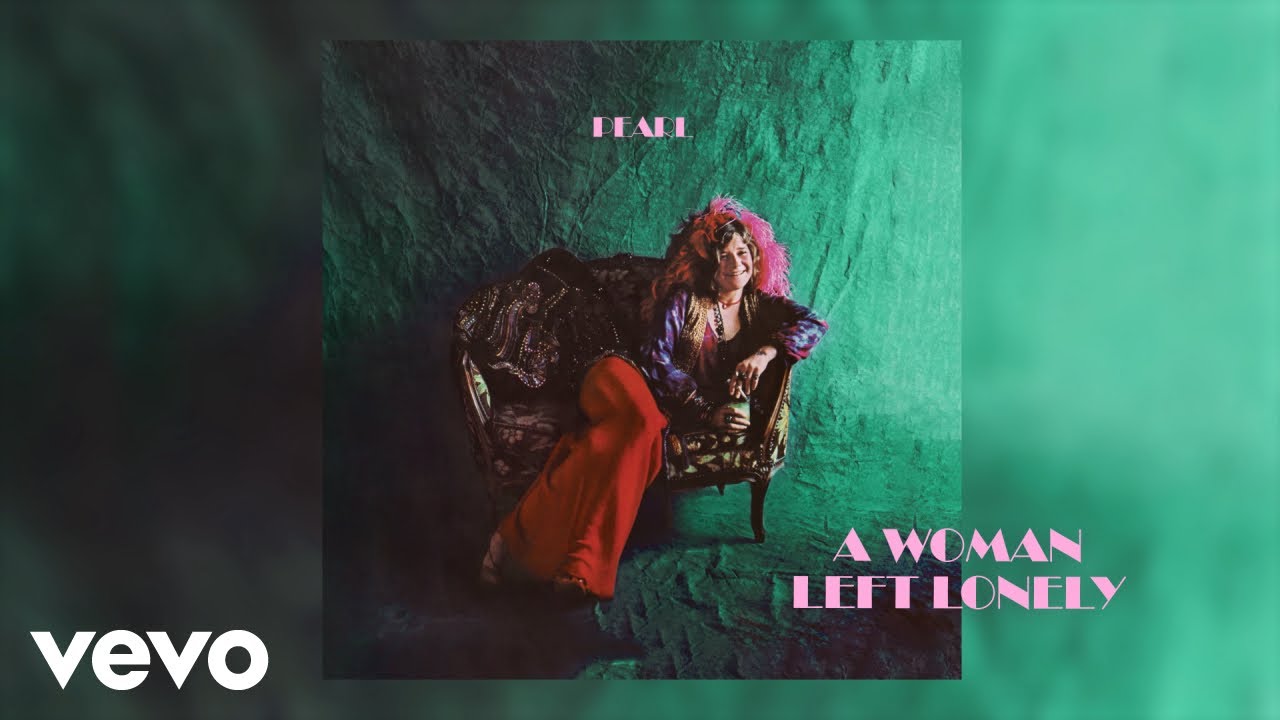
In an interview with Yahoo! Music, Bob Neuwirth said that if Joplin had not died, it would have been unlikely that Mercedes Benz would have been included on the album.
“The album wasn’t finished,” said Neuwirth. “They didn’t really have enough stuff. And Paul Rothchild thought it captured her personality, so they included it on Pearl. You know, it’s one of those songs that was never meant to see the light of day. It was just a bar improvise on the back of Michael McClure’s thought.”
On 11 January 1971, three months after Joplin’s death, Pearl was released. The album reached No 1 in the Billboard Hot 200 where it stayed for nine weeks. In 2003, the song was remixed adding a beat and background melody. This version was featured on the CD collection The Essential Janis Joplin
In a retrospective review in AllMusic, Joe Viglione notes that on Mercedes Benz, Joplin “stands naked before the listener providing a clear picture of what a commanding presence her voice was, and the texture of that extraordinary instrument as well”.
He then ponders the question: “Can anyone name another short and sweet solo performance which has left such an indelible mark?”