
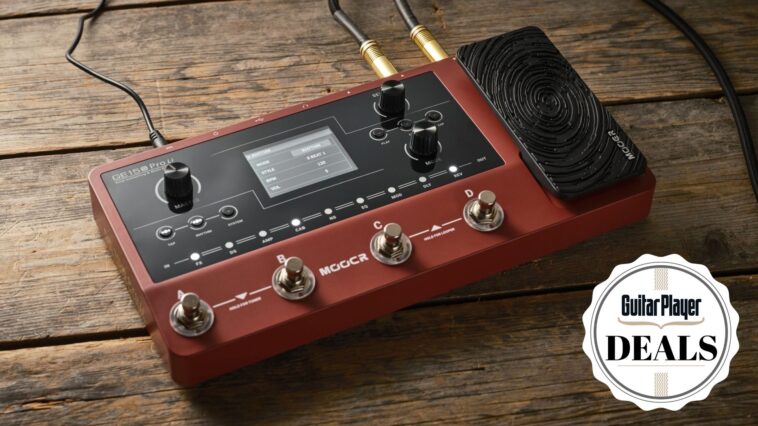
When I think back to the simplistic, multi-effects I had to settle for as a beginner, today’s budget modelers are honestly mind-blowing. If you’re trying to build a versatile rig without draining your bank account, Amazon’s Prime Big Deal Days just dropped some serious discounts on a pair of feature-packed floorboards.
You can snag the Mooer GE150 Pro Li for around $132, or step up to the Max Li version for just a hair over $200. Both of these units pack a ridiculous amount of value into a stompbox format, even before the sale, making them absolute steals for the gigging musician on a tight budget.
During my recent hands-on time with this modeler, the internal rechargeable battery absolutely won me over. Ditching the pedal power makes setting up a breeze, and after hammering away for a solid three hours during my tests, the battery indicator only dropped a single notch. It seems Mooer isn’t exaggerating about that nine-hour lifespan.
It’s built to survive the road. Tossing it into a backpack is no problem thanks to its manageable footprint, while the metal-and-plastic hybrid chassis feels tough. Add in a heavy-duty metal expression pedal and satisfyingly clicky switches, and you’ve got a piece of gear that feels genuinely rugged.
You also get a built-in looper, plenty of assignable footswitches, and crucially, full compatibility with Neural Amp Modeler (NAM) captures.
Stepping down a tier, we have the Pro Li, which has a deep well of usable sounds, it’s practically tailor-made for newbies or anyone craving a cheap, reliable practice tool.
Because it’s incredibly compact, you can slide it right into the front pocket of your gig bag. It definitely feels a bit plasticky compared to its big brother, and the I/O options are pretty stripped back, but it’s tough enough to handle basement jams and early band practices.
You won’t find a touchscreen here; instead, building your signal chains relies entirely on tactile hardware knobs. The good news is that the interface is snappy. The mode and select dials are laid out clearly on the screen, and we experienced absolutely zero latency when tweaking our signal chains.
As for the tones? They’re solid, though maybe a touch uninspiring if you’re a tone snob. The clean amps actually punch above their weight, even if the high-gain stuff tends to sound slightly generic. We obviously aren’t dealing with Quad Cortex horsepower here, but for an entry-level player getting their bearings, or a veteran wanting an inexpensive practice rig, these sounds are more than adequate.