
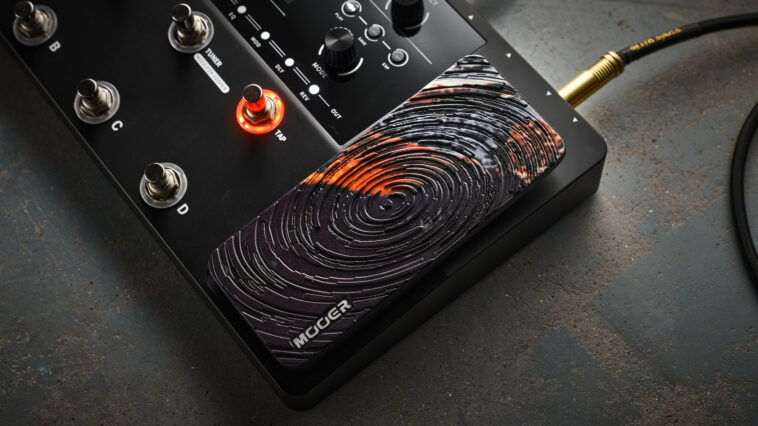
If you’re looking for a budget multi-effects pedal with plenty of flexibility and features, there are two great deals available in the Prime Big Deal Days Sale at Amazon right now. The Mooer GE150 Max Li is available for just over $200, while the Mooer GE150 Pro Li is down to just $132.03.
They’re both amazing value for money even at full price, but with these additional discounts you’re getting a lot for relatively little money. Looking back at what was available when I first started playing, these units blow those out of the water.
The Mooer GE150 Max Li has a lot of features. It’s compatible with NAM (Neural Amp Modeler) captures, can be operated on a built-in battery, is rechargeable via USB-C, has a looper, and plenty of footswitches that make it usable when gigging.
It’s fairly lightweight and sized so that you can easily chuck it in a backpack. It feels very sturdily built with a chassis that’s a mixture of metal and hard plastic, and the footswitches click satisfactorily when you press them. The expression pedal is also made out of metal, giving it a very hardy feel.
In my testing, I used it for a good three hours solid, and it only lost one bar of battery, so Mooer’s claim of nine hours looks to be on point. There are plenty of cues on the front of the unit, so it can be operated without diving into the manual, and the screen is bright and clear.
One thing you will have to do with this unit is dial in the tones. It’s got great sounds in it, but the stock presets aren’t the best. This is one of the factors in buying something cheaper that I’ve noticed having tested many different multi-effects units.
The Mooer GE150 Pro Li is very compact, small enough to fit into a gig bag pocket if you need it to. The build is very plasticky, but it feels overall robust enough to take some abuse. It’s not got a huge amount of connectivity, but then this is aimed at beginner players playing in their first bands.
There’s no touch screen here, so everything has to be handled via the hardware knobs. The select and mode dials do most of the controlling here, and everything is clearly represented on the screen. Everything reacts instantly, and we found zero latency when putting signal chains together.

The amp models are solid if unspectacular. But at this price, we’re not expecting Quad Cortex quality. The clean tones are actually pretty good, but the more distorted amps can end up feeling a little generic. Obviously, beginner players won’t know the difference, and if you’re looking for a cheap modeler for practicing with, they’re more than respectable.