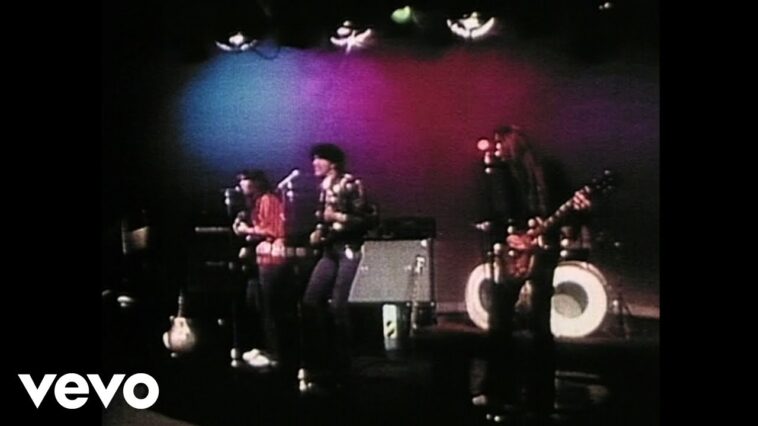
It was May 1976, early summer in Hollywood, California, and Phil Lynott was on a high.
The singer, bassist and leader of fast-rising rock heroes Thin Lizzy, Lynott was enjoying a night out at the famous Rainbow Bar & Grill on the Sunset Strip. At his side was Lizzy’s California-born guitarist Scott Gorham.
They had a swagger about them, and for good reason. Lizzy’s single The Boys Are Back In Town – partly inspired by the band’s first trip to LA – had become a huge hit both in America and across the Atlantic. In Ireland, Lynott’s homeland, it was No 1.
Latest Videos FromMusicRadar
Thin Lizzy and Phil Lynott had arrived, and Lynott wasn’t shy about letting people know it. As he walked into the Rainbow that night, he felt invincible.
The Rainbow was where rock ’n’ roll royalty held court. In its dark corners and private booths, drug dealers and groupies attended to the stars.
Led Zeppelin, especially, loved the Rainbow. Whenever they were in Los Angeles they made the place their own: they were the biggest band in the world, and threw their weight around accordingly, drummer John Bonham most of all.
Bonzo would think nothing of ordering up ten Black Russian cocktails – for himself – and then picking a fight with anyone who looked at him the wrong way. He was one of rock’s true wild men. But even Bonzo was taken aback when he ran into Phil Lynott in the Rainbow on that night in May ’76.
Lynott and Scott Gorham stood at the bar, knocking back drinks with Ritchie Blackmore, the ex-Deep Purple guitarist, who had once tried to lure Lynott away from Thin Lizzy to play bass in a new group. Blackmore was feared as the meanest, moodiest bastard in rock. He was a huge star with a big reputation and a savage wit. But Lynott wasn’t intimidated. Lizzy had been booked to support Blackmore’s new band Rainbow on a forthcoming US tour, and Lynott was fired up about it.
As John Bonham looked on, Lynott sneered to Blackmore, “Man, when we get on the road we’re gonna kick your ass every night. You won’t know what’s hit you!”
Blackmore was speechless. Bonzo was laughing his head off. Both were amazed at Lynott’s cockiness. But that was Phil Lynott. The man wasn’t short on self-belief. He was good and he knew it.
In ’76, Phil Lynott and Thin Lizzy were on a path to glory. The Boys Are Back In Town blared from radios throughout that long, hot summer. Lizzy would follow it with many more great songs and classic albums.
The band would develop into one of the definitive hard rock acts of the ’70s; the first internationally successful Irish rock band, fronted by the first black rock superstar since Jimi Hendrix. Thin Lizzy’s wild lifestyle would become the stuff of legend. And their music would inspire future rock giants from Bon Jovi and Def Leppard to Guns N’ Roses and The Darkness.
But Thin Lizzy, and Phil Lynott, were bound for self-destruction. By 1983, the band had split up. And on 4 January 4 1986, just 10 years after that night at the Rainbow when the world was at his feet, Phil Lynott was pronounced dead, his heart, liver and kidneys all having failed due to the effects of prolonged drug addiction.
His death, at just 36 years old, was described by his friend Bob Geldof as “a sickening tragedy.” Phil Lynott had lived fast and paid the price. But the man had such charisma, and produced so much great music, that he would never be forgotten.
The bronze statue of Phil Lynott that stands on Grafton Street in Dublin, one of his favourite haunts, confirms his status as a great Irish hero and a genuine rock ‘n’ roll icon. As Scott Gorham stated simply, “Phil left an impression like nobody else.”
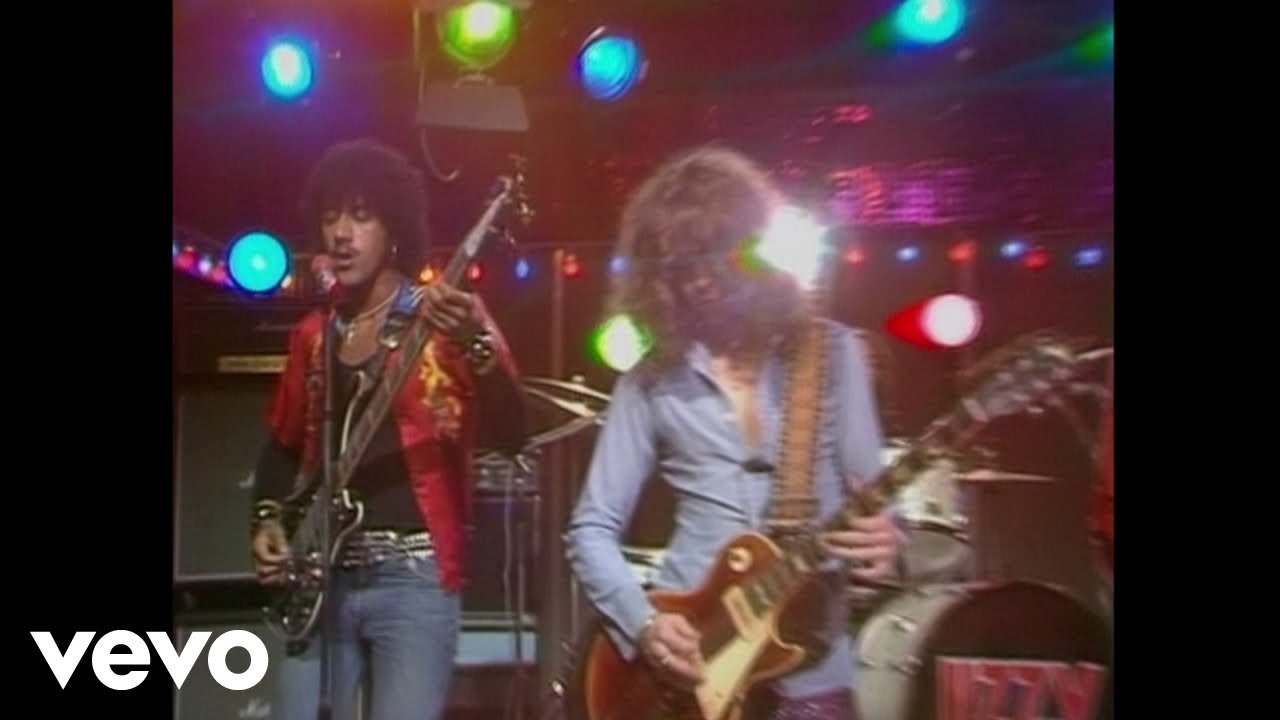
Phil Lynott was the kind of rock star who made it all look easy. He exuded an effortless cool. But he’d been through many tough times, and won many hard battles.
He was born Philip Parris Lynott on 20 August 1949 in Birmingham. His mother Philomena Lynott was a student nurse from Dublin, his father Cecil Parris a black American serviceman. The couple never married, and separated soon after Philip’s birth.
Philomena, a devout Catholic, admitted, “I was a sinner in the eyes of the church.” ’50s society was scornful of unwed mothers and mixed-race relationships. There were few black kids in Dublin back then. Philip was subjected to racist abuse. He grew up without a father, and was also separated from his mother at the age of four when Philomena took a job in Manchester and left Philip in Dublin to be raised by her family.
It was not an idyllic childhood, but Philip was smart, and his confidence grew when, aged just 11, he joined his first rock ‘n’ roll band, The Black Eagles. Philip was the singer and he loved the attention he got.
The Black Eagles were no more than a covers act – Beatles and Stones hits a speciality – but by the mid-’60s they were performing four nights a week, giving Philip his first taste of stardom, albeit on a very modest scale.
Also of significance was the bond Philip formed with the Eagles’ drummer Brian Downey, who attended the same school as Philip in the working class district of Crumlin. The pair would become co-founders of Thin Lizzy in 1970, but only after Philip had learned another hard lesson.
When The Black Eagles fell apart in 1967, Philip worked for a brief time at an iron foundry. It was to be his final, half-hearted attempt at holding down a normal job, aborted when he was invited to join a new rock band named Skid Row in 1968. He got the gig because, as Skid Row’s leader Brendan ‘Brush’ Shiels later revealed, “Philip was the best looking boy around, and I knew that with him fronting the band, we’d get lots of attention from girls.”

Skid Row played the psychedelic rock songs of the era – Hendrix, Cream, etc – and were soon one of the most popular bands in Ireland. Philip the gangly youth was becoming Phil Lynott the rock star. And when the band acquired a brilliant new guitarist in Belfast-born Gary Moore, they were emerging as serious contenders. Then they fired their singer.
Phil couldn’t believe what was happening to him. He had been struggling with his voice and needed an operation to have his tonsils removed. When he returned to the band, they’d decided that they were, in Shiels’ words, “better off without him.” It was a bitter blow for Phil and a tough call for Brush Sheils to make, especially as Phil had been best man at Shiels’ wedding.
Shiels did what he could for Phil: he taught him how to play bass, and gave him a bass guitar at a knockdown price (which Phil never did get around to paying). Most valuable of all, however, was the lesson Phil learned from the Skid Row experience: that even friends could screw you over, and that the only sure way to avoid getting screwed in the future was to boss your own band.
That’s exactly what Phil did with Orphanage, formed in 1969 with old friend Brian Downey, bassist Pat Quigley and guitarist Joe Staunton. This being Phil’s band, they played Phil’s songs: new, original compositions. And this being the new, more ruthless and business-savvy Phil, when a better option materialised, he grabbed it.
Another hot young guitarist from Belfast, Eric Bell, turned up at an Orphanage gig at Dublin’s Countdown Club, and despite being off his face on acid (“It was like waking up on Jupiter!” he later confessed), Bell talked Phil and Brian into forming a new band with him.
The new band got its name from a character in the children’s comic The Dandy: Tin Lizzie, the Mechanical Maid. It was Eric Bell who said they should change the name to ‘Thin Lizzy’, because heavily accented Dubliners would pronounce it the same anyhow. Phil laughed: Thin Lizzy it was. And in three years, that name was at the top of the British and Irish charts.
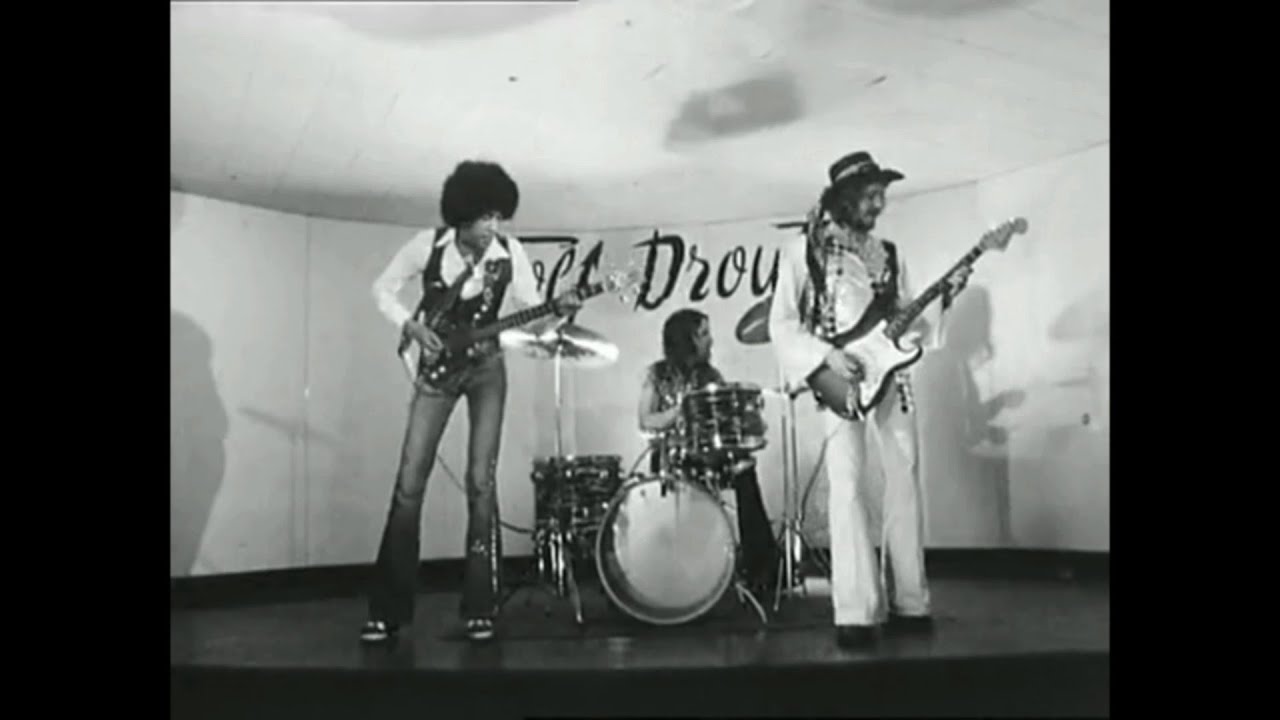
Thin Lizzy’s first hit was a complete fluke. Their first two albums, released in 1971 and 1972, had sold poorly, so when co-manager Ted Carroll heard them playing around with an old Irish folk song called Whiskey In The Jar, he suggested they record it for a single. Brian Downey was horrified. “Fuck off!” he snapped. “It’s a joke song – it’s not Thin Lizzy.” Downey had a point: Thin Lizzy were a hard rock band, and although their version of Whiskey In The Jar had a rock feel, it was still, plainly, a folk song. They recorded it anyway, mostly to keep Carroll happy, and in March 1973, to the band’s surprise, the single hit No 1 in Ireland and No 6 in the UK.
Phil Lynott was on Top Of The Pops. He was a star. But celebrations were short-lived. When subsequent singles bombed, Lizzy were written off as one-hit wonders. And although they’d made a third album together, Eric Bell was faltering. He loved music but hated the music business. Also, he was, by his own admission, “drinking too much, doing too many drugs.” Following a disastrous gig in Belfast when he was so pissed he could barely play, Bell resigned. “I’d lost my mind,” he confessed years later. From hereon in, Thin Lizzy would change guitar players like most bands would change guitar strings…
Bell’s replacement, Gary Moore, would last just four months. He and Phil had hit it off when they were in Skid Row, but when Moore toured with Lizzy in early ’74 he would irritate Phil by hogging the spotlight, and would drink even more than Eric Bell did. “I was killing myself,” Moore admitted. So he quit the band, and in doing so, almost finished them off.
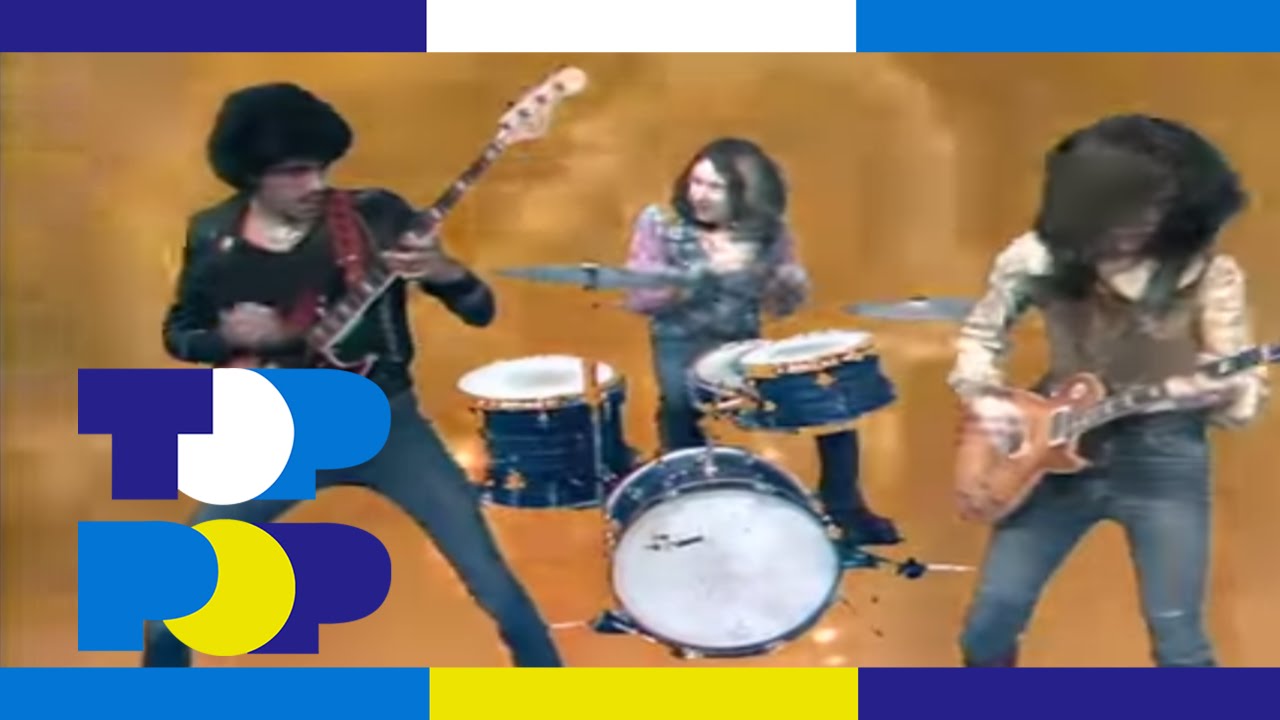
With two guitarists gone in quick succession, Brian Downey grew so disillusioned that he quit too. For a brief period, Thin Lizzy was Phil Lynott and Phil Lynott alone. But after luring Downey back for an extra £50 per week – big money in those days – Lynott had a great idea: he’d replace Gary Moore with not one but two new guitarists. First came 17 year-old Glaswegian Brian Robertson, then 21 year-old Scott Gorham. Both would play lead guitar. A new Thin Lizzy sound was born.
What they needed next was another hit record, and fast. Thin Lizzy were massively in debt, and their new record label Vertigo wanted a quick return on their investment. As Scott Gorham admitted: “The guillotine was hanging right over everybody’s heads.” Lizzy delivered two patchy albums inside a year, Nightlife and Fighting. Neither of them was a big seller. The third album for Vertigo would be their last chance with the company – maybe the last chance that Thin Lizzy would ever have.
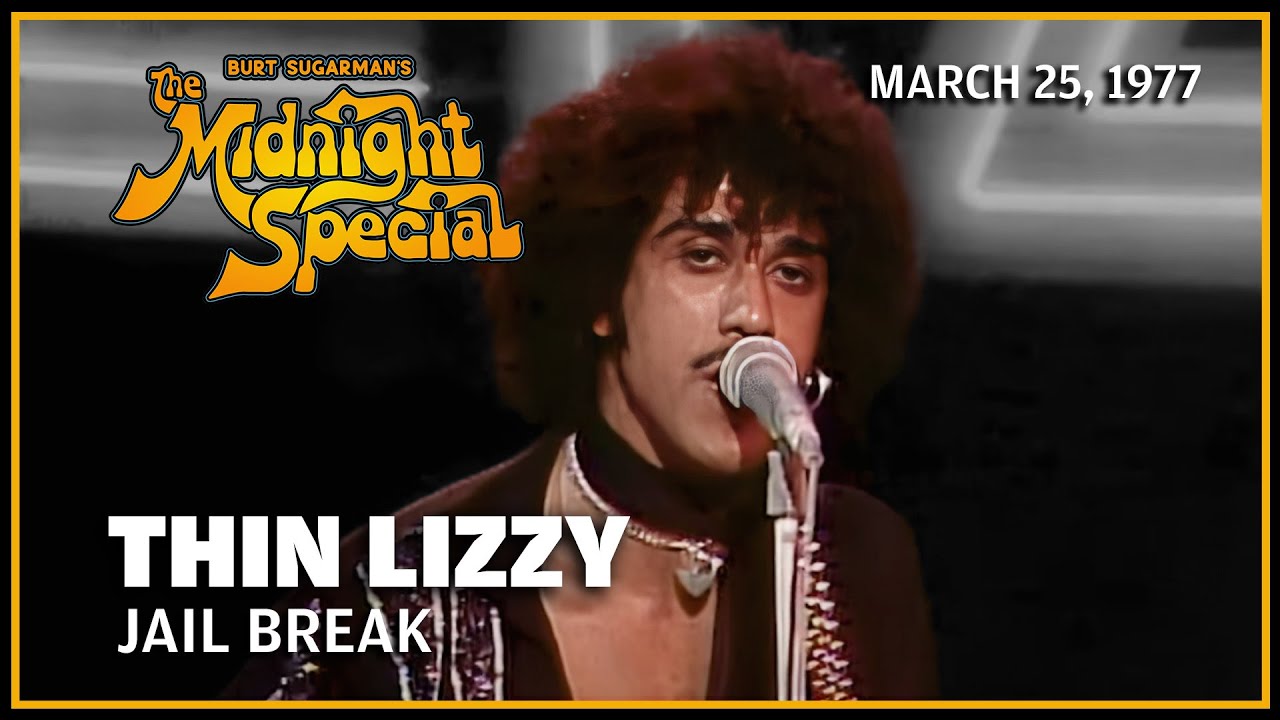
Released in March 1976, Jailbreak was a quantum leap. The sound was bigger and tougher. The songs were stronger. The performances oozed confidence. Thin Lizzy meant business. And although it didn’t look so good when Jailbreak started off selling slowly, the breakthrough came when a song from the album started getting radio airplay in America. Incredibly, it was a song that wasn’t even going to be on the album until one of the band’s managers said he liked it.
As Scott Gorham recalled, “We were on tour in America and our management said The Boys Are Back In Town was bustin’ out of the Midwest. We said, ‘Shit, we’d better put it in the set!’ It really caught the record company with their pants down, like, ‘Holy crap, man! I think we got a hit on our hands!’ It did a hundred yard dash up the American charts, and the album took off. We couldn’t quite believe that this was happening.”
Phil Lynott had really nailed it with The Boys Are Back In Town. It was a great song – fluid, catchy, punchy – with a brilliantly evocative lyric about boys and girls, drinking and fighting. It was, said Phil, a song that “every street gang in the world can relate to.” It would become one of the classic rock anthems, and the song Thin Lizzy would always be remembered for. But its short-term effects were no less impressive. The Boys Are Back In Town saved Thin Lizzy’s career.
It certainly gave Phil Lynott something to boast about when he bumped into Ritchie Blackmore in LA in ’76. But Phil would regret telling Blackmore that Lizzy were going to kick his ass every night on tour. Lizzy had to pull out of those dates when Phil contracted hepatitis. His eyes were “banana yellow”. He ended up in a hospital in Manchester for three weeks.
Phil told the press that this illness had made him reconsider the kind of lifestyle he was leading. “You’re chasing the wrong things,” he said. But he wouldn’t slow down. He even wrote the next album, Johnny The Fox, while he was in that Manchester hospital.
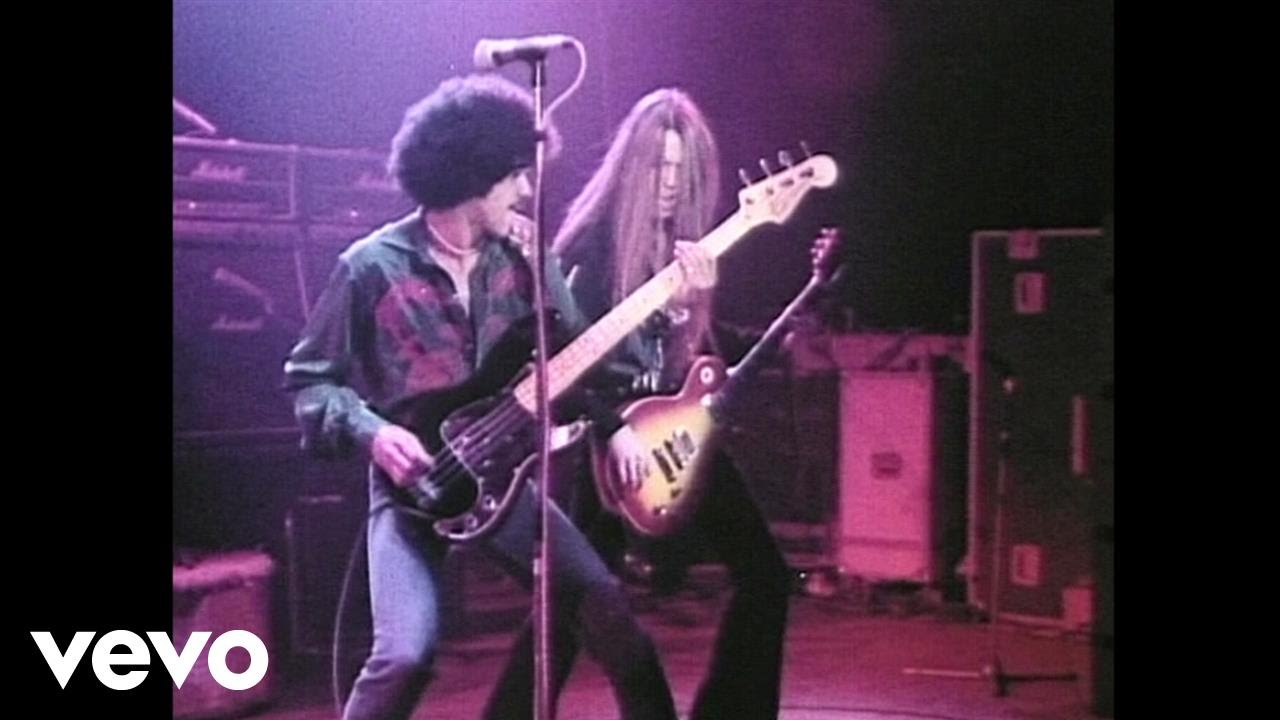
Phil Lynott had worked hard to get to the top and he would work hard to stay there. And he loved to play hard too. As Scott Gorham said with a laugh, “I liked to actually sleep every once in a while, but Phil, he was the original 24-hour guy.”
In the late ’70s, no band worked harder or partied harder than Thin Lizzy. Gorham: “We were touring so heavily, we were getting so tired out on the road, we were looking for inspiration anywhere. You wanted to get fucking high, man.” As the band’s former tour manager Frank Murray once noted, wherever Lizzy played, “every chick in town got a backstage pass.”
Phil was exceptionally popular with the ladies. “He had this image as a leather-clad rocker, a tough character,” Gorham said. “But Phil had a real romantic, poetic, charming side to him. He could charm the ass off anyone, women especially.”
Equally, he was very capable of looking after himself and the other guys in the band whenever a jealous boyfriend or drunken idiot fancied throwing a few punches.
“It was like the Wild West,” Gorham smiled. “We were the fastest guns in town and there was always some young punk who wanted to take you down. He was a fighting guy, Phil – even if he was stoned. He had that attitude: fuck with me, man, or fuck with my band, and there’s gonna be a world of hurt going on here!”
If Phil was the kind of guy you could rely on in a fight, Brian Robertson was the kind you could rely on to start one. Lizzy’s young guitarist was drunk a lot of the time, often putting away two bottles of whiskey a night. The amount of speed he was snorting didn’t help, either.
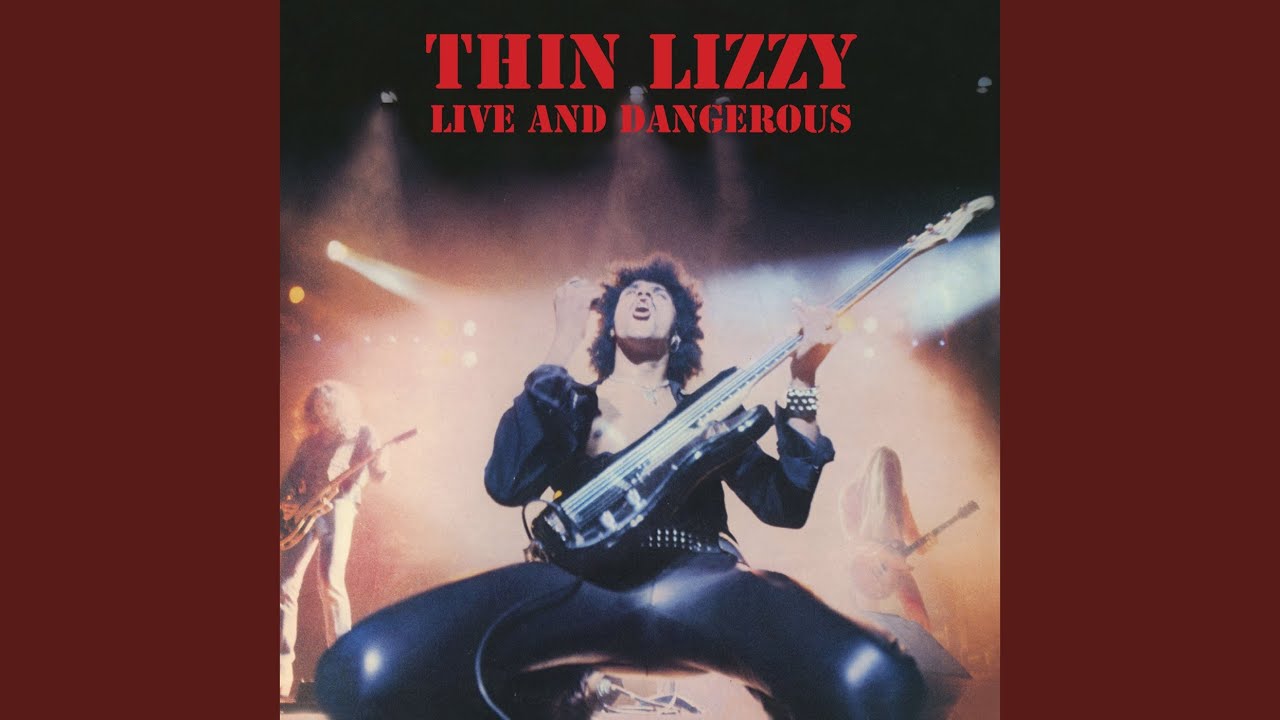
“I was like a stick of dynamite waiting to explode,” he admitted. But Robbo often came off worse from a scrap. In 1977 he missed Lizzy’s tour of the US with Queen after injuring a hand in a brawl, Gary Moore acting as stand-in. Robbo returned for another tour at the end of that year, and in June 1978 the band were celebrating their biggest success to date when the Live And Dangerous album hit No 2 on the UK chart.
It remains arguably the greatest live album ever made. As Scott Gorham says, “Live And Dangerous is what Thin Lizzy was all about.” But it was also the last album Brian Robertson would make with the band.
He quit before he was sacked. “I was just out of control,” Robertson said. “A complete asshole.” In August 1978 Gary Moore joined on a full-time basis, and in April 1979 Lizzy had another top 10 album with Black Rose. Thin Lizzy looked solid, and Phil Lynott was a happy man – his girlfriend Caroline Crowther, daughter of TV personality Leslie, had given birth to their first child, Sarah. Plus, he was working on his first solo album, Solo In Soho, another personal milestone.
But behind the scenes, Lynott was sowing the seeds of his own destruction. During the recording of Black Rose in Paris, he and Scott Gorham had become hooked on heroin. “That was me and him gone for the next six years,” Gorham said. It was an addiction that Lynott would never shake.
Slowly, Phil Lynott’s life would fall apart. His band would go into decline, his marriage to Caroline would disintegrate, his health gradually eroded by the drugs.
Gary Moore quit Thin Lizzy – for the second and final time – during the summer of ’79, midway through an American tour. Moore was drinking heavily but felt that Lynott was doing far too many drugs. “I couldn’t stand there watching Phil blowing it night after night,” he said.
With Moore’s replacement, former Pink Floyd sideman Snowy White, Lizzy made two more albums, but they were sounding past their best. Lynott’s second solo album was a mess. So too was Scott Gorham. He could feel the heroin killing him. “I was in way too much pain,” he recalled. “I wasn’t having fun anymore. I said, ‘Phil, I’m done, baby!’”
But Phil managed to talk him into doing one last tour. The fans, he said, deserved a proper farewell. Reluctantly, Gorham agreed. A new guitarist, ex-Tygers Of Pan Tang star John Sykes, was recruited. A new album, Thunder And Lightning – the heaviest of the band’s career – was recorded.
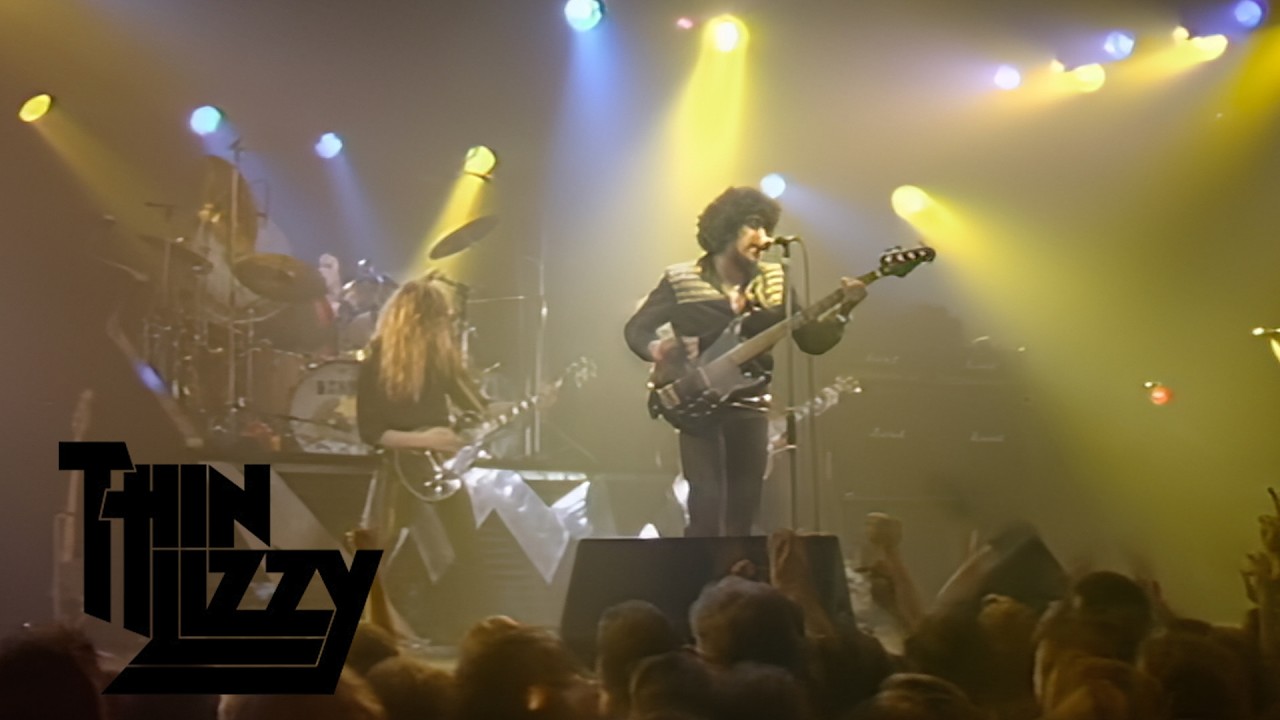
In January 1983, Thin Lizzy headed back out on the road for the very last time. Scott Gorham winced at the memory.
“Fuck, it went on forever,” he groans. “It was the most painful thing I ever went through. People didn’t want to let go.”
A four-night residency at the Hammersmith Odeon was concluded on 12 March with guest appearances from Brian Robertson, Gary Moore and then Eric Bell during the encores. Old grudges were forgotten.
Thin Lizzy’s last British show was at the Reading Festival on 28 August 1983, the Sunday evening. The last they ever played with Phil Lynott was on 4 September in Nuremberg. Brian Robertson was present at that show as a member of Motörhead. He cried as he watched from the wings. Scott Gorham did not. “I was numb,” he said. “Numb to any emotion that was going on.”
Many believed that Phil Lynott had always intended to reform Thin Lizzy somewhere down the line. When his post-Lizzy band Grand Slam fizzled out in 1985, the reunion seemed inevitable. Phil and Scott Gorham discussed it in December 1985 when Scott visited Phil at his house in Kew, south London. They had not seen each other for a year, in which time Scott had kicked heroin. When Phil greeted him, Gorham was shocked at his appearance.
“He was fucked up, bloated,” Gorham said. “He just didn’t look good, and he was wheezing with asthma. That was always a telltale sign with Phil. When he was doing smack it affected his lungs.
“We sat talking. He told me he was gonna stop doing all that crap and get healthy again. He talked about getting the band back together. And there was something in the way he said it that convinced me that he wanted out. So I actually walked out feeling quite upbeat. I felt he had a chance. Three weeks later I got the phone call…”
It was on Christmas Day, at the house in Kew, that Philomena Lynott found her son lying unconscious. Phil was driven to a rehab centre near Salisbury, where staff immediately referred him to a local hospital. There, eleven days later, he died.
“Phil was a true star,” Brian Robertson said. “He was an original.”
Perhaps it was British DJ John Peel who described Phil Lynott best: “Part rakish lover, part football hooligan, part incurable romantic, part historic warrior.” Peel added, with more characteristic understatement, “He has written some good songs.”
According to his friend and Boomtown Rats singer Bob Geldof, “Philip was the classic rock star in every sense. He was a rock star to the very core of his being, and therein lies the tragedy. He couldn’t be anything else: it was that or nothing.”
“I still dream about him,” Scott Gorham said. “And there’s one dream I keep having, where he just shows up, and I say,’ Jesus, Phil, you don’t know what I’ve been going through, man!’ And he taps me on the shoulder and says, ‘Don’t worry, I’ll take care of it.’ And after that, everything’s okay.”