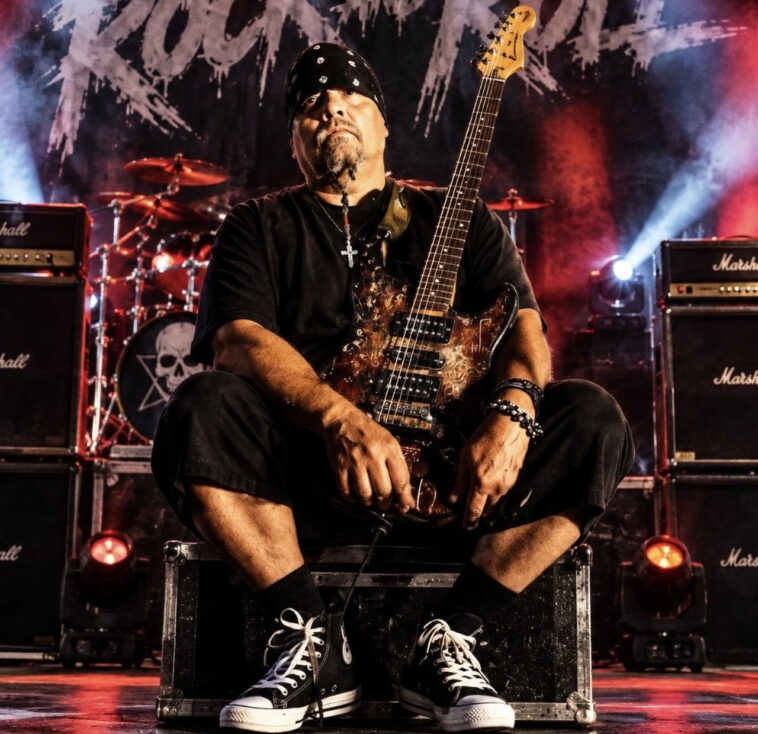
Growing up in Whittier, California, Tracy Grijalva – best known as Tracy G – was in a band with his father. “At the age of seven, my mom and dad asked if I wanted to learn an instrument,” he recalls. “My father was a drummer, so I said, ‘I’d like to take guitar lessons so I can jam with him.’”
It didn’t come easy, though: “I had really small hands, but the main challenge was that I’m left-handed, and the guitar teacher taught me as a right-handed player.” But he stuck at it, and five years later he discovered heavy metal. “When I heard the first Black Sabbath album, I was immediately drawn to the riffs. I naturally went down that road.”
By his late teens, G had made guitar his life’s work. He played in a variety of bands in the early ‘90s, hooking up with Love/Hate frontman Jizzy Pearl and former Great White mouthpiece Jack Russell. “I played in many local bands, as many young musicians do,” he says. “Jack and Jizzy were in a couple of them.”
Latest Videos FromGuitar World
That’s when he assembled the gear he still uses today: “Old Marshalls, old Randalls, my Sandoval guitar that Karl Sandoval made for me in 1985, and a bunch of random pedals.”
Then, in 1993, at 24, G found himself in Ronnie James Dio’s band. “Vinny Appice and Jimmy Bain were the rhythm section for Dio, and also WWIII, the band I had before Dio,” he says. “They told Ronnie about me, and I auditioned.”
Of course, the singer was no stranger to guitar heroics, having shared stages with Ritchie Blackmore, Tony Iommi, Vivian Campbell, Craig Goldy and Rowan Robertson. “I showed up to play and Vinny, Jimmy and Ronnie were there,” G remembers.
“No soloing, no songs – just jamming with Vinny and Jimmy while Ronnie listened. He was interested in a guitar player who could write for him. They ended up calling me back; I played again then Vinny called and said, ‘Ronnie wants you in the band.’”
He hit the ground running with Dio, who was coming off the success of 1990’s Lock Up the Wolves and 1992 Black Sabbath reunion album Dehumanizer. The musical landscape was awash with alternative music, meaning a sonic pivot was required. Luckily for Dio, Grijalva was up for the challenge.
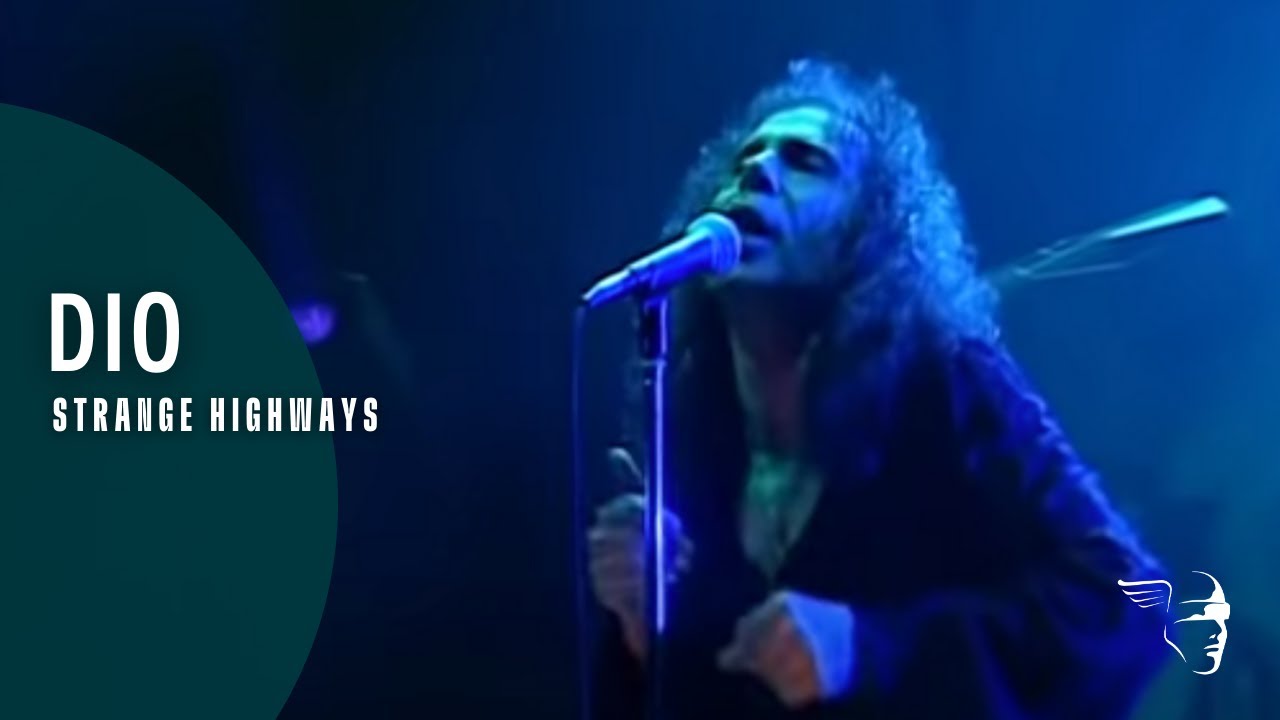
“The sessions for Strange Highways went good,” G says. “It took about six weeks to record that album, and maybe eight weeks to record Angry Machines.”
The guitarist’s embracing of ‘90s grunge and industrial vibes made Dio – who, in his 40s, was considered by some to be over the musical hill – was relevant again. But G wasn’t chasing trends: “That’s just the way I play. I’m influenced by many other players, but I always try to be myself and play what I feel.”
Given that situation, it’s puzzling that Dio reinstated Craig Goldy without warning in 1999, relegating G to rhythm duties.
“I didn’t go for that,” he says. “I’d played lead guitar for six years. When I solo, that’s how I express myself. If you take that from me, I’m out.”
But he gives Dio a pass for the move. “It wasn’t insulting,” he insists. “I knew Ronnie was doing what the record company and management wanted him to do.” Even so, the pair never crossed paths after that. “I was never at odds with him,” G says. “After I left I called his office to wish him merry Christmas and left him a message. I never heard back from him.”
With one adventure cut short, he formed The Tracy G Group and other outfits. “I went into my studio and started writing new music – heavy metal, classic rock, blues and even flamenco. Since then I’ve put out 25 CDs on my own label. I still make music through many different projects, but my main band is the Tracy G Group.”

Now 67, G has few regrets; although many fans believe he was given a raw deal, and Strange Highways and Angry Machines are regarded as among Dio’s finest solo works. Both musicians went on to other things, but one can’t help wonder what might have been.
“I’m very proud of the albums that I made with Dio,” G states. “I was honored to play and create with him for six years. That was enough. I think I handled it great.”