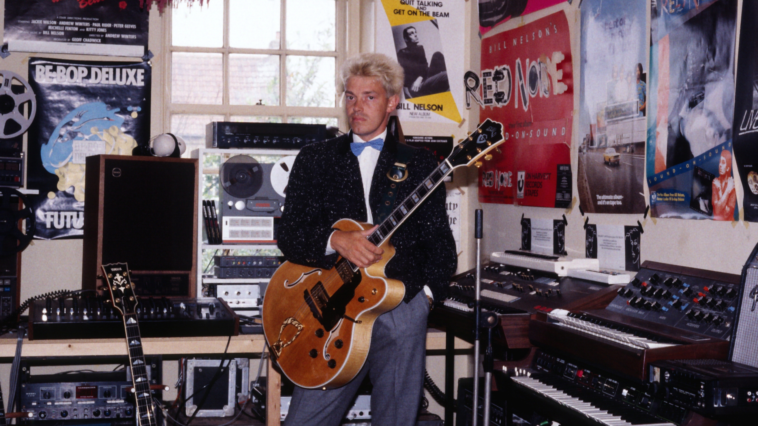
Recently, we caught up with Be-Bop Deluxe guitar hero – and storied creative journeyman – Bill Nelson. In our lengthy conversation, Bill reflected on some of the most notable moments of his wide-ranging career, including working with Harold Budd and David Sylvian.
In the midst of the interview, Nelson remembered how he began working with Gary Numan in 1983. Invited to produce his fifth solo album, Warriors, Gary was keen to learn from the man whom he had described as his “favourite guitar player, bar none.”
During the album’s troubled production, however, Nelson and Numan began to disagree about the fundamentals. Disliking each other’s philosophies and attitudes to music-making, the pair started avoiding each other. Eventually, things got so bad that Nelson would ask for his producer credit to be removed.
“I got the impression that Gary didn’t want to move from a safe place. His record company had contacted me and said that, whilst he was one of the early synth-pop artists, the newer ones were moving ahead and doing something different. They felt he needed to push the envelope a little,” Nelson told us.
“I tried to get him to do certain things, but found it really hard going because he wanted to do stuff the way he’d always done it, which I can understand after you’ve been working in a certain mode. Anyway, engineer Nick Smith and I mixed the album, but I got a call from him about a week later saying he’d quit because Gary had gone in and remixed it.
“I managed to get hold of a copy of the remixes and it just wasn’t what I wanted to have my name put to, so I took it off the album before it came out. It was all a bit silly and sad really, but he’s actually been good enough to say he was young and naive and should have given me more space. I did some EBow guitar on the album, which hopefully stands up, but I haven’t heard it for years.”
But, as Bill says, working on other people’s records can generally be quite a gruelling experience for musicians used to following their own instincts.
“I always found playing with other musicians nerve-wracking because it’s hard to know exactly what they want,” Bill told us. “Most times they probably wanted my guitar to sound like whatever it did on my records, but sometimes they wanted a certain style that I wouldn’t naturally gravitate towards.
“I can’t say that I always enjoyed playing on other people’s records because it’s always slightly stressful, but as long as they’re happy with it – and they usually seem to be – I won’t bother referencing it again. I tend to be like that with my own albums once I’ve released them too.”