Steve Vai has paid tribute to keyboardist Tommy Mars, his former bandmate in Frank Zappa’s group, recalling the extraordinary improvisational abilities that made Mars one of the most distinctive musicians he had ever worked with.
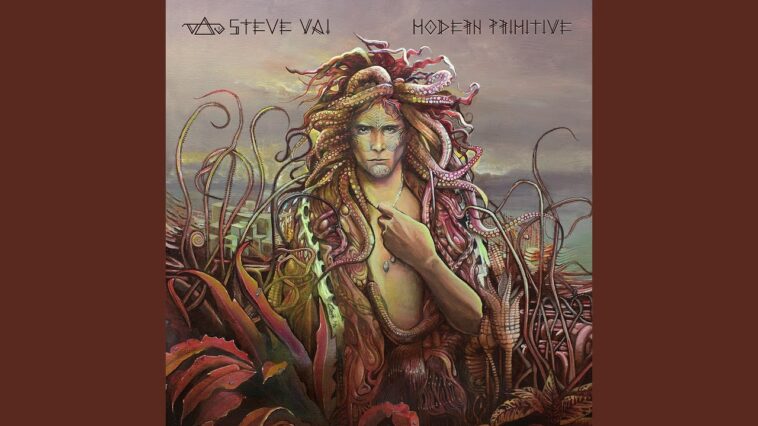
In an extended post on Facebook, Vai shared the story behind “Mars Attack,” a 13-minute-and-13-second instrumental that captures Mars at his most uninhibited. The piece is the second movement of “Pink and Blows Over,” a three-part composition that appears on Vai’s 2016 album Modern Primitive.
The composition dates back to the mid-1980s, when Vai formed a band called the Classified with Mars, keyboardist and vocalist Sue Mathis, drummer Chris Frazier and bass guitarist Stu Hamm. The group played a series of adventurous gigs around Los Angeles, but its unconventional music proved difficult to sustain financially.
“‘Pink and Blows Over’ was Tommy’s playground,” Vai recalls. During live performances, the other musicians would step aside and let Mars take an unaccompanied solo.
“What happened next was anybody’s guess,” he writes. “He could move from delicate, beautiful harmonic landscapes into ferocious, rhythmically complex explosions, then suddenly turn a musical corner that you didn’t even know existed.”
When Vai began assembling Modern Primitive, he was determined to record the composition in its entirety, reuniting the original Classified musicians in the process. But he had something special in mind for Mars.
“I wasn’t sure that his deepest improvisational brilliance had ever been properly captured using the instruments and sounds he loved most,” Vai explains. “So I decided to create an environment where he could simply be Tommy, with no musical restrictions whatsoever.”
Vai assembled a collection of instruments for the session, including a Rhodes electric piano, a synthesizer loaded with horn and string sounds, a vocal microphone and Mars’ unmistakable Taurus bass pedals.
He then invited the keyboardist into his studio for two days, gave him some melodies to extrapolate on and told him, “Have at it, Mars.”
“And boy, did he,” Vai writes.
“I recorded somewhere between four and six hours of Tommy simply improvising. No charts, no expectations, no rules. Just that extraordinary musical imagination flowing freely.”
Vai eventually edited the recordings into the 13:13 movement that became “Mars Attack.”
“If you’d like to experience a little of what I’m talking about, I encourage you to listen to that movement,” he writes. “Strap yourself in, leave your conventional musical expectations at the door, and prepare to be abducted by Mars.”
Vai, who first met Mars after joining Zappa’s band in 1980, also reflected on the keyboardist’s remarkable musical range, describing him as perhaps the most powerful in-the-moment improviser among the musicians who passed through Zappa’s group.
“Tommy was no ordinary keyboard player. He was an entire orchestra of musical possibilities living inside one gloriously eccentric human being,” he writes.
Mars’ talents extended across classical music, jazz and virtually any other musical language, Vai says. His distinctive touch can also be heard on Vai’s Flex-Able and Flex-Able Leftovers, including the haunting vocal synthesizer solo on “Bledsoe Bluvd” and the organ on “Tender Surrender.”
But Vai’s tribute also makes clear that his admiration for Mars extended well beyond his musical gifts.
“When I joined Frank’s band, I was only 20 years old, a young musician trying to find his footing among some of the most extraordinary players on the planet,” he writes. “Tommy was one of the people who always treated me with warmth, generosity, and encouragement. That meant more to me than he probably ever knew.”
Remembering Mars’ mischievous grin and wonderfully unpredictable sense of humor, Vai describes a musician whose imagination seemed to extend into every aspect of his personality.
“His humor was an extension of his music. It came from that same mysterious, wildly imaginative place where the unexpected was always waiting just around the corner.”
Vai closed by thanking Mars for the music they made together and the friendship they shared.
“I’m so grateful that our paths crossed, that we got to make music together, and that I had the privilege of witnessing that magnificent imagination of yours up close.”
“Thank you, Mars. You were one of a kind.”