
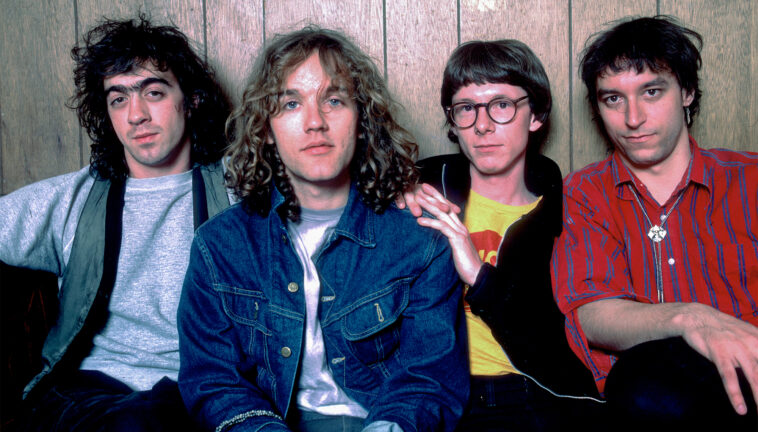
R.E.M. bass guitarist says the alternative-rock group is comfortable with its decision to call it quits and that trying to bring it back could damage what it accomplished.
“There are reasons, and they were all good reasons, and they were all the right reasons,” Mills tells The Sunday Times. “And such as it is, it’s not my place to say what our legacy is. But I do believe that by reforming and trying to play again, you would tarnish it.”
The Athens, Georgia, quartet — Mills, singer Michael Stipe, guitarist Peter Buck and drummer Bill Berry — announced its breakup in September 2011, bringing to a close a career that had spanned more than three decades. Their final album, Collapse into Now, had been released earlier that year.
The decision came nearly three years after the band’s final full concert, at Mexico City’s Palacio de los Deportes on November 18, 2008. R.E.M. did reunite in 2024, when all four original members took the stage at the Songwriters Hall of Fame induction ceremony to perform an acoustic version of “Losing My Religion” as the band was honored. But the appearance was a one-off, and there has been no indication that a full reunion or return to touring is on the cards.
And Mills doesn’t seem particularly interested in changing that. He says Buck shares his view that the band would be unable to recapture what it once had.
“Peter says it wouldn’t be as good. And I agree. Do I miss it sometimes? Yes. But it’s something we’re all very comfortable with and being done with it.”
Mills is also happy not to face the pressures that would accompany a return.
“It’s kind of liberating to not worry about how it’s going to sound or how it’s going to go out and what it’s going to do to the R.E.M. legacy. It’s best just to leave all that behind.”

R.E.M. had become one of the most successful alternative rock bands with the 1991 release of “Losing My Religion,” from their album Out of Time. But that level of fame also brought unexpected pressures.
Buck touched on that in a 2022 interview with Classic Rock, expressing doubts that anyone in the music business actually enjoys the intense non-musical demands that come with success.
“When it got really big, I don’t know if anyone really enjoys that,” he said. “When the non-musical stuff became so intense, it took away some of the pleasure for me.”