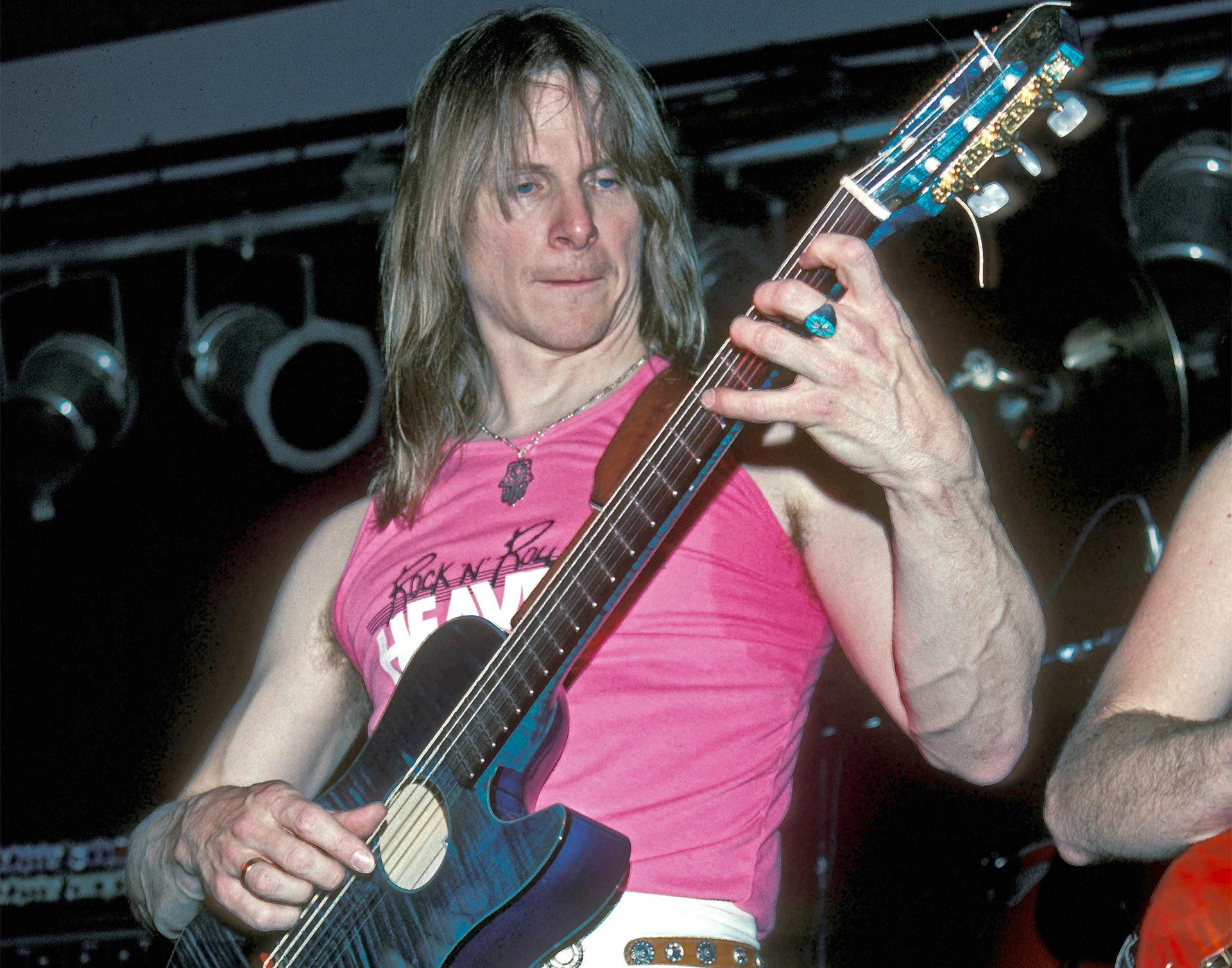
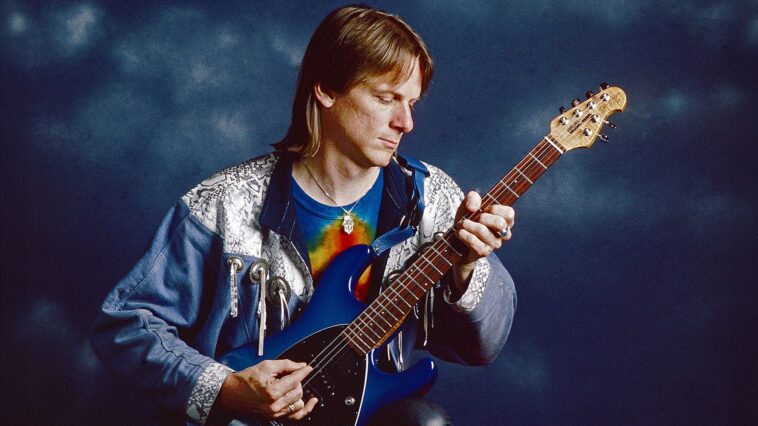
Guitar virtuoso Steve Morse has spent much of his career struggling to fit in. So when the opportunity to join Kansas, a band he loved, presented itself, he felt he’d finally found his place. For a while, he had. But the fit wasn’t built to last.
Last year, the guitarist suggested that some members of Deep Purple were glad to see the back of him when he departed in 2022 and was replaced by Simon McBride. This was despite Morse having become the British rock institution’s longest-serving guitarist. He wasn’t a traditional blues-rock player in the mold of Ritchie Blackmore, which may help explain why many of his ideas were dismissed.
Morse had made his name fusing rock and jazz with the Dixie Dregs, a band that helped pave the way for his Kansas tenure. He joined Kansas in 1986, just as MTV and VH1 were becoming major tastemakers in the music industry.
“This was where I didn’t fit in, the ’80s MTV/VH1 machine,” he tells Classic Rock History. “I learned a lot and discovered that I wasn’t cut out for certain things that were changing in the music business. I became disillusioned and ended up distancing myself from the music business after that.”
After recording two studio albums with Kansas, Morse eventually stepped away from music to become a commercial airline pilot. It took an impromptu performance with Lynyrd Skynyrd to bring him back to the stage. But how did he reach that point in the first place?
After finishing school, Morse enrolled at the University of Miami School of Music, where he again found himself outside the traditional guitar-player mold. Speaking to Classic Rock earlier this year, he recalled how he and a group of fellow outsiders gravitated toward hybrid music, crossing jazz and rock and incorporating polychords.
“I ended up writing and presenting ideas that were closer to what Kansas were doing than to what Jimmy Page was doing,” he adds. “That started my shift away from pure rock. Having seen the Mahavishnu Orchestra play too, the world was starting to open up for me compositionally. By the end of my first year I knew what I needed to work on.”
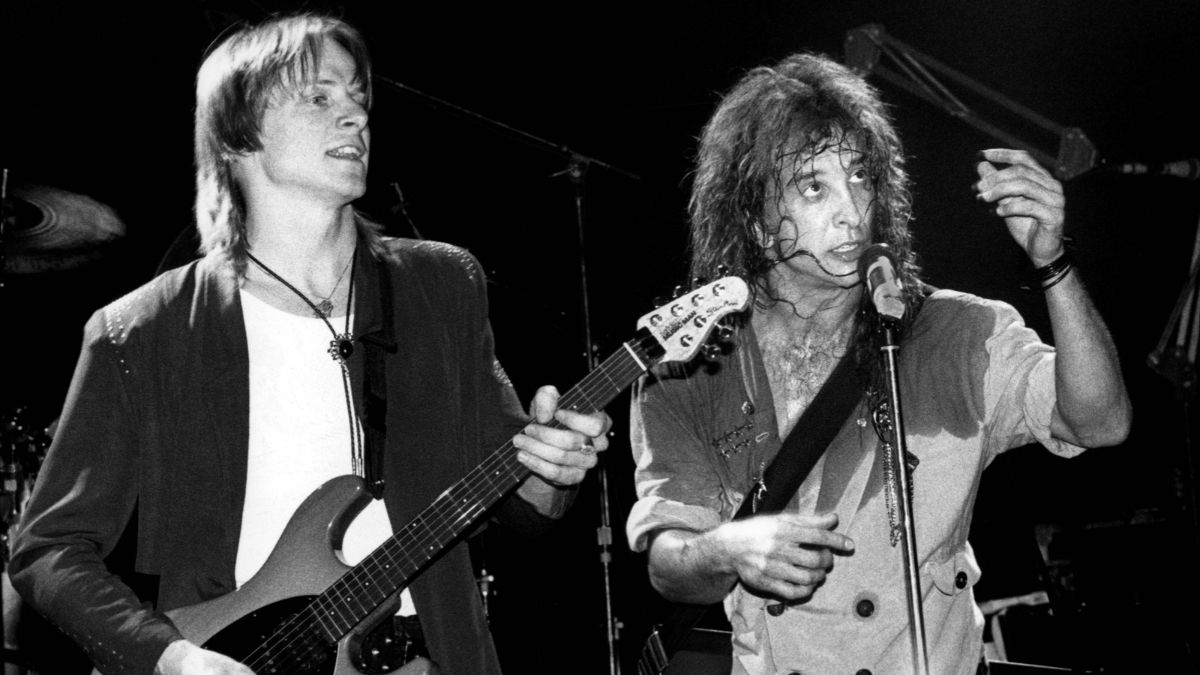
By the time the Dixie Dregs were turning heads, creative tensions were tearing Kansas apart. So when drummer Phil Ehart began assembling a new lineup, a chance meeting with Morse proved fortuitous.
“I was always a Kansas fan,” he says. “I felt a kinship with [guitarist] Kerry Livgren, with him also being a pilot, having a small farm like me, and writing prog-type music at the same time as the Dregs were going full steam. I saw Phil Ehart at a concert we were both watching, and he informed me that the band was getting back together with Steve Walsh [vocalist].
“[It was] big news for me, as a fan, since he had left right in the middle of their biggest album tour at the peak of their career,” Morse continues. “He asked if I had any song ideas, and that Kerry wouldn’t be joining them. I was disappointed in Kerry being absent, but he did come to the rehearsal/writing session with the guys, and we hit it off well, coming up with a solid tune.”
That initial songwriting session produced more than anyone expected. One song became an album’s worth of material, eventually forming Power, Kansas’ 10th studio album, released in 1986. The period also saw Morse reshape his live rig for a variety of reasons, beginning a relationship with Engl that continues today. Musically, he had room to bring his own ideas to the band. But the ground was already beginning to shift beneath him.
“For the second album [In the Spirit of Things, 1988], there was a big push to have hit singles,” he reveals. “I was game to try, and I went out to LA with Steve Walsh and Phil Ehart to work with some writers. ‘Bells of St James’ was the most Kansas part of that album to me – something Steve and I worked on together and which turned out good.”
The experience, however, reinforced Morse’s sense that he was working outside his natural territory.
“A lot of it was foreign to me, and I felt I was on the outside looking into a world that I didn’t fit in,” he admits. “I was never going to be a hit songwriter and I knew I wasn’t embracing the concept enough to be good at it. All of a sudden the idea of having a job outside the music business reared its head.”
Today, Morse balances his two worlds, fixing tractors and flying planes while continuing to write music with his Ernie Ball Music Man signature guitar. It’s a split existence that he says makes him more creative. Although he continues to adapt his playing to contend with arthritis, Morse has fashioned a simpler, if unconventional, life away from the mainstream music business – a world he never quite felt at home in.