!["Alex Lifeson Reflects on How Led Zeppelin's 'Kashmir' Shaped His Unexpected Track, Credit to Jimmy Page as His Main Inspiration"]](https://backingtracksfullcollection.com/wp-content/uploads/2026/03/Alex-Lifeson-Reflects-on-How-Led-Zeppelins-Kashmir-Shaped-His-758x426.jpg "\"Alex Lifeson Reflects on How Led Zeppelin's 'Kashmir' Shaped His Unexpected Track, Credit to Jimmy Page as His Main Inspiration\"] 1")
“We really fell in love with Led Zeppelin,” Rush guitarist Alex Lifeson once said. “Jimmy Page was probably the biggest influence on me. I loved everything that he represented — his style, the looseness of his playing. I learned an awful lot from him.”
Page’s influence extended well beyond Lifeson’s guitar approach. As the guitarist has noted, Kashmir directly inspired “Passage to Bangkok,” a deep cut from Rush’s prog landmark, 2112.
Page famously described the polyrhythmic drive of “Kashmir” as a “great hypnotic beast,” and its Eastern tonalities, coupled with interlocking rhythmic pulses, sparked something in Rush as they set about writing their most ambitious record to date.
Article continues below
For understandable reasons, the 20-minute title suite — the work that transformed them from a blues-rooted band (their first tour saw them opening for Rory Gallagher) into progressive-rock heavyweights — tends to dominate discussion of 2112. But the album’s second side is filled with concise, sharply defined songs that reveal a different dimension of the band. Among them, “Passage to Bangkok” offered Lifeson the opportunity to channel his own interpretation of “Kashmir.”
“Alex Lifeson said the music was inspired by ‘Kashmir,’” notes author Daniel Bukszpan. “That song influenced a lot of musicians at the time, who were essentially thinking, ‘We need our own Middle Eastern–flavored epic.’”
That song influenced a lot of musicians at the time, who were essentially thinking, ‘We need our own Middle Eastern–flavored epic.’”
— Daniel Bukszpan
“Passage to Bangkok,” however, is no direct replica. At under four minutes, it’s far more concise. Bukszpan points instead to Stargazer by Rainbow as a closer parallel to Zeppelin’s sprawling approach. The broader point stands: Zeppelin had expanded rock’s sonic vocabulary, and Rush — ever eager to experiment — seized the opportunity to explore those new textures in their own way.
Placed after the conceptual density of 2112’s first side, the track also provides a tonal shift.
“It has a more exotic melody, so it creates a kind of break from what precedes it,” Bukszpan explains. “Side one is so heavy, both musically and conceptually. Then you flip the record, and here’s something looser — essentially a song about getting high.”

“It’s about a fun little journey to all the good places you could go to have a puff,” Lifeson said in an interview with High Times magazine (via Ultimate Guitar). “We. “We thought it would be fun to write a song about that, and Neil [Peart] handled it in a very eloquent way.
“That song was probably written in a farmhouse, on an acoustic guitar, in front of a small cassette recorder. We’d sketch ideas like that and then take them down to the basement to rehearse.”
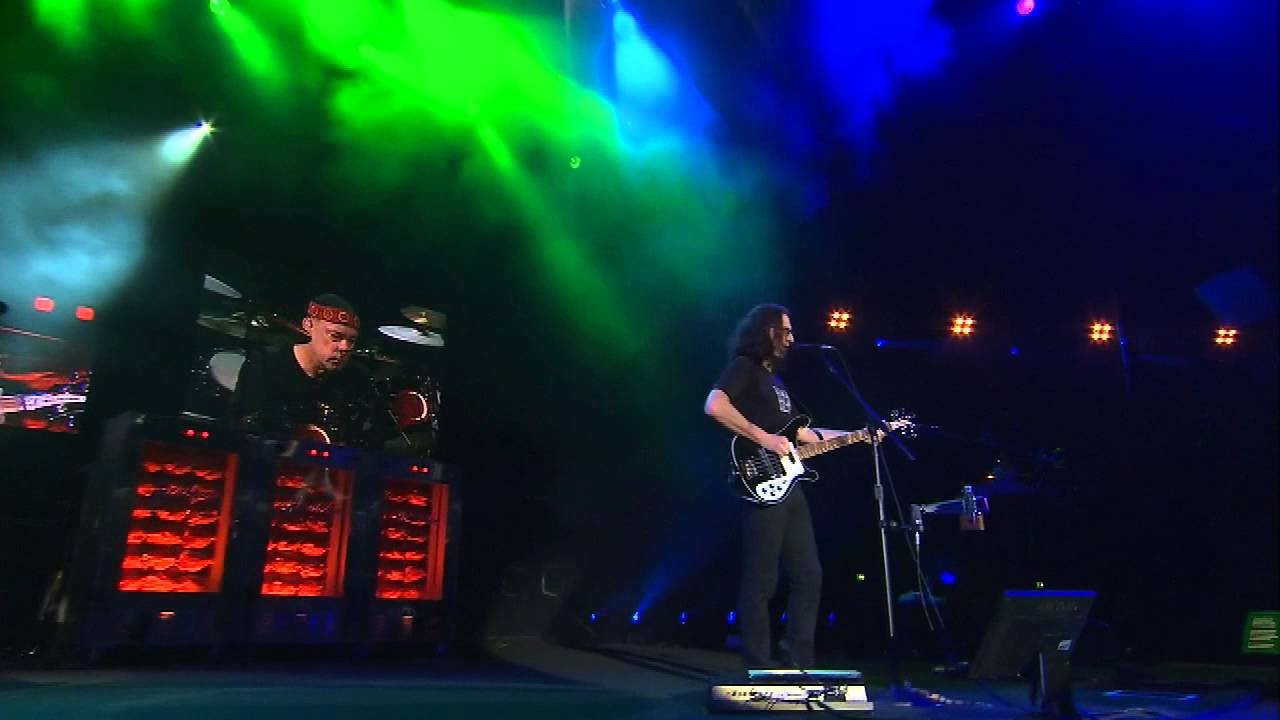
Lifeson’s connection to Page dates back to 1969, when he first saw Led Zeppelin perform in Toronto.
“I waited in line for 15 hours,” he recalled. “We were sitting on the floor, just a few rows back from Jimmy. I was completely blown away. I wanted to look like him, play like him — be him. If there was one person I ever wanted to meet, it was Jimmy Page, but I never thought I’d get the chance.”
He finally did in the mid-1990s, when he and Rush bassist Geddy Lee met Page and Robert Plant backstage during their No Quarter Tour stop in Toronto.
Now, decades later, Lifeson is once again looking forward. With renewed activity in the Rush camp thanks to the addition of drummer Anika Nilles — and even the possibility of new music — the long arc of influence that began with “Kashmir” may yet echo into another chapter.