!["Called ‘the modern Led Zeppelin’: A thrilling yet challenging journey of an exceptional rock band that had everything – and then lost it all."]](https://backingtracksfullcollection.com/wp-content/uploads/2026/03/Called-‘the-modern-Led-Zeppelin-A-thrilling-yet-challenging-journey-758x426.jpg "\"Called ‘the modern Led Zeppelin’: A thrilling yet challenging journey of an exceptional rock band that had everything – and then lost it all.\"] 1")
Out of the New Wave Of British Heavy Metal in the early ’80s came two world famous bands – Iron Maiden and Def Leppard. The lost heroes of that golden age were Diamond Head.
The band was formed in 1977 in the Midlands town of Stourbridge by guitarist Brian Tatler, singer Sean Harris, drummer Duncan Scott and bassist Colin Kimberley. They took their name from a solo album by Roxy Music guitarist Phil Manzanera, and took their inspiration from Led Zeppelin, Black Sabbath and Deep Purple.
In Brian Tatler they had a master of riffs, comparable to Zeppelin’s Jimmy Page and Sabbath’s Tony Iommi, and in Sean Harris they had a singer who came on like a young Robert Plant.
Article continues below
One British critic proclaimed Diamond Head “the natural successors to Led Zeppelin”. Sounds writer Geoff Barton added to the hype by boldly stating: “There are more good riffs in your average single Diamond Head song than there are in the first four Black Sabbath albums.”
For all that hype, this was one great band that never made it big. While Iron Maiden and Def Leppard went on to superstardom, Diamond Head missed out.
But with three great albums in the early ’80s, Diamond Head were one of most influential bands of the New Wave Of British Heavy Metal era – and a huge influence on one band in particular.
As Metallica drummer Lars Ulrich would say: “Diamond Head was fifty per cent of what ended up being Metallica. We got the whole thing about riffs and structuring from them. The other fifty per cent was Motörhead.”
From the start, Tatler and Harris were the dominant figures and songwriters in Diamond Head. The pair were still teenagers when they created the song for which Diamond Head would always be remembered – Am I Evil?
Tatler recalled to Planet Rock magazine: “I loved Sabbath’s Symptom Of The Universe, and my goal was to have a riff even heavier than that.”
Adding to the heaviness was an intro lifted from Gustav Holst’s Mars, The Bringer Of War.
In this epic song was so much ambition, but for the 17 year-old Tatler, emulating Zeppelin, Sabbath and Purple seemed an impossible dream.
“I thought I had to be a brilliant guitarist like Ritchie Blackmore,” he said. “I’d have to practice in my bedroom for fifteen years!”
For Tatler, and so many young hopefuls in the late ’70s, punk rock was a revelation.
“Seeing the Sex Pistols on TV, playing three chords, was a lightbulb moment,” Tatler said. “I didn’t want to play punk rock, but I thought, ‘Let’s go!’ It spurred us into action.”
In this moment, Diamond Head were not alone. Across the UK there were other young heavy metal bands inspired by punk’s DIY ethos, cutting demos and self-financed singles, playing in pubs and clubs.
By 1979, the New Wave Of British Heavy Metal was in full swing. Diamond Head were in the right place at the right time.
What they lacked was the heavyweight management that Def Leppard had in Peter Mensch and Cliff Burnstein – whose clients included AC/DC – or that Iron Maiden had in the aggressive Rod Smallwood.
Diamond Head were managed by Linda Harris, Sean’s mum, and her partner Reg Fellows, who bankrolled the band with profits from his cardboard box business.
As Leppard and Maiden signed to major labels, Diamond Head missed out. “We had Sounds raving about the band,” Tatler said. “I wondered, how come record companies aren’t knocking on the door? It was extremely frustrating.”
Their answer was to make a self-financed album on their own label, Happy Face. It was recored in a week at the Old Smithy studios in Worcester, and featured four songs later covered by Metallica: It’s Electric, Helpless, The Prince, and Am I Evil?
Also included was Sucking My Love, with a riff that was later echoed in Metallica’s Seek & Destroy.
The album was titled Lightning To The Nations. The initial pressing of 1000 copies had pure white sleeves with no band name or title printed, hence its alternative name, ‘The White Album’.
Lightning To The Nations was one of the defining albums of the NWOBHM. In 1980, with the movement at its peak, debut albums arrived from key bands including Leppard, Maiden, Angel Witch and Girlschool. Only Maiden’s was as great as Diamond Head’s. In Sounds, writer Paul Suter said of Diamond Head: “They’re going to be stars.”
In July 1981, Lars Ulrich, then 17, travelled from Los Angeles to London on a pilgrimage to experience the NWOBHM first hand, and at the Woolwich Odeon in London he saw his favourite band on stage. “I finally experienced the mighty Diamond Head face to face,” he recalled. “This was the pinnacle – true heavy metal heaven!”
After the show, Ulrich schmoozed his way backstage and befriended the band. And after he returned to California, he kept in touch with Tatler, writing to him in late 1981 to say that he had formed his own band, named Metallica.
Tatler later admitted: “I never dreamed that this kid and his band would conquer the world.”
Eventually, Diamond Head got their major label contract with MCA. At the company’s insistence, the band’s second album Living On Borrowed Time featured a new version of Am I Evil?. There was also a song that was written to order as “the single”, in the style of early Foreigner, titled Call Me.
Most impressive of all was the album’s opening track, In The Heat Of The Night, with echoes of Zeppelin in its measured power.
In March 1982, when Borrowed Time entered the UK chart at No.24, it was, Tatler recalled, “a fantastic moment for us”.
Even so, Diamond Head were at this point playing catch-up to the NWOBHM’s two leading bands. Def Leppard had already started to make waves in America with their second album High ‘N’ Dry, and Iron Maiden had a huge hit with their third album, The Number Of The Beast.
In California, Metallica’s early club shows would regularly include as many as four Diamond Head covers. But there was no backing from MCA for Diamond Head to tour in America, or even Europe. Instead, after 14-date British theatre tour, and an appearance at the Reading Festival in August 1982, the band began work on a new album.
The intention, as Tatler said, was to “push the boundaries”. In doing so, they opened up a Pandora’s box. “The difficult third album,” Tatler admitted. “A cliché, and it was true for us.”
Diamond Head were fast outgrowing their heavy metal roots. As Tatler explained: “We loved The Police, U2’s War and Siouxsie & The Banshees. We tried to pull in everything we could.”
They were also reaching for the kind of sophistication that Def Leppard achieved with visionary producer Mutt Lange on the 1983 album Pyromania, which elevated arena rock to a new state of the art.
Diamond Head’s producer Mike Shipley had served as engineer on Pyromania, but the way that he and Lange worked with Def Leppard – “perfection mode”, as Tatler called it – was for Diamond Head a major problem.
“We would struggle to play to a click track,” Tatler said, “and that started to fracture the band.”
During the recording, bassist Colin Kimberley and drummer Duncan Scott departed. “Colin quit, and we fired Duncan,” Tatler confirmed. “It was terrible, really. We should never have done it. We were under pressure. Debts were mounting. But we lost something when Colin and Duncan went. The band fell apart after that.”
The band’s third album, named Canterbury, was completed with bassist Merv Goldsworthy (later of AOR band FM) and drummer Robbie France (later a founding member of Skunk Anansie). The recording budget came in at a hefty £100,000.
On a purely artistic level, Canterbury was a triumph, a hard rock album both modern and classic. To The Devil His Due had the pomp of Zeppelin’s Kashmir. The title track had shades of early Queen. And if there was one song that should have made stars of Diamond Head it was Makin’ Music, the flagship single, a euphoric anthem that sounded like the future of rock.
“It was a very bold and adventurous, album,” Tatler said. “We probably tried too hard. Too much too soon.”
But the music was not the problem. The real problem was a manufacturing fault that rendered the first 20,000 vinyl copies of Canterbury unplayable – jumping all the way through.
All but a handful of copies were returned to retailers, and in September 1983 – just a month after Diamond Head played to an audience of 60,000 as the opening act at the Monsters Of Rock festival at Donington Park – Canterbury duly limped into the UK chart at No.32.
By the end of 1983, as Metallica were revolutionising heavy music with their debut Kill ’Em All, Diamond Head had been dropped by MCA.
They recorded demos for a fourth album, tentatively titled Flight East, and with a beautiful song, Today, that sounded like U2. But among the big labels there were no takers.
In 1984, Metallica’s version of Am I Evil? was released as the b-side to the single Creeping Death.
But in early 1985, Diamond Head quietly disbanded. “I felt that Sean was aiming to go solo,” Tatler said. “And really, we needed a break from each other.”
In the late ’80s, Tatler led a new group, Radio Moscow, but failed to get a record deal.
Sean Harris teamed up with guitarist and former Kerrang! cover star Robin George as a duo named Notorious. The debut Notorious album was made at huge expense, but a stinging review in Kerrang! – in which writer Jon Hotten goaded: “Never in a million years, boys” – proved prescient. The album was deleted three weeks after its release in 1990. “A complete disaster,” Tatler said.
In the wake of these defeats, a Diamond Head reunion was inevitable. An album begun in 1990 was eventually completed in 1993, with Tatler and Harris backed by drummer Karl Wilcox and bassist Pete Vuckovic, who went on to lead the band 3 Colours Red.
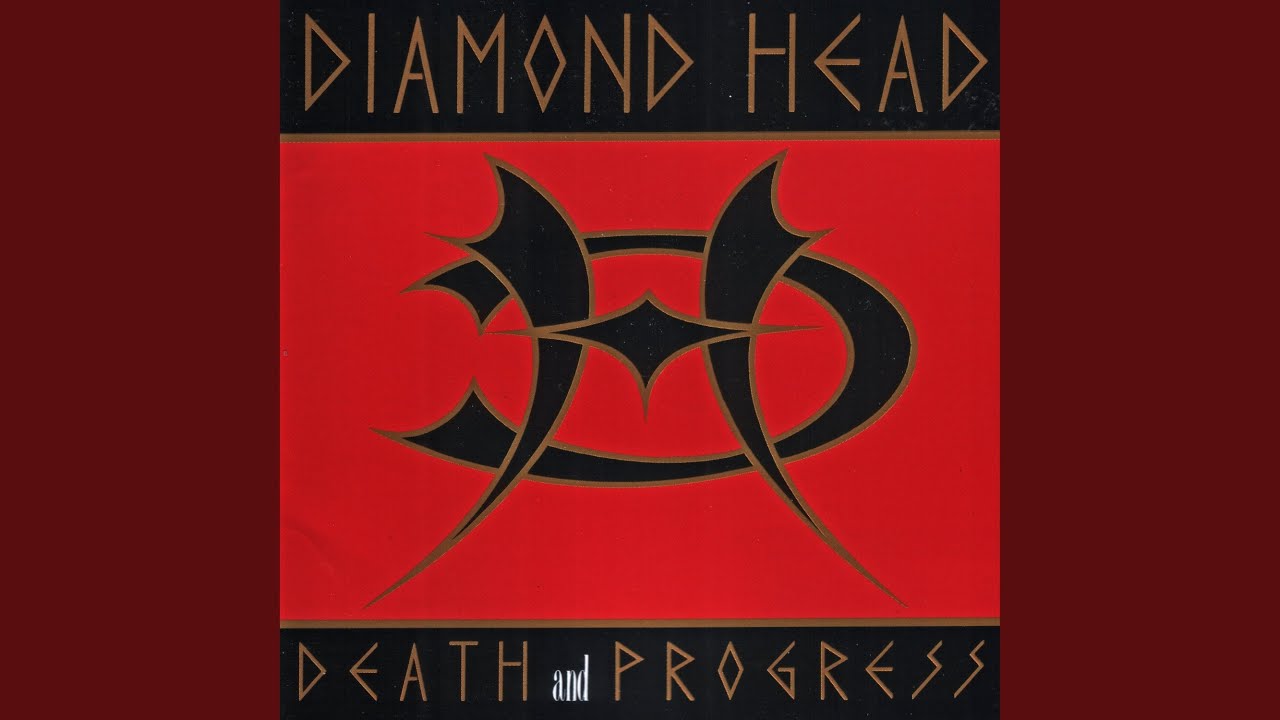
The album, titled Death And Progress, had all the hallmarks of classic Diamond Head – power, melody, riffs aplenty. It also featured guest appearances from two big names.
Megadeth leader Dave Mustaine, a Diamond Head fan since the days when he was briefly in Metallica, played on Truckin’.
Black Sabbath’s Tony Iommi co-wrote and played on Starcrossed (Lovers Of The Night),
Another figure instrumental in Diamond Head’s comeback was, of course, Lars Ulrich. The multi-million selling Metallica album – aka ‘The Black Album’ – had made them megastars, and for a huge open-air gig at Milton Keynes National Bowl on 5 June 1993, Ulrich chose Diamond Head to open the show.
“It was our biggest ever gig,” Tatler said. “And it turned into a nightmare.”
The band was under-rehearsed. Tatler, suffering from a bout of shingles, could barely move on stage. And having wisely chosen to begin their set with Am I Evil? – the Diamond Head song most familiar to Metallica’s audience – they blew it when Sean Harris appeared, to general hilarity, in a Grim Reaper costume complete with a cardboard scythe.
“It looked ridiculous,” Tatler groaned.
What Tatler later discovered was that Harris had already decided before this show that he wanted out, and that the Grim Reaper act was symbolic. As Tatler explained it: “His message was: ‘Diamond Head is finished, I’m moving on. Death and progress.’ So that was that.”
There was another brief reunion in the early 2000s. Tatler and Harris recorded a new album with Wilcox again on drums and Eddie Moohan on bass. The band laid down some strong material – the heavy Medusa’s Gaze a throwback to the early days, Music Box a lighter track reminiscent of the Canterbury era. But the album was never released, and Tatler eventually decided to move on with a new singer.
In 2004, another Midlands-based vocalist, Nick Tart, got the gig with Diamond Head. The new-look band toured with Megadeth and Thin Lizzy, and recorded two solid albums – All Will Be Revealed (2005) and What’s In Your Head? (2007).
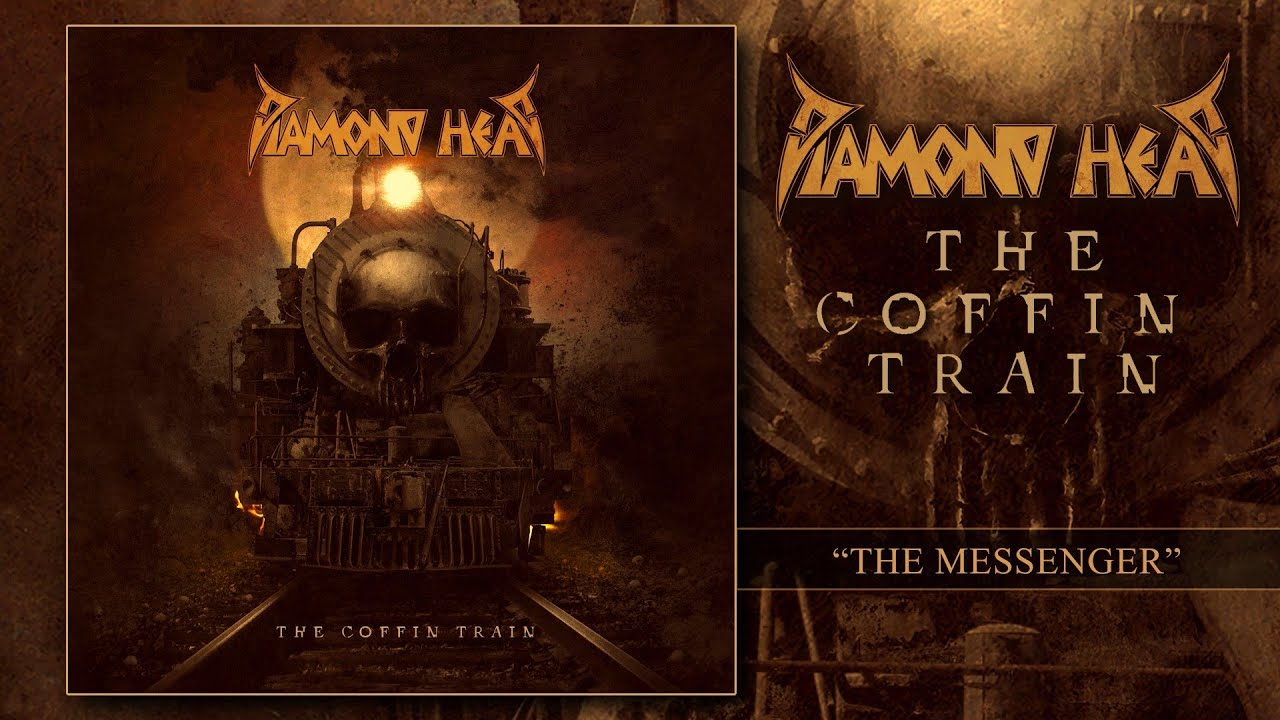
In 2014, Tart left the band by mutual consent, and was replaced by Swedish singer Rasmus Bom Andersen. Two years later, on the album that was titled simply Diamond Head, Andersen proved an inspired choice, with Tatler still conjuring up riffs that Metallica would kill for. This was followed in 2019 by another powerful studio album, The Coffin Train.
Tatler has since taken a new role as guitarist with fellow New Wave Of British Heavy Metal survivors Saxon. But he’s not yet finished with Diamond Head.
As he explained to Planet Rock: “I do it because I want to, not because I have to. The Metallica royalties have made a huge difference to me and my lifestyle. Buying a house. Not having to work.”
Metallica also brought Tatler and Harris together again in 2011. As guests at Metallica’s 30th anniversary event in San Francisco, they joined their hosts on stage for a blast through four classic Diamond Head songs.
“I don’t think of Diamond Head as a failure,” Tatler said. “But in life you make your own luck. Metallica had back luck, but they just moved forward. And that’s what Diamond Head should have done in the ’80s, instead of throwing in the towel too quickly.”
There are, Tatler said, many other great bands that never made it big. “King’s X was one. Lone Star was another – their album Firing On All Six was world-beater, but it just didn’t happen.”
What Brian Tatler takes from all his years in Diamond Head is a hard-earned wisdom.
“We were labelled ‘the new Led Zeppelin’. I mean, wow! But it was a blessing and a curse. There could never be another Led Zeppelin just like there could never be another Beatles.
“Not many bands get to the top,” he said. “Talent is not enough. You need what Lars had, that will to succeed. We just didn’t have enough of that in Diamond Head.”