![He showed up alongside the legendary shredders of the '80s, then he disappeared.]](https://backingtracksfullcollection.com/wp-content/uploads/2026/03/He-showed-up-alongside-the-legendary-shredders-of-the-80s-758x426.jpg "He showed up alongside the legendary shredders of the '80s, then he disappeared.] 1")
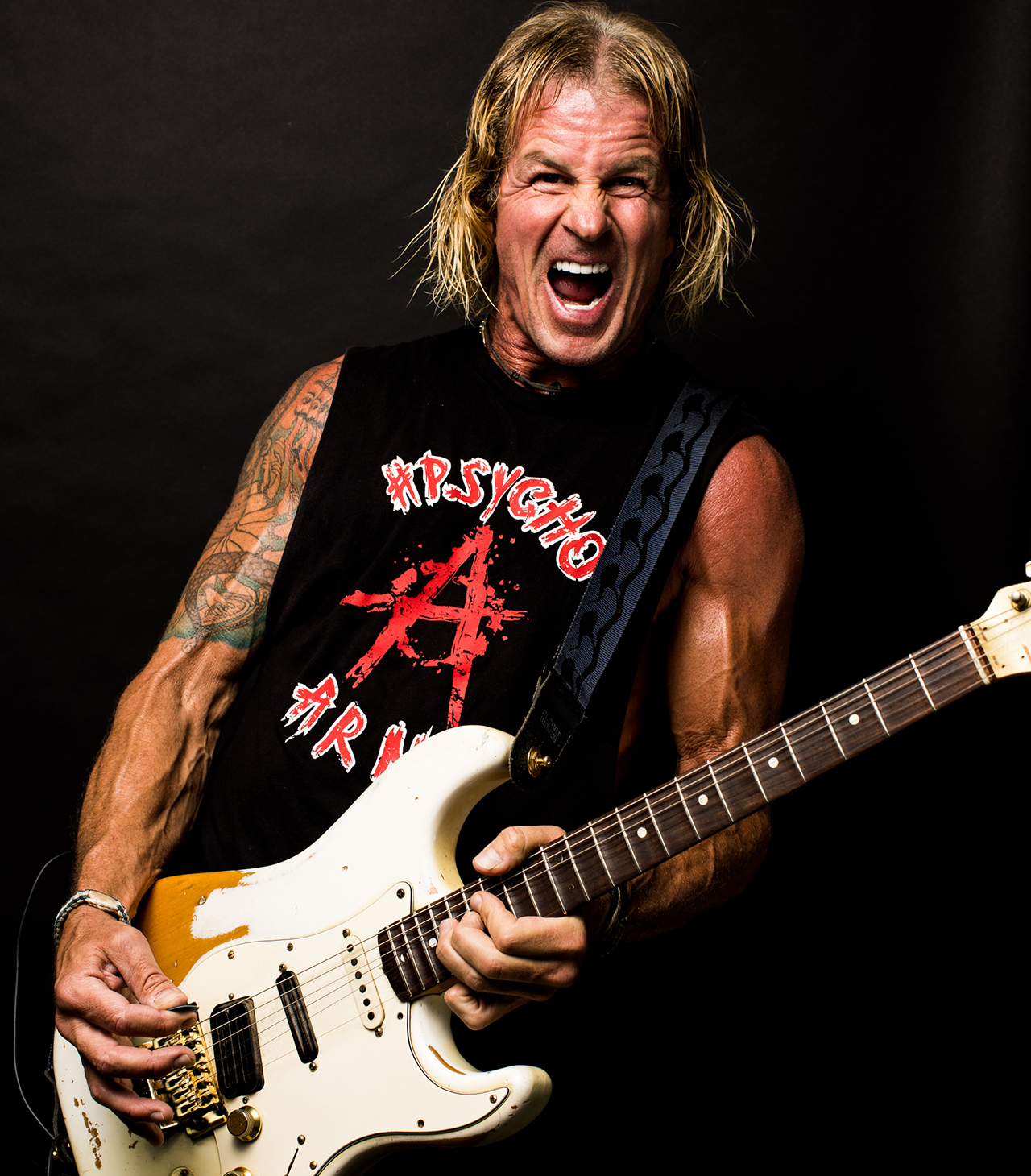
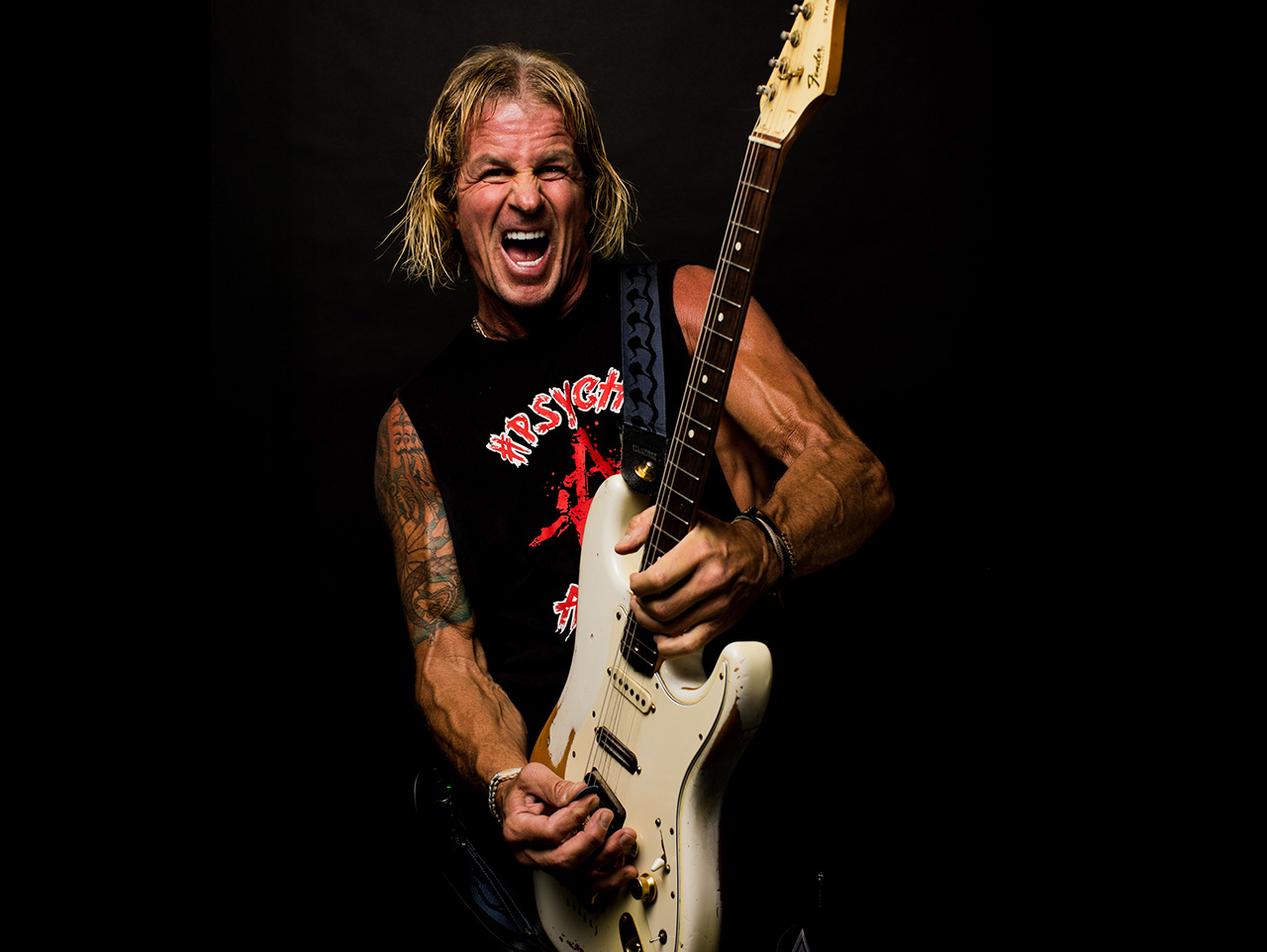
Darren Housholder was at the heart of the ’80s guitar boom era alongside Paul Gilbert and Greg Howe, rubbing elbows with everyone from John Petrucci and Marty Friedman to Jason Becker. But he’s not often mentioned among those leading names.
It’s probably because he dropped out of the biz in ’96 after starting a family and a successful supplement company, Psycho Pharma. But his passion for guitar never waned.
“Music is cosmic and magical,” he says. “We musicians are so fortunate to do what we do.”
Article continues below
In 2017, Housholder hooked up with Love/Hate vocalist Jizzy Pearl for his first recordings in years. Then last year he released fourth solo album, A Vision for You. “Each track has such meaning and purpose,” he says. “There’s depth and emotion to these songs. They’re well-crafted. You can hear the passion and desire.”
“My priority is growing Psycho Pharma globally and taking care of my family. I don’t have time to devote to music like I once did. But my life as a guitarist has no relevance without published original music. Releasing A Vision for You 30 years after Symphonic Aggression gives me a sense of being a tree in the forest of successful guitarists.”
How did your guitar journey begin?
I didn’t start until I was 15. I had older sisters who didn’t listen to rock music, but my friend had older brothers who turned me onto Aerosmith, Ted Nugent, Lynyrd Skynyrd, and Jimi Hendrix. I heard Van Halen’s And the Cradle Will Rock… and I started taking lessons right away. I’d play as soon as I got home from school and kept going until I went to bed.
When I graduated from high school in 1983, the guidance counselor said I wasn’t college material. I didn’t know Berklee or GIT existed then. I took a year to self-educate myself with books from the public library, like The Guitar Handbook by Ralph Denyer.
I practiced from 8am until midnight. I’d press play and pause on the cassette player. I memorized an hour of classical guitar repertoire, performed at the Pittsburgh arts festival, and then had to decide between GIT and Berklee. In 1984, Paul Gilbert and the shred scene had yet to emerge at GIT. I got the Al Di Meola partial scholarship and attended Berklee from 1984 to 1988.
How did your world open up once you got to Berklee?
I thought jazz was Jeff Beck and Al Di Meola; I didn’t realize there was Charlie Parker and John Coltrane. I did my best to embrace and learn jazz – but after a year, the jazz instructors were brutal. I was not listening to jazz; I just couldn’t stomach it. Fortunately the guitar chairman, Mike Ihde, gave me magazine transcriptions of Yngwie Malmsteen‘s Far Beyond the Sun.
I was taking advanced harmony and ear training while I was working with half-speed recordings and transcriptions of the entire Rising Force album. I was conducting my own recitals called Rock in a Jazz Place, featuring music by Yngwie Malmsteen, Steve Vai, Paul Gilbert, and original pieces.
I would go by John Petrucci’s room and he’d be working on alternate picking to a metronome. I’d never seen anyone do that
The recital halls were packed. John Deservio – JD from Black Label Society – was the bass player, and Jay Gates, then later Brian Tisdale, was the drummer. Jay was childhood buddies with Paul Gilbert, so I got the first Racer X cassette before it was released. I did my best to learn YRO and played it live before the album came out!
You were at Berklee with John Petrucci, right?
John, Mike Portnoy, and John Myung showed up at Berklee and would line up every morning to reserve a practice room for the evening. They were there every night, with a little lamp on top of the piano and the office lights turned down, writing that first Majesty tape that I still have.
What was John like then?
We were all in the Berklee dorms at the time. I would go by John’s room and he’d be working on alternate picking to a metronome. I’d never seen anyone do that before. I was amazed at how effortless and accurate he was. I got a chance to play in a guitar night recital with Petrucci and Myung. I have some old photographs of us wearing these skinny leather ties!
The Dream Theater guys were extremely disciplined, hard-working musicians from day one. You just knew they were going places. They didn’t come back for a second year. I saw John and Dream Theater again at The Troubadour in the early ‘90s.
What led to Mike Varney discovering you?
I played more recitals and recorded songs for a demo tape, which got me into Mike’s Spotlight column in Guitar Player in October 1988. I taught the summer program at Berklee after graduation; I was teaching sweep arpeggios and the tapping triads system I created, combining the William G Levitt Berklee method books with Van Halen arpeggio tapping.
That went into my piece Malt Shop Serenade, which got Mike’s attention for Spotlight and appeared on my 1992 Shrapnel debut.

What was it like integrating into the so-called shred scene?
Mike would play upcoming artists over the phone. Typically he’d call you at three in the morning, and you’d talk while he played music for you to hear. I remember a call with Marty Friedman and Jason Becker, who’d heard my demo of Middle of the Night, which appeared on my 1995 album, Symphonic Aggression.
Those guys had nice things to say. I was over the moon to be talking to Jason Becker and Marty Friedman on the phone! I first heard Greg Howe’s music on a call with Mike. He wrote 17 instrumental songs in about four hours!
It was mind-blowing that someone could create that level of music in that time. I became obsessed with writing instrumental guitar music at that level. I wrote songs, but they weren’t ready. I wasn’t ready.
Before recording your debut, you were in a band with Jeff Pilson and Vinny Appice.
Mike called me one day with Jeff. Dokken had just broken up, and I was able to fly to LA to audition with Vinny on drums, and a bass player named Michael Diamond. Jeff Pilson was fronting the band and playing rhythm guitar. I got the gig and moved to L.A. in October 1989. Long story short, the band were signed, then dropped, and Jeff fired me!
Is that when you decided to record a solo album?
Mike called to say, “Let’s make a record.” The first thing was Mr. Robinson’s Neighborhood, on the Ominous Guitarists of the Unknown album in 1991. That album featured Ron Bumblefoot Thal and others – there were 10 really incredible guitar players.
I was busting my ass writing, recording, and teaching at GIT. I had a backlog of material, so I was the first of those guys to release a full record, featuring Cakewalk, Noodle Surprise, and Malt Shop Serenade. The entire album was recorded and mixed in seven days.
My business was growing, but trying to get a record deal in Hollywood was draining. One area of my life was prosperous. Another was not going well
Did you feel a lot of pressure to compete with the likes of Marty Friedman, Vinnie Moore, Greg Howe, and John Petrucci?
I wanted more than anything to be part of the Shrapnel fraternity – so yes, I felt the pressure. These guys were the greatest guitarists in the world. I also admired Steve Vai, Joe Satriani, and Al Di Meola.
What do you think set you apart?
I had my own style. I’d spent four years writing dozens of instrumental guitar pieces, so I had many well-crafted, finished pieces. One of the last things I wrote was Detrick Hates Jazz – a funky, heavy-metal big band with four-horn harmonizations played over four guitars. And Malt Shop Serenade, with the triad tapping arpeggio piece, was my innovation. I didn’t sound like any of the Shrapnel greats.
Did grunge have a negative impact on what you were doing?
Grunge came out and killed the rock shred scene. I stopped listening to instrumental and progressive music and tried to find my voice as a rock band guitarist. I played in the band Love/Hate and recorded for their album Let’s Rumble in 1993.
We toured extensively and I matured as a guitarist. I left after a year and a half and released my second Shrapnel record, Generator Man. In 1994, with grunge ruling the airways and guitar magazines, I formed a band called Freak Power Ticket and tried to get a record deal. I recorded my third Shrapnel album, Symphonic Aggression, in 1995.
What led you to step away from music?
In 1996, my first child, Dorian – named after my favorite minor scale! – was born. I found myself telemarketing in the mornings and teaching guitar in the afternoons and evenings. I’d go on to have two more sons named after minor scales, Damon and Devin!
That was the beginning of a family. I bought my first home in ’97 and soon after, I quit my job and started my business. The supplement business was growing, and trying to get a record deal in Hollywood was draining. One area of my life was prosperous but another was not going well. I played my last show in September ‘99, retired, and didn’t play again on stage for eight years.

In more recent years you’ve been involved with a few legacy ‘80s bands. Did that lead to you restarting your solo career?
In the past seven years I’ve recorded three records with Jizzy Pearl from Love/Hate. They were the first albums I’d been involved with in a long time. Recording my parts, solos, and the work involved really got me believing I could actually make that long-awaited fourth album.
But business is a priority. I was at a crucial point in the creation of my Psycho Pharma brand. In 2020 I recorded my first instrumental song in years, Ava’s Dance. Ray Luzier and Billy Sheehan played on it.
My chops aren’t what they were between 1992 and 1995. My signature is more in my styles and crafting of rhythm and melody
I recorded nine songs over the next four years as Psycho Pharma took on a whole life of its own. As I was finishing my ninth song, Jizzy asked me to record for Punk Rock Fiesta. It was released in March 2025, and my fourth solo album, A Vision For You, was released in September.
Are you the same player now that you were 30 years ago?
I would say my chops aren’t what they were between 1992 and 1995. My signature is more in my styles and crafting of rhythm and melody. I’ve been learning Brent Mason and some of the other country greats. I wish I’d learned this stuff long ago, but Yngwie just dominated my brain!
I make 60-second guitar posts on social media almost daily. There’s a huge void of clear-cut guitar how-to videos. I want to help guitarists become great musicians, not great technicians. It’s gratifying to give away this knowledge because I have the ability to make it so simple. It’s one of the best things I have to offer – and I have to give it away.
If you could give your young self a piece of advice, what would it be?
Creating, understanding, learning, and performing music is a gift that the majority of people can’t really comprehend.
Challenge yourself to get better, to create, and to connect with others through music. To get something from it and to give back to others is to be a tree in a forest of musicians. It’s a good feeling!