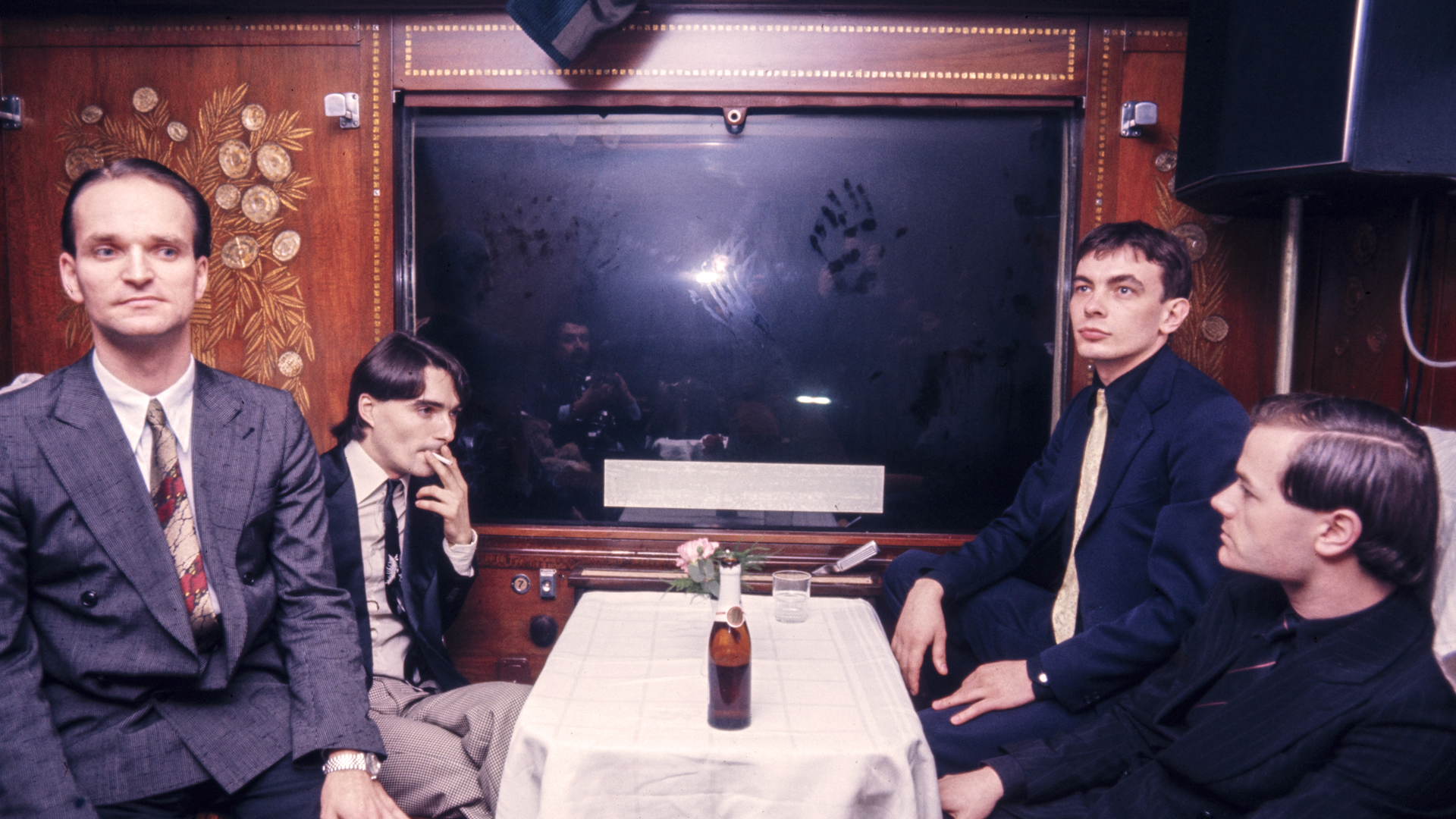
!["How Kraftwerk Pioneered Techno in 1973, Long Before the Genre Came to Be"]](https://backingtracksfullcollection.com/wp-content/uploads/2026/04/How-Kraftwerk-Pioneered-Techno-in-1973-Long-Before-the-Genre-758x426.png "\"How Kraftwerk Pioneered Techno in 1973, Long Before the Genre Came to Be\"] 1")
Sliding Doors moments in music? We love them. That time when Gary Numan noticed a synth in the corner of the studio? Brilliant. When Richard James started twiddling about with electronics? Inspired. Or when Phuture found that second-hand TB-303 and invented acid house? Genius. Or what about when you found that unheard-of Kraftwerk track in 1973 and were so blown away that you started a new scene based on it called ‘techno’ in 1974?
Oh, except that last one didn’t happen did it. Because you didn’t hear the track and neither did anyone else.
But yes, Kraftwerk did invent techno in 1973.
Article continues below
Trouble is, no-one heard it, or if they did, they weren’t that fussed about it, nor would they be for another decade…
It’s true that Kraftwerk have had an awful lot of accolades thrown at them since they began their careers – and kickstarted those of many others – back in 1970. They are, according to many: synth-pop progenitors, technology innovators, hip-hop pioneers, EDM seeders, cultural super-icons, future aniticipators… In fact, you name it, Kraftwerk have been labelled it.
Yet after being praised, lauded, swooned over, and worshipped, they have for the most part just ignored every word, which has, somewhat ironically, only helped further feed the myth-making around their legacy.
And if you think this article is in any way going to do anything to explode these myths, or to burst the bubble of worship, then we’ve got bad news.
Get down on your knees, because the more you discover about Kraftwerk, the more you ask, ‘How the heck did they come up with that?’. Or, more appropriately in this instance, ‘Did they have a time machine?’
We’ve discovered a track (Ok, when we say ‘discovered’, it’s basically on an early Kraftwerk album you might not have heard of or played in a while) that is structured so much like an acid house, techno or a basic dance music track from the mid- to late- ‘80s that you have to ask, ‘Did Kraftwerk, as they once said, actually ‘beam themselves into the future?’.
Ok, we might be getting ahead of ourselves here, almost literally, but take one listen to Kraftwerk’s Kristallo, and ask yourself what right this track had to exist in 1973?
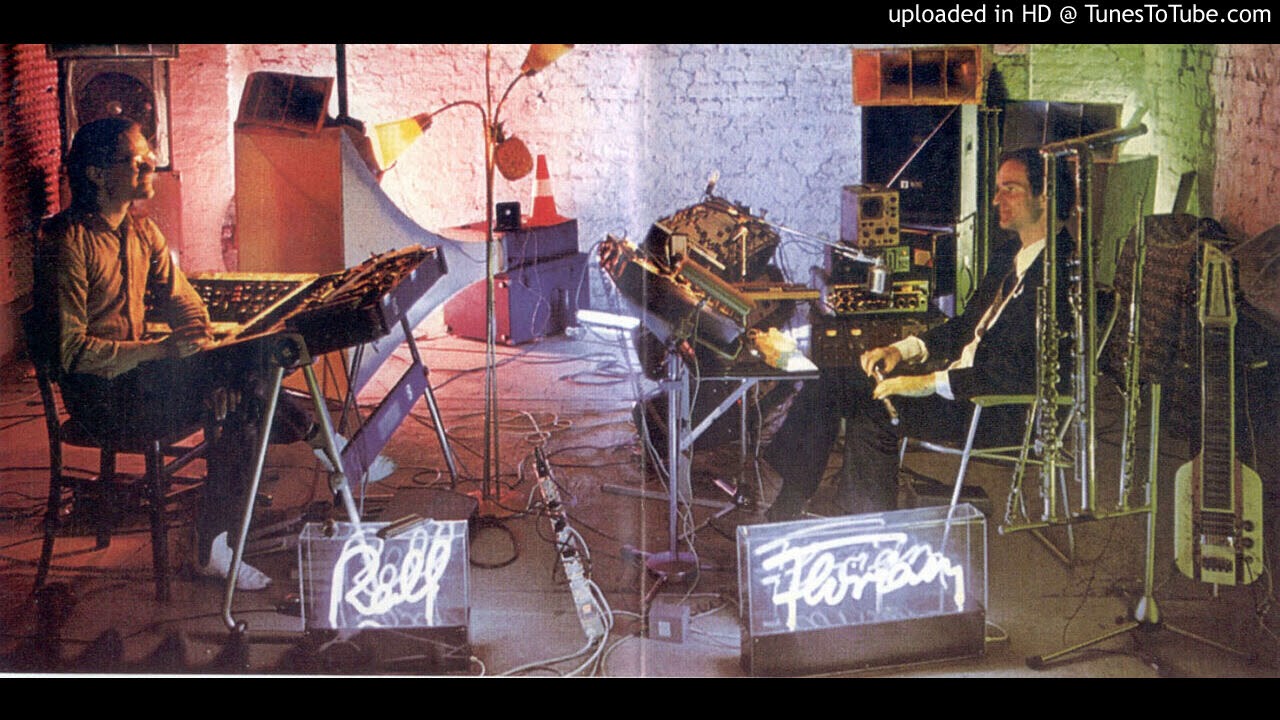
Kraftwerk originally formed in 1970, out of both Organisation (co head-honchos, Ralf Hütter and Florian Schneider’s previous band) and the broad ‘Krautrock’ movement.
Acts like Neu! and Can were stretching musical definitions across Germany, and lazy journalists like us gave this movement this slightly dubious label because, well, describing it otherwise was more difficult, as the music it produced could cover everything from psychedelic improv, to early electronic prog.
On Kraftwerk’s first three albums, they pretty much straddled all of these styles and more. The band’s first two LPs Kraftwerk (1970) and Kraftwerk 2 (1972) were freeform jazz/musique concrète/ flute rock experiments, with organs, tape splicing, effects and oscilloscopes taking centre stage.
If there was a trend and musical direction, it was to gradually bring an electronic sound to complement and eventually replace the folk-driven jazz rock.
Third album Ralf & Florian (1974), was very much the tipping point of this movement, where early monophonic synthesisers met acoustic instruments, flutes, ad-libs and even early sequencing.
And that’s where we find Kristallo, the subject of this feature and a six-minute, driving, four-to-the-floor and – there’s really no other way of saying this – ‘techno’ track.
Here Kraftwerk were at the very cutting-edge of technology, thanks, it has to be said, to the fact that they were among the lucky few people who had the cash to get anywhere close to it.
Both Ralf and Florian came from rather well-to-do backgrounds – which is just as well.
Their early synths including the EMS Synthi A, ‘the first synth’ the band owned according to the recent Florian Schneider auction, and Ralph’s Moog Minimoog. Both of which cost a fortune, the latter upwards of £/$/€50k in today’s money.
By Kraftwerk’s third album, both synths were starting to make an impact, as evidenced in this wonderful clip of the band performing Tanzmusik from the album (which also, as it goes, means ‘dance music’!)
The electronics had very much arrived, then, and when asked about the biggest innovations in music technology by Mark Sinker in the December 1992 edition of Music Technology magazine, it was these very machines that got a shout-out.
“I think this must be the availability of the first monophonic synthesizers,” Ralf Hütter said. “Because before that it used to be these big machines from Bell Laboratories or government radio stations. Being able, as an individual musician – an independent musician – to get your hands on some of this electronic gear. I think that was the most significant change, around the late ’60s.”
It truly was the dawn of a time when technology influenced music more than ever before.
Yes, the electric guitar had been pivotal in the development of rock and roll, but the synth and its electronic circuits took music sideways, backwards and forwards. But it wasn’t cheap.
Ralf admitted that his initial investment was a big one; “I remember the first monophonic synthesizer I bought was the same price as a Volkswagen, so that was the choice to make. I think that’s a very good comparison, because the synthesizers were giving freedom of movement to musicians.”
This democratisation would eventually occur when prices of music gear fell, but in 1973, few people had access to synths and, whether by luck or design, it was Kraftwerk who would capitalise. As the innovators, though, the band did have to wrestle with the technology.
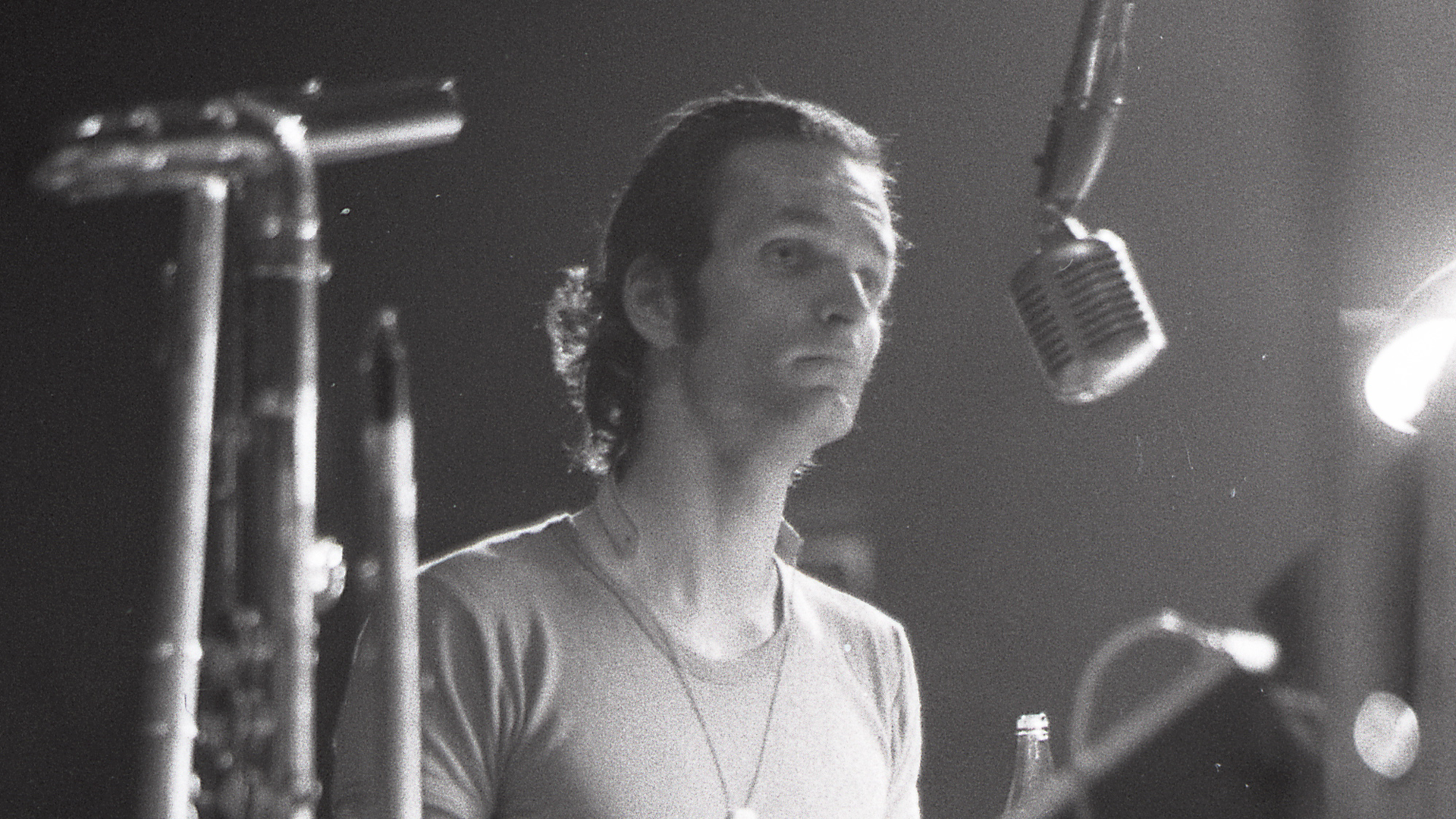
“They would give you just a three-page typewritten guide, saying ‘this is the oscillator, this is the filter’ – and that was it,” Ralf recalled in the same interview.
“Then you would go home and fiddle around and turn knobs; there were no pre-programmed sounds in it because it was all analogue.
“I don’t like today’s preprogrammed sounds so much; we always work on them, if we use them at all. We never really find anything that comes from other people’s ears that we keep. We always turn knobs, that has been a continuing priority. We used to design our own synthesizers as well. In those days we had sequencers built, because they were very rare.
“Only the very big Moog modular systems had sequencers. And then we would take drum boxes and re-design them with our engineers and electricians into a playable form, and adjust these with the sequencers, and those to tape, so that everything was synchronised.”
All of this was taking place in what would become Kling Klang Studios, a back-street industrial unit that would eventually become the sacred recording space that birthed some of the band’s most famous albums, including Computer World and Autobahn.
And when we say ‘birthed’, we really do include the studio itself, because the gear in it became part of the actual process of composing and as well as recording.
In Kraftwerk: Man, Machine and Music by Mick Fish and Pascal Bussy, Kraftwerk promoter and collaborator Maxime Schmitt describes a fascinating process at Kling Klang where the band members would often leave the machines running for hours, to see and hear what they would come up with.
“From time to time Florian would stand up and go to another machine and start or launch another sequence,” he said. “It was almost closer to a traditional jam session than to studio work. The following day they would listen back to the tape.”
So even during these early years, and for the recording of Ralf & Florian, Kraftwerk were starting to develop their ‘Man Machine’ philosophy, and almost treating the gear as an equal in the studio.
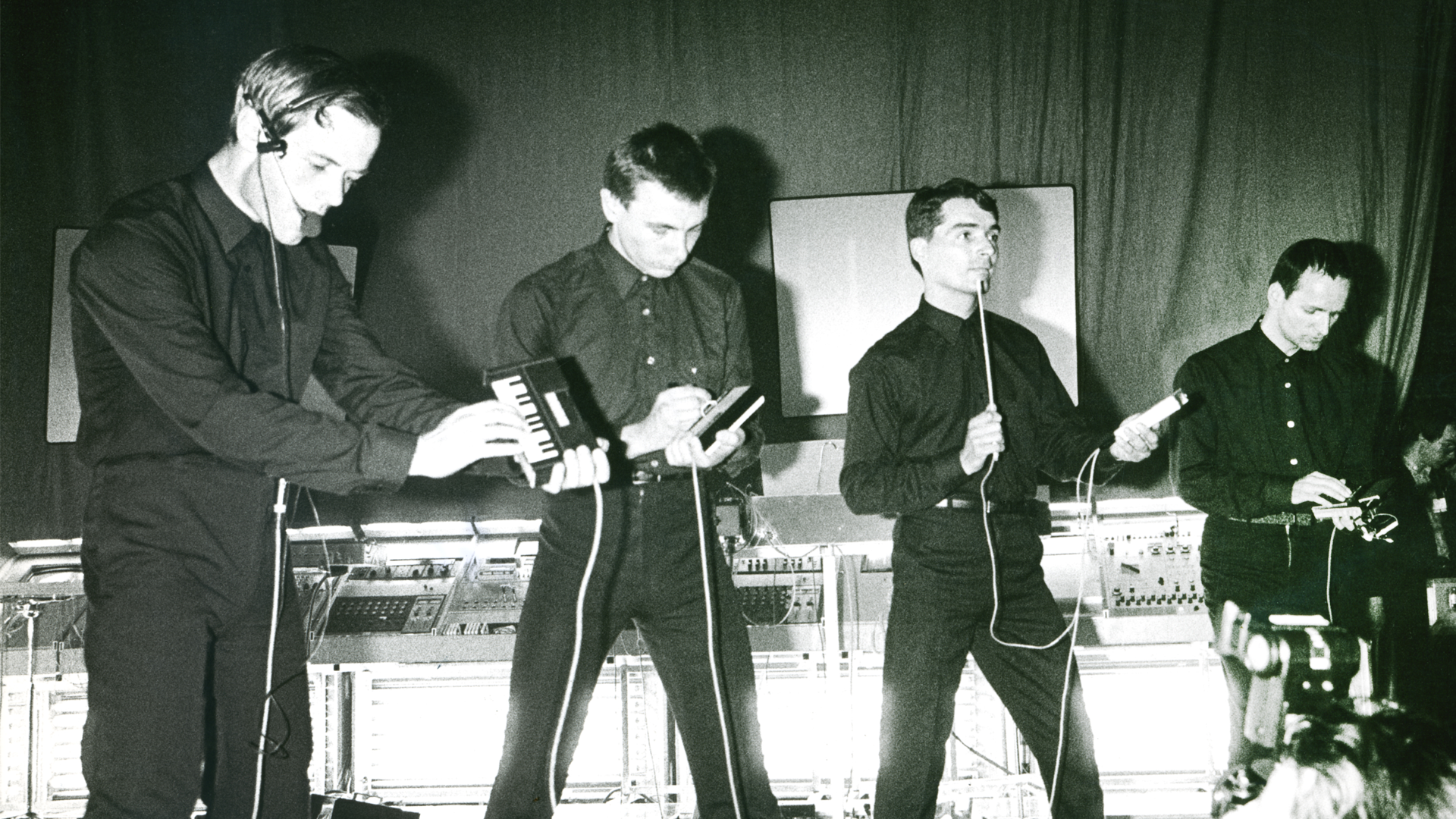
This is perhaps the key to understanding why Kristallo feels so out of time, with its 4/4 feel, and a kind of arpeggiated beat most likely created on a synth, which sounds at times like a kick.
Free-forming over the top of this is a harpsichord-sounding lead which some reports say was the Minimoog, but to be honest, it’s such a simple sound that it could have been any one of a number of keyboards, perhaps their Farfisa organ.
More ‘dance music’ than even the 4/4 ‘kick’ feel is a squelching 16-note bass line. It’s so acid-like it could have been lifted from DJ Pierre’s house in Chicago in the mid ’80s’. Here we’re guessing that the Minimoog provided the squelching, all manually controlled with the filter.
What we have with Kristallo are two core elements of dance music firmly in place – and it’s only 1973.
Whether by pure experimentation or by driving towards a sound that they anticipated would take hold in the future, Kraftwerk were nearly a decade ahead of their time.
Indeed, techno arrived in the early ’80s, with the soul-infused house manifesting towards the middle part of that decade. Acid exploded everywhere with the second summer of love as the ’80s closed, and then there were smiles everywhere as the ’90s embraced everything and anything dance, whatever your tempo.
Kraftwerk’s influence was of course, a key part of that dance music origin story and their shadow loomed over many future developments.
But it isn’t Kristallo that is hailed in the annals of electronics music history. That honour falls to better-known Kraftwerk songs like Trans-Europe Express and Numbers.
Kristallo very much went under the radar on its release. The double tempo addition at the end of the song didn’t help (and the winding lead starts to annoy after a while too) and Ralf & Florian, the album from which it came, only found limited success.
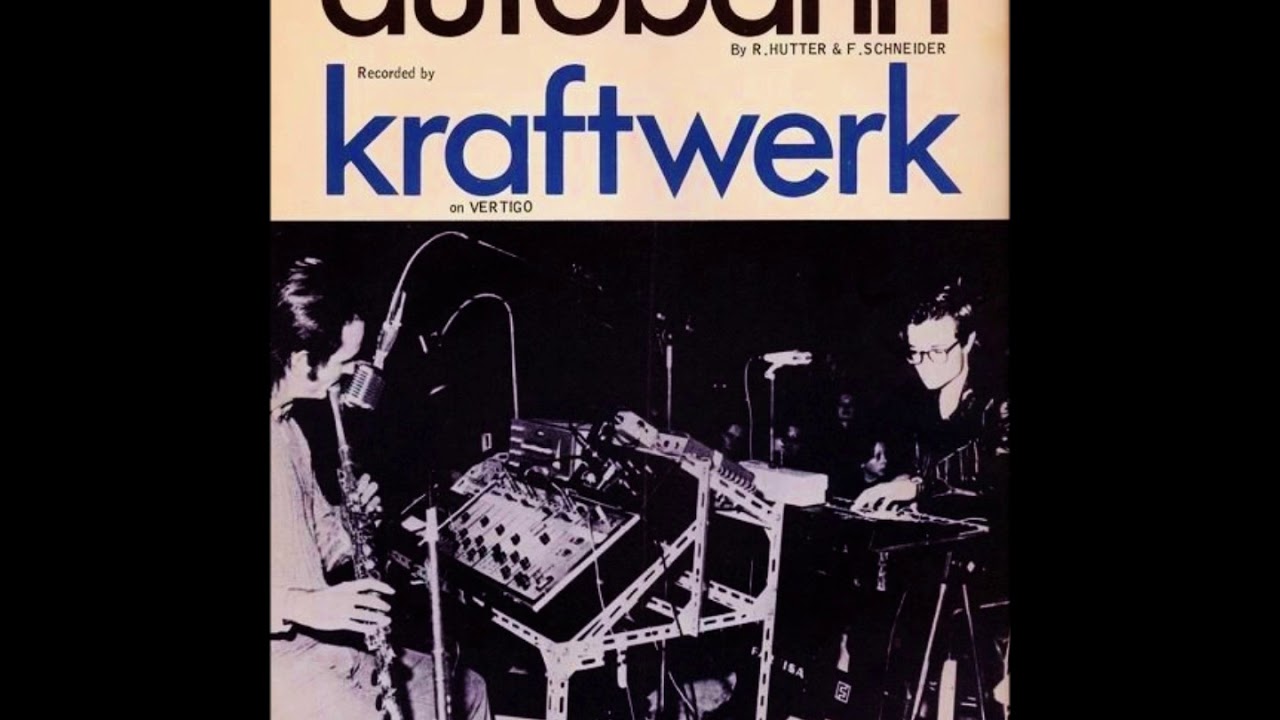
It wouldn’t be until Kraftwerk’s next album, Autobahn, that the band would truly find their groove, with the synth-driven title track kicking off their classic period.
But, from a historical point of view, Kristallo remains one of their most intriguing pieces of music. Crucial evidence that the DNA of electronic dance music was permeating the sonics of the earliest incarnation of the band.
As well as its 4/4, acidic predictions, perhaps it marked something even more pivotal to the band – a time where the man-machines at Kling Klang were first unleashed.
“We call it the electronic garden, because it is continually regenerating,” Ralf said of the studio’s evolution in 1991. “Now it is completely modular so that we can pick out certain units and replace them. We kept all our old synthesizers from all the different phases in storage, because they were of very little value once they were superseded, but today we have all this old analogue equipment back in place! It’s really very good. Moving over to digital has in no way superseded analogue.
“We have always considered any sound source. It’s just sound. Kling-klang is the German word for sound, so we have always had a fascination for sound.”