!["Isn't it incredible to hear people joyfully singing about their experiences in a car crash? We chat with The Smiths' producer Stephen Street to discover the story behind their iconic song."]](https://backingtracksfullcollection.com/wp-content/uploads/2026/03/Isnt-it-incredible-to-hear-people-joyfully-singing-about-their-758x426.png "\"Isn't it incredible to hear people joyfully singing about their experiences in a car crash? We chat with The Smiths' producer Stephen Street to discover the story behind their iconic song.\"] 1")
British poet and author, Brian Bilston, recently published a short and pithy poem entitled Morrissey’s Fridge. It reads:
Morrissey
was filled
with sudden
self-doubt
as he shut
his fridge door –
did the light
never go out?
Article continues below
The poem references arguably the greatest song by the ever-controversial singer’s former band, The Smiths; There Is a Light That Never Goes Out.
Despite never being released as a single in the UK while the group were together, the song is firmly established as one of their most-loved and quintessential recordings. Four decades on, and it’s been well-cemented in the canon of indie anthems.
Co-written by Morrissey and the Smiths’ veritable musical director – guitarist Johnny Marr, There Is a Light… is the penultimate track on the band’s 1986 third album, The Queen Is Dead, and has been covered by artists including The Divine Comedy, Noel Gallagher, The Cranberries, The Courteeners, Miley Cyrus and Dum Dum Girls.
It has been a mainstay of Morrissey’s own live set – at his O2 Arena show in London on 28 February this year, There Is a Light That Never Goes Out was played as the encore, and he’s even opened some of his 2025 US shows with it.
The song is also a staple of Marr’s solo concerts – he usually finishes with it, leading to a mass singalong from the crowd.
In 2014, NME voted There Is a Light That Never Goes Out the 12th-greatest song of all time and in 2021, it was ranked at No.226 on Rolling Stone’s list of the 500 Greatest Songs of All Time.
The track also features in a memorable scene from the 2009 US romcom-drama film, (500) Days of Summer, when central characters Tom Hansen (Joseph Gordon-Levitt) and Summer Finn (Zooey Deschanel) first meet in a lift. Hansen is listening to the song on his headphones and Finn recognises the song, telling him how she loves the Smiths, which impresses him – their shared music taste leads to them starting a relationship, which, sadly, doesn’t end well.
It’s fitting really, as There Is a Light That Never Goes Out is widely seen as the ultimate ode to doomed romanticism.
In the chorus, Morrissey sings:
And if a double-decker bus
Crashes into us
To die by your side
Is such a heavenly way to die
And if a ten-ton truck
Kills the both of us
To die by your side
Well, the pleasure, the privilege is mine
As author Simon Goddard writes in his excellent book, The Smiths: Songs That Saved Your Life, “The song encapsulates the Smiths at their most morbidly romantic; a love song that celebrates the existential transience of human mortality by fantasising about being cut down in the prime of happiness. Preserving bliss, but only through death.”
It’s Morrissey and Marr’s masterpiece – the perfect balance of the former’s tragicomic lyrics with the latter’s lush, intricate and melancholic, pop-influenced orchestration.
In his autobiography, Set The Boy Free, Johnny recounted how he wrote the music for some of the songs that would end up on The Queen Is Dead, including There Is a Light That Never Goes Out, and recalled how he first played his ideas to Morrissey on a Martin acoustic guitar – recording them on a cassette machine while the two of them were sat in Marr’s three-storey Victorian house, on Marlborough Road in Bowdon, a leafy suburb in Altrincham, Greater Manchester.
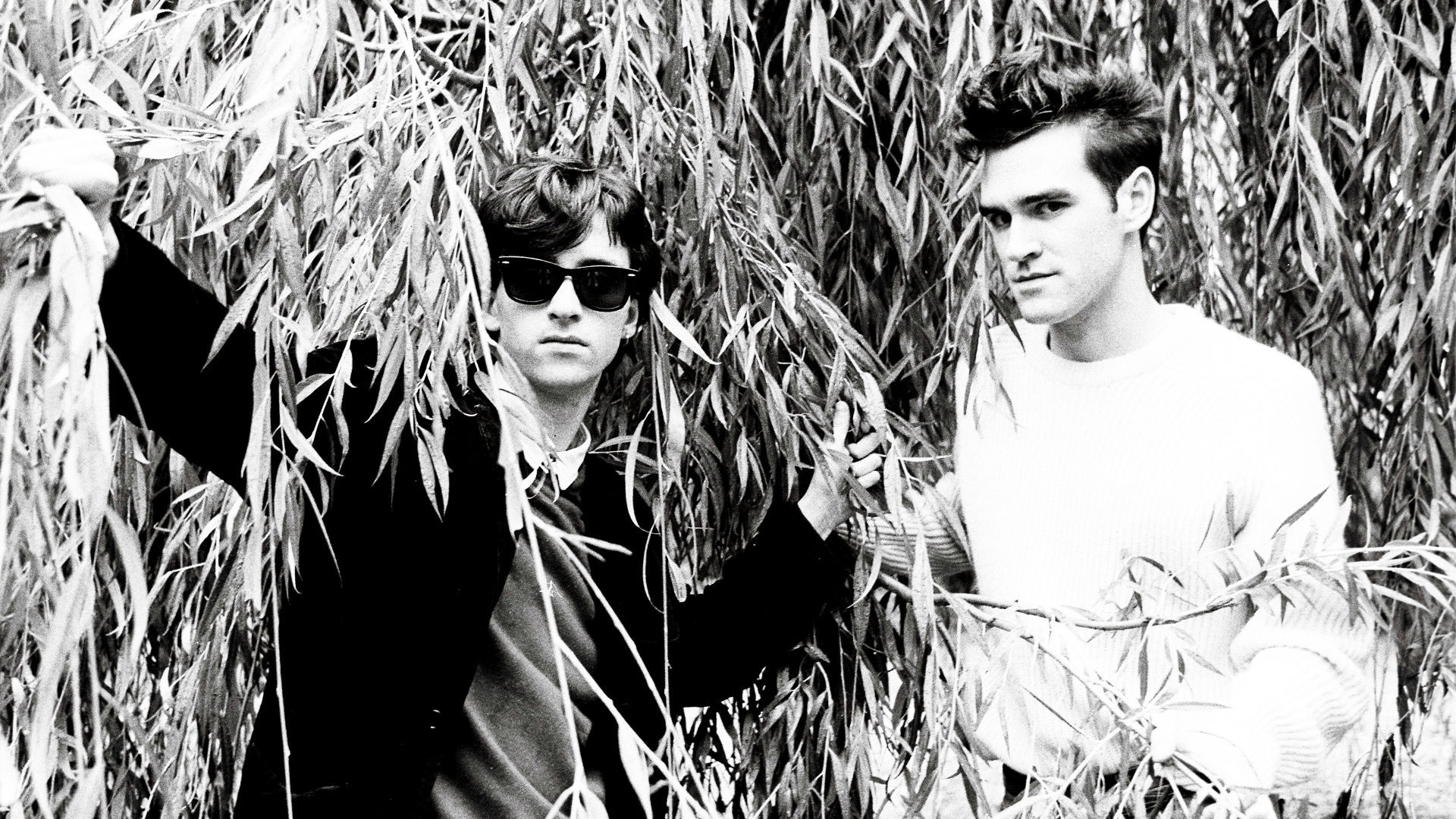
The Martin was a D-28 Natural model from 1971, a guitar favoured by the likes of Joni Mitchell, Neil Young and Bert Jansch, which Marr bought in 1984. He also conjured the sparkling Cemetry Gates chords with this guitar.
Marr wrote the chords for There Is a Light That Never Goes Out during the late summer of 1985. “It had a breezy minor chord pattern that went to an uplifting chorus, and I’d inserted a rhythmic skip from The Velvet Underground for some mischief, as they’d copied it from The Stones,” Marr said in his book.
“At first, I thought the song might be a B-side because it came to me so easily, but as I played it there was something certain about it, an indefinable quality that comes out of nowhere. We were getting the feeling that we had something good.”
Marr added that at the end of the night, he drove Morrissey back to his place with a cassette of three new songs that would ultimately become I Know It’s Over, There Is a Light That Never Goes Out and Frankly, Mr Shankly, all destined for inclusion on The Queen Is Dead.
Speaking to Select magazine in 1993, Marr said of the Velvet Underground and Rolling Stones influence on There Is a Light That Never Goes Out: “There’s a little in-joke in there just to illustrate how intellectual I was getting.
“At the time everyone was into the Velvet Underground, and they stole the intro to There She Goes Again from the Rolling Stones’ version of Hitch Hike, the Marvin Gaye song. I just wanted to put that in to see whether the press would say, ‘oh, it’s the Velvet Underground!’ ‘Cos I knew I was smarter than that. I was listening to what the Velvet Underground were listening to.”
That part Marr is referring to is the bridge ascent from F# minor to A, then B.
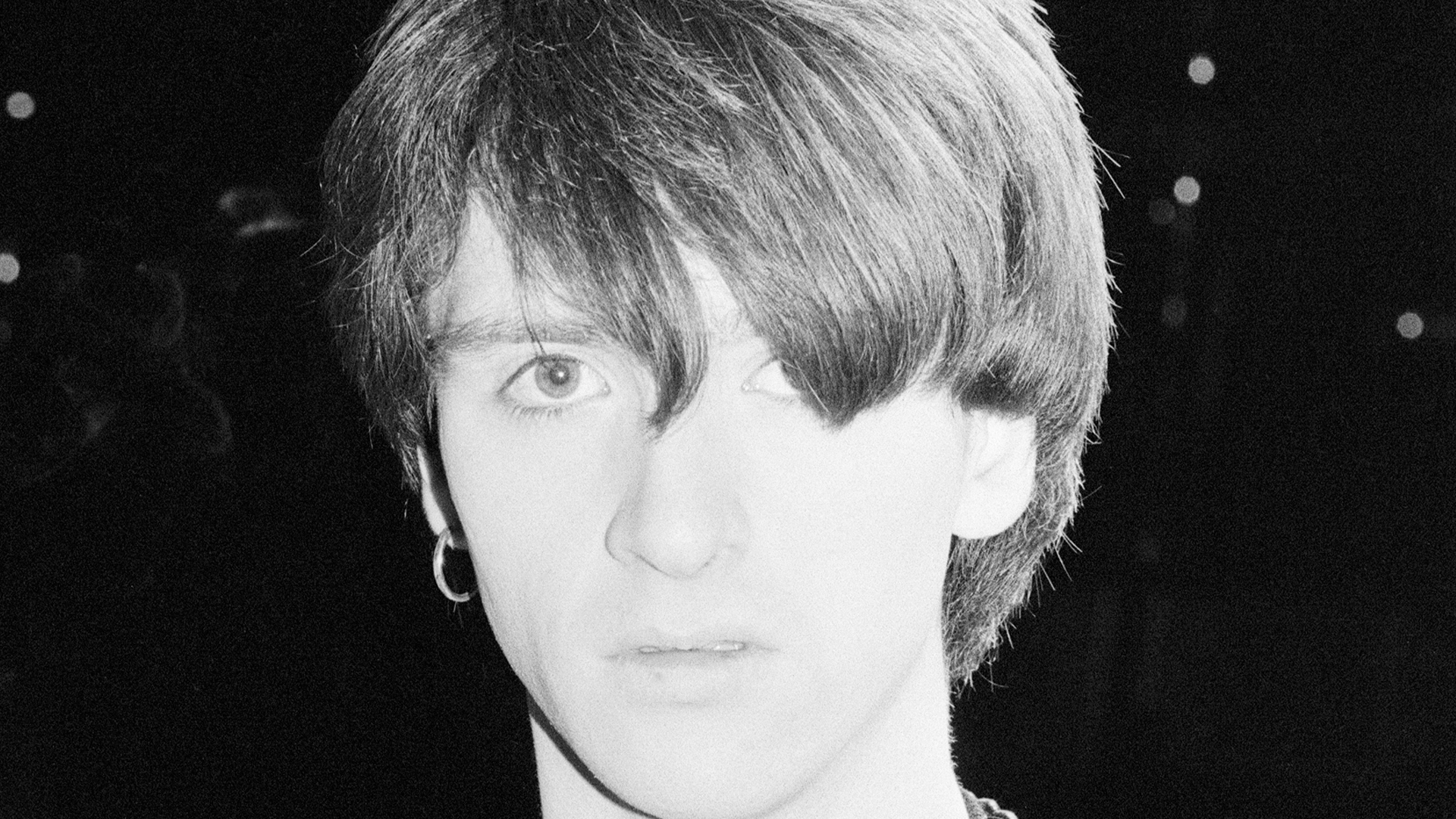
Writing in The Smiths: Songs That Saved Your Life, Goddard stated that the chords for There Is a Light That Never Goes Out were based on a sequence of C# minor, A,B, E and either F# or F# minor – he added that the flute section, which was originally written as a guitar part, was based around an arpeggio in its home chord of C# minor.
The flute part and the string arrangement were created by Marr on an Emulator digital sampling synthesizer, allowing him to orchestrate the song, opening up new possibilities and expanding the sound of the band, which, on their first two albums had largely been a guitar, bass and drums set-up.
On The Queen Is Dead, the orchestration was wryly credited to the fictitious ‘Hated Salford Ensemble’.
The first sessions for The Queen Is Dead took place in August 1985, in Studio Three at RAK Studios in St John’s Wood, London, with Morrissey and Marr as producers, and Stephen Street on engineering duties, although the first song to be recorded for the album, The Boy With The Thorn In His Side, was captured at Drone Studios in Manchester, in July of that year.
According to Goddard, a raw rehearsal of There Is a Light That Never Goes Out took place at RAK in autumn 1985 – the session was taped on 2 September. Goddard stated that this version was originally in a higher, ill-fitting key, F# minor, but that a more comfortable monitor mix, lowered to C# minor, was completed four days later.
The song was finished in winter 1985 at Jacobs Studios, a residential recording complex located in a Georgian house in the Surrey countryside near Farnham, where Morrissey redid some of his vocal takes.
In earlier versions of the song, Morrissey sang: ‘There is a light in your eyes and it never goes out,’ but in the final recording, this was amended to simply ‘There is a light and it never goes out,’ adding ambiguity to the song’s meaning.
As Goddard pointed out, the narrative of the song was influenced by the ‘death discs’ of the ‘60s, as well as Karel Reisz’s 1960 film version of Alan Sillitoe’s seminal novel, Saturday Night and Sunday Morning, and the 1955 coming-of-age movie, Rebel Without a Cause, starring James Dean – a significant idol of Morrissey’s.
Writing about the initial RAK sessions for There Is a Light That Never Goes Out in his book, Set The Boy Free, Marr said: “I decided to record it using the Martin acoustic I’d written it on, so as to capture the breezy quality, and I ran through the chords with Andy [Rourke – bass] and Mike [Joyce – drums], who were hearing it for the first time, while Stephen Street made some adjustments to the sound.
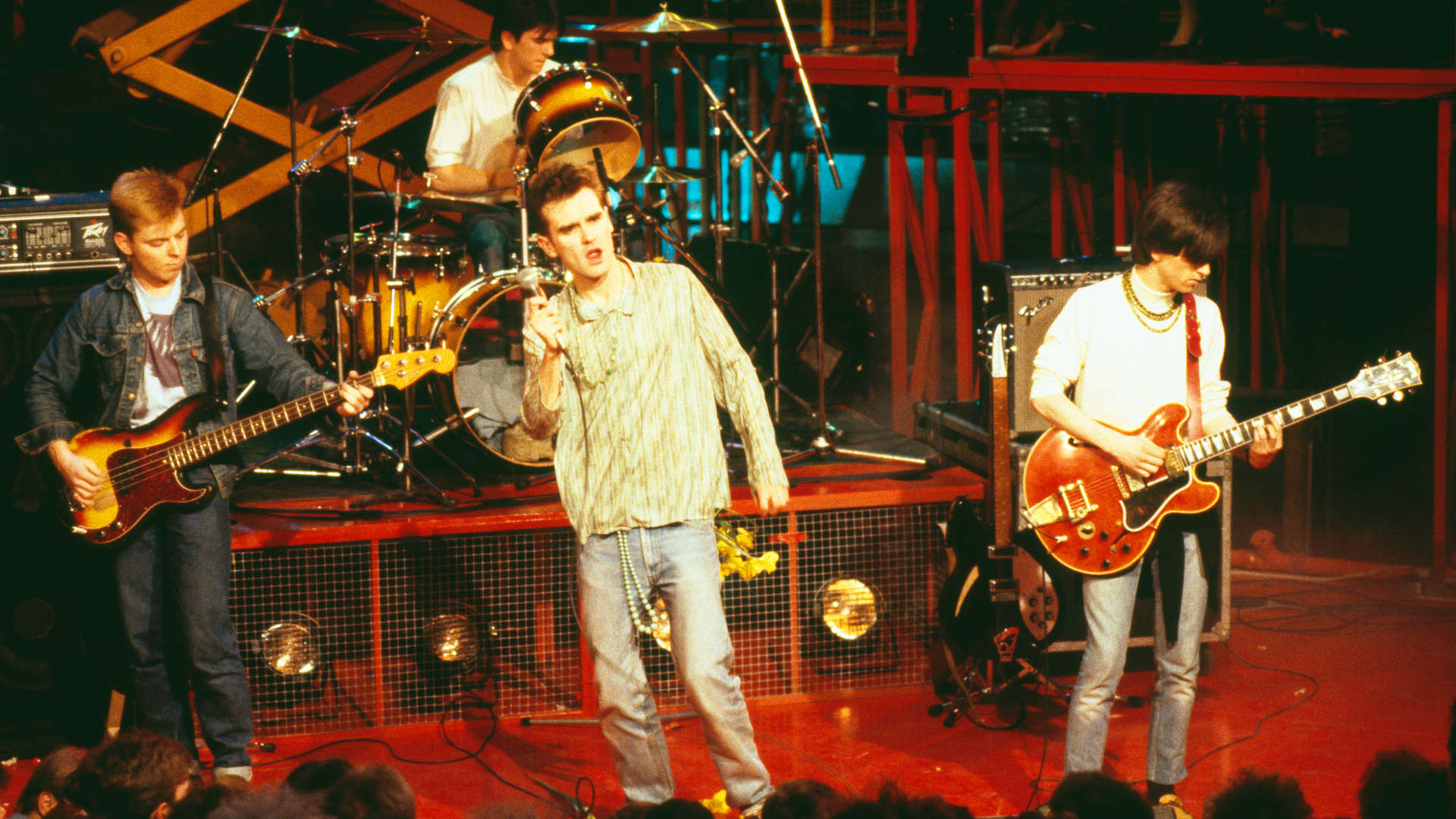
“The music came together quickly, which is usually the sign of a good song. It was always an important moment for me when we were putting down something new, but with There Is a Light… it was obvious that we might have some magic, and it felt like the music was playing itself.’
He added: “All my expectations were surpassed though when Morrissey got behind the microphone, and we played the song as a band for the first time. Every line was perfect as the words and the music carried us along on our new anthem. We were high with it, and after a few takes we had one of our best ever songs, and something that felt at the time like pop music and beyond.”
We spoke to Stephen Street to get some more perspective on the There Is a Light… sessions, and interestingly, he contradicts Marr’s recollection. Stephen tells us that the first time he heard the song was at Jacobs Studios, rather than RAK.
“They might have done There Is a Light… in a rehearsal session [at RAK], but not in the main session that I worked on there, where we focused on recording Bigmouth Strikes Again,” he tells us.
“There was a smaller studio down the corridor, and they might have gone in there for a day or two to do some run throughs, but, certainly, for me, I didn’t hear There Is a Light… until we actually recorded it at Jacobs.”
Reminiscing about the sessions for the song at Jacobs Studios, Street says: “We were working on a Mitsubishi digital multitrack tape machine, it was quite new technology. I remember doing There Is a Light…, it came together like a breeze. Johnny came in one afternoon, running through it with Mike and Andy, and we recorded it. I think within two or three takes, we had the one we wanted. Morrissey did a vocal on it quickly and it was evident straight away what a great melody and lyric he had prepared for it. He was pretty impressive with his vocal performances.”
He adds: “When I was working with Johnny, I always had a couple of delays on the go because he liked his guitar going into them, there would be a 3/16 delay or an eighth delay, and I would play around with them to see which one worked with which part.
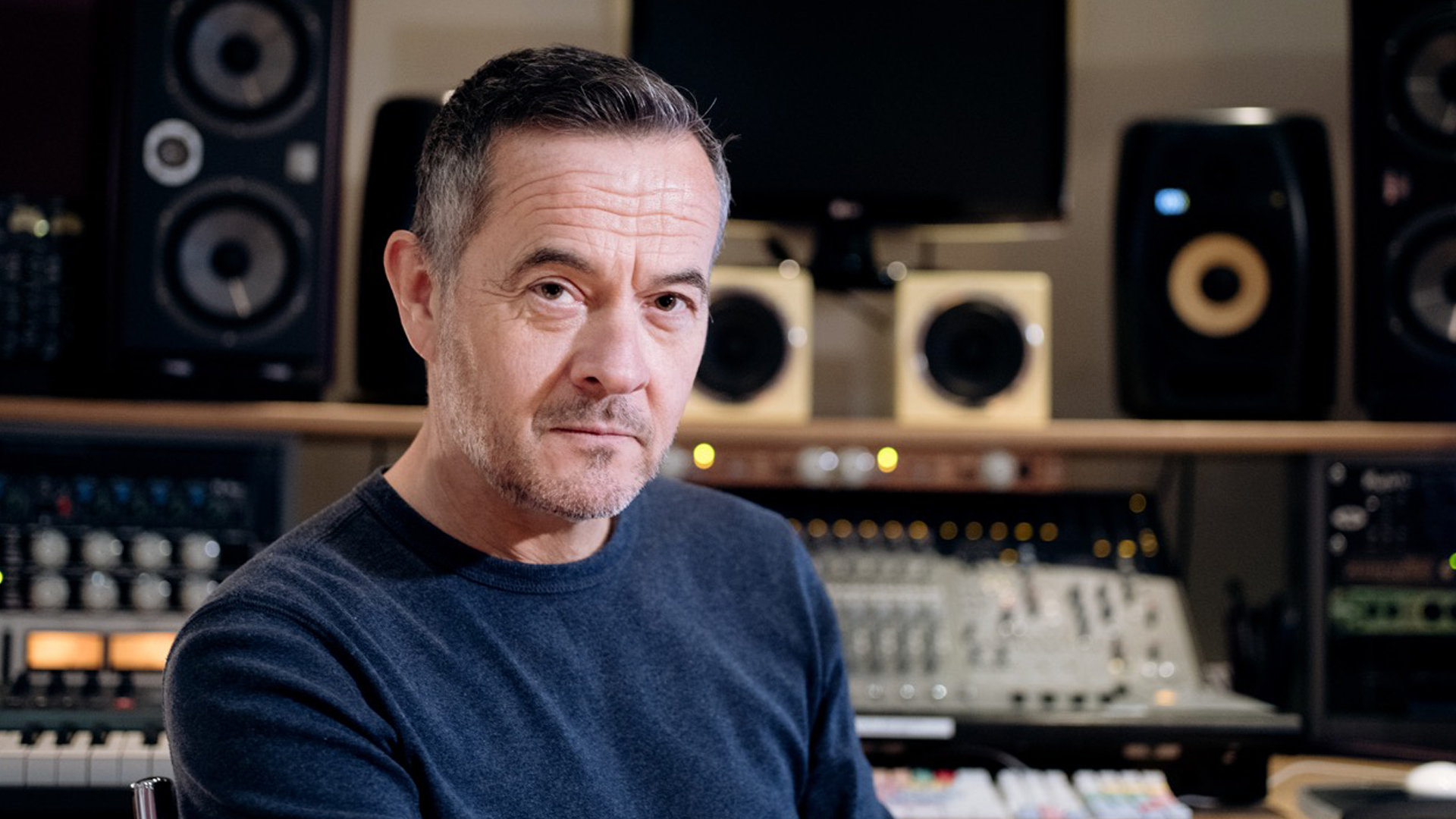
“Once we had Morrissey’s vocal on, we knew what else we needed to embellish – I can remember a lovely afternoon in the studio with Johnny when we had the Emulator there. We did the arpeggiated flute thing. I put an echo on it, which really made it bounce around. I remember that working, it was wonderful. Once we had that idea down, all the extra bits, like the strings, just seemed to come out of the ether.
“We used the Emulator even more on the next [and final Smiths’] record [Strangeways, Here We Come] – they were quite expensive to hire in for the day.”
The recording budget for The Queen Is Dead couldn’t stretch to hiring in a real string section for the sessions, hence the use of the Emulator, and, as Street points out, having guest musicians in the studio might not have sat well with the band’s gang mentality anyway. The Smiths treated outsiders with suspicion…
“I don’t think Morrissey would’ve been happy working with a string section, he liked everything contained within the band,” says Street. “When we had a trumpet player in to play on Frankly, Mr Shankly, I could see him slightly squirming. He might be a little bit more open to working with session players now, but back then he wasn’t.” Tellingly, the version of Frankly, Mr Shankly featuring the trumpet player didn’t make The Queen Is Dead – an alternate take was used.
Recalling working at Jacobs, Street tells us: “It was quite a nice studio, a stately home-type thing, but with a barn as a side extension, with glass doors, which was the main recording studio. The control room was in one of the rooms of the house. I can remember that Status Quo were recording in the other studio there and I think there was a coming together one evening, but Morrissey didn’t want to mix with Status Quo, that was obvious!”
On the recording process, he says: “I’d get up in the morning, go downstairs and work on the tapes. Morrissey would be around and do a vocal or two, but Johnny was quite a night owl back then, you wouldn’t see him much before lunchtime. The most productive part of the day would be in the afternoon, from two or three o’clock onwards until dinner.”
As Goddard wrote in The Smiths: Songs That Saved Your Life, audio evidence of Marr’s initial awe at hearing There Is a Light That Never Goes Out when it was first played in the studio has survived.
Following the song’s first rehearsal at RAK on 2 September, the tapes were left rolling long enough for the microphones to pick up Marr’s excited adulation of his co-writer. “Aw, your singing on the end of that,” he glowed towards Morrissey, “was brilliant.”
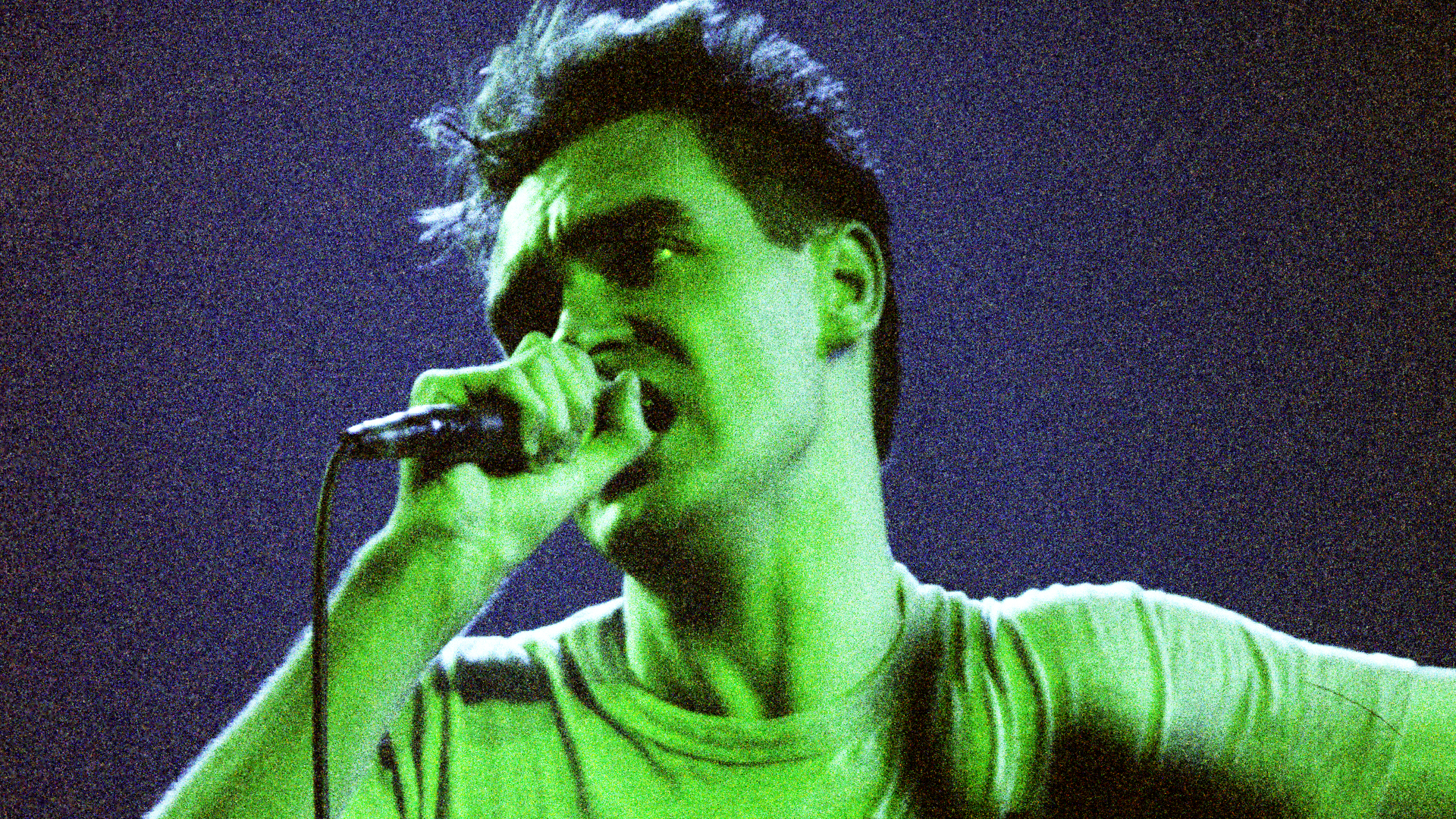
Says Street: “The chord structure for There Is A Light… just has a nice natural flow to it and once Morrissey added the lyric and the melody, I thought it was going to be a very special track. I knew it was going to be one of the highlights of the record. What links everything together for me is the emotion of it, it’s so celebratory, but Morrissey is singing about dying in a car crash and how beautiful that would be if you were with the person you loved.
“If you go to indie clubs and that record comes on, everyone gets together and sings along – I find it amazing that people are singing in such a celebratory way about being involved in a car crash. It’s quite a strange and very English thing to do.”
He adds: “Johnny and I treated it with a lightness of touch – we didn’t want to go too big or heavy or make it into a single. It was just like; let it be what it is… It’s lovely and it’s still one of my favourite Smiths songs.
“I knew we had recorded an important track, we were excited about the whole album, but for me it’s a highlight. I was a bit worried that The Queen Is Dead was getting a bit dark, but we got the balance right with There Is a Light…, as it provided some light and poppy relief. There’s nothing wrong with pop music, you know.”
The song was eventually released as a single in the UK in 1992, five years after The Smiths had split up, reaching number 25 in the official Top 40. By then, it was already widely-known.
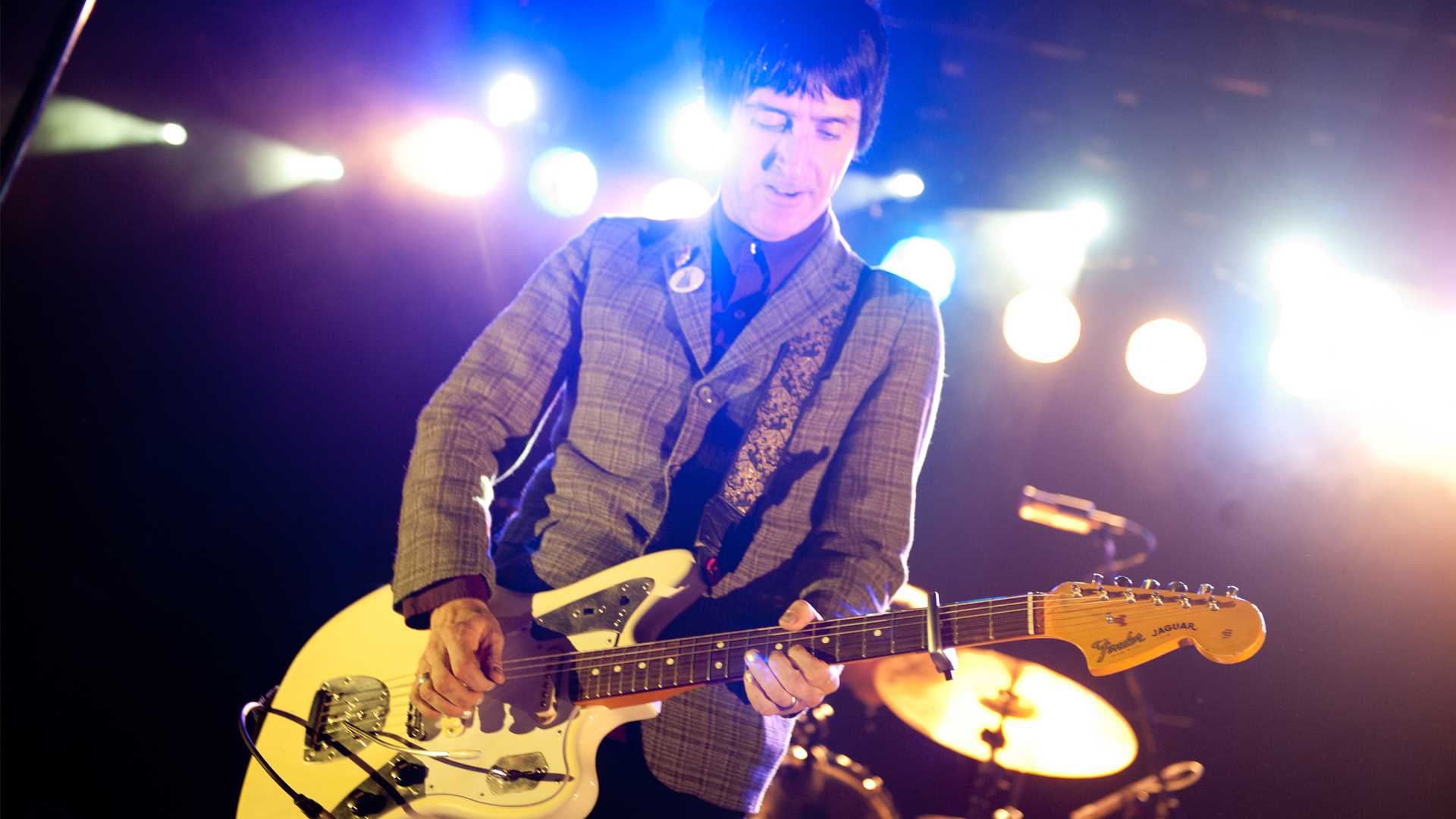
In 2005, Morrissey put out a live version of the song as a double-A side with his cover of Patti Smith’s Redondo Beach, which – impressively – got to number 11 in the UK Singles Chart.
From its pivotal place on The Queen Is Dead, to massed singalongs in indie clubs and its frequent outings at 2020s Morrissey and Marr gigs, There Is a Light That Never Goes Out is perhaps the Smiths’ most iconic song – a timeless anthem for love, longing and romantic fatalism that will endure long after Morrissey’s fridge has packed up.