![Jeff Beck's drummer reflects on the brilliance and downfall of Tommy Bolin]](https://backingtracksfullcollection.com/wp-content/uploads/2026/03/Jeff-Becks-drummer-reflects-on-the-brilliance-and-downfall-of-758x426.jpg "Jeff Beck's drummer reflects on the brilliance and downfall of Tommy Bolin] 1")
Narada Michael Walden has built a career as a first-call percussionist for some of the world’s most celebrated electric guitar virtuosos. His résumé includes work with John McLaughlin in Mahavishnu Orchestra, Carlos Santana, Robert Fripp, Neal Schon and Jeff Beck, with whom he says he recorded an album’s worth of unreleased material.
Among the six-string luminaries on that list is a more tragic figure: Tommy Bolin.
The two met in 1975, by which point Bolin had emerged as one of rock’s fastest-rising stars. After a stint in the James Gang — where he replaced Domenic Troiano, who had replaced Joe Walsh — Bolin elevated his profile with his explosive performance on Spectrum, the 1973 solo debut by Billy Cobham.
Widely regarded as a foundational jazz-fusion release, Spectrum helped codify the genre’s high-velocity, technically demanding aesthetic. The record fused rock aggression with jazz sophistication, influencing players like Beck and helping define fusion’s 1970s sound. Bolin’s fiery, Echoplex-driven tone on tracks such as “Stratus” and “Quadrant 4” became his breakout statement.
I knew about him from a band called Zephyr, which came on the scene when I was in high school in Kalamazoo, Michigan. It was just bad-boy guitar. I loved all that stuff.”
— Narada Michael Walden
The album’s success led Bolin to a contract with Nemperor Records and his 1975 solo debut, Teaser. It was during this period that Walden and Bolin connected, although Walden had been aware of him for years.
“I knew about him from a band called Zephyr, which came on the scene when I was in high school in Kalamazoo, Michigan,” he tells Guitar Player. “It was just bad-boy guitar, like Grand Funk Railroad, Mark Farner. I loved all that stuff.
“We met through [Nemperor co-founder] Nat Weiss, and Tommy said, ‘Come play on my album,’” Walden continues. “So I went down.” The track they recorded was “Marching Power,” an instrumental standout featuring keyboardist Jan Hammer and saxophonist David Sanborn.
“We were walking down the street after we cut the song and Tommy was like, ‘I’m gonna go on a tour. Want to come with me?’ Damn right! I wanted more rock exposure, which I hadn’t had with playing jazz-rock fusion. Playing with him gonna be more of that.”
Before that could happen, Bolin had another commitment. The visibility he gained from Spectrum had put him on the radar of Deep Purple, who were seeking a replacement for Ritchie Blackmore. Bolin joined the band and recorded 1975’s Come Taste the Band. The decision to tour behind the album delayed his plans to perform behind Teaser.
His tenure in Deep Purple proved brief, however. By the end of the tour, he was battling a heroin addiction. When the group disbanded in 1976, Bolin resumed his solo career and assembled a touring band that included Walden, bassist Reggie McBride of Stevie Wonder’s band, Mark Stein of Vanilla Fudge and saxophonist Norma Jean Bell.
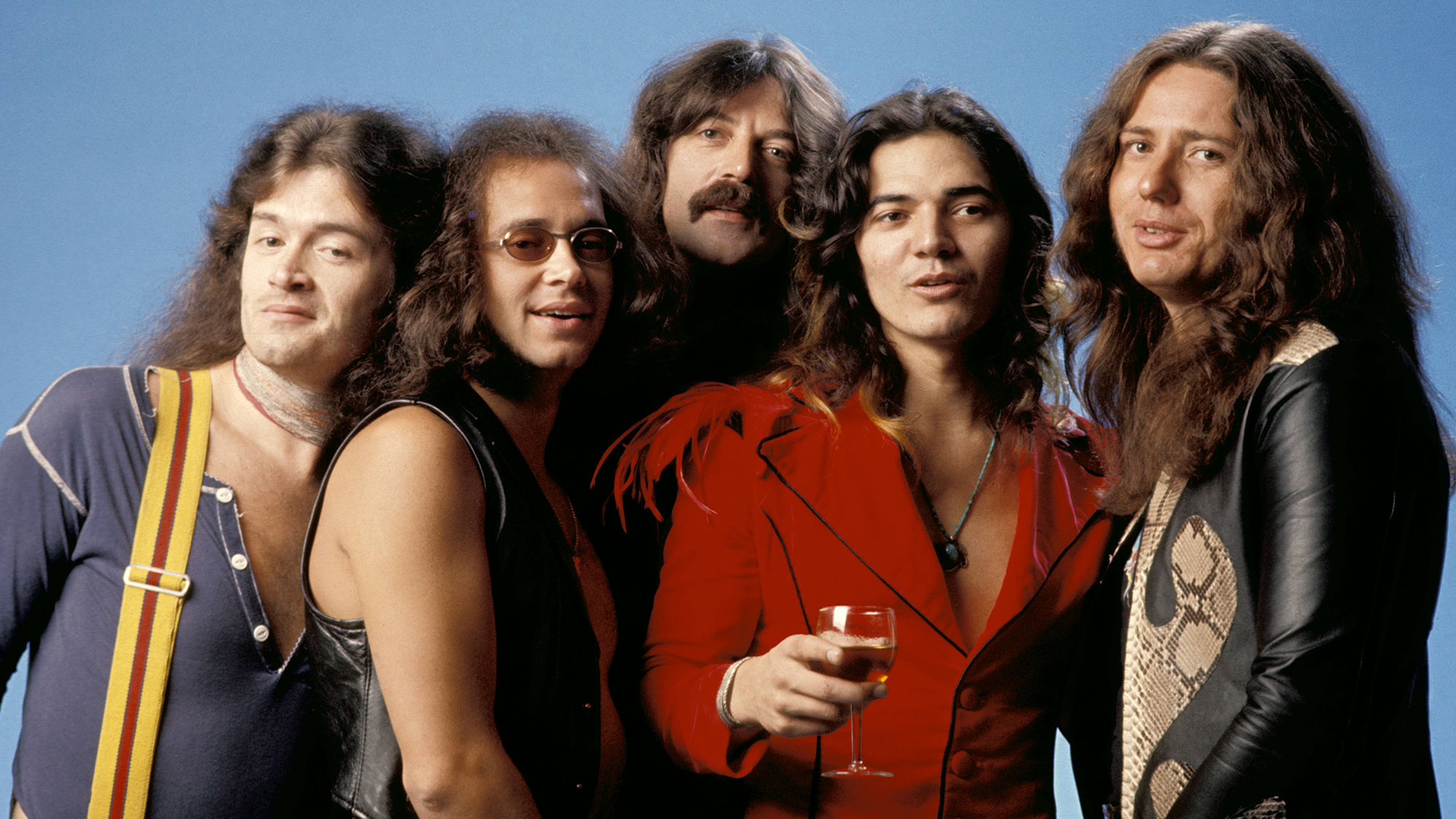
“We were hot!” Walden says. “But Tommy, God bless his heart, after we got back to New York to play at the Bottom Line, he drank too much and he had to lean on the pole. It embarrassed me that he was that drunk in New York.”
By then, Bolin was struggling with severe alcohol abuse and heroin addiction, which would lead to his death just months later, on December 4, 1976.
The Bottom Line concert proved decisive for Walden.
“That was my last show. I had to leave the band, and I felt terrible ’cause we were closer than bread and butter,” Walden says. “I loved Tommy. He was part Native American, like me, so we had that blood mixture going on. It had that soul.
“But I couldn’t be around the alcohol and drug thing too much, which wound up taking him out.”