![Joe Bonamassa Discusses B.B. King's Underrated Guitar Brilliance]](https://backingtracksfullcollection.com/wp-content/uploads/2026/02/Joe-Bonamassa-Discusses-BB-Kings-Underrated-Guitar-Brilliance-758x426.jpg "Joe Bonamassa Discusses B.B. King's Underrated Guitar Brilliance] 1")
Joe Bonamassa has little patience for the idea that B.B. King wasn’t a guitar virtuoso, and he’s making that clear at every opportunity.
The contemporary blues heavyweight is currently promoting Blues Summit 100, his new all-star tribute album to the architect of modern electric blues. One track pairs Bonamassa with Eric Clapton, and the choice was deliberate. In Bonamassa’s view, the song required not just technical skill but historical weight — and few carry more than Clapton when it comes to King’s legacy.
The project has also reignited a familiar debate guitar virtuosity. Bonamassa recently bristled at a journalist’s claim that King didn’t qualify — a puzzling assertion, given that the blues giant’s influence stretches from Clapton and Jimi Hendrix to more recent guitarists like Lenny Kravitz and even Grace Bowers.
That irritation surfaced again in a new interview with Classic Rock .
“When people say, ‘Oh, B.B. King doesn’t play much on guitar,’ I just can’t believe it,” Bonamassa said. “He’s one of the only guitarists you can identify with one note. And if you really listen, there’s a lot of jazz in his playing — Wes Montgomery, Charlie Christian, and of course T-Bone Walker.”
Bonamassa’s defense of King pushes back against a flashier, post-’70s notion of virtuosity. Wolfgang Van Halen once joked that his father “kind of ruined” the ’80s by raising the technical bar so high. After Van Halen’s success, speed became the currency of credibility, and the decade filled up with Eddie Van Halen acolytes attempting to set new speed records on the electric guitar.
King operated in a different universe. His brilliance lay in restraint: the placement of a single note, the curve of a phrase, and his unmistakable vibrato. For Bonamassa — who once took Leslie West’s advice to heart and learned to say more by playing less — that economy is exactly what defines true mastery.
“By the ’60s, his phrasing was completely his own,” Bonamassa said. “But the real thing was his time.— where he put the notes. He was never in a hurry. And every solo he played told a story.”
Bonamassa has recently pushed back against caricatures of his own playing, too, rejecting the notion that he’s confined to slow tempos. In a Guitar World column, he pointed out that he can unleash “blazing licks” when required. The difference, he suggests, is knowing when not to.
And that lesson, he says, came straight from King.
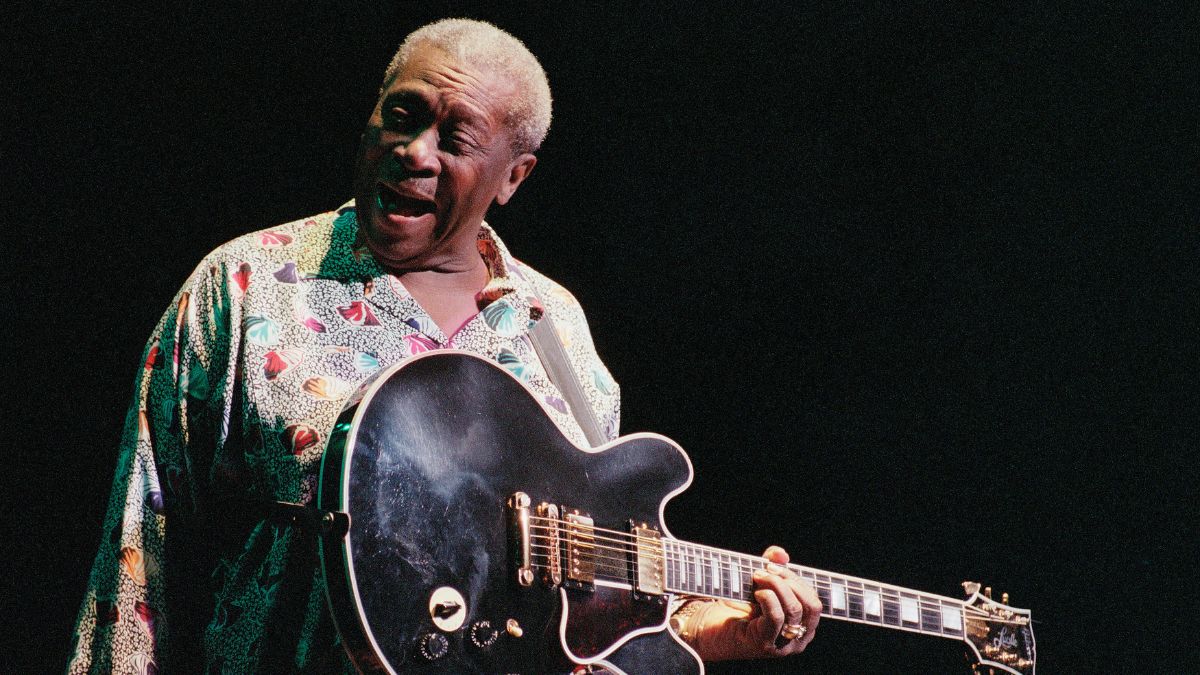
“Everything I do — and everything everybody does — tips its hat to B.B.,” Bonamassa said. “I opened for him hundreds of times. Our band would come out and be cooking for 20 minutes. Then he’d walk out with an ES-355, hit one vibrato, and instantly, you knew it was him.”
Bonamassa has since admitted that adopting King’s fondness for punishing stage volume proved costly, after he suffered hearing loss during a show late last year. Even so, the influence remains indelible.
As Paul Rodgers recently put it, reflecting on his friendship with Bonamassa, his guitar playing flows like “blinding liquid” — a modern expression of the guitar language B.B. King helped to create.