![John McLaughlin: The Story Behind Miles Davis's "In a Silent Way"]](https://backingtracksfullcollection.com/wp-content/uploads/2026/03/John-McLaughlin-The-Story-Behind-Miles-Daviss-In-a-Silent-758x426.jpg "John McLaughlin: The Story Behind Miles Davis's \"In a Silent Way\"] 1")
After building a career as a pop and jazz session guitarist in 1960s London, John McLaughlin crossed the Atlantic in 1969 to join Tony Williams’ group Lifetime.
The move dropped him in the center of New York’s music scene, where he would spend time in Greenwich Village jamming with Jimi Hendrix and absorbing the city’s jazz culture.
It also resulted in him performing on an album that would become the foundation for the 1970s jazz-fusion genre: Miles Davis’s 1969 release, In a Silent Way.
Article continues below
As McLaughlin recalls, that session date came a mere two days after he arrived in America. It proved to be a decisive moment in his career when, at Davis’s urging, he was told to take the lead on Joe Zawinul’s title composition.
They looked at me and said, ‘Who are you?’ I said, ‘I’m the guitar player,’ and they said, ‘We’ve got another guitar player on this session.’”
— John McLaughlin
“Miles just happened to scoop me up, because he wanted a guitar player,” McLaughlin explains. “I was just at the right place at the right time. I’d been in New York for 48 hours, and suddenly I was in a studio with Miles, and, man, it was just unbelievable.
“This was a pivotal moment for Miles, and he’d never heard me play. But since I was playing with Tony Williams, I guess that encouraged Miles.”
Even so, McLaughlin admits he arrived at the session unnerved by Davis’s reputation.
“I came into the studio, and I was shaking,” he recalls. “There were all these heavyweight session guys there. They looked at me and said, ‘Who are you?’ I said, ‘I’m the guitar player,’ and they said, ‘We’ve got another guitar player on this session.’”
Assuming Davis had a reason for bringing him in, the musicians handed McLaughlin a photocopied piano score. ”Which I couldn’t read,” he adds.
“And then Miles came in. We tried ‘In a Silent Way’ a couple of times, and he didn’t like it. I could feel the sweat pouring down. I knew there was no way I could do this piano score on guitar.”
Then, unexpectedly, Davis turned to him.
“He asked me to play it alone on the guitar.”
The only instruction he offered was characteristically opaque.
“Miles goes, ‘Play like you don’t know how to play guitar.’ It was the kind of thing he was known for saying. He’d make these cryptic statements and never really told anyone how to play.
“But it wiped my mind, and from that point I thought, ‘I’m here in a Miles Davis session. It’s do or die.’
I basically threw out all the harmony and played it in E major. The recording light was already on, and the tune just went its own way from the start.”
— John McLaughlin
“I basically threw out all the harmony and played it in E major. The recording light was already on, and the tune just went its own way from the start.
“I sweated a lot, but in the end, the actual direction of the recording of the tune was left to me by Miles himself.”
The result shocked even McLaughlin.
“Afterward, I was not only surprised that Miles really liked what I had done, I was astonished that he had been able to pull something out of me that I would never have imagined.”
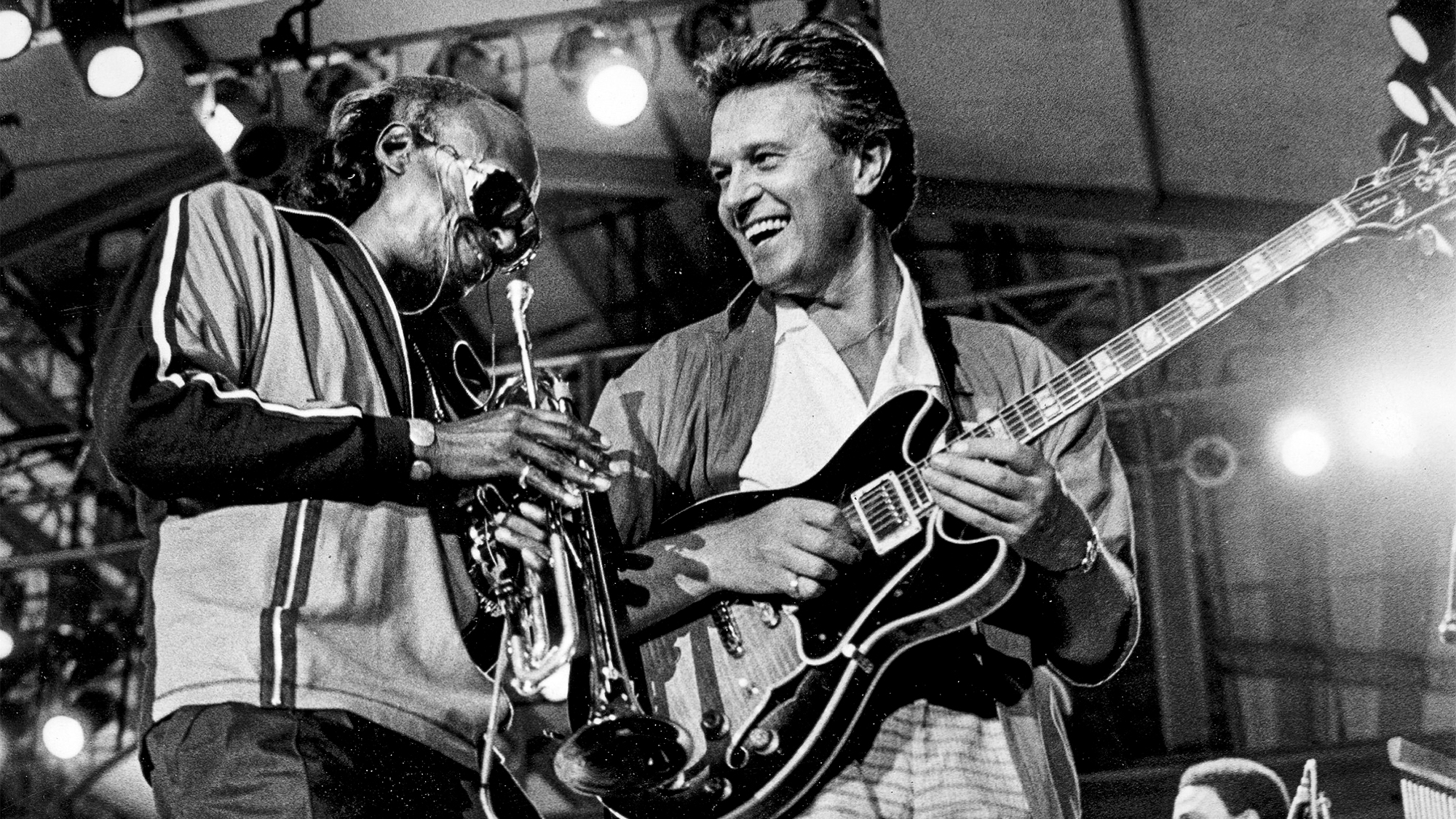
McLaughlin would go on to appear on a run of Davis’s landmark recordings from the 1969–1972 fusion era, including Bitches Brew, Jack Johnson, and On the Corner.
Despite his own groundbreaking work with the Mahavishnu Orchestra, he still credits Davis as the pivotal force in his career.
“Where would I be without Miles? I don’t even want to think. He’s been my hero since I was 15 or 16. He was my hero of heroes. The last thing I expected was to be playing with him.
“He was beautiful. I know he has a reputation for being very caustic, but he was just honest with everybody. He loved his musicians, and he took care of them.”