!["The Paradox of Success: Lee's Perfect Song Brings Both Joy and Stagnation"]](https://backingtracksfullcollection.com/wp-content/uploads/2026/04/The-Paradox-of-Success-Lees-Perfect-Song-Brings-Both-Joy-758x426.jpg "\"The Paradox of Success: Lee's Perfect Song Brings Both Joy and Stagnation\"] 1")
There have been few bands that have been so widely written and speculated about that have such a thin back catalogue.
The La’s discography consists of just one album and four singles, the last of which was released over 35 years ago. And yet the fascination with them remains undimmed, largely due to the fact that their lead singer and songwriter Lee Mavers has released not a single note of new music since.
Famously, Mavers hated his band’s self-titled album. “There is not one good thing I can find to say about it,” he told NME shortly after its release in October 1990. There were all sorts of rumours of the songwriter’s perfectionism: sacked producers, aborted recording sessions, the search for authentic ‘60s dust’ to cultivate the right ‘vibe’ in the studio. In the end, the band’s label Go! Discs had to intervene, gave the tapes to Steve Lillywhite to remix and got the album over the line, much to Mavers’ chagrin.
Article continues below
And at the centre of the record is There She Goes, which became the La’s only hit single in November 1990. It’s been covered, anthologised, sync-ed and debated ever since. It’s cropped up in films as varied as So I Married An Axe Murderer, Fever Pitch and The Parent Trap.
The US indie folk act Sixpence None The Richer scored an international hit with a cover in 1999. Last year it lent its title to a BBC drama starring David Tennant and Jessica Hynes and, inevitably, became the theme song. There She Goes is a classic that will, in all probability, outlive us all.
Back in 1987, it was just another one of the wonderful songs that Lee Mavers seemed to pluck out of thin air during an incredibly fruitful burst of songwriting. The guitarist had joined the group in 1984 and by the end of 1986 had muscled out the band’s actual founder (and its other main songwriter) Mike Badger. Badger took his own songs with him and so Mavers had to quickly step up and write some more.
The group started rehearsing at The Stables, part of a property owned by the parents of the band’s new guitarist (and Badger’s replacement) Paul Hemmings in early 1987. Interviewed by Udiscover music last year, Hemmings says of that period. “It was a really productive time. We weren’t under pressure to go into the studio, and there was nothing happening with radio or anything, so it was just a really creative time when everything just flowed. The band were sounding great live.”
“I remember there was just me and John (Power, bassist and future Cast leader) at the Stables one morning, and Lee came in with this riff,” he says. “The only other person who would have previously heard it would have been his mum, because Lee lived with her back then. He came in and played the song’s riff, which he described as “a circular riff which goes round every chord in the world, la’!”
“I remember how John and I reacted more than anything. Our jaws just dropped. It was literally one of those spine-tingling moments. The best riffs ever are the simple ones that hook you in, like The Rolling Stones’ Satisfaction, which is just three notes – or Smoke On The Water, or Paranoid. Simple but brilliant riffs which people will remember forever.”
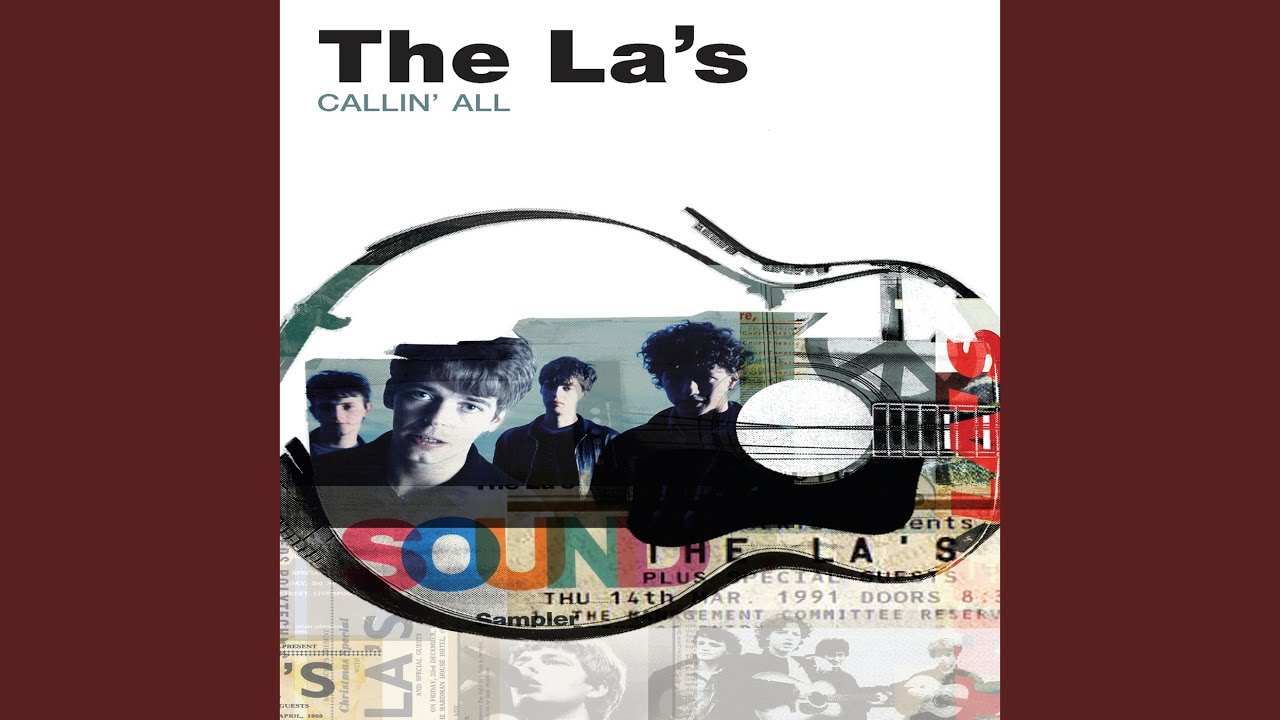
According to Hemmings, Mavers wasn’t initially that convinced by the song, placing it on the band’s ‘reserve’ setlist. The guitarist says that it finally got its live debut at a gig at Liverpool’s Flying Picket that June, a night that was recorded that eventually released on the 2001 compilation Calling’ All: Lost La’s 1986-87.
“Lee announces it by saying, “New song, la’, first time it’s been played’,” remembers Hemmings. “It sounded really good, and you can tell the audience clearly thought it had something, even that early on. After he showed us the chords, I came up with the little complementary riff, which finishes it off. The middle-8 you hear on that first live version changed later on.”
By mid ‘87 there was a buzz about the La’s. Already one of the biggest live attractions in Liverpool, they were signed by Go! Discs, then flush after their success with the Housemartins.
A debut single Way Out was released in November 1987, with the plan being that There She Goes would follow in the New Year, and then the album, which at this stage was to be titled Callin’ All. As we know, things didn’t work out that way.
Instead, The La’s spent most of 1988 in the studio. There were sessions with Siouxsie and the Banshees and Cure producer Mike Hedges, initially at Go! Discs mainman Andy MacDonald’s parents’ house in Devon. “The band were very positive, even Lee, until the last couple of days, thought it was going to be great,” Hedges told the Guardian in 2008. “Everyone else thought it was the best thing they’d done.”
Hedges hinted that Mavers might have been entering a “drug-induced psychosis. He’d either be really on it, or the opposite. I can’t really say what drugs were involved, but let’s say he had ups and downs.”
Eventually, those sessions ran aground when Mavers decided he wanted to rerecord all the songs. Jeremy Allom at the Pink Museum in Liverpool found the same problem. As did John Leckie when he tried his hand with the band. “We’d record six songs that were fantastic, but if there was one thing wrong on the seventh song, (Lee) would be convinced that everything else was terrible and we’d have to start everything all over again.”
“The most frustrating thing was, at the end of each session, when everything was switched off, Lee and John would pick up guitars in the kitchen and sing together and it was utterly fabulous. In the end, I was sacked because, apparently, I was no good.” Not that that was any skin of the producer’s nose – his next project would be the debut album by an obscure Manchester band called The Stone Roses.
The La’s though, broke for a BBC session recorded at the end of May for the Liz Kershaw Show. This was the first time There She Goes was heard by a national audience. By their very nature, radio sessions preclude perfectionism and the enforced restrictions seem to have forced the band to focus.
The four songs that were broadcast on Radio One sparkle and shine like rough diamonds. There She Goes’ middle eight has a sustained single guitar note underneath the main riff and Mavers’ lead vocal has a clarity it would later lose. Already it sounds like a classic.
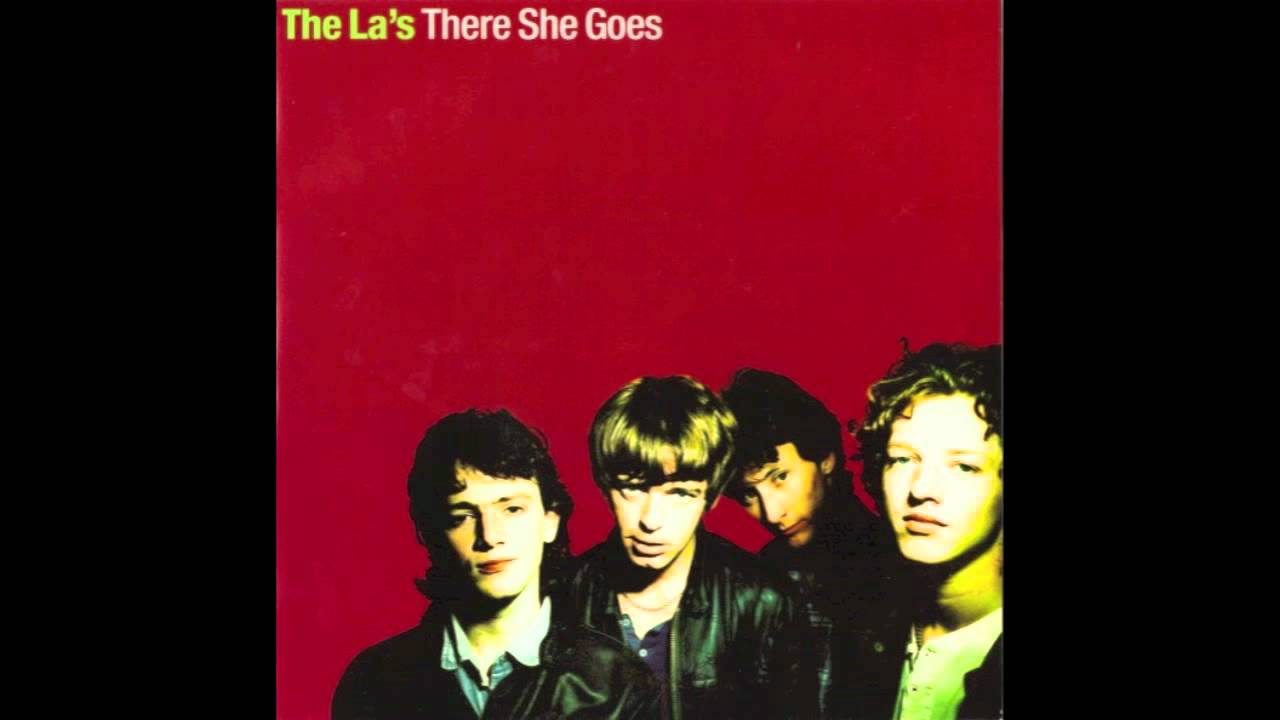
Next to try their hands at dealing with Lee Mavers was Bob Andrews and it is from his sessions with the band that the first single of There She Goes was pulled. The 1988 version is less muddy than the 1990 version, the intro is just two repetitions of the main riff and the crossover harmonies are mixed a wee bit higher.
But autumn 1988 was not a good time for cult indie bands to be releasing singles, no matter how accessible or melodic. Daytime radio ignored There She Goes first time around and it could only stutter to Number 59 after Christmas.
There then followed another year of silence. Eventually, at the end of 1989 the band went into Eden Studios in Chiswick with Steve Lillywhite at the controls. Speaking to Music Radar in 2011, the producer admitted – as if we were in any doubt – that “it wasn’t such an enjoyable album to make.”
“I knew the songs were absolute diamonds, but getting them on tape wasn’t so easy,” he recalled. “Lee Mavers had this blueprint in his head for the record, but it was like an acid trip that kept coming back to him, and it would mess him up.”
It was a familiar story. “We’d record six songs that were fantastic, but if there was one thing wrong on the seventh song, he’d become convinced that everything else was terrible, and we’d have to start everything all over again.
“There’s nothing wrong with seeing an album as an artistic whole rather than a collection of songs, but when that view is to the detriment of getting things done…well, it can be a problem.”
As we know, Andy Macdonald, by now probably tearing his hair out in frustration, went behind Mavers’ back and released the Lillywhite versions as the finished album. It’s his mix of There She Goes that reached Number 13 in November 1990 and has become the one we all know.
And the debate about whether it is/isn’t really about heroin? “Absolutely not,” according to Paul Hemmings. “There’s been a lot of speculation about that for many years, but Lee told me emphatically that it isn’t about heroin during a long train journey from London to Liverpool we shared during 1995.”
Whatever the associations, its popularity hasn’t been affected. The La’s album has sold over a million copies worldwide and There She Goes has gone double platinum. Mavers, meanwhile, has become that rarest of figures: a true living legend. According to taste, he’s either a Scouse Syd Barrett, or the King Arthur of Britpop; the greatest songwriter of his generation who, one day (perhaps), will return to reclaim his throne.
But there’s a paradox there at the heart of the La’s story. For it’s the ubiquity of his best known song that means that Lee Mavers doesn’t have to sit through another frustrating recording session with a producer again if he doesn’t want to. Speaking to the BBC in 2021 his old bandmate, Mike Badger explained the irony of There She Goes: “It’s the best thing that’s happened to Lee but also the worst. He wrote this perfect song, but it’s meant he hasn’t had to do anything because he has a constant source of income.”