!["Thrilling and Nerve-Wracking: Kate Bush's Journey to Creating a Timeless Single and Becoming a Self-Sufficient Artist"]](https://backingtracksfullcollection.com/wp-content/uploads/2026/05/Thrilling-and-Nerve-Wracking-Kate-Bushs-Journey-to-Creating-a-Timeless-758x427.jpg "\"Thrilling and Nerve-Wracking: Kate Bush's Journey to Creating a Timeless Single and Becoming a Self-Sufficient Artist\"] 1")
Few artists have demonstrated such an abundance of talent at such a young age as Kate Bush, who by her 15th birthday had already written over 100 songs. And not just any songs. Bush was a mere 13 years old when she penned The Man With The Child In His Eyes, which reached No 6 in the UK Singles Chart in May 1978.
Throughout her career, Bush has shown a fearless commitment to creative evolution and an innate desire to move forward, as demonstrated on her third album, Never For Ever (1980), which became the first original album by a single female artist to reach No 1 in the UK.
Never For Ever was a far more diverse work than her first two albums and reflected a transitional stage between her youthful songwriting and her more experimental adult work.
Article continues below
It was her first album to feature digital synthesizers and drum machines, in particular the Fairlight CMI, a digital synth, sampler and digital audio workstation (DAW), an instrument so groundbreaking back in 1980 that it cost roughly the same as a small house.
Never For Ever yielded the epic single Breathing, a song written from the perspective of a foetus, frightened by the prospect of a nuclear fallout.
The album’s second single was Babooshka, the powerful, upbeat and infectiously catchy slice of art rock, which reached No 5 in the UK Singles Chart.
But it was the third single Army Dreamers that marked a significant departure from the Baroque pop of her earlier work.
The song was Bush’s devastating account of war through the eyes of a grieving mother, whose son is killed on military manoeuvres. It is a biting social commentary on the futility of war and the lack of opportunities for young people.
It’s also one of the most emotive, poignant and haunting compositions within Kate Bush’s rich and illustrious back catalogue.
By the time preparations began for Never For Ever, she had taken the decision not to use Andrew Powell, who had produced her first two albums and been integral in melding lush orchestral arrangements with a live band sound.
Bush initially considered Eric Stewart of the band 10cc as producer, before taking the decision to produce the album herself, alongside audio engineer Jon Kelly.
Abbey Road Studios was the facility chosen for the recording of Army Dreamers and that was where the song came into being. “It’s the first song I’ve written in the studio,” Bush told Colin Irwin of Melody Maker in October 1980.
Army Dreamers is a wistful folk ballad in 3/4 waltztime and features sampled gun sounds and an emotional vocal performance.
In the song, the grieving mother wrestles with her guilt over what she could have done to prevent her son’s pointless death during military training.
Acoustic instrumentation features throughout. Bush’s brother Paddy provides mandolin and backing vocals, Brian Bath is on acoustic guitar and backing vocals, while Alan Murphy is on electric guitar, acoustic bass and backing vocals. Stuart Elliott, meanwhile, is on bodhrán while Duncan McKay plays the Fairlight CMI.
One of the most notable aspects of the song is that Bush sang it in an Irish accent. For Bush, whose mother was from County Waterford in Ireland, the decision to sing it that way was integral to the song.
“The Irish accent was important because the treatment of the song is very traditional and the Irish would always use their songs to tell stories, it’s the traditional way,” Bush told Kris Needs of ZigZag magazine in 1980.
“There’s something about an Irish accent that’s very vulnerable, very poetic, and so by singing it in an Irish accent it comes across in a different way.”
Bush’s decision to sing in Irish prompted suggestions that the song was specifically about The Troubles in Northern Ireland. But Bush suggested the song was more of a general commentary on the waste of young people’s lives, particularly those with limited opportunities.
“The song was meant to cover areas like Germany, especially with the kids that get killed in manoeuvres, not even in action,” Bush told Kris Needs. “It doesn’t get brought out much, but it happens a lot. I’m not slagging off the Army, it’s just so sad that there are kids who have no O-levels and nothing to do but become soldiers, and it’s not really what they want. That’s what frightens me.”
For Bush, the experience of producing Never For Ever was an empowering one and gave her a sense of creative ownership over her recordings. This album marked her transition into a completely self-sufficient auteur of sorts and she seized the opportunity.
“The whole thing was so exciting for me, to actually have control of my baby for the first time,” she told the Canadian fanzine Break-Through. “Something that I have been working for and was very nervous of too, obviously, because when you go in for the first time you really wonder if you are capable – you hope you are… it really is a wonderful experience – everyone’s feelings going into the songs that you wrote perhaps in a little room somewhere in London, you know, it’s all coming out on the tape.”
Bush came into the sessions soon after the Tour Of Life in 1979, an experience so gruelling that she resolved never to tour again.
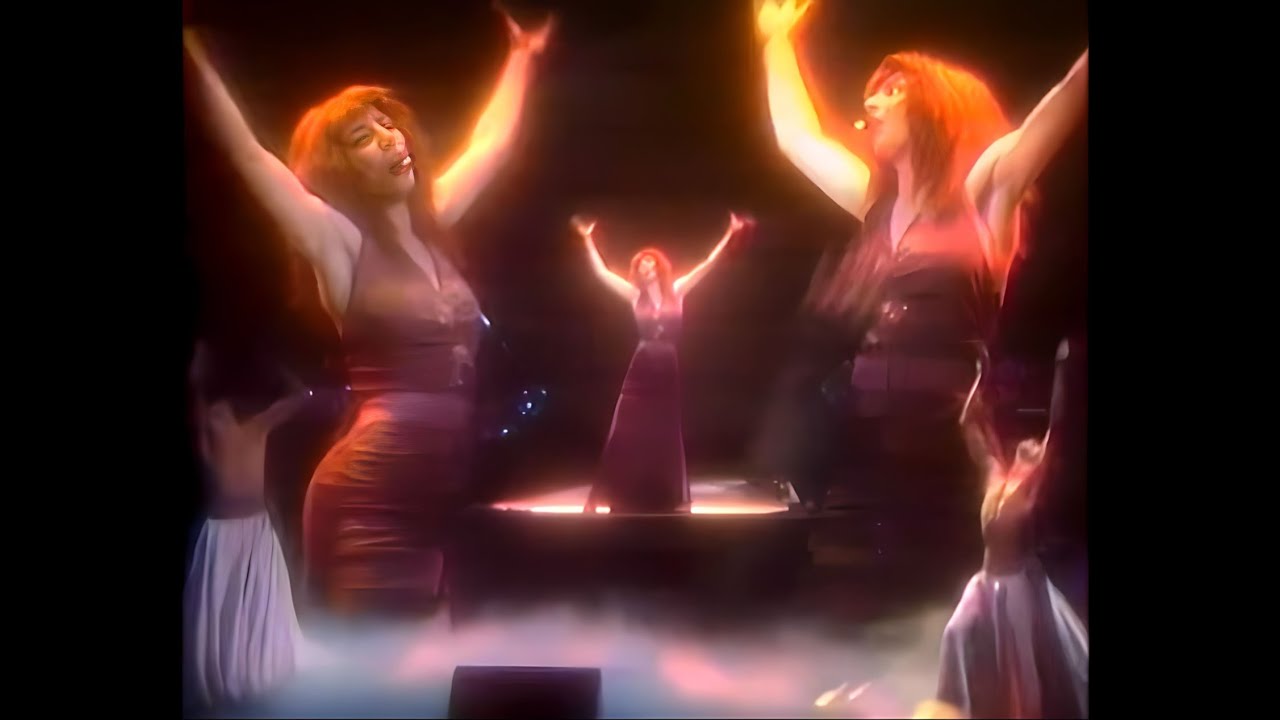
According to her biographer Rob Jovanovic, Bush spent an unprecedented five months writing and demoing at Abbey Road studios. Like most artists, she was reportedly fastidious and exacting in her quest to achieve her creative vision.
The Fairlight CMI digital sampler in particular was an empowering new piece of technology and Bush and the band reportedly spent hours experimenting with the new technology. As Ben Hewitt notes in The Quietus in 2020, such experimentation allegedly included smashing Abbey Road Studio’s crockery and recording the varying sounds of each shattering plate, cups and glasses.
According to Graeme Thompson’s biography Under The Ivy, Bush reportedly sought forgiveness from the appalled kitchen staff by bringing in Belgian chocolates for them as gifts.
The Fairlight CMI was prominent in the sessions. Bush had been introduced to the Fairlight by Peter Gabriel and there were only three in the UK at the time. It was, as Ben Hewitt of The Quietus put it: “The sonic equivalent of a Jedi being handed their first lightsaber”.
While Bush wouldn’t fully master the Fairlight until later, observed Hewitt, “her instant obsession speaks to how determined she was to bend her ornate style into bizarre new shapes”.
The Fairlight would inspire and enhance Army Dreamers. The distinct “ck-ck” sound heard throughout the song is the sound of a bullet being loaded into a World War One Lee-Enfield rifle and the sound was processed and triggered on the Fairlight to produce a gunshot sound.
There’s a wistful, airy feel to Army Dreamers, which both offsets and enhances the poignancy of the song’s lyrics. Bush’s soft Irish lilt, melded with brother Paddy’s mandolin and the thwack of the bodhrán give the song a real emotional power and edge.
There is an airy sparseness to the arrangement. Paddy Bush’s mandolin contributes some beautifully melodic flourishes while Alan Murphy’s acoustic bass weaves a tasteful pattern beneath.
There’s a warm timbre to Bush’s vocal, which rises and falls as she imparts the heartbreaking experience of the grieving mother and her pragmatic resolve to carry on.
“I’ve a bunch of purple flowers/To decorate mammy’s hero/Mourning in the aerodrome/The weather warmer, he is colder/Four men in uniform/To carry home my little soldier.”
“I wanted the mother to be a very simple woman who’s obviously got a lot of work to do,” Bush told Flexipop in 1980. “She’s full of remorse, but she has to carry on, living in a dream. Most of us live in a dream.”
40 seconds in, the backing vocals of Paddy Bush, Brian Bath and Alan Murphy enter the mix, providing a vocal counterpoint to Bush’s top-line melody, on lines such as “Should’ve been a politician” and “should’ve been a father”.
There’s an almost ragtime, swing feel to the song, a kooky whirly-gig of a concoction, whose sweet, pared-down feel only highlights the heartbreak of the lyrics.
As Ben Hewitt put it in his piece in The Quietus in 2020: “Its gauzy prettiness gives it the air of a nightmare taking place inside a snow globe, twice as crushing for her delicate touch.”
Army Dreamers was released on 22 September 1980 and reached No 16 in the UK Singles Chart. Its success was fuelled by a video, featuring Bush in camouflage in a forest, holding a white-haired child.
Bush went on to say that the video was one of the few pieces of work that she was completely happy with.
“It really was a treat, that one. I think that’s the first time ever with anything I’ve done I can actually sit back and say, ‘I liked that’. That’s the only thing.”
In the decades that have followed, the potency of the song has prevailed. Its message was emphatic enough to ensure that Army Dreamers was one of 68 songs considered inappropriate for airplay by the BBC during the first Gulf War.
Far more recently, in 2024, the song’s haunting anti-war lyrics and themes of loss led to the song being appropriated for Tik-Tok’s ‘Witchtock’ trend.
Army Dreamers experienced a 1300% increase in streams when snippets of the song used on clips on TikTok and Instagram went viral, prompting Gen Z-ers to seek out the track on platforms such as Spotify and Apple and fuelling the song’s popularity.
The song reportedly clocked up over 100 million streams on Spotify between May and December 2024, and 1.6 billion views on TikTok.
This is nothing new for Kate Bush. Ever since 2022, when Running Up The Hill was featured in Season 4 of Stranger Things, Kate Bush’s songs have seemingly had a deep emotional connection through edits on TikTok. While such appropriation can seem facile to some, it does underpin the song’s emotional impact and its potency as an enduring anti-war anthem.