
![Array]](https://backingtracksfullcollection.com/wp-content/uploads/2026/05/Array.svg.svg+xml "“He did all the Ozzy stuff you’d think he would do – he got down on his knees and performed. I was like, ‘Oh, my God. This is so weird’”: A hair-metal hero turned nu-metal synth-guitar maverick who impressed Ozzy Osbourne – who is the real Amir Derakh? 18")
The name Amir Derakh is bound to elicit one of two reactions from guitar fans. Some people will light up with immediate recognition, while others will stare blankly and go, “Who?” As it turns out, the guitarist is quite aware of his niche status in the music world, and he’s OK with it.
“I realized a long time ago that I was a bit different, and I quite like it, to be honest,” he says. “I don’t think I’m that obscure or unknown, but I don’t go out of my way to conform. I couldn’t see being a blues player and that’s all I ever did – no offense to blues players.” He laughs. “I just like doing different things. I get bored easily.”
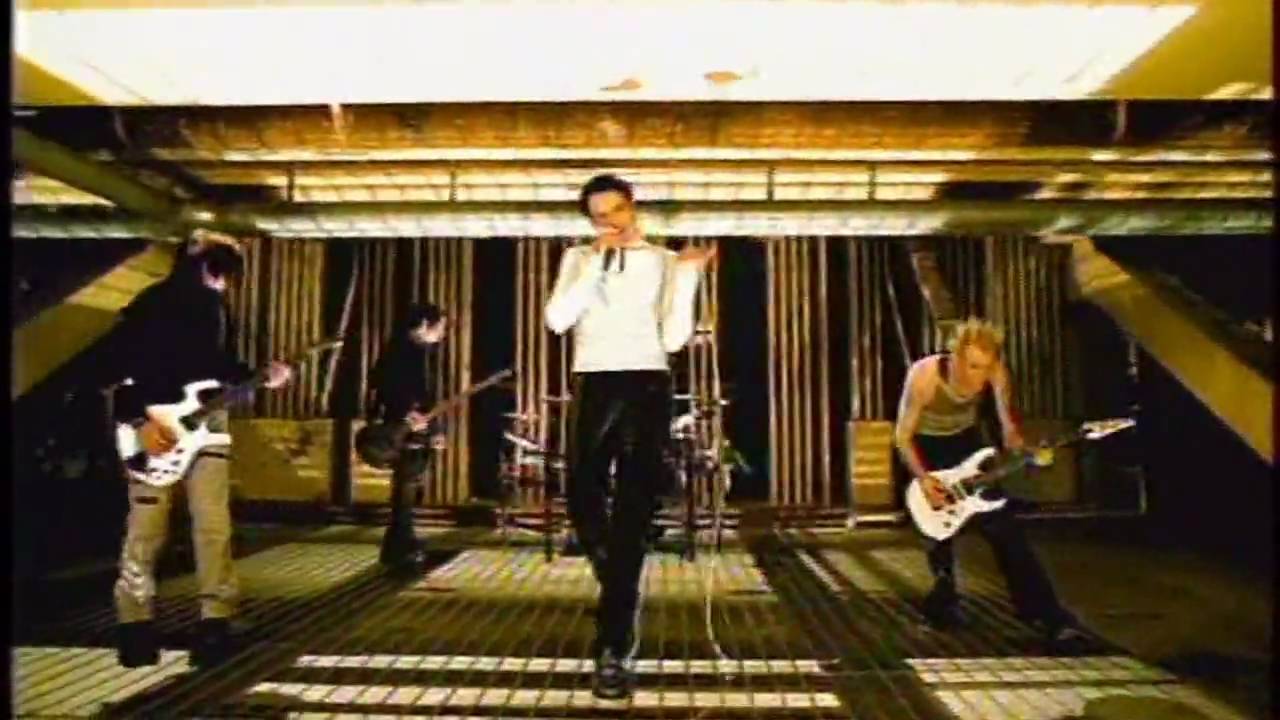
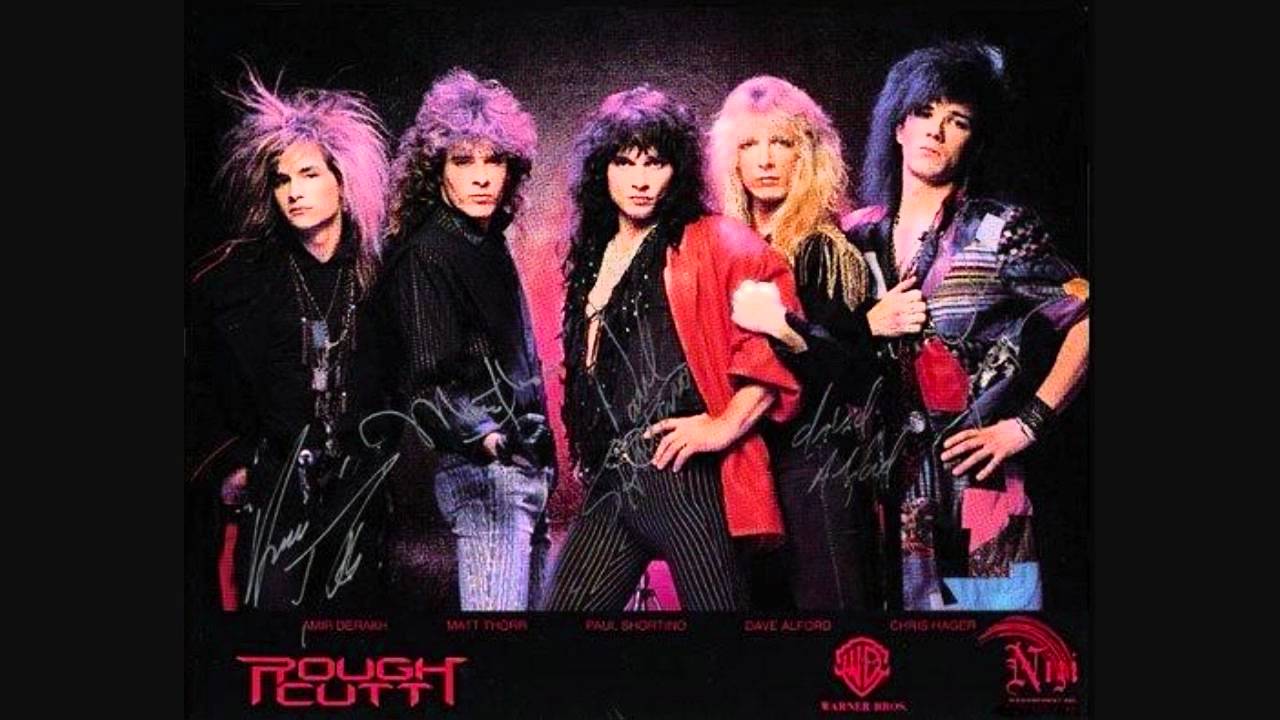
Derakh’s fanbase is splintered across a wide spectrum of musical styles. There are those who have followed the guitarist since his mid-’80s shred days, when the San Diego native replaced Craig Goldy (who replaced Jake E. Lee) in the glam metal band Rough Cutt. Other fans discovered Derakh in the late ’90s, when his guitar synth skills powered the hit industrial rock band Orgy.

And still others started took to him via his more recent electronic project Julien-K with Orgy vocalist Ryan Shuck or the alternative rock band Dead by Sunrise, which featured Shuck and the late Linkin Park singer Chester Bennington.
“Funnily enough, I get fans from my entire span of career,” Derakh says. “I get Rough Cutt fans that come out to my shows, and then there are people who are more into the newer stuff. It’s very gratifying to know that people have embraced my work and have followed me through all of these projects.
“Obviously, I realize that what I’m doing now might not be for everybody, because some of the stuff is completely electronic – there’s no guitar at all. But there is some overlap, and it’s cool.”
Let’s go back to when you started on guitar. Who got you interested in playing?
The truth is, I didn’t want to play guitar initially. I wanted to play synthesizers. They had become a thing when I was in my mid-teens. My older cousin had a job, so he bought a Moog and started learning how to play keyboards. He kind of stole the idea from me, and I thought, “What the heck am I gonna do?”
I liked the guitar, and I loved bands like Thin Lizzy and Judas Priest – all the heavy metal bands of the time – so I thought I’d pick up the guitar. I got an Ibanez Iceman and started playing.
Did you take to the guitar pretty easily?
At first, it was total failure. A friend tried to teach me how to play, but he quit on me because he said I didn’t have what it took. But then I started taking binoculars to concerts, and I’d focus on what the guitarists’ hands were doing.
That’s how I taught myself. I could figure out the chords pretty easily, and then I focused on learning how to play leads. I started following players like Jeff Beck and Allan Holdsworth. Oh, and Alex Lifeson was a big influence.
You quickly became part of the San Diego music scene. It became kind of a thing. Bands and guitarists would get known around town, and then they’d split for L.A.
Yeah. I was one of the last people who came out of that whole thing. Jake E. Lee had already left San Diego. I kind of knew Warren DeMartini, but he was pretty much heading for L.A. at the time. They were a little older than me. San Diego became this hotbed for guitarists – I don’t know why. Craig Goldy was another one.
Matt and Dave came by my house. I plugged into a little Super Champ, played one of their songs, and they went wild
How soon after you moved to L.A. did you join Rough Cutt?
[Laughs] They came to San Diego and found me. A couple members had already left – Craig Goldy split to join Giuffria, and Jake left for Ozzy. The band decided to look around San Diego to see who else was around. They met with a bunch of great players, but nobody wanted to leave. They had families or whatever.
Finally, [bassist] Matt Thorr and [drummer] Dave Alford went to this music store, Guitar Trader, and said they were going back to L.A. because they were shit out of luck. Everybody in the store said, “You gotta check out Amir.”
Matt and Dave came by my house. I plugged into a little Super Champ, played one of their songs, and they went wild. They were like, “Can you get your gear and come to L.A. tonight?” It all happened really fast.
This was right in the middle of the Spandex-and-Aqua Net hair metal thing. You didn’t quite go for that all the way.
Not really. I think I’ve always wanted to be an individualist. I changed my look and my hair style a lot. There was just something driving me to be a little different. Musically, too, I didn’t fit in with other guys on the scene.
A lot of the guitarists from the ’80s had this shrill, screechy tone, but I always liked darker sounds. I like darker music, darker scales. My lead solos had a warmer, fuller sound. I think it was more melodic.
Do you think that was because of your interest in synths and their warm, atmospheric sounds?
Maybe. It’s funny, because I was actually using a guitar synth in Rough Cutt, but I had to keep it undercover because it wasn’t considered cool. My band was afraid to say anything about it. But early guitar synths were featured on Rough Cutt records.
What was your first guitar synth?
It was a Roland GR-700. Grover Jackson gave it to me. I was already working with Jackson and Charvel. Grover had gone to Japan and came back with the Roland. He knew I was into synths, and he thought, “There’s only one person who might know what to do with this.”
And did you?
Yeah. It was cool. I think a lot of people were using it wrong. They treated it like a keyboard, but it didn’t deliver good keyboard sounds. It tracked poorly and sounded pretty cheesy. I thought, “It’s a guitar, so I’ll treat it like a guitar.”
I plugged it into a guitar amp. It gave me a lot of cool added sounds. We downplayed it on Rough Cutt records, but I brought it back with Orgy. I hadn’t played it in years, and I thought, “I’m going to really make my mark with this.”
Rough Cutt was bouncing around for a while trying to get a deal. Once you joined, Warner Bros. signed the group.
That happened within a few months. We had problems, though: the A&R guy who signed us said that he was going to get Ted Templeman to produce us. We waited and waited for a long time, but Ted was too busy to get to us. Then the A&R guy left and completely abandoned us.
After Jake E. Lee left Ozzy, you auditioned to replace him.
I did. I think [bassist] Phil Soussan and [drummer] Randy Castillo championed me, so I was fast-tracked and avoided a lot of the B.S. They had already gone through a lot of guitar players, but there were only a few they liked. One of them was this kid, Zakk Wylde.
I’m not a finger-tapper, so I thought, “I’ll do that stuff, but I’ll do it with one hand.” Ozzy was really impressed with my playing
Oh yeah, I’ve heard of him. What songs did you play at your audition?
We did a few of the hits, pretty much what everybody knows – Crazy Train, Bark at the Moon, Shot in the Dark, Over the Mountain. I’m not a finger-tapper, so I thought, “I’ll do that stuff, but I’ll do it with one hand.” Ozzy was really impressed with my playing.
He did all the Ozzy stuff you’d think he would do – he got down on his knees and kind of performed. I was like, “Oh, my God. This is so weird.” But it was also a dream come true. I was a huge Randy Rhoads fan. I got my ear pierced when Randy died. I got a guitar like him. So to be playing with Ozzy, it was unreal.
On the other hand, there was something telling me that it wasn’t right for me. I remember they asked me to do a guitar solo on the spot – you know, an unaccompanied solo. I was like, “Yeah, I’m not really prepared for that.” I wanted to put something together and not rip off a bunch of stuff.
How were you told that you didn’t get the gig?
I can’t remember what they said; it was Ozzy and Sharon. It was kind of like, “Ozzy really likes you…” I pretty much knew that Zakk had the gig. I saw him at the Rainbow, and I said, “You’re going to get it.” He was like, “No, no, no…”
There were probably a couple of reasons why I didn’t get it. One, I was connected to Wendy Dio [who managed Rough Cutt], so they didn’t want to deal with that whole thing. Two, I wasn’t completely unknown. They preferred people who were new.

You and singer Ryan Shuck formed Orgy, and you achieved a fair amount of success. Your biggest hit was a dark electronic cover of New Order’s Blue Monday. Did you ever hear from the New Order guys?
Not directly, but I heard from a friend who had a friend that was playing with New Order, and as it was told to me, somebody in the band has a daughter, and she told Peter Hook in rehearsal one day, “I like Orgy’s version of Blue Monday better than yours.” I’m told they all laughed.
You and Ryan then formed Julien-K, and the two of you hooked up with Chester Bennington for Dead by Sunrise. What was it like working with Chester?
We were great friends and had been since the recording of the first Linkin Park album. Getting to create a project together was a dream for all of us. He had a one-of-a-kind voice and was very dedicated to his craft – always willing and able to go the extra mile. I feel lucky to have had him in my life. I miss him terribly.
Had he not passed, do you think the band would have continued?
Yes. He had talked with us about doing more DBS in the future.
I play sounds that I created for the record on an iPad. I use a bullhorn that has a laser and a light on it
Do you feel as if your post-Rough Cutt work has been a truer representation of your sonic style?
I do. Honestly, I wasn’t planning to be in Orgy – I was having a lot of success as a producer, engineer and programmer. I was talked into it, though, and I said, “Well, I’m going to play guitar synths.” Since then, it’s just a continuation of that vision. In Julien-K, I get to play keyboards, but I do play guitar. I’ve been playing a baritone guitar for the past 20 years. I get a darker sound with it.
I get to engage in a lot of different things with Julien-K. The middle of our set is completely electronic, and I play sounds that I created for the record on an iPad. I use a bullhorn that has a laser and a light on it, and I have my whole getup – it’s this different character that comes out.
All of that owes to my years of DJing in the club and techno scene. I got to do all of that incognito. Doing that stuff really allowed me to up my electronic abilities.

Rough Cutt have gotten back together sporadically over the past few years. The band’s latest record, 2021’s 3, was pretty solid. Was that a one-time deal?
Pretty much. We’ve had a very interesting relationship over the years. It was cool to go back and feel like the chemistry was still there. Everything sounded like it did before, even when we wrote some songs. But at this point, yeah, we’re kind of done. We’re grown-ups, and we all do a lot of different things. I was just like, “I can’t do this full time.”
Is there a specific non-synth guitar you rely on these days?
Absolutely. It’s the Yamaha signature guitar that I designed when I was in Orgy. It’s a baritone, but it’s not a super-long scale baritone, so it’s easy to play. Everything about this guitar is custom, including the pickup that I wound with Larry DiMarzio.
It’s been my workhorse for so many years. It’s an amazing guitar, but there’s not many of them. I think there are 75 models in the world.
![Array]](https://backingtracksfullcollection.com/wp-content/uploads/2026/05/1779850244_Array.svg.svg+xml "\"Lately I have felt so disconnected from everything. I have felt in pain a lot and I don't know why\": Artists and fans shower Yungblud with love after emotional response to \"industry plant\" accusations 33")