
![Array]](https://backingtracksfullcollection.com/wp-content/uploads/2026/05/Array.svg.svg+xml "“I had no money. I couldn’t pay for it, so I borrowed it and never took it back”: How Ronnie Wood began his path to rock royalty with a stolen Fender bass 18")
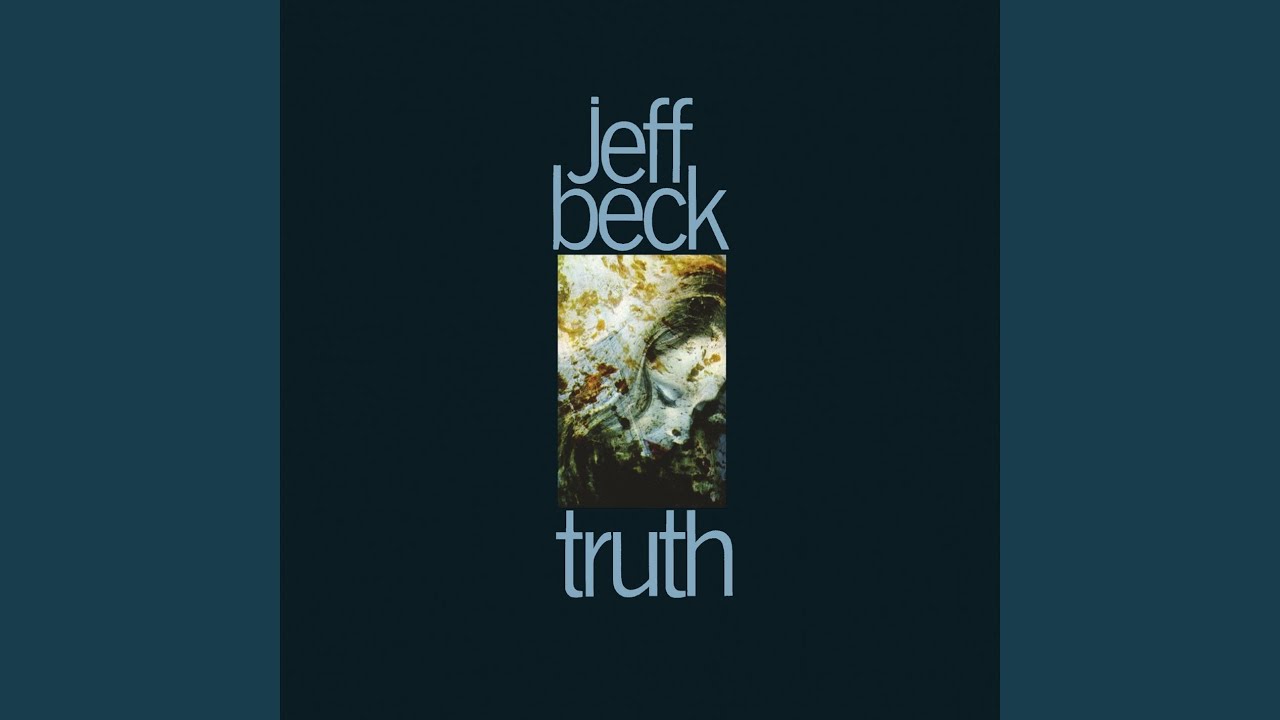
In 1968, Jeff Beck released Truth, a pumped-up blues-rock album featuring Rod Stewart’s grainy vocals, Mickey Waller on drums, and a recently “demoted” Ron Wood on bass guitar.
Originally the band’s second guitarist, Wood took over the bass duties when original member Dave Ambrose missed a rehearsal.
As it turned out, Wood actually preferred letting Beck take the spotlight on guitar, and for two albums (the band put out Beck-Ola the following year), he laid the foundation for the future of hard-rock bass playing.

When you consider that Truth pre-dates Led Zeppelin‘s arrival on the scene by a year, Wood’s bass playing takes on even greater significance.
In addition to a 1968 Telecaster Bass, he played a Fender Jazz Bass he “obtained” from a store near their rehearsal studio. In a 1975 interview, he told Guitar Player, “I had no money… I couldn’t pay for it, so I borrowed it and never took it back. About five years later I paid for it, after they tracked me down.”
As a guitarist coming to the bass, Wood brought a melodic voice to the instrument (later exemplified by his playing on Rod Stewart’s Maggie May), along with a rhythmic ferocity born of his well-honed chops, as heard on Let Me Love You, a straight-ahead 12-bar blues penned by blues legend Willie Dixon.

Let Me Love You is played here in F# with a swinging 16th-note rock feel. The blues scale (1-b3-4-#4-5-b7) in that key offers use of the open E and A strings, and Wood’s bassline takes full advantage of the position.
The first of nine choruses features an authoritative instrumental statement from Beck over the alternating I-IV progression for the first four bars of the blues form, and the bassline comes in blasting a prototypical riff with an accent off the ‘e’ of beat four that gets repeated throughout the tune.
At 00:32, Rod Stewart’s vocals take the lead, and the alternating I-IV movement gives way to a standard ‘long I’ progression for the rest of the song.
At 00:41 Wood introduces a variation of the Shortening Bread lick (1-6-5), which is a recurring theme throughout. The answer phrase at 00:48 goes up an octave, with the slide up from the last F# causing the following lick (which sounds like Mountain’s Mississippi Queen) to get hacked up.
This lick reappears many times, but this one has an unexpected visit from the open E string. It’s a quick blip that doesn’t cause any real problems, but it’s typical of Wood’s relaxed approach to the bass. Although he misses the intended destination note (F#), Wood nails it every other time.
Beck starts to solo at 01:33, and Wood calms it down with steady eighth-notes and a descending octave jump that serves as a motif for the next four bars.
The Shortening Bread lick at 02:19 gets transmuted into a blues riff that has a strong resemblance to the pre-chorus guitar riff from the Rolling Stones’ 19th Nervous Breakdown.
The solo ends with a short ‘three-against-four’ rhythm that creates adequate tension for the release into the next chorus where Stewart’s vocals return.

This time, Wood sets up the Mississippi Queen lick with a slide from the low F# and nails it at 02:42. On the IV, he ventures up to the G string and plays in the higher octave, bringing out a melodic vibe with the C# at 02:48.
The energy chills out again and Wood opens chorus seven with a quote from Duck Dunn’s riff on Hip Hug-Her by Booker T. & the M.G.’s. It could be a simply happy accident, but most important is to notice how he uses space to work with the dynamic level of the arrangement.
Wood pokes his head up above the fray again by sliding up to the high C# at 03:17, but gets in a little trouble on the way down the lick by letting an open D and A slip through. Not a big problem really, but it was probably not intentional.

Just when it feels as if the energy is petering out a bit, the drums set up a fill at 04:00, and Wood unleashes a furious rapid-fire lick with a bluesy bend that brings back the fire for the final chorus.
Wood keeps up the dynamics, using the mid-register F# to give the line a lift. The song stops abruptly at 04:27, and Wood sets up the end with an unaccompanied descending blues scale that lets you hear the true tone of the bass.
Running it through a Marshall 100-watt stack and playing roundwound strings with a pick, dig the amp breakup on the E string!