
![Array]](https://backingtracksfullcollection.com/wp-content/uploads/2026/05/Array.svg.svg+xml "“His death was an incredible loss, not only for the band but for guitar fans as well”: Every Deep Purple guitarist, from Blackmore to McBride 18")
Deep Purple’s longevity is remarkable on a number of levels. Aside from a relatively brief split between 1976 and 1984, they’ve been a working band since 1968 – a striking achievement, attributable in part to their willingness to forge ahead creatively rather than coasting on past glories, and to adapt in the face of personnel changes.
Anyone familiar with their history will know that these two elements have not only worked in parallel on many occasions, but have often sparked fresh, innovative Purple patches.
Even before the arrival of Ian Gillan and Roger Glover in 1969, and the resultant shift to their genre-defining hard rock sound, founding members Ian Paice (drums), Jon Lord (keyboards) and Ritchie Blackmore (guitar) used their instrumental prowess to inject rock, pop, psychedelia, jazz, and blues influences into the Mark I lineup’s three albums.

Citing the influence of Led Zeppelin, Blackmore then sought to pursue his muse in a heavier direction. With Gillan and Glover in place, the Man in Black rose to the occasion with riffs and solos that proved central to the Mark II lineup’s explosive chemistry, often characterised by creativity and volatility in equal measure.
Blackmore would twice depart the ranks, and although his instantly recognizable style set the bar at an intimidating height, his successors – the late Tommy Bolin, Dixie Dregs virtuoso Steve Morse, and recently recruited blues-rock hotshot Simon McBride – have succeeded in making the gig their own.
And while never a permanent member, anyone who caught Purple live between December 1993 and July 1994 would have witnessed the Yoda of Shred himself, Joe Satriani, working his magic on stage.
With the band’s new album Splat! out now, we cast an eye over the proliferation of Purple pickers who have propelled them to this point.
Ritchie Blackmore (1968-1975, 1984-1993)

By the time he formed Deep Purple with Paice and Lord in 1968, Blackmore was already a relative veteran at the age of 23, having served an apprenticeship which ran in parallel with the development of British rock ‘n’ roll.
He’d taken in stints with the Dominators, the Satellites, Screaming Lord Sutch’s Savages, and also the Outlaws, the in-house band of studio pioneer Joe Meek.
Though certainly capable of distinctive, nimble phrasing on Mark I highlights like Wring That Neck, it was during the Mark II era that Blackmore’s signature style as a riffmeister and soloist came dramatically into focus.
He composed a wealth of widely imitated signature motifs, ranging from bluesy single note earworms like Black Night and Lazy, to the pedal toned powerchords of Smoke on the Water, and the vicious Speed King.
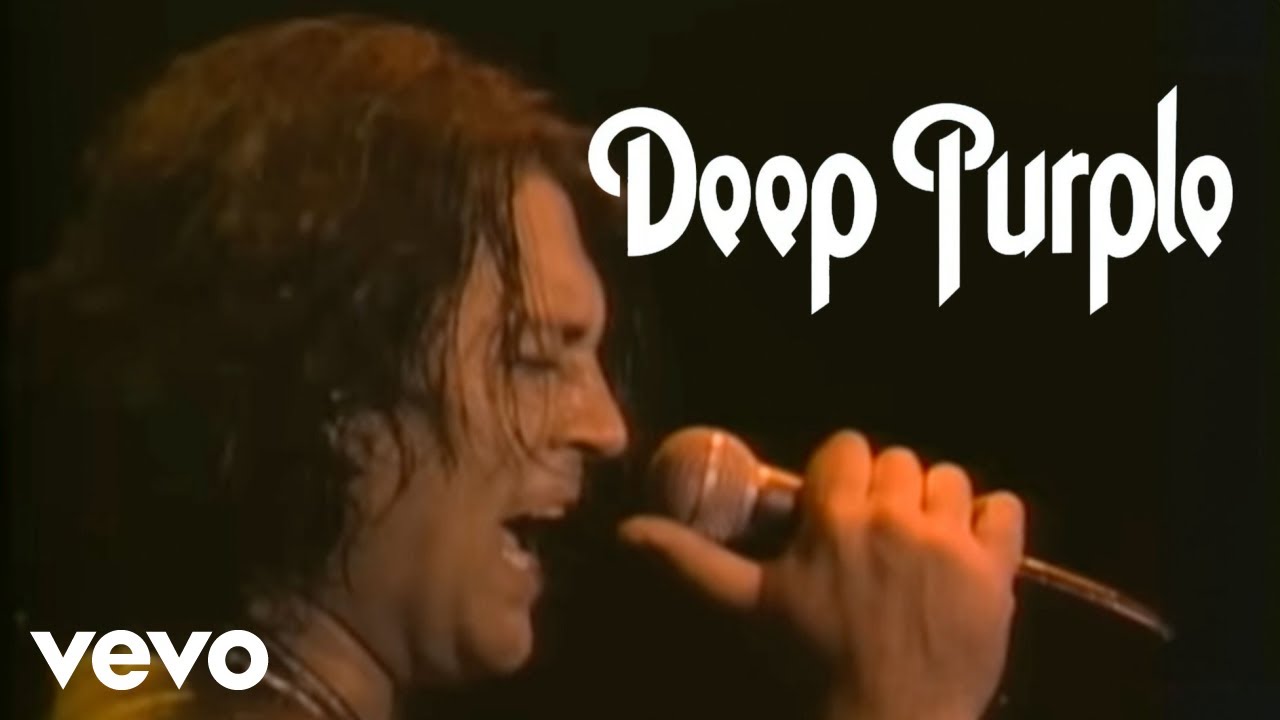
His innovative lead guitar style blended raw blues licks with fluid, classically inspired runs, as his solos on Highway Star and Strange Kind of Woman demonstrate.
In a 1991 interview with Guitar World he explained, “I found the blues too limiting. Classical, on the other hand, was always too disciplined. I was always playing between the two. I’m not a rigid player. I like to improvise.”
After growing dissatisfied with Mark III’s increasingly funky direction, ushered in by new members David Coverdale (vocals) and Glenn Hughes (bass/vocals), Blackmore quit to form Rainbow in 1975 – but not before turning in ferocious performances on the title track of Burn, both in the studio and onstage at the California Jam festival the previous year.
The post-1984 reunion era would be marked by interpersonal turbulence that prompted Blackmore to quit for a second and final time in 1993. But it nonetheless yielded sublime results on a musical level, as demonstrated by Knocking At Your Back Door, on which Blackmore modernized the powerchord riffing style of Smoke on the Water, before letting rip with a serrated solo.
Tommy Bolin (1975-1976)

Prior to joining Deep Purple in 1975, Tommy Bolin had recorded albums with Zephyr, the James Gang, and most notably, appeared on former Mahavishnu Orchestra drummer Billy Cobham’s 1973 solo debut, Spectrum. His coruscating shredding on tracks like that album’s Quadrant 4 convinced his new bandmates there could be life after Ritchie Blackmore.
Tragically, Bolin was in the grip of a heroin dependence that marred his live performances, and contributed to his death in December 1976. Thankfully, his talent won out on 1975’s Come Taste the Band, his sole studio outing with Purple.
With Bolin co-writing seven of its nine tracks, and the funk and soul influences of Burn and Stormbringer front and center, the album bore little resemblance to the Purple of old, save for sprightly opener Comin’ Home.
Nevertheless, as Lord reflected on its 35th anniversary reissue, it remains “a surprisingly good rock album of that period. Tommy’s guitar playing is par excellence.”
Gettin’ Tighter, featuring singing slide licks and a chicken-picked solo from Bolin, wields a funk rock groove the way Bruce Lee wielded nunchucks. Similarly, Bolin’s scorching lead over the tightly syncopated instrumental Owed to “G”, and the dynamic flow of his layered solo on You Keep On Moving, show how potent the Mark IV formation’s chemistry could be.
Sadly, Bolin’s erratic performances, coupled with the addictions of other members, hastened the group’s demise, and in July 1976, the band’s first run came to an ignominious close.
In a 1999 interview with Guitar World, Ritchie Blackmore paid tribute to his successor: “I don’t envy Tommy Bolin for trying to take my place in Purple.
“He was a uniquely talented player and it’s unfortunate that he never had the chance to develop with the band the way I did. His death was an incredible loss, not only for Deep Purple but for guitar fans as well.”
Joe Satriani (1993-1994)

When Joe Satriani stepped into the breach at short notice to help Purple fulfill tour dates after Blackmore’s abrupt departure, he’d already achieved a seemingly impossible feat by proving that not only could virtuoso guitar instrumentals be enjoyable for non-players, but that albums full of them could be commercially successful.
With bona fide hit records that had bagged him gold and platinum sales awards, and a couple of Grammys in his trophy cabinet too, Satriani was a star in his own right when he hooked up with Purple in 1993 – although that wasn’t the reason he gave for declining the band’s offer of permanent membership.
“I had the time of my life,” Satriani told author Martin Popoff. “But it was very mentally difficult to replace one of my idols, Ritchie Blackmore.
“And having a solo career makes you feel like the luckiest guitarist in the world. I just couldn’t see having to turn my back on it.”
Satriani stuck close to Blackmore’s original solo templates in the main, but took the opportunity to illustrate how well his own masterful style might have worked long-term in Purple on tracks that had always been more fluid in structure, like Child in Time.
Steve Morse (1994-2022)
Like Satriani, Steve Morse was already a revered guitar hero when he joined Purple in 1994. His 28-year tenure as the band’s longest-serving lead guitarist would only enhance his reputation, to the point that Guitar World once hailed him as “the guitar virtuoso’s virtuoso.”
His ability to combine feel, melodious musicality and ninja-level chops had famously seen him voted Best Overall Guitar Player in Guitar Player’s readers’ poll every year between 1982 and 1986. With a style that fused classical, rock, blues, country, jazz, and bluegrass, Celtic influences from his grandfather – a Cajun fiddle player – and prior experience of blending genres with the Dixie Dregs and Kansas, Morse was a perfect fit.
Morse’s new compatriots were quick to praise him for the revitalizing effect he had on the band, which ignited a new chemistry that fueled Purple through eight studio albums and countless live shows for almost 30 years. When he departed in 2022 to care for his ailing wife, his bandmates stated that he was “a true master” who’d be “greatly missed.”
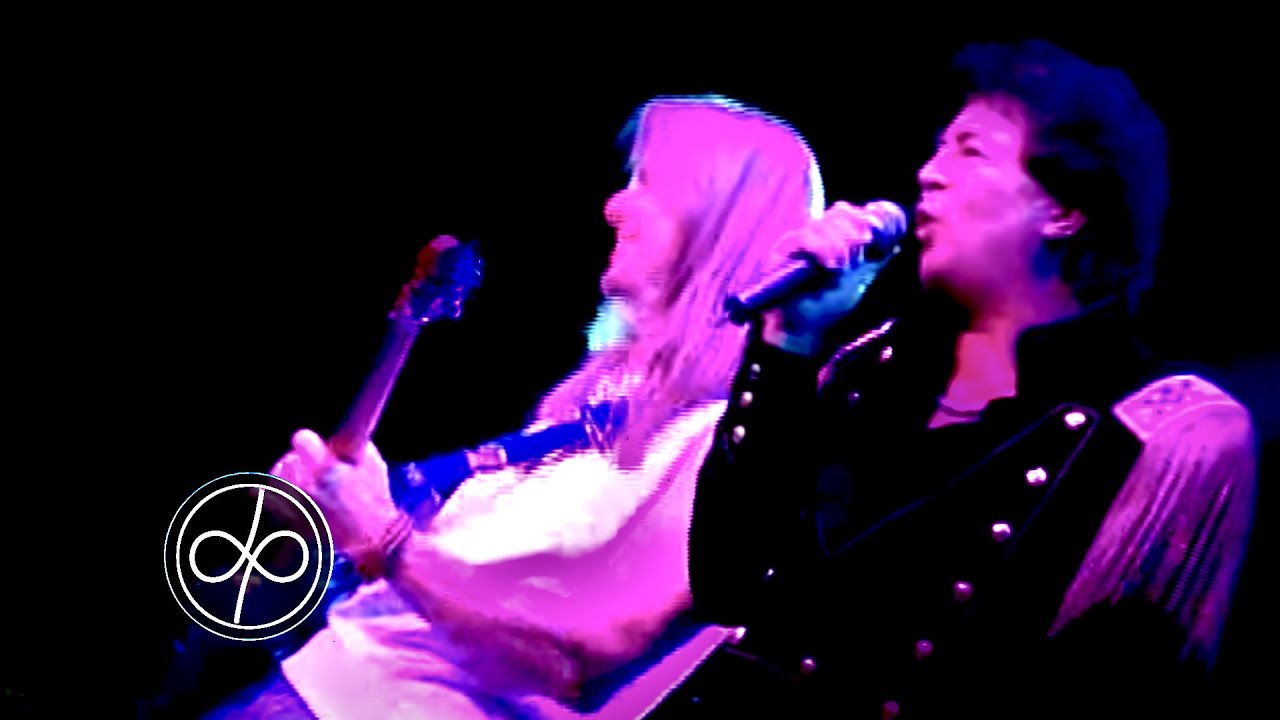
When asked to choose favorite Purple recordings over the years, Morse has flagged up Man Alive (from 2020’s Whoosh!), which he described as “an attempt to play something different from what I would normally do,” and selected his 1996 debut with the band, Purpendicular, in a list of his career-defining albums for MusicRadar.
For this writer’s money, the latter album is an inspired choice, shot through with a palpable sense of energy and enthusiasm. Check out Morse’s consummate lead work on Vavoom, Ted The Mechanic, and Sometimes I Feel Like Screaming, and you’ll hear exactly why he was the ideal man for the job.
Simon McBride (2022-present)

Though only 46, Purple’s newest six-stringer – brought up on the band’s music – had been turning heads with his blues-infused style since winning Guitarist’s Young Guitarist of the Year award in 1996.
In addition to recording as a solo artist, he’d proven his mettle in various branches of the Purple family tree, playing with Whitesnake offshoot Snakecharmer, and in current keyboardist Don Airey’s band, a role in which he backed Ian Gillan on 2019’s Contractual Obligation #2: Live In Warsaw.
Morse’s ability to think and play outside the box, while drawing on a wide range of influences, allowed Purple to broaden the scope of their signature sound and move forward. Today, McBride’s more streamlined, riff-driven approach has helped the band revisit their roots as they head for the finish line.

On the well-received release of 2024 album =1, Gillan told Qobuz that McBride’s playing is “very compatible with the way we started; very straight ahead.”
That said, McBride’s catchy riffing and eloquent, inventive lead lines – on highlights such as Portable Door – ensure that the Mark IX lineup delivers a classic-era vibe with the contemporary edge. Nearly 60 years in, they look set to bow out at the top of their game.