
![Array]](https://backingtracksfullcollection.com/wp-content/uploads/2026/05/Array.svg.svg+xml "“When John smashed that guitar above my head, I knew it was coming. But it was terrifying nonetheless”: Stephen Bishop on friendship, luck, and his impossible-to-miss Ferrington guitar 18")
Stephen Bishop, the prolific songwriter who penned the 1976 soft rock hit On and On, and who infamously had a guitar smashed over his head in Animal House, is back on the road after a brief retirement.
He’s 74, but his approach hasn’t changed. “I’ve always preferred to keep things simple,” he tells Guitar World. “Give me a good guitar, a microphone, and a great song, and I’m happy.”
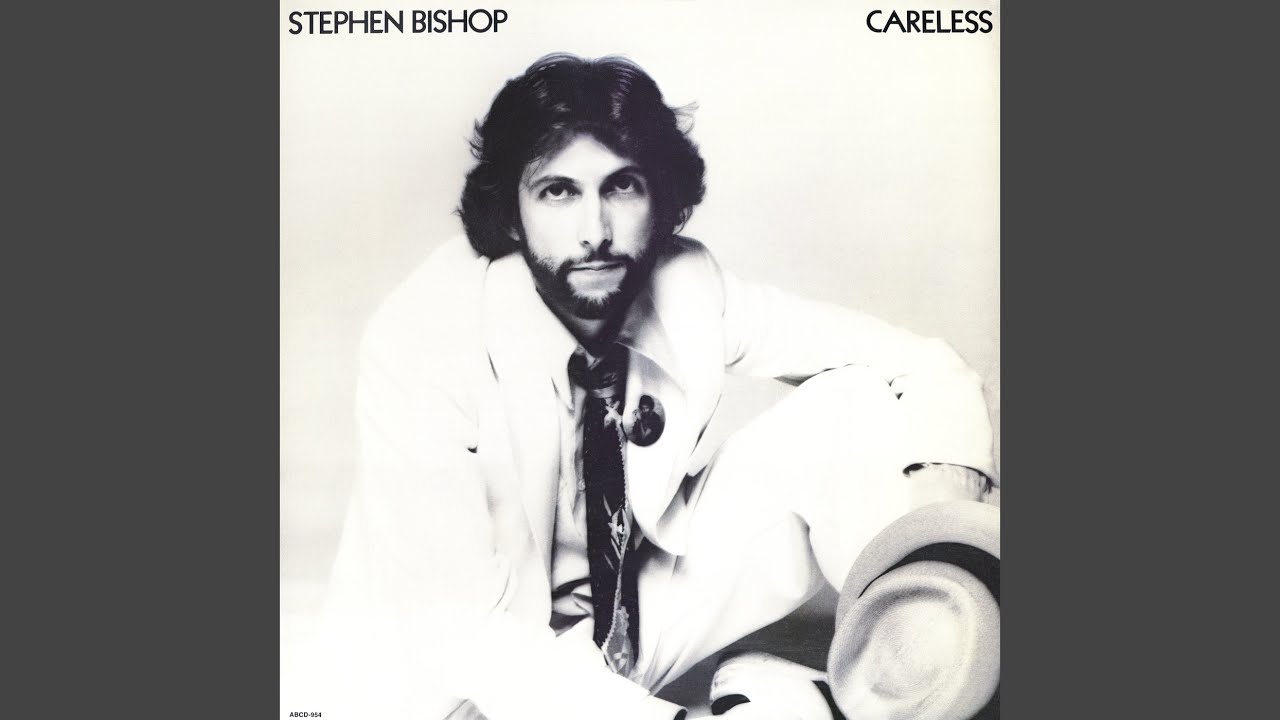
Bishop wasn’t thinking about music during his downtime, but now he’s thrilled to be marking the 50th anniversary of his beloved debut record, 1976’s Careless. “I’m excited to get back out there, celebrate these songs, and thank the fans who’ve been with me all these years one final time,” he says.

“Careless represents a very specific moment in my life. I was a young songwriter trying to prove that I could stand alongside the established writers. I was hungry. I wanted people to see that my songs could compete. Deep down, I believed the songs were incredible – thankfully, audiences did too.”
He adds: “To think these songs started as rough drafts in notebooks on my kitchen table, and that I still have those notebooks today, is pretty remarkable. An album that once existed only in my imagination ended up becoming part of so many people’s lives. That’s a really good feeling.”
What prompted you to come out of retirement?
I thought I was retired for good. I was looking forward to spending more time with my family, especially my son, who just turned 2 and is the joy of my life. But after I announced my retirement, my agent told me the demand for shows had gone through the roof. Funny how that works!
How are you getting back up to playing speed?
I’ll admit I was rusty. It had been almost a year since I’d even picked up a guitar. But now I have a great vocal coach, a guitar coach, and even a stage coach. It’s become like a real job – which is funny because I’ve never really had one before.
I’m putting in the work because the fans deserve the very best version of me. That means practicing every day, exercising regularly, eating right, and making sure I’m prepared mentally and physically for life on the road.
What gear did you use while recording Careless?
I used my 1969 Martin D-28, which I still have and still love. Back then, my gear setup was pretty simple because I was a broke songwriter trying to make a living. It was my first album and my first real adventure into recording.
Making an album isn’t easy, especially when you’ve never done it before. Having musicians like Eric Clapton, Art Garfunkel, and Chaka Khan involved was incredible. But honestly, a lot of it was luck.
How so?
Except for Eric, Art, and Chaka, many of the session players weren’t household names, but some of them went on to become even more successful than I was.
What was Clapton like?
When my manager at the time, Bob Ellis, was at Shangri-La Studios visiting Ronnie Wood of The Rolling Stones, another of his artists, Eric happened to be there. Bob told him, “You should meet this young artist I’m working with named Stephen Bishop. He’s a funny guy – I think you’d like him.”

Eric came by the studio with his guitar, and thankfully Bob was right; we hit it off immediately. I played Eric some of the songs I was working on, and to my relief, he really liked them. He performed the guitar solo on Save It for a Rainy Day and added his beautiful slide guitar work to Sinking in an Ocean of Tears.
As a 16-year-old kid I’d seen Cream perform, so having Eric playing on my debut album was pretty surreal. He was exactly like what you’d imagine a rock star should look like; he had this effortless charisma about him.
I brought my friend in. He played a few takes and then said he had to leave. I said, ‘We’re making a record here!’
What means the most to me, though, is that all these years later we’re still friends and still keep in touch. As important as Eric was to Careless, the album would probably never have happened without my lifelong friend, Art Garfunkel.
Art was the one who discovered you, right?
My dear friend Leah Kunkel, who sadly passed away last year, gave Art a cassette of my songs. Art liked what he heard and recorded two of them for his Breakaway album in 1975, including Same Old Tears on a New Background, which I later recorded for Careless.
Art’s support helped open doors that ultimately led to my record deal. He also sang background vocals on several songs on Careless, and I returned the favor by singing background vocals on Breakaway. That’s how our friendship began, and it’s lasted for more than 50 years.
On and On was a significant chart hit.
It started long before we ever got into A&M Studios. In the mid-1970s I was living in Laurel Canyon – the traffic was terrible, dogs were always knocking over trash cans, and I was just another songwriter trying to make it. I had a little recording setup in a closet.
I invited a couple of friends over to help me record a demo of On and On. Mike [Staton] played Hawaiian steel guitar, Jeff played bass, and I played guitar. The Hawaiian steel gave the song a sound that immediately stood out.
When it came time to record the song at A&M Studios, I wanted to recreate the magic of that demo. I brought Mike into the session. He played a few takes and then suddenly announced he had to leave. I said, “What do you mean? We’re making a record here!”

I called his brother and complained that Mike had walked out on the session. Fortunately, he came back and ended up playing some of the most memorable parts on the record. Those Hawaiian steel lines became one of the signature sounds of On and On.
Did you have a feeling you were on to something with the song straight away?
On and On started with a chord progression I couldn’t stop playing. I’d sit there for hours playing it over and over. I like to joke that people came from miles around just to hear that one chord. I wasn’t eating, I wasn’t sleeping – I was just playing it endlessly until I finally realized I should write a song around it.
When John smashed that guitar above my head, I knew it was coming. But it was terrifying nonetheless
Back then, I liked writing lyrics about little details that made the songs feel more real. But I never thought On and On would become a hit. It was simply a song I loved and believed in.
You toured with Fleetwood Mac at their height of craziness on and off stage.
I hate to disappoint anyone looking for wild stories, but honestly, nothing particularly crazy happened while I was touring with Fleetwood Mac! At least not around me. What I remember most is how talented and professional they were.

I was friendly with Stevie Nicks. She was always incredibly kind, warm, and supportive. One memory that stands out happened around Christmas. I performed The Christmas Song, and afterward, Stevie came over and hugged me because she really liked it. That meant a lot coming from someone with such a unique voice and artistic presence.
What did you think of Lindsey Buckingham?
I’ve always thought he’s a remarkable musician. His guitar playing was inventive, distinctive, and unlike anyone else’s. He had a way of making complex parts sound effortless, and his contributions were a huge part of what made Fleetwood Mac so special.
But if you want a strange Fleetwood Mac-related story, I do have one! When I was making my second album, Bish, in 1978, I wanted the cover to have a romantic feel. I decided to interview about 40 different models for the cover photo.
I eventually chose a young woman named Sara. Years later, she became the inspiration for Stevie Nicks’ Fleetwood Mac song Sara. I’ve always thought that was one of the stranger coincidences in my career! She married Mick Fleetwood. Sometimes the music business is a very small world.

Tell us about your infamous Animal House acoustic scene, where you cameo as the folkie who gets his guitar smashed.
This is probably the question I get asked most. People want to know if that was really me and whether John Belushi actually smashed the guitar. The answer is yes to both! I still have the smashed guitar – I even have the back piece that flew off. It’s in my living room, and the entire cast signed it!
Michael Jackson told me the first record he ever bought was On and On!
When John smashed that guitar above my head, I knew it was coming because we’d talked about it beforehand. But it was terrifying nonetheless. We did the scene in only two takes.
Was it scripted?
No. We used the song I Gave My Love a Cherry – also known as The Riddle Song – because it’s a 15th-century English folk song. It was in the public domain so there were no licensing fees. I also wrote and sang the theme for Animal House and another song called Dream Girl.
So it really is me in the scene, although I don’t look much like myself. At the time I was touring with Linda Ronstadt and had long hair and a beard. For the movie they wanted me to fit the period, so I had to shave off my beard. Deborah Landis, John Landis’ wife, pinned my hair back to make it appear much shorter.

Judy Belushi is sitting right behind me in the scene. John was a good friend and incredibly talented. He had that rare ability to walk into a room and immediately make people laugh. Sometimes the most talented ones just don’t make it. I’m grateful I got to know him. I still stay in touch with several members of the cast.
You also appeared in Michael Jackson’s Thriller music video.
I’m the guy in the yellow shirt in the movie theater scene. While they were filming, I spent a lot of time wandering around the set, taking photographs and soaking it all in. None of us knew we were witnessing one of the most iconic music videos ever made.
One of my favorite memories from that experience was talking with Michael. He told me the first record he ever bought was On and On! Years later, Janet Jackson confirmed the same story. That really blew my mind – one of the biggest entertainers in history telling me he bought one of my records!
Is it bittersweet to be on your farewell tour?
Not really. I’m doing this for the fans. They’ve supported me and my music for nearly 50 years, and I wanted to thank them in person one last time. The hardest part isn’t the thought of saying goodbye; it’s the preparation. Fortunately, I have some help.

I also bring along a very special guitar: my 1984 Ferrington Stephen Bishop model. It’s bright blue, impossible to miss, and I’ve had it for a very long time. It’s been with me through a lot of chapters in my career; it’s always nice having it along for the ride. The truth is, I don’t need much. I don’t use an iPad on stage. I don’t rely on a lot of electronics or technology.
What are you proudest of?
Since I was 15 I’ve lived by a quote: “In my life I will lose good friends, girlfriends, and faith in some people, but I will always have my songs.” Through all the changes, successes, disappointments, and surprises, the one constant has been songwriting. It’s given me experiences I never could have imagined as a kid growing up in San Diego.
Do you have any regrets?
Honestly, not many. I’ve lived the life I wanted to live; not everyone gets to say that. Of course, there are things I might have done differently along the way, but I wouldn’t change the overall story.
The one exception might be that I never got to write a song with The Beatles. I’ve been a Beatles fanatic my entire life. Like most songwriters, they changed my music forever. If I have one remaining item on my bucket list, it would be to write a song with Paul McCartney or Ringo Starr. Then again, there’s still time – Paul, Ringo, give me a call!
![Array]](https://backingtracksfullcollection.com/wp-content/uploads/2026/05/1779850244_Array.svg.svg+xml "SampleRadar: 493 free hardware drum machine samples 34")