Ever been to see a live music film in the cinema? It can be a strange, slightly awkward experience if you’re one of those people that just can’t sit still when the music you love is being blasted full-pelt out of massive speakers, and the band you’re obsessed with is projected at a ridiculous size…
This writer remembers seeing Talking Heads’ Stop Making Sense in IMAX a few years back, it was pretty peculiar how half the audience were on their feet – spontaneously reacting and letting loose as if the show were actually happening in front of them, while the other half remained planted in their seats. In fact, they seemed a tad irritated by all the mirth…
But now, that former half of that particular crowd – to which this author certainly belonged – is being specifically catered for with a new, live gig-style presentation of one of music history’s most thrilling concert films.
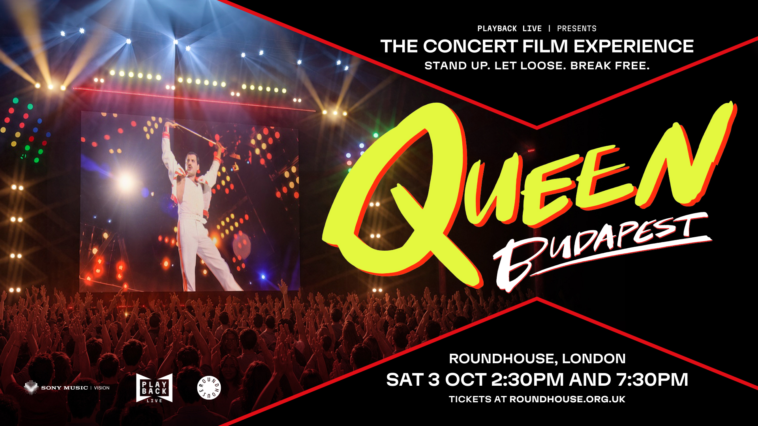
The UK-based Playback Live are kicking off their bespoke new presentation approach with a special screening – or ‘performance’ rather – of the freshly spruced-up Queen Budapest [aka Hungarian Rhapsody] at London’s Roundhouse on Saturday October 3rd in collaboration with Sony Music.
The film, which has been recently remastered in 4K by Peter Jackson’s Park Road Post Production facility in New Zealand, will be shown on a massive LED screen with live-mixed surround-sound, synchronised lighting, a support act and mandatory ‘Ay-Ohs!’
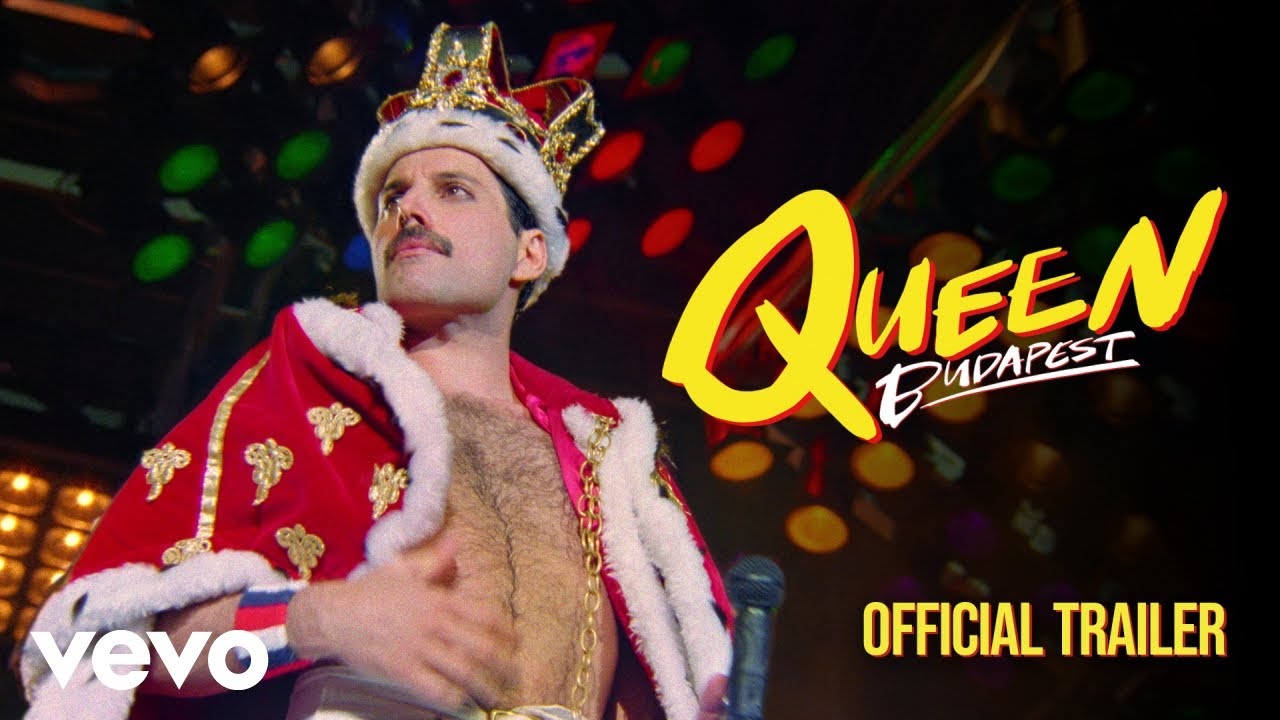
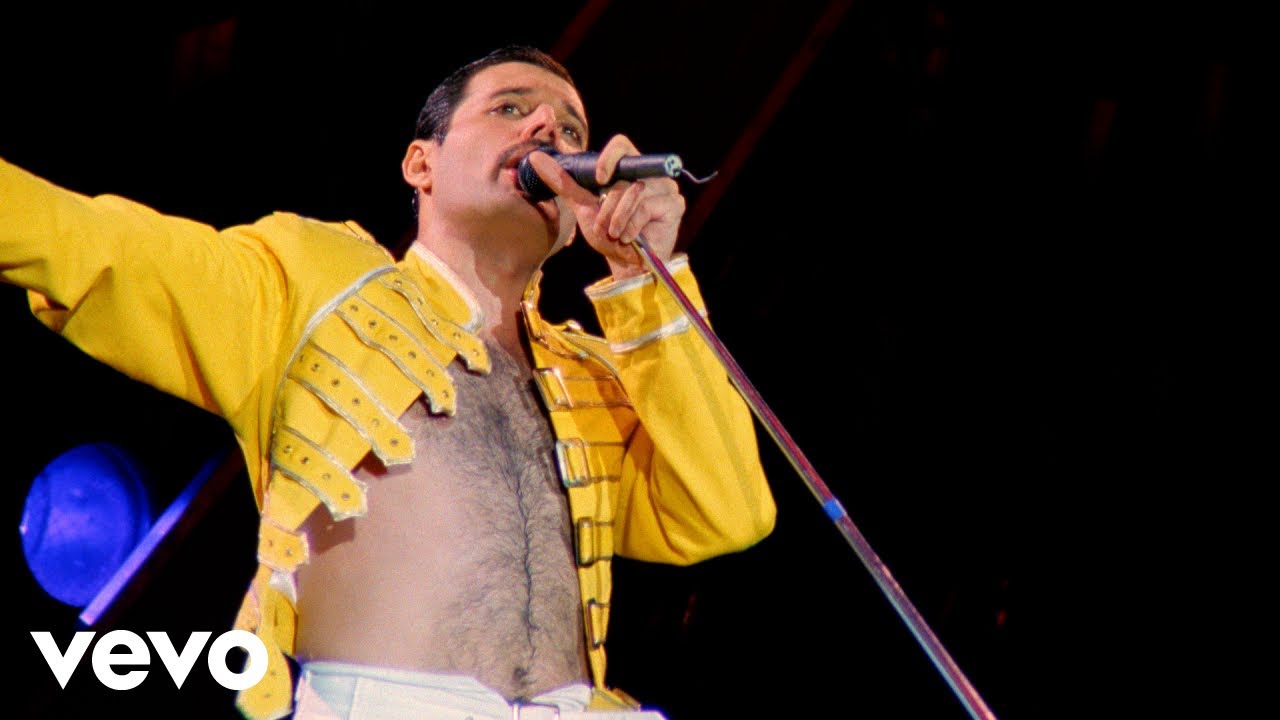
The show in question took place at Budapest’s Népstadion on July 27th 1986, with a reported 80,000 attendees. As well as being a thrilling watch, it has become something of a significant one for Queen fans. It’s the final full-length recorded concert by the band, and was recorded just a week before the final Queen show at Knebworth on August 9th. An important document then of a band nearing their conclusion, and of course a reminder of the scope of the talent that was lost when Freddie Mercury passed away in 1991 at age 41.
Freddie, of course, was on imperial, commanding form, whilst the rest of the band had, in the words of Brian May, ‘Never been tighter’. Ahead of its re-release on Blu-Ray and DVD on October 30th, what better show is there then to prove Playback Live’s concept?
We spoke to three members of the Playback Live team – CEO Caroline Lockyer-Nibbs, Production and Operations Director Rebecca Margariti-Smith and Event Sound Designer and Mix Engineer Jay Jones – to find out more about bringing this revered show back to audiences in this astonishing new way, and just how you gee an audience up enough so they treat a movie as if it’s happening right there, right now, on that stage…
MusicRadar: Hi all, so firstly, can you kind of explain to us how Playback Live got started? What was the initial concept?
Caroline Lockyer-Nibbs: “We’ve worked with Sony on a number of projects, specifically the AC/DC tour over the last couple of years. We were doing pop-up fan zones for them where we had 5,000 people a day trundling through, buying merch, getting photo ops, and all those kinds of things.
“At each one it was part of the remit that we had a big screen and showed footage. There was obviously music playing all the time. So, it just became obvious, [seeing] those fans all coming together and gravitating to the screen with a beer in hand. They were just singing along, getting in the vibe before they went to the gig that night. You could just sense that there was that feeling of just being all together.
“We’re also very aware of what’s happening in the marketplace as well. ABBA: Voyage is a great place where you can go and sing and dance. There is that concept of ‘coming together’ again.
“We felt that there was an opportunity within the market to do that. We talked to Sony, and they talked about the [recent] remastering of Queen Budapest. So it just seemed a perfect opportunity for us to develop Playback Live – and for [Queen] to be our launch. We’re talking about bringing it as a concept to the public in different cities in the future with other bands, based on how legacy bands are so popular right now.
“There are so many biopics now. The Oasis [film] has just come out. You’ve got the George Michael film coming out soon. Michael [Jackson] the film has been massive. So there are many opportunities.”

MR: I remember being in the cinema seeing a concert film, and it was strange seeing half the cinema up on their feet dancing and the other half sat looking perturbed. It’s great that this experience is very much sold as a ‘reactive’ event – the people who like to move know they’re able (and encouraged) to let loose!
Rebecca Margariti-Smith: “That’s the thing, we’ve all gone to the cinemas and watched like the Taylor Swift Eras Tour or whatever, and it [can be] such a juxtaposition.
“It really divides people because you’ve got like the people that are confident enough to just get up and dance and sing because they want to, and they can. But then you know, other people are there saying, ‘Well, I can’t see the screen!’, and calling the usher, so I think it’s such a relevant thing to talk about. I think when we then went and presented this to Sony, they [knew] that these kinds of films were the future.
“Like we need to have the premieres [at] the cinemas and IMAX in particular is amazing. That’s really important for these kinds of concert films, of course, but there’s more that we can do.
“The fans can come together and have that moment, share that feeling of passion together. That’s what these [films] were made for in the first place. So we kind of just highlighted the fact that it’s it’s always a little bit like bizarre, almost to [put these music concert films on] in the cinema, which is a venue very much designed for film.
MR: This kind of experience also seems like a great way to feel the live impact of those bands who no longer play shows anymore. I mean, I know Queen do perform still – but obviously without Freddie. Freddie was such a commanding – and ‘interactive’ – frontman, with his regular back and forths with the audience…
RMS: “Yes, and the fans want that connection. I think with [the rise of] AI, and everything else being so like perfectly manipulated and manufactured, people are looking more to the past. They’re looking at these great names that have kind of stood the test of time. So it’s just a new way to experience it. In the sense and the mood that it was designed for in a live space”
Jay Jones: “It’s the gigs that you always wanted to go to, right? It’s like you wish you’d been there. Now you can be there in a different way.”
CLN: “There’s also the fact that, because we’re in the Roundhouse and as it’s a music venue, our audience capacity is bigger than any cinema. So you’re actually there with more people experiencing it.”

MR: Was Freddie’s sheer magnetism as a stage performer a particularly appealing hook to kick Playback Live off with?
RMS: “When we first approached Sony on this, and they mentioned Queen Budapest, we were just kind of ecstatic, to be honest. Because Freddie was who he was – and he was such a great stage presence – you have that interaction, that’s what this experience is all about.
“You can lean on the fact that you know Radio Ga Ga has the clapping hands or like We Will Rock You has the stomping. You can do [those actions] in the live space. Sure, it’s not never going to be Freddie again. But it’s the closest setting that you can experience as close to what the live experience actually was in that stadium in Budapest. So yes, it’s a particularly special one to launch it on, I think with Queen. It’s ideal.”
MR: This Budapest show in particular is quite an important one for fans, being the final filmed live performance of Queen, and actually just a handful of days before their final ever show, so it’s quite poignant in a way…
CLN: “Yes, and you hear about Brian May talking about it as the tightest that they’ve ever been, and they had the most natural interaction that they’d ever had. They were at their all-time peak, essentially at that point. So I think it’s a really lovely way to hone in on that and then just deliver it in a way that’s more true to the setting. Because obviously, there’s so much that gets spoken about in terms of the remastering, the delivery of the film and that gig in itself, but actually, a lot of the time we lose that sense of ‘what was it for?’ We want for you to feel how you feel at a gig. That’s what we were leaning into.”
MR: I guess doing it this way obviously requires a lot more work than simply screening a film in a cinema, on a technical level. How long does the planning of this kind of show take? And do the additional live elements – the synchronised lighting and surround sound setup – cause a few headaches?
CLN: “It’s been a good six months at least really, actually more like eight months since when we first started talking to the venue. Obviously trying to get venue availability versus a cinema availability is always very different.”
JJ: “It’s sort of twofold, really. Obviously, in a live setting we’re trying to put in a system [so] that everyone can have the same experience. That’s true of any live concert or any theatre event. Obviously, cinema is so much more controlled. It’s a room that’s been deadened, has been acoustically treated. Everything’s measured and very accurate. Of course, live, that’s a completely different beast. And that’s what makes it exciting. People love the sound of concert halls and music venues. The reason is that they [have] huge loud. pumping, brilliant sound systems – and that’s what we wanted to do with this event.
“But with the surround sound, we’re trying to bring in the sort of theatrical, cinematic feeling – and so it’s a lot of speakers. It becomes about making sure that everyone’s getting the same experience, whether you’re sat upstairs or downstairs or at the sides. We spend a lot of time working that out, and I think we’re gonna we’re gonna achieve it.”
RMS: “The production of this hasn’t been planned in a silo. We were very adamant that if we were going to do this, we were going to get everyone’s seal of approval on it across the board. That includes Sony’s team, and we’ve been in touch with Queen’s audio people that have worked with them for years on end.
“What part of Jay’s job has been is working with them with [the audio stems] which Jay can speak on better…
JJ: “The amount that the Queen team have wanted to really get involved has kind of been brilliant. We’re working with the music production team that have worked with Queen for their career. They were really excited when we spoke about the idea.
“One of the things we were talking about is that in a live room, you get a lot of natural reflections – that’s what that’s what a room does. We talked about taking the concert sound that they’ve mixed for cinema and putting it into a live room. And so we’re spending a lot of time thinking about how we mix, how we get the sound of the band right.
“Of course, first and foremost, a big consideration is how we make the vocal sit in the in the room as it would at a live concert. Then there’s all the sort of reverbs and effects and the audience atmos so that we can really transport people to the Budapest Arena, but while delivering that massive punch of Queen live.
“We were just talking earlier about how the challenges are the sort of most exciting bit. The biggest challenge is the most exciting part of it, which is that we don’t know how the audience will react in that moment when we’re in the show. We’ll be mixing the show live to react to that – and sort of follow the dynamics of the night.”
MR: So it is treated like a gig ostensibly, like it’s happening right now, on stage?
JJ: “That’s it. Yeah, and we’ll be mixing the band, which actually will be one of the easier bits as there’s a brilliant mix that the producers that have made for the film and the remaster, but we’re also going to be sort of mixing the atmosphere and the audience reaction, both what that Budapest crowd were doing, but also what our crowd are doing. I think that’s going to be one of the really exciting things about coming to see the show at the Roundhouse.”
RMS: “When we talked to the Sony music team, and were talking to them about this and we shared our deliverables of what we need, and the visuals. They just started getting really excited about it.
“They’ve delivered all of these things as a sort of done-and-packaged file that then just gets played very generically in cinemas. It was quite cool to hear them say, ‘This is the first time that we’ve done this, guys, and this is a really exciting thing.’ It’s exciting on a few levels across all of the teams that we’re working with.”
MR: I guess getting that audience reaction is the litmus test of the whole thing, really. You’ve got a support act in the form of a a DJ to help warm them up, but do you think some people might find it a little bit uncomfortable at first – the idea of dancing and letting the hair down in this new context?
CLN: “We don’t know how they’re going to react, but we’ve got a great ’80s DJ just to get the atmosphere going. The bars are open. You’re in a music venue… you know what’s coming. The audience that are coming want to come and dance and sing. We’re doing what we can to encourage that. But I think there’s a general understanding that that’s what they’re there to do.”
RMS: “I personally think that the element that actually people aren’t going to realise so much until they’re there is the effect of the pre-show DJ. We just wanted to emulate the the sort of support act moment of warming up the crowd so that you can catch up with your mates, you can have that beer, you can have that chat where you haven’t caught up with them in six months or whatever it is.
“The ‘80s DJ that we’re using is brilliant because he does these discos for grown ups all around the country already. So he’s like an expert in this era of music anyway – and getting crowds going is what he does. We’re making sure that we’re using the full rig, so we’re using the screen. We’ve got really cool graphics playing. We’re using the lights. So it really is going to be like a pre-show party, rather than a DJ set.”
JJ: “That’s what’s great about going to see a concert live – the anticipation and the build-up to the main act. I think that sort of atmosphere can only happen in a live environment as a shared experience amongst a mass of people, roaring together when the band come out. It’s such a great sound in a music venue. That’s what’s going to be really exciting.”

MR: Are there any moments in the film where you know the crowd will just lose it?
CLN: “We can’t wait for Bohemian Rhapsody to drop – I think the room’s going to go a bit wild. I’m going to get myself a nice spot at the very top of the balcony just to look down and see how the hell they react. It’s going to be very cool.”
JJ: “It’s amazing actually when you watch it. We’ve obviously been privileged to see the film as we work. You get surprised, you think ‘Oh my God, this song!’ – it’s just one after another.”
RMS: “I think Queen as a band are very multi-generational. If I ask my kids about Queen, they know their music. People know the words, they know the songs. I’m sure our audience will be quite a mix of generations, and people will be coming with their kids, so yeah there will definitely be a mix.”
MR: I was actually going to ask about the multi-generational appeal of Queen as obviously a lot of kids are discovering them in 2026 for the first time on streaming playlists. Of course if they become fans they have no way of experiencing Freddie live any more, which was a big component of the band’s identity. I guess this is almost the next best thing to time travel, this type of screening/performance hybrid…
RMS: “Yeah, we love that. That’s the best way to describe it. That’s great. It’s funny as well because I was just thinking – and you’re going to laugh at me for this story – but you know, when we were talking about how initially we were not quite sure how the audience is going to react, and that it’s the first time that they’re in this setting, and is there going to be a little bit of a kind of nervousness? Then we received the file…
“I happened to be at home when I first played it. And literally, my three-year-old, as soon as the concert started and Freddie started singing, was dancing around like a lunatic in the kitchen. I remember saying to Caroline the next day in the office, I was like; ‘We’re not going to have a problem here’. Like it’s just Queen and it’s Freddie. It’s multi-generational.
MR: Beyond the Queen Budapest show, what other classic gigs do you think Playback Live could handle – and how would you like to expand the experience in the future?
CLN: “There are many, many legacy artists we would love to do this with. We are having conversations now as a starting point as to what can be done. There are some amazing [semi-documentary] concert films out there, which would need a little bit of work just so that you lose all that backstage chat, to [edit] it up into what it needs to be: a concert.
“So yes, there are conversations happening. We very much want to look at look at shows that you can then take on tour to different parts of the country. It’s not a London-centric event. It could go anywhere.”
RMS: “We actually made a conscious decision as well for this to be designed to be agile and be able to tour. We can have a rig – a really nicely designed PA and screen that then we tour, so the production quality and stamp of approval is consistent for wherever we take it. It can then go international as well. There’s definitely scope to do so much with it, and I think the fact that already the people that we’re approaching are very keen to talk to us is exciting. We’ve all got our own favourite artists on the team – we can’t talk about them yet – but who will win in that race we’ll see…”
Playback Live’s Queen Budapest screening takes place at London’s Roundhouse on Saturday October 3rd at 2:30pm and 7:30pm. For more info on Queen Budapest see here