You can trust Guitar World
Our expert reviewers spend hours testing and comparing guitar products so you can choose the best for you. Find out more about how we test.
What is it?
When it comes to electric guitars with vintage aesthetics, nothing beats a real nitrocellulose finish. It is what was predominantly used on those coveted Fenders and Gibsons from the ‘50s and ‘60s, and its soft nature means it will happily wear as you clock up the miles. And for those who like a bit of modern relicing, it’s just more convincing on a nitro finish compared to the now much more prevalent polyurethane. The thing is, it nearly always comes with a higher price tag. Patina is looking to change that.
Brought to us from the same folks behind the bang-for-buck success story that is Jet, the concept behind Patina is that of affordable guitars with real nitrocellulose finishes. This sets the company apart from other budget brands that usually utilize the cheaper and more durable polyurethane.
To be clear, plenty of higher-end guitars use a poly finish too (for example, Fender’s American Professional range), as there are advantages to this finish – mostly that aforementioned durability – so we are in the land of preference here. The main point is that for those who like a classic look and a guitar that will wear, the softer nitro is the better choice.
Latest Videos FromGuitar World
So, with this in mind, Patina’s catalogue currently consists of four lines – the 3 Series, 4 Series, 6 Series, and 7 Series – with the differences between each being predominantly in finish and pickup configuration. As I frequently use a Fender Telecaster as my main gigging instrument, I am pleased to have one of Patina’s Telecaster-inspired guitars for review – the PT-3.
The point behind the 3 Series is that they are not relic’d, allowing us to give the guitar its own battle scars over time (for the relic’d equivalent, you’ll want to look at the PT-6).
Specs
- Launch price: £519 | €599
- Made: China
- Type: Six-string electric guitar
- Body: Paulownia
- Neck: Roasted maple
- Fingerboard: Rosewood
- Scale length: 25.5″/647mm
- Nut/width: Bone, 42mm
- Frets: 22, jumbo, stainless steel
- Hardware: Chrome, locking tuners, included strap locks
- String spacing at bridge: 10mm
- Electrics: 2 custom hand-wound single coils
- Weight: 6.1lbs/2.8kg
- Left-handed options: No
- Finishes: Black (as reviewed), Sunburst, Sea Foam Green
- Case: No
- Contact: Patina
Build quality
Build quality rating: ★★★★½
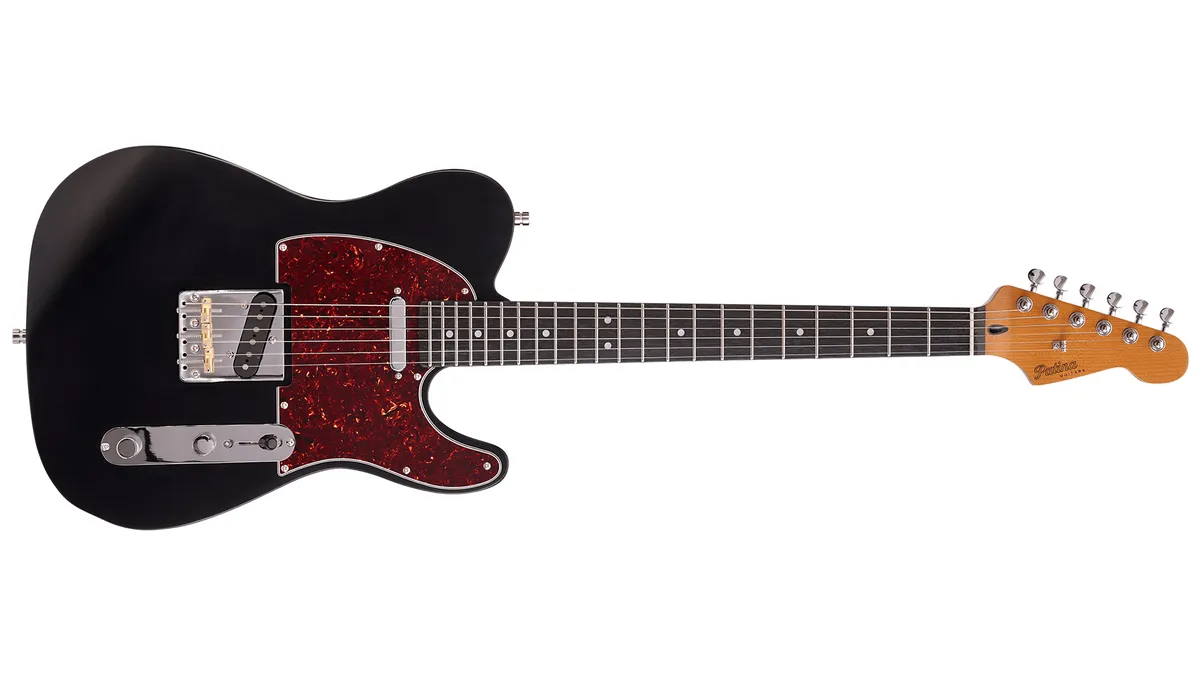
On this review model, the finish is a plain Black, which I suspect some may find a little boring, but personally I appreciate the understated aesthetic matched with the red tortoise shell scratch plate. It’s a classic combo and this reminds me why.
The body is paulownia, which is known to be a softer wood that will pick up knocks fairly easily. This isn’t necessarily a bad thing if you have bought a Patina in order to have a guitar that will wear as you play.
It’s also a wood known to be lightweight – and that’s very much the case here where the PT-3 is coming in at a comfortable 6.1lbs. Well under the usual solid T-style territory of 7lbs+.
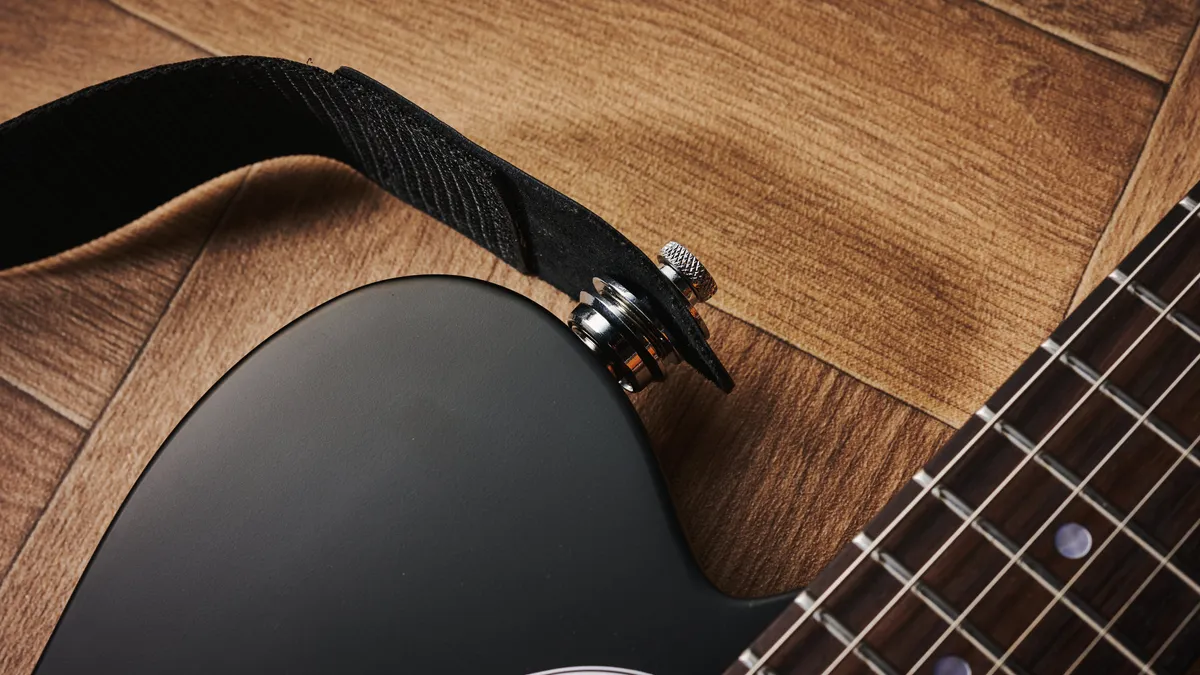
I would prefer a little more weight in this case, however, as the guitar suffers from a touch of neck-dive, I suspect due to the hefty nature of the locking tuners paired with that lightweight body.
The upside is that the tuners feel robust and do their job well, aiding in what is a stoic tuning stability despite my best efforts to catch the guitar out with some wild bending.
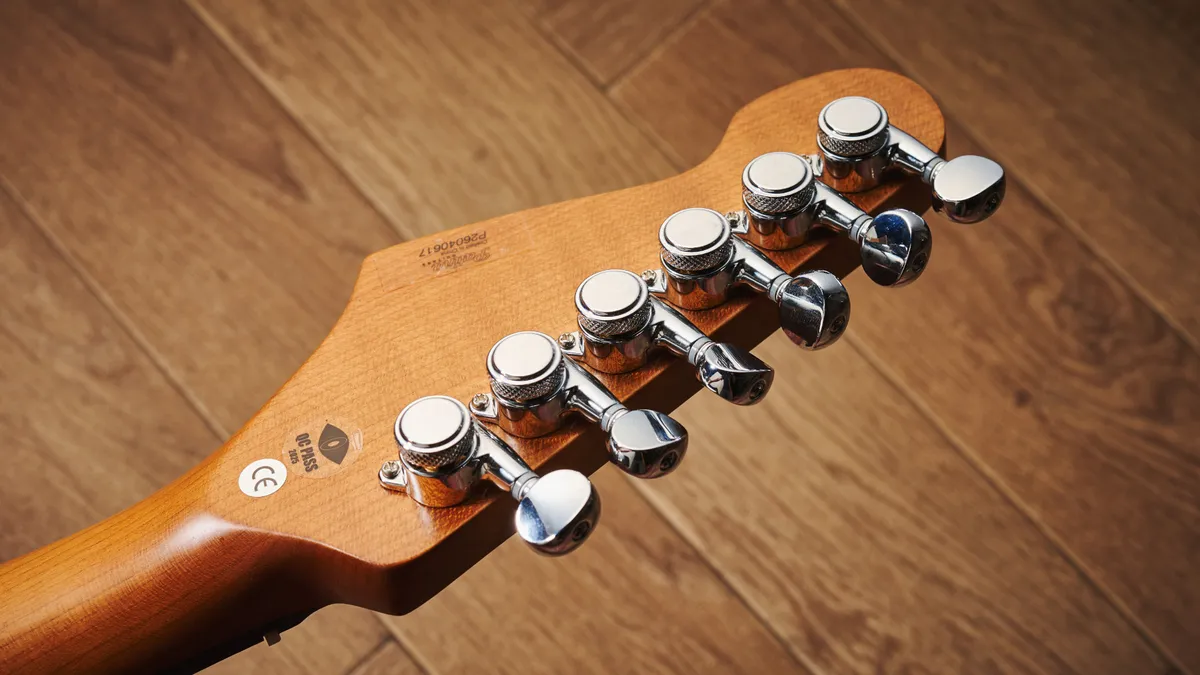
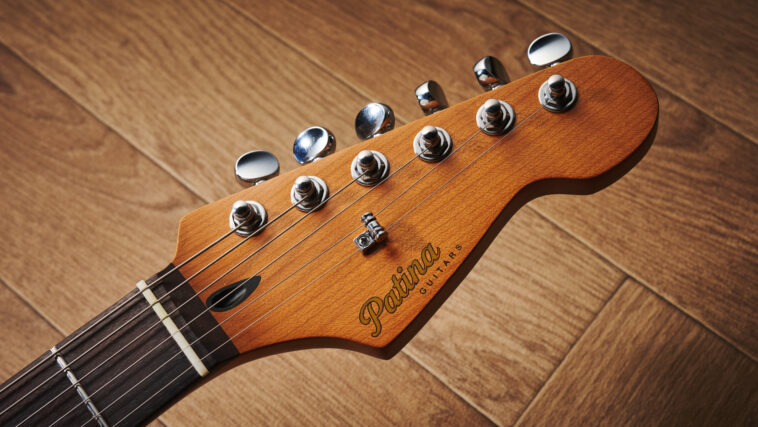
A quartersawn roasted maple neck is also likely to be contributing here, as well as appointments like a bone nut and decent chrome hardware. In short, it’s a pretty high spec for a budget-friendly guitar.
Well, I say budget-friendly; we are definitely on the higher end of that definition at £519, but I’d argue that this still represents good value when we consider that nitro finish. Other appreciated appointments include nicely finished stainless steel frets, strap locks, and a compensated three-saddle bridge.
Playability
Playability rating: ★★★★½
A fretboard radius of 13.75” is an interesting choice
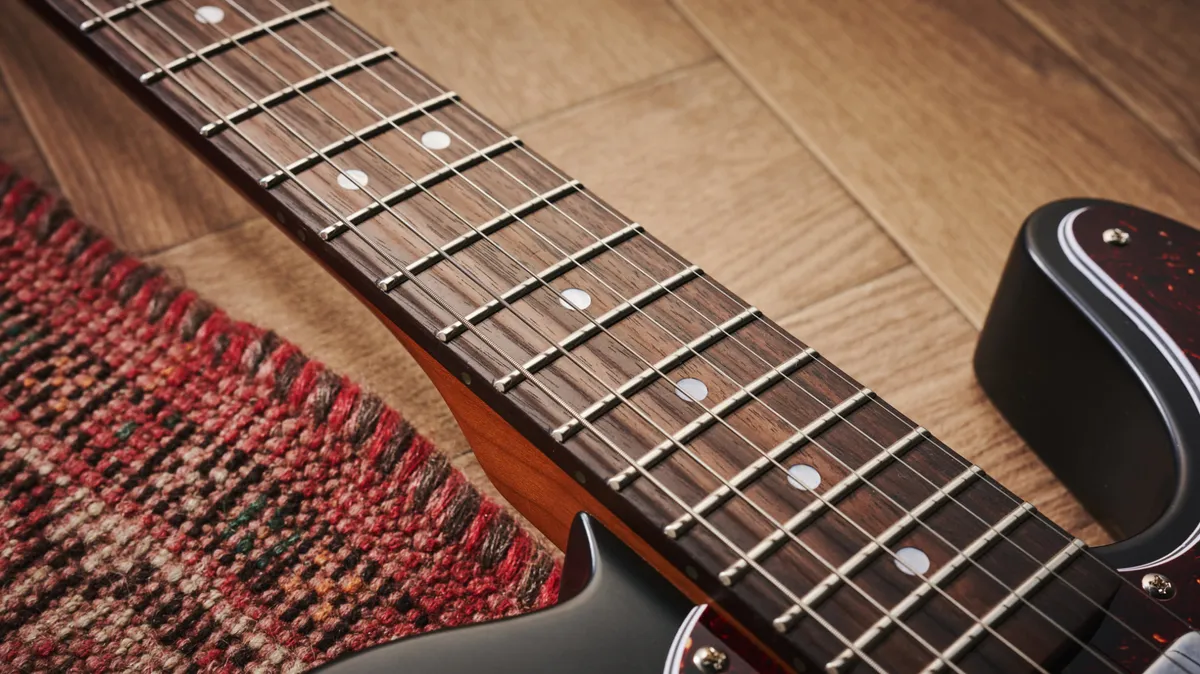
A fretboard radius of 13.75” is an interesting choice for a lower-priced T-style. It makes legato runs feel fluid, but is slightly less comfortable than the more ubiquitous 9.5” radius (for a guitar of this ilk) would be for the cowboy chords that are arguably more typical of the type of thing played by folks in the market for an instrument like the PT-3 at this price point.
I should stress that by ‘less comfortable’ I don’t mean uncomfortable. Those chords still feel easy enough to play thanks to a decent setup with a buzz-free, medium-low action of 1.25mm on the high E and 1.5mm on the low E.
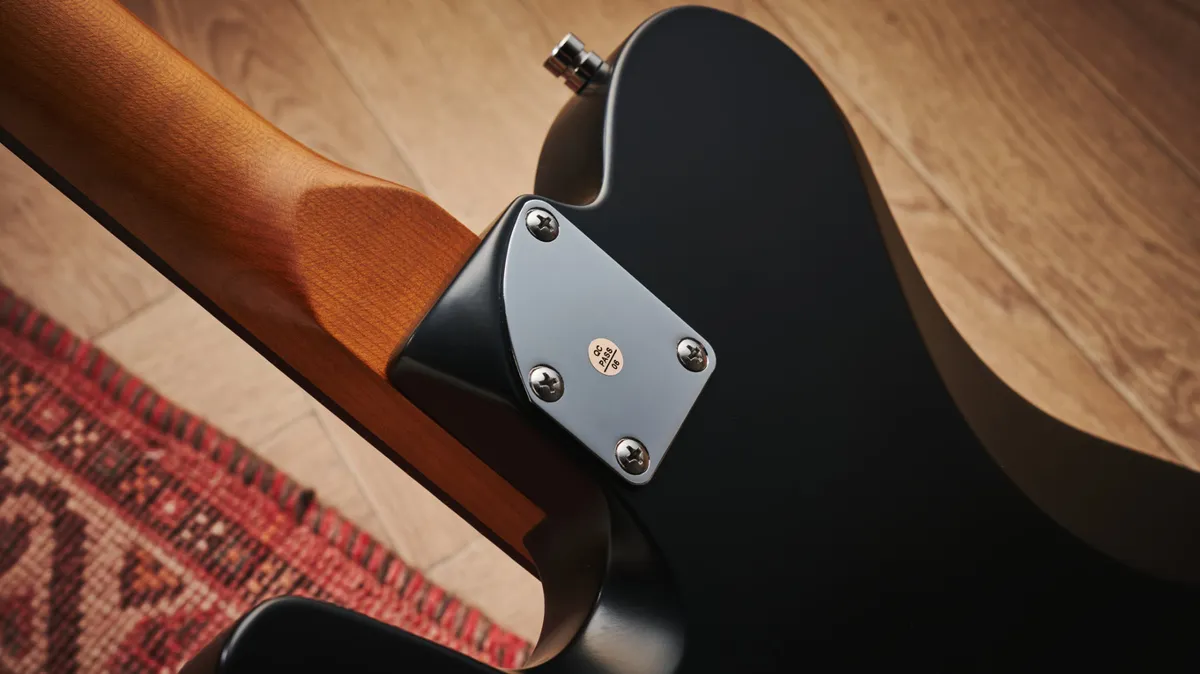
So, digging into open chords does not feel quite as effortless as it does on other guitars of this type, but shredding up and down some legato lines is a little easier than you might expect, and the satin finish allows execution of that speed without getting stuck to the neck.
The result is an instrument that feels a little quicker than your average T-style-inspired guitar, and this is something you could accentuate by lowering the action a little more too.
Bends and vibrato also come off with ease, thanks to the nicely finished stainless steel jumbo frets, and access to the higher frets is made a little easier by the lightly sculpted heel. All in all, a rewarding guitar to play.
Sounds

Sounds rating: ★★★☆☆
Plugging in, I am testing the guitar via my Fender Hot Rod Deluxe with a Browne Amplification Ethane covering overdrive pedal duties.
Starting with some clean sounds on the neck pickup, I am detecting a little less low end than I am used to in this position on a T-type guitar. There is a good helping of high-mid presence that results in those fancy chord extensions cutting nicely – something I am enjoying taking advantage of. The flip side is that it can sound a little harsh when digging in on a clean sound.
The middle position increases the mids whilst retaining the low end that is there – great for funky clean stuff.

Bridge pickup feels quite narrow, which makes it less effective for cleans
When I activate the bridge pickup, it is immediately clear where those extra mids are coming from. It is very honky in its response, and feels quite narrow, which makes it less effective for cleans, but stick some gain on it, and lead lines poke through in a way that will stand out in a mix. But again, I find myself wanting some more low end.
With that in mind, I am spending most of my time on the neck pickup. Although the lows aren’t as present as I would like them to be, it stays articulate on gains, suiting both rhythm and lead work.
Verdict

The main headline here is a nitro-finished electric guitar at a budget-friendly price, but obviously, this doesn’t mean much if the guitar itself isn’t up to scratch. Thankfully, it is well put together and plays nicely.
There are some decent tones to be had here, but things are a little thin across the board
The weak point for me is in those sounds. Don’t get me wrong, there are some decent tones to be had here, but things are a little thin across the board, and the bridge pickup lacks the bite I am used to on this type of guitar. That latter point, however, may be a good thing for some.
Guitar World verdict: The Patina PT-3 falls a little short on tone, but there are still some good sounds here. And as a nitro-finished guitar with a high-quality build that plays well, it is a good deal nonetheless. You can always upgrade the pickups, and if you do, you will have a solid foundation to install whatever it is you decide to put in.
|
Test |
Results |
Score |
|---|---|---|
|
Build quality |
A well put-together instrument, especially considering the price point. |
★★★★½ |
|
Playability |
The set up goes a long way here, as do the nicely finished frets. Fretboard radius may not suit everyone. |
★★★★½ |
|
Sounds |
A little thin all round, and not quite what I look for from a T-style, but the neck pickup retains some nice clarity that makes fancy chords and cello-y gain good fun. |
★★★☆☆ |
|
Overall |
A good looking and playing guitar that is undeniably decent value for money, but you may want to upgrade those pickups. |
★★★★☆ |