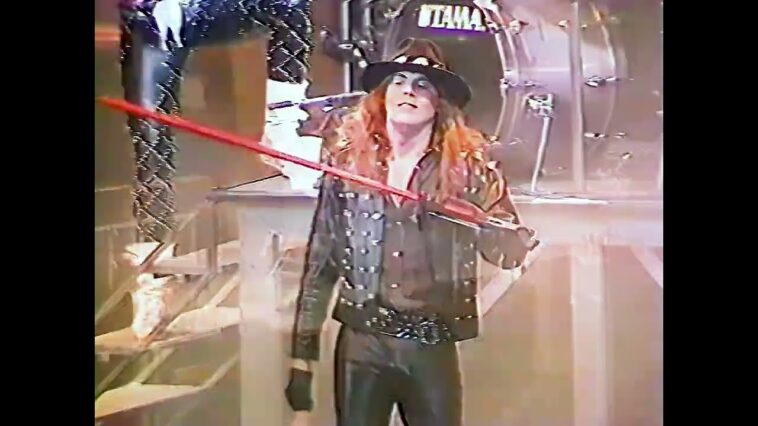
George Lynch is one of the most acclaimed and influential rock guitarists to have emerged in the ’80s.
He could have been Ozzy Osbourne’s right hand man. He lost out on that gig twice – first to Randy Rhoads and later to Jake E. Lee.
But Lynch’s brilliance eventually made him a star with Dokken, one of the leading hard rock bands of that decade.
Latest Videos FromMusicRadar
Dokken sold millions of albums despite the hostility between Lynch and the man whose name was on the covers of those albums – singer Don Dokken.
In an interview with Rock Candy magazine, Lynch looked back on his career with Dokken and recalled the years before he joined the band when he was first making his name on the Los Angeles rock scene.
He began with his early influences.
“I was ten when The Beatles emerged,” he said. “That was good timing. I identified with George Harrison quite a bit due to the name. Later, the guitar hero appeared – Hendrix, Clapton, Page.
“My dad was a traveling salesman, so we moved around the country a lot. My guitar was my solace and my friend. But around the age of 14 I started getting in trouble, drinking and drugging and being defiant. I was constantly running away from home.
“I wanted to get out into the world, ride the rails. So my guitar was taken away, my head was shaved and I was shipped off to live with my very strict godparents in a little place in southern California, just a lumber mill and not much else. That straightened me out, and I got my guitar back.”
Lynch recalled his experiences with his early bands.
“I moved to northern California and we had a band called Sgt. Roxx – glitter rock, very influenced by Kiss and the New York Dolls. We had a band room with egg cartons all over the walls, and we’d do full rehearsals in there with pyro. One day it caught fire and burned the whole place the ground, with all our equipment. That was the end of that band!
“Then I formed The Boyz with [future Dokken drummer] Mick Brown. I was the singer and lead guitar player, and we played covers – Montrose and Deep Purple. Eventually we decided to give it a go in Los Angeles.
He continued: “We got a singer, Michael White, a Robert Plant lookalike, except he played flute like [Jethro Tull frontman] Ian Anderson. I don’t know how, but he would blow fire out of his flute. We weren’t crazy about it, but he said, ‘If the fiery flute solo doesn’t go over like gangbusters I’ll drop it.’ And he wore these see-through stretchy pants, with no underwear. It was really hard to watch, so we ended up getting rid of him and got Greg Sanford, whose brother was Rick the singer in Legs Diamond.”
It was after The Boys morphed into a new band, Xciter, that Lynch first encountered Don Dokken, who was then singing with a group named Airborn.
“When the band became Xciter we wrote Paris Is Burning and some others that became Dokken songs,” Lynch said.
“We played a gig with Airborn at the Starwood, and they were playing one of our songs. I asked Don about it and he said it was one of his songs that he’d written. ‘Oh, okay.’ That should have been a big red light.”
He added: “Don wasn’t like a normal guy you could talk to. It was strained and weird. He had to control the conversation in the room. All eyes had to be on him. There was obviously a little bullshit going on.”
Despite his reservations, Lynch accepted an offer to record an album with Don Dokken in Germany in 1981. Mick Brown was the drummer. Juan Croucier, later of Ratt, was the bassist.
That album was initially released as a Don Dokken solo album but was subsequently released as the Dokken band’s debut, Breaking The Chains.
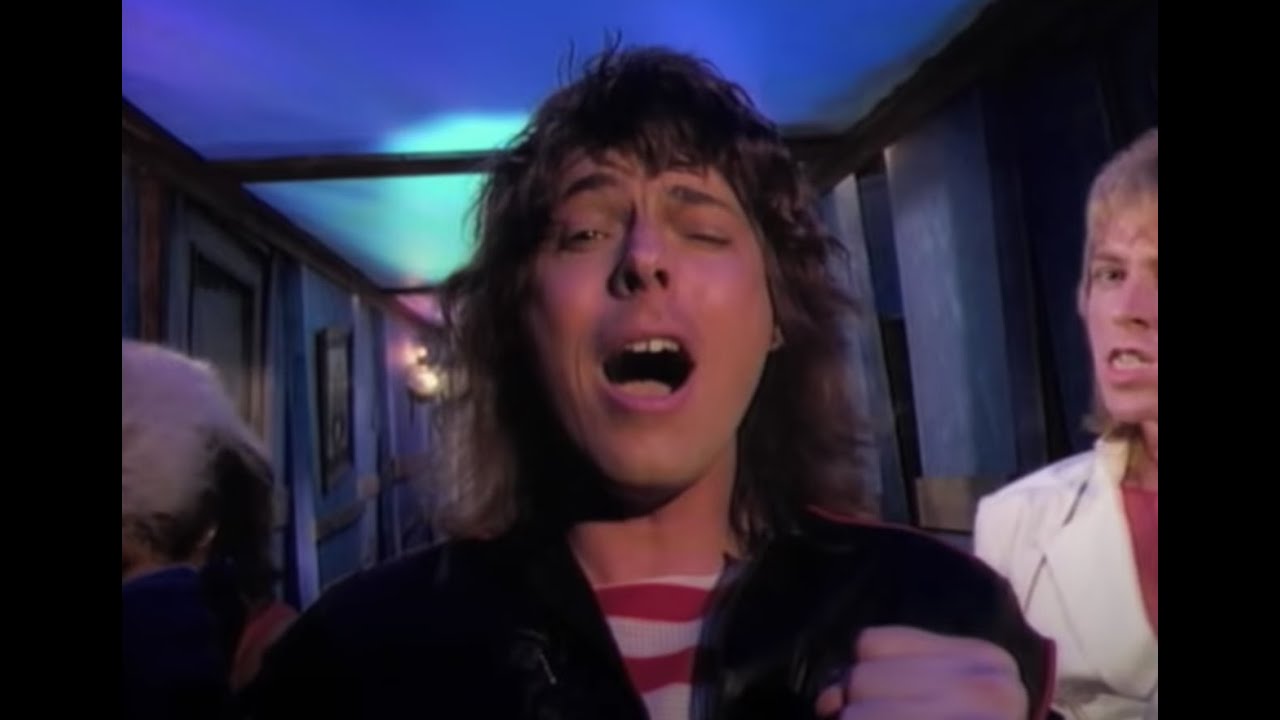
Lynch admitted: “We had no idea what was going on business-wise. It was Don who was handling it. In Germany, Don took care of himself. He had a woman he was seeing, and he lived at her flat right on a lake, eating good food. We were all stuck in a Czechoslovakian hotel in an attic with no door on the shower.
“Don told people that he paid us, but to get home from Germany I had to sell some equipment to get a plane ticket and I also very fortunately got a last minute job writing songs and playing guitar for Udo Lindenberg, a German artist. I made eight hundred marks and I was able to get myself home.”
In 1982, following the death of Randy Rhoads, Lynch auditioned for Ozzy Osbourne’s band for the second time. Lynch was heartbroken when the job went to Jake E. Lee, but in the wake of that disappointment he rejoined Dokken alongside Brown and bassist Jeff Pilson, and by 1984 the band had achieved a major breakthrough with their second album Tooth And Nail.
“We were full of piss and vinegar and wanted to show the world we had what it took,” Lynch said. “We dedicated ourselves to taking it to the next level, which we managed to do with Tooth And Nail, which went gold.”
Dokken’s rise continued with the million-selling albums Under Lock And Key (1985) and Back For The Attack (1987). Lynch acknowledged the role that the band’s management played in that success.
He recalled: “If you have to give one element of the machine the most credit for the success that Dokken had, it would be Cliff Burnstein and Q-Prime. These guys got us on radio and MTV, on these giant tours, and in all the magazines. So we owed our success to them. And to Don’s bullshit and perseverance, and maybe some of our talent and chemistry as well.”
The tension between Lynch and Don Dokken was exacerbated by the fact the singer felt isolated in his own band, unwilling to embrace the rock ’n’ roll lifestyle in the manner enjoyed by Lynch, Brown and Pilson.
As Lynch put it: “We had our little clique because we were partying together. Don wasn’t.”
It was after a disastrous spell on the Monsters Of Rock stadium tour in 1988 that Dokken split up.
Lynch subsequently formed the band Lynch Mob, whose debut album Wicked Sensation was released in 1990, featuring Mick Brown on drums.
“It was an equal four-way split in Lynch Mob,” the guitarist said. “We found a great singer with Oni [Logan], and we had a real chemistry while it lasted.”
Lynch rejoined Dokken in the mid-’90s, but the grunge-influenced 1997 album Shadowlife was his last studio recording with the band. He left the band after a tour opening for Alice Cooper.
“I had no intention of quitting Dokken,” he said. “I was hopeful that we could evolve and get to a better place. But when we finished the Alice Cooper tour I got a fax telling me I was fired. No explanation, just a cold, one-sentence statement. I was owed quite a bit of money, but later I got a letter saying if I wanted to get paid I had to sue them. ‘Oh, great!’”
There was one last reunion of the classic Dokken line-up in 2016 when the quartet performed live in Japan. Across the years Don Dokken has carried on recording under the band name with an entirely different line-up. Lynch has had various projects in recent years, including a band named The End Machine with Brown, Pilson and another ex-Lynch Mob singer Robert Mason.
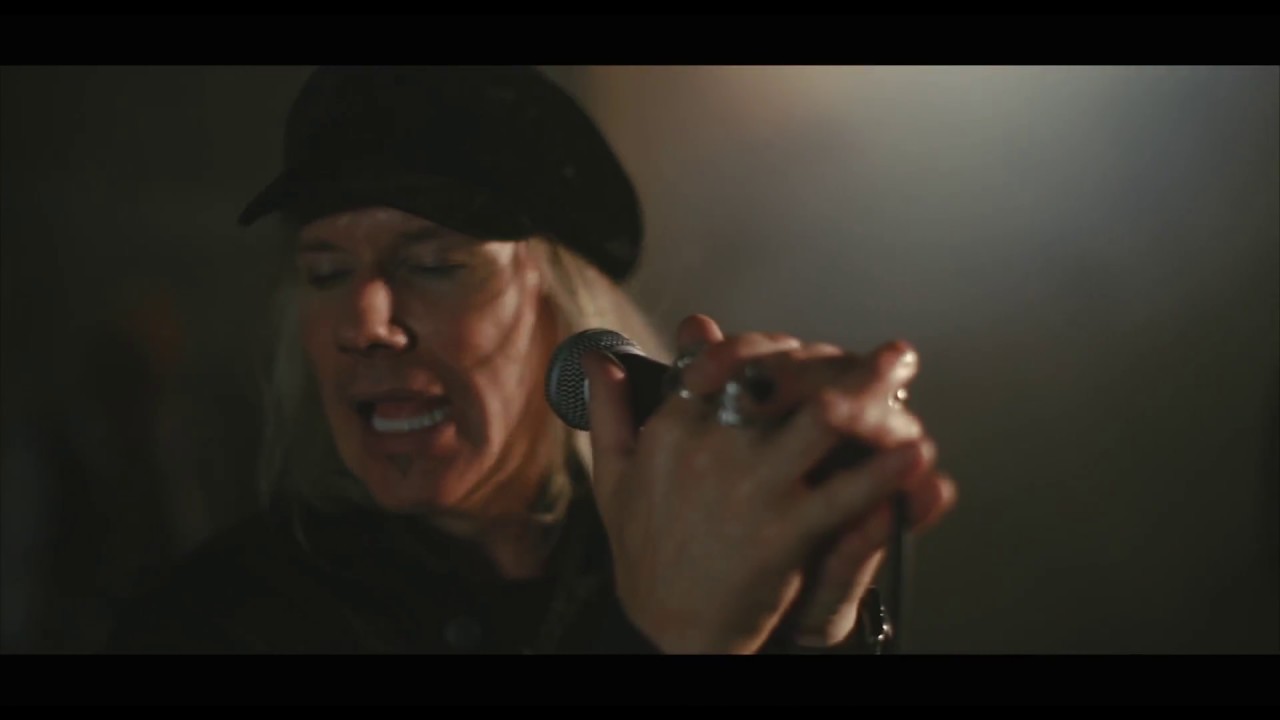
In his interview with Rock Candy, Lynch reflected on what might have been.
He stated: “We are definitely different animals, Don and I. We really aren’t meant for each other. In any band there are complicated, triangulated emotions. Egos. And Don’s ego was just gigantic.
“He built himself up and tried to crush everybody else. He always had to be right and everybody else was wrong. He had to be the absolute alpha male top dog. And I guess my lack of diplomacy didn’t help. I didn’t have the patience or I wasn’t mature enough to really think before I said something. I would just say things that were true, but probably pretty hurtful.”
Lynch ended with a confession.
“I’m not pointing fingers,” he said. “Dokken had more success that anything else that I’ve done in my life, so maybe there is something there. I’m as much to blame as anyone else.”