
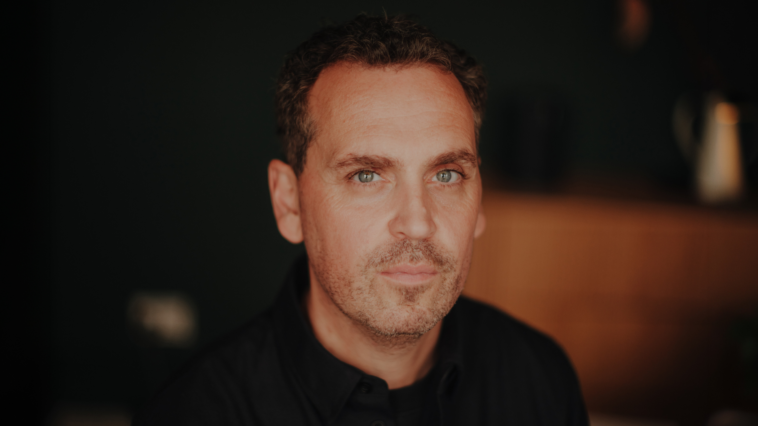
The name behind many of music’s leading lights’ recent successes – Blur, Pulp, Arctic Monkeys and Fontaines D.C. to name just a few – James Ellis Ford’s production aptitude is renowned.
While some have commented on Ford’s meticulous work ethic, his own recent second solo album – Lost in Another World – has proved to be perhaps his most impressive achievement yet, particularly given the extraordinarily bleak context behind its creation.
Bed-bound in hospital after being diagnosed with acute myeloid leukaemia, an aggressive cancer of the white blood cells, Ford was determined to not let his condition get the better of him.
“There were some grim circumstances behind the record and it was made with whatever equipment I could get my wife to bring to the hospital,” James told us in our recently-published interview. “I’m in a fortunate position of having plenty of gear that I’ve built up over the years but in a way it was liberating to not have any.”
For Ford, the situation was oddly inspiring. The obvious limitations of being confined to one room – and with only a tiny fraction of his gear at his disposal – exceptionally intricate tracks such as Overtones and The Ever After gradually emerged.
“As I’m a producer, I’m always extolling the virtues of limitations and trying to impose them artificially or by creating a system,” James told us. “In this case, the universe did it to me without me wanting it.”
Perhaps the most remarkable fact about the making of Lost in Another World is that it was written and produced in a little over two weeks.
“In the weirdest way, I’ve never had music come so easy,” James explained. “I think partly because I’d been gagging to make some, I’d been laid out ill without any creative thoughts for some time. It was the first moment that my brain started to spin again and it was a wonderful feeling, being able to prove to myself that I still could write and record.”
James’s computer-based setup was integral to the production, as was his fixation with old samples. His limited choices allowed more focused expression;
“Having limited choices around synths or the sounds you can use forces you to go with what you have at your disposal and one key element was my voice,” James states. “I found myself concentrating more on the chords, the melodies and lyrics. When you’re in the process, it can be hard to remember to keep all of the options open. Having this taken away, it meant I’d never found it easier to write and record.”
The gorgeous Here Today is among the record’s strongest moments, which James wrote between rounds of chemotherapy after going out to the countryside with his family.
“We had this beautiful day and I was overwhelmed with gratitude and sadness about simple things like nature and being with the people you love,” James says. “It’s not often you have an experience and a song comes out of it so directly. But to be honest, I’m really proud of the whole record and the fact it happened at all.”