
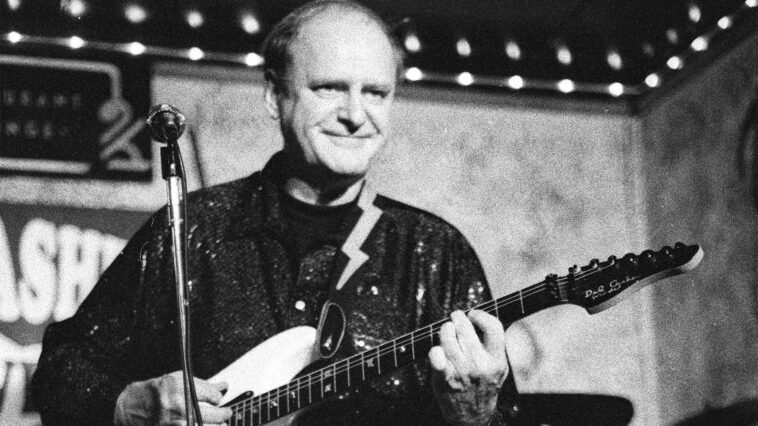
Del Casher, the guitarist, session musician and inventor whose work helped bring the wah-wah pedal into the world of electric guitar, has died at the age of 88.
Casher died October 1 following a battle with cancer, according to a GoFundMe campaign established to support his wife, Eiko. News of his death was reported November 9.
Although Casher enjoyed a long career as a performer, composer and studio musician, his most enduring contribution came in the mid-1960s, when he recognized the musical possibilities of a tone-control circuit that would eventually transform the sound of electric guitar.
Working with Vox and its American parent company, Thomas Organ, Casher helped turn the circuit into a foot-operated effect that allowed guitarists to sweep through frequencies, producing the distinctive vocal-like sound that gave the wah pedal its name.
The story began in 1966, when Casher was working as a consultant for Vox and performing with the company’s Ampliphonic Orchestra. He noticed that a variable tone control on one of the company’s amplifiers produced an intriguing wah-like effect when adjusted from one position to another.
He immediately recognized its potential for guitar. “I want to sound like I can compete with a trumpet or a trombone,” he recalled telling the company’s engineering team, describing the expressive quality he wanted to achieve.
Casher persuaded the engineers to adapt the circuit into a foot-operated pedal, allowing guitarists to control the effect while playing. The development involved Thomas Organ engineers Brad Plunkett and Les Kushner, building on an earlier midrange-boost circuit developed by Vox engineer Dick Denney. Casher helped refine the sound for guitar and championed the idea at a time when the company’s management envisioned the device primarily as an effect for trumpet and other horn players.
“They thought I was a crackpot,” Casher later recalled.

Determined to demonstrate what the pedal could do, he recorded a promotional album showcasing its possibilities across blues, jazz, rock, country and other styles. He then took the prototype to music stores and industry events, demonstrating the effect to guitarists and trying to generate interest. The response was initially disappointing.
Casher even tried pitching the idea to James Brown, explaining that he believed the wah-wah represented the future of music. The Godfather of Soul wasn’t convinced.
“I was describing to James Brown that the wah-wah pedal is really a thing of the future,” Casher recalled. Brown’s response was that he thought it was “a passing fad.”
Casher eventually found a more receptive audience in Frank Zappa, with whom he had worked before the wah-wah’s development. According to Casher, he gave Zappa a pedal and encouraged him to introduce the effect to Jimi Hendrix. Zappa helped bring it to Hendrix’s attention, and the guitarist would go on to make the wah-wah an integral part of his sound.
Hendrix’s use of the effect on his groundbreaking 1968 album Electric Ladyland helped establish it as one of rock’s defining guitar sounds. His performance at Woodstock the following year further cemented its place in the electric guitar vocabulary.
Other major players quickly embraced the effect. Eric Clapton put it to memorable use with Cream on “White Room,” while Jimmy Page, David Gilmour and Tony Iommi were among the guitarists who incorporated its distinctive vocal quality into their own playing. The wah-wah would become a staple of rock, funk and countless other styles.
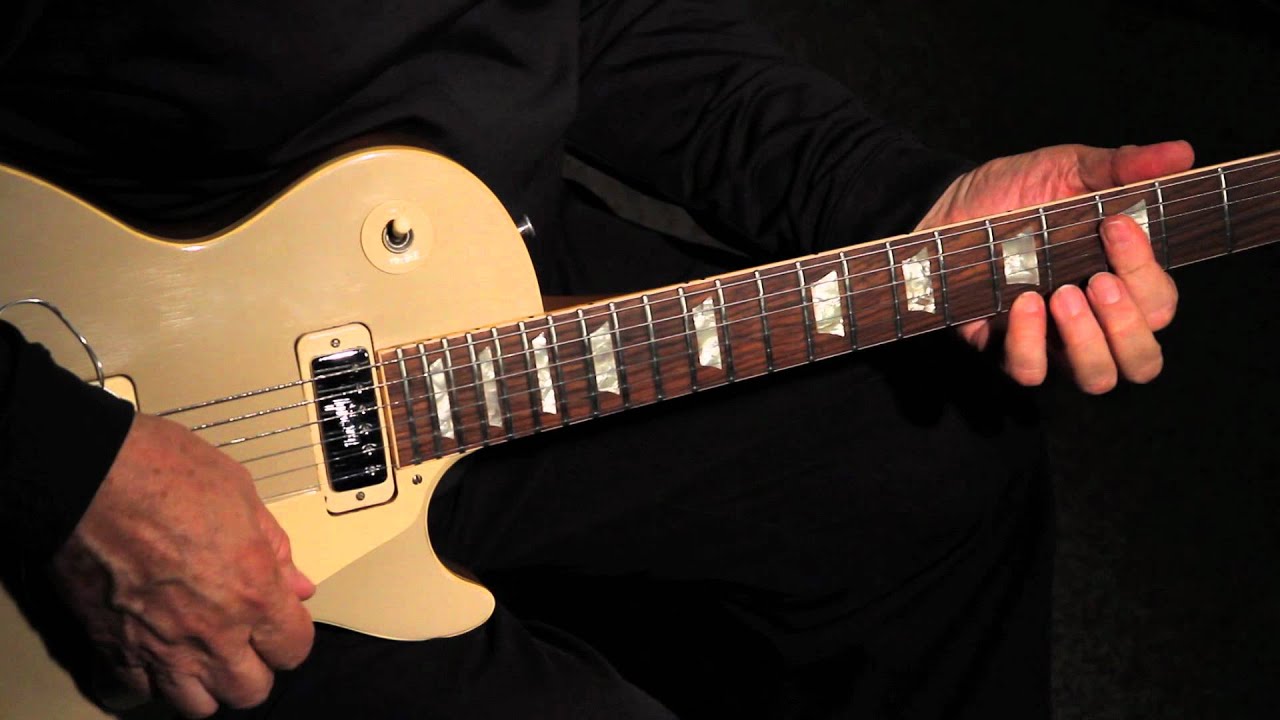
Casher had actually been recording with the effect before many of those famous performances. Through his association with composer Vic Mizzy, he brought the wah-wah into film soundtracks, including The Traveling Saleslady and The Ghost and Mr. Chicken, helping establish its distinctive voice beyond the recording studio.
Born in Hammond, Indiana, Casher moved to Hollywood after graduating from the University of Pittsburgh. One of his first major opportunities came as a guitarist on The Lawrence Welk Show. He subsequently toured with the Three Suns, the instrumental pop group behind the 1958 hit “Twilight Time.”
It was while traveling with the group that Casher developed another important invention, the Ecco-Fonic, a portable tape-echo device that allowed musicians to use studio-style effects in live performance.

Casher also became an accomplished Los Angeles session musician, working alongside members of the celebrated Wrecking Crew. His career brought him into contact with performers including Gene Autry, Frank Sinatra and Sonny & Cher. He appeared alongside Elvis Presley in the 1964 film Roustabout and Jerry Lewis in The Patsy that same year.
His inventive streak extended well beyond the wah-wah. Casher developed the Fender Electronic Echo Chamber and helped introduce Roland’s early guitar-synthesizer technology to American audiences. His work as a composer and producer continued for decades, including music for the children’s television series The New Zoo Revue, for which he produced, arranged and performed on more than 200 episodes. He also composed the guitar-driven theme for NBC’s Los Angeles newscasts, which remained in use for 18 years.
Despite the enormous influence of the wah-wah pedal, Casher sometimes felt his contribution to guitar history had been overlooked. In a 2011 interview with The New York Times, he expressed satisfaction at having helped introduce the effect but wished more guitarists knew about his role.
“I feel gratified that I was there at the beginning,” he said. “I would just like guitar players to think of me once in a while. The only thing I ask is: remember me.”